This website uses cookies as well as similar tools and technologies to understand visitors’ experiences. By continuing to use this website, you consent to Columbia University’s usage of cookies and similar technologies, in accordance with the Columbia University Website Cookie Notice.
Energy Explained
Get the latest as our experts share their insights on global energy policy.
New Venezuelan Oil Regulations Offer Promise, But Politics and Quake Recovery Threaten Investment
The economic and humanitarian consequences of the June 24 twin earthquakes in Venezuela continue to emerge.

Podcasts
Hear in-depth conversations with the world’s top energy and climate leaders from government, business, academia, and civil society.
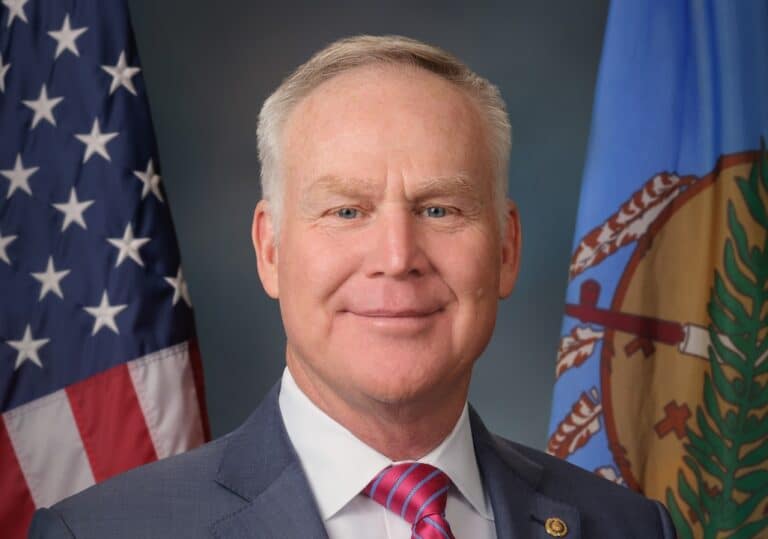
Senator Alan Armstrong on Building American Energy Infrastructure
As the demand for power surges across the US, the debate over how to build energy infrastructure has reached a fever pitch. And while both sides of the...
News
Center on Global Energy Policy Announces Sweeping New Analysis of 20 Countries’ Carbon Credit Markets
June 17, 2026
The Center on Global Energy Policy (CGEP) at Columbia University SIPA today released a new report examining Project-based Carbon Credit Markets (PCCMs) in G20 countries and Singapore. A white paper summarizing the project’s findings can be found here. The individual country frameworks can be found here.
PCCMs have expanded since the signing of the Paris Agreement in 2015, but their growth has slowed due to concerns about the credibility of carbon credits. In response, independent initiatives have proposed robust standards for creating “high-integrity” credits. However, these standards are voluntary and, therefore, non-binding. Regulations could restore market confidence through enforceable safeguards that can enable liquid and scalable PCCMs, as discussed and analyzed in the report.
“Carbon credits are a crucial tool in governments’ efforts to reduce greenhouse gas emissions, but they must be credible to attract sustained interest from investors,” said Gautam Jain, Senior Research Scholar at CGEP. “Regulations can help close that integrity gap. This new report provides extensive analysis of the state of carbon credit markets in countries around the world along with a stocktake of regulatory frameworks that governments are creating to build trust and attract investment. Carbon credit markets are expanding, but their widespread adoption will require credits to be reliable and trustworthy so that investors feel comfortable that their reputational and legal risks have been sufficiently alleviated before they decide to purchase credits.”
The report, authored by Gautam Jain, Preetha Jenarthan, Victoria Prado, and Shubham Deshmukh, identifies the next phase of market development as likely to be centered on deeper integration into country strategies to reduce greenhouse gas emissions and governments raising standards for carbon credits with stronger integrity rules.
A carbon credit is generated from a discrete project and can be used to offset emissions or meet climate goals. Each credit represents one metric ton of carbon dioxide equivalent (tCO₂e) removed, reduced, or avoided from the atmosphere relative to an established baseline scenario that enables the assignment of a monetary value to a ton of carbon. Companies and project developers that achieve greenhouse gas reductions or removals from the atmosphere at lower costs than other firms can sell carbon credits to companies that face higher costs to do so on their own. These markets create financial incentives for emissions reductions across the economy. However, verifying that carbon credits correspond to real, additional, and permanent greenhouse gas emission reductions has proven difficult. As a result, companies have been hesitant to invest in carbon credits unless they are assured of their high integrity.
The report, Taking Stock of the Regulatory Landscape for Project-Based Carbon Credit Markets, features 19 of the G20 countries, with a planned future publication to more comprehensively focus on the United States. The year-long project was supported by Bloomberg Philanthropies.
Related
More News
Biden’s climate law is dead. The energy transition might not be.
A year after Trump repealed the Inflation Reduction Act, the outlook for climate action is dark. But there are silver linings.
IRA clean energy gains mostly on track despite OBBBA, says MIT study
74% of all new clean electricity capacity that would have been added under the Inflation Reduction Act will be preserved despite Trump administration policy changes, the report estimates, including 82% of utility-scale solar generation.
IRA clean energy gains mostly on track despite OBBBA, says MIT study
74% of all new clean electricity capacity that would have been added under the Inflation Reduction Act will be preserved despite Trump administration policy changes, the report estimates, including 82% of utility-scale solar generation.
Relevant
Publications
Taking Stock of the Regulatory Landscape for Project-Based Carbon Credit Markets
Project-based carbon credit markets (PCCMs) facilitate the generation, trading, and retirement of carbon credits from projects that remove, reduce, or avoid greenhouse gas emissions.

How the World Bank’s Rethink on Industrial Policy Could Affect Energy Sector Support for Developing Countries
The World Bank is revisiting one of its most entrenched positions, publicly questioning its long-standing emphasis on market-led approaches in economic policy.