This website uses cookies as well as similar tools and technologies to understand visitors’ experiences. By continuing to use this website, you consent to Columbia University’s usage of cookies and similar technologies, in accordance with the Columbia University Website Cookie Notice.
Two economic planning documents released at the March meeting of China's National People’s Congress include the term "energy powerhouse" for the first time.
Much of the world’s attention today is understandably focused on conflict in the Middle East, and the immediate implications for energy markets and global security. But other regions...
We are the premier hub and policy institution for global energy thought leadership. Energy impacts every element of our lives, and our trusted fact-based research informs the decisions that affect all of us.
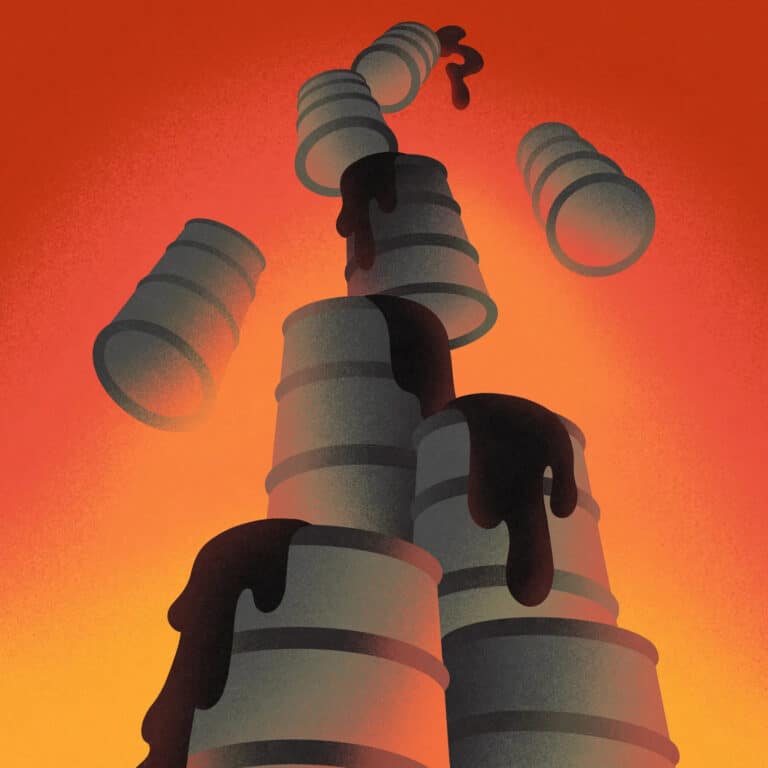
The Oil Price Crash and the Shifting Energy Landscape
Past Event
May 5, 2015
4:00 am - 7:30 am
Share
This half-day event will bring together experts from Columbia University to discuss the policy issues and opportunities presented by the dramatic change in oil prices.
Confirmed speakers include: David Schizer, Columbia Law School, Michael Graetz, Columbia Law School, David Sandalow, Columbia University School of International and Public Affairs, Geoffrey Heal, Columbia Business School, Jesse J. Greene, Jr., Columbia Business School, Jason Bordoff, Columbia University School of International and Public Affairs, Bob McNally, The Rapidan Group and Colin Fenton, Columbia University School of International and Public Affairs.
On February 28, the United States and Israel launched an attack on Iran, resulting in the deaths of Iranian Supreme Leader Ali Hosseini Khamenei and senior Iranian leaders...
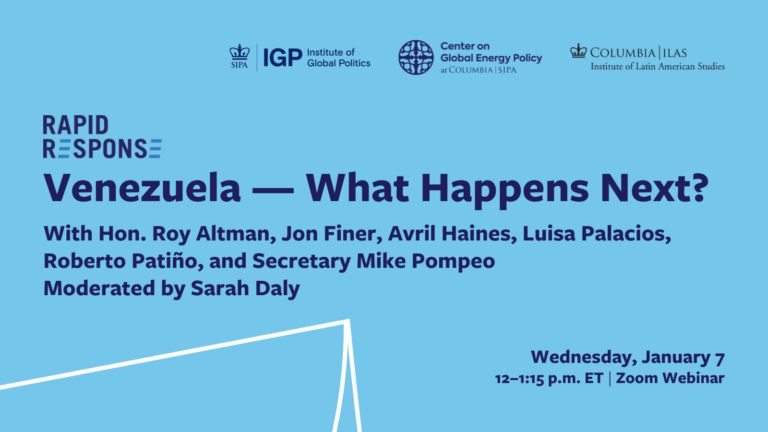
The recent military operation to remove Venezuelan President Nicolás Maduro and First Lady Cilia Flores raises several implications for the future of Venezuela and Latin America, geopolitics, and energy markets. Cosponsored by SIPA’s Institute of Global Politics (IGP) and Center for Global Energy Policy (CGEP), along with Columbia’s Institute of Latin American Studies (ILAS), this webinar will analyze the circumstances and impact of their capture and extradition to New York to face narcoterrorism and drug trafficking charges.
The Columbia Global Energy Summit 2026 is an annual event dedicated to thought-provoking discussions around the critical energy and climate challenges facing the global community.