Net Power Surrendered Its Clean Dreams to Data Center Demand
The zero-emission pioneer is doing the dirty work for the AI boom.
Get the latest as our experts share their insights on global energy policy.
This Energy Explained post represents the research and views of the author(s). It does not necessarily represent the views of the Center on Global Energy Policy. The piece...

Hear in-depth conversations with the world’s top energy and climate leaders from government, business, academia, and civil society.
After years of trying, the US may be on the cusp of a nuclear renaissance. Commercial nuclear generation began in this country in 1958. Today, the US has...

Find out more about our upcoming and past events.
Dr. Claudia Castro will share insights into her professional journey and the role of financial markets in shaping energy investments.

Big Oil is facing a test of its ability to navigate geopolitical risk.
A mass transition to green energy could help to quell future international conflicts that stem from the control of oil, energy and climate change experts told ABC News.
Many consider a widespread war in the Middle East the worst-case scenario for the global oil and gas market. That war is here, and it could have wide-ranging, long-lasting impacts on energy and climate policy. This week on Zero, Akshat Rathi speaks with Jason Bordoff to try to understand what those impacts could look like.

I’m en route home after a week in Europe—first at the Oslo Energy Forum and then at the Munich Security Conference. Munich generated considerable news and drama, but...

Tatiana Mitrova, a fellow at Columbia University’s Center on Global Energy Policy and former energy scholar at Moscow’s Russian Academy of Sciences, and Sergey Vakulenko, an oil and gas expert at Carnegie’s Russia Eurasia Center, argue that Russia and Ukraine are locked in an energy war that has become an adaptation spiral, despite growing human and economic costs and despite current US pressure on Ukraine. They observe Ukraine’s remarkable ability to withstand Russian strikes, while questioning claims that long-range Ukrainian strikes will be able to achieve game-changing damage on Russia. Ukraine and Russia have transformed the role of energy warfare in modern conflict, drawing on low costs drones but also new forms of technological resilience that are likely to make wars longer and more dangerous.
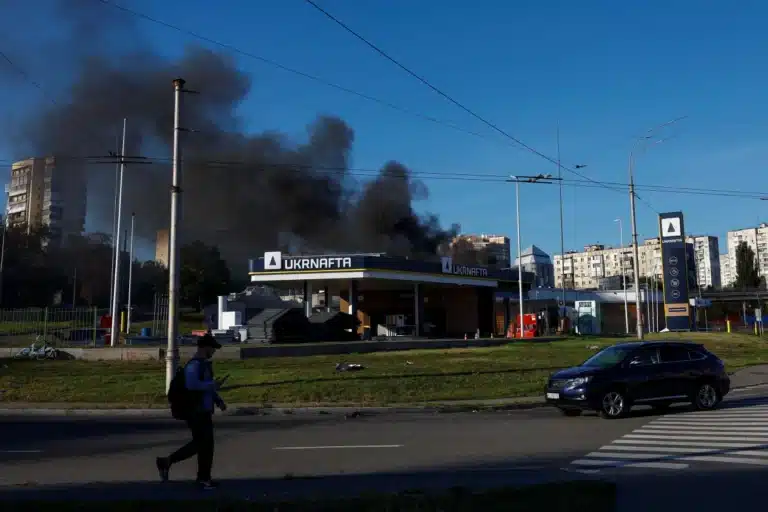
The Hormuz crisis is the latest in a series of disruptions that have exposed the continent’s energy vulnerabilities. The time to build resilience is between crises, not during them.