Energy Markets Series: Half-Time Talk Weekly Feature Interview
Dr. Tatiana Mitrova, Research Fellow, Center on Global Energy Policy, Columbia UniversityTells Half-Time Talk GI Exclusive Interview: âEnergy Markets Pass th...
Get the latest as our experts share their insights on global energy policy.
Midterm voters gave Democrats control of both chambers of Congress and flipped governorships in states central to data center development.
Hear in-depth conversations with the world’s top energy and climate leaders from government, business, academia, and civil society.
Earlier this month, US voters handed Democrats control of both chambers of Congress and flipped several governorships across the country. The dramatic shift in power raises big questions...

Find out more about our upcoming and past events.
CGEP invites students to join a roundtable discussion with Cassady Walters, Vice President, Power, The Rockefeller Foundation.

US Senator, Maine
Congress has huge sums of money on the table for climate action, much of it contained within a $2 trillion dollar infrastructure plan. The bill would provide historic investments in electric vehicles, grid modernization, and renewable energy.
But a ceaseless struggle for bipartisanship threatens the bill and other types of climate legislation. Its success hinges on a small group of moderate Senators with a track record of reaching across the aisle.
Will they cast the votes that are necessary, or will party politics sabotage the push for meaningful climate action?
Today on the show, Bill Loveless is joined by Maine Senator Angus King.
Senator King is part of a small group of powerful moderates. He spends his time in the Senate actively working with Democrats and Republicans in search of climate compromise.
Senator King is a founding member of the Senate Climate Solutions Caucus and a Member of three prominent committees — energy, intelligence, and armed services.
We spoke with the Senator about the state of play for climate and energy legislation.
Earlier this month, US voters handed Democrats control of both chambers of Congress and flipped several governorships across the country. The dramatic shift in power raises big questions...
Affordability was one of the key issues that drove US voters to the polls last week, and the resulting message for the newly elected Congress is clear: driving...

Energy costs are a big consideration for voters in much of the US today as they head to the polls. But the decisions that shape those costs will...

Every permitting bill promises the same thing: build faster. The harder question is what the trade-offs are, and who bears them. That question is at the heart of...

The shift in the balance of political power will help determine which US policies can be funded and sustained over the next two years.
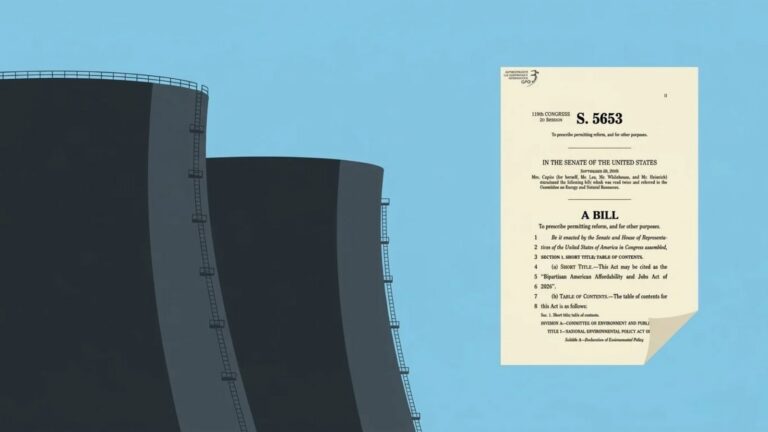
The BAAJA bill could facilitate nuclear development by streamlining federal environmental reviews and providing greater certainty for permitted projects.
This Energy Explained post represents the research and views of the author(s). It does not necessarily represent the views of the Center on Global Energy Policy. The piece...