Everyone Wants in on Brazil’s Rare Earths
But is Brasília ready to meet the moment?
Get the latest as our experts share their insights on global energy policy.
The Iran crisis, whenever it ends, will materially change how the LNG market operates.
Hear in-depth conversations with the world’s top energy and climate leaders from government, business, academia, and civil society.
Grid operators sit at the center of many of the biggest forces reshaping the global energy system. They’re navigating rising electricity demand, a lack of transmission infrastructure, shifting...
Fifty years ago this week, one out of every 10 Americans, 20 million in all, came together for a series of rallies, teach-ins, and speeches, to tell their leaders they were no longer willing to put up with choking air and poisoned water. The fiftieth anniversary of Earth Day is an occasion to celebrate the environmental movement’s vast success cleaning up America’s skies and waterways, but also a moment to take stock of lessons learned – for how to address the existential environmental issue of our time: climate change.
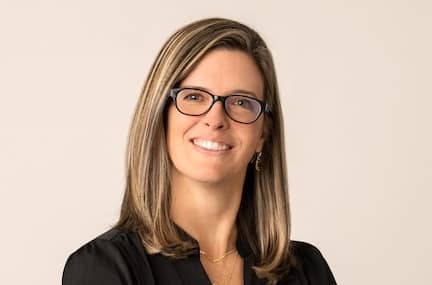
To celebrate this historic milestone, the Columbia Energy Exchange will have a special double episode this week with two conversations with two champions of the environmental movement for many years. Both are former U.S. Environmental Protection Agency (EPA) Administrators, one Republican and one Democrat, William Reilly and Gina McCarthy.
In this edition of Columbia Energy Exchange, host Jason Bordoff is joined by William Reilly, who has a remarkable career in the environmental movement. On the first Earth Day in 1970, Bill was at the time one of the first employees at the brand new Council on Environmental Quality that had just been created in the White House. He went on to serve as the President of the World Wildlife Fund, and as Administrator of the EPA during the Administration of President George H. W. Bush, leading efforts to pass the Clean Air Act Amendments of 1990, and to bring President Bush to the 1992 Earth Summit in Rio de Janeiro. He was also appointed by President Obama to co-chair the National Commission on the Deepwater Horizon Oil Spill, among many other prominent positions in his long and distinguished career. He served in the army to the rank of Captain from 1966-1968, and he graduated from Harvard Law School, and earned his master’s degree from Columbia University in urban planning.
Keep an eye out for host Jason Bordoff’s conversation with Gina McCarthy, coming out on Wednesday.
Grid operators sit at the center of many of the biggest forces reshaping the global energy system. They’re navigating rising electricity demand, a lack of transmission infrastructure, shifting...
Concerns about the affordability of electricity in the US have been rising along with prices. And while the headlines have pointed to AI and data centers as the...

The energy transition is in the midst of its own transition. Spiking electricity demand and geopolitical events are driving up energy prices, while debates over the best sources...

Yesterday, the US and Iran signed a memorandum of understanding starting the clock on a 60-day truce. The agreement intends to halt attacks, begin lifting the US naval...
The Iran crisis, whenever it ends, will materially change how the LNG market operates.
The Center on Global Energy Policy is providing live updates on key developments related to the Iran crisis. Check back here for the latest.
In early 2026, CGEP held a roundtable and several hybrid closed-door meetings in Mexico City on Mexico's mining sector.
The Inflation Reduction Act of 2022 (IRA) was built, sold, and attacked as the largest climate investment in U.S. history. […]