This website uses cookies as well as similar tools and technologies to understand visitors’ experiences. By continuing to use this website, you consent to Columbia University’s usage of cookies and similar technologies, in accordance with the Columbia University Website Cookie Notice.
Energy Explained
Get the latest as our experts share their insights on global energy policy.
G7 Progress on Critical Minerals Diversification Overlooks Demand Side
This Energy Explained post represents the research and views of the author(s). It does not necessarily represent the views of the Center on Global Energy Policy. The piece...

Podcasts
Hear in-depth conversations with the world’s top energy and climate leaders from government, business, academia, and civil society.
Michael Cembalest Does the Math on the Energy Transition
The energy transition is in the midst of its own transition. Spiking electricity demand and geopolitical events are driving up energy prices, while debates over the best sources...

Events
Find out more about our upcoming and past events.
June 25, 2026
• 11:30 am - 12:30 pm
est
The Cost of Power: Rising Electricity Prices, AI, and the Grid
This event will take place in-person in Washington DC, at the Rayburn House Office Building, Room 2168 (Gold Room). Advance registration is required. Announcing New Columbia University Publications...
Event
• Rayburn House Office Building, Room 2168 (Gold Room)
Washington, D.C.
Washington, D.C.
With the next U.S. election just 15 months away, advocates of action on climate change are gearing up with fresh plans to address the issue and bring them to the attention of the American electorate. Among the biggest such efforts is the Beyond Carbon campaign launched recently by Bloomberg Philanthropies, the charitable-giving arm of former New York City Mayor Michael Bloomberg.
In this edition of Columbia Energy Exchange, host Bill Loveless talks to Carl Pope, the senior climate advisor to Michael Bloomberg who has played a major role in developing the strategy behind the Beyond Carbon campaign. Bloomberg Philanthropies has put $500 million behind the campaign, which it calls the largest ever effort in the U.S. to fight climate change.
Carl is well known in environmental circles, having led Sierra Club for more than 30 years before stepping down in 2010. He is also a founder of the BlueGreen Alliance and has served on the boards of the California League of Conservation Voters and the National Clean Air Coalition. He’s written three books as well, including one in 2017 with Michael Bloomberg called “Climate of Hope: How Cities, Businesses and Citizens Can Save the Planet.”
Bill reached Carl by phone the other day at his office in San Francisco, where he is a Principal Advisor at Inside Straight Strategies.
Among the topics they discuss are the goals of the Beyond Carbon campaign and why Bloomberg and Pope are now targeting natural gas, as well as other fossil fuels, for elimination in order to put the U.S. on a path to a 100% clean-energy economy.
Bill probes Carl, too, regarding the timing of Beyond Carbon ahead of the 2020 elections, his views on renewable energy and nuclear energy, whether putting a price on carbon makes sense, and how the media is covering climate change.
Of course, with another round of debates for Democratic candidates for president about to take place, Bill also gets Carl’s take on their positions on energy and climate issues.
More Episodes
Michael Cembalest Does the Math on the Energy Transition
The energy transition is in the midst of its own transition. Spiking electricity demand and geopolitical events are driving up energy prices, while debates over the best sources...
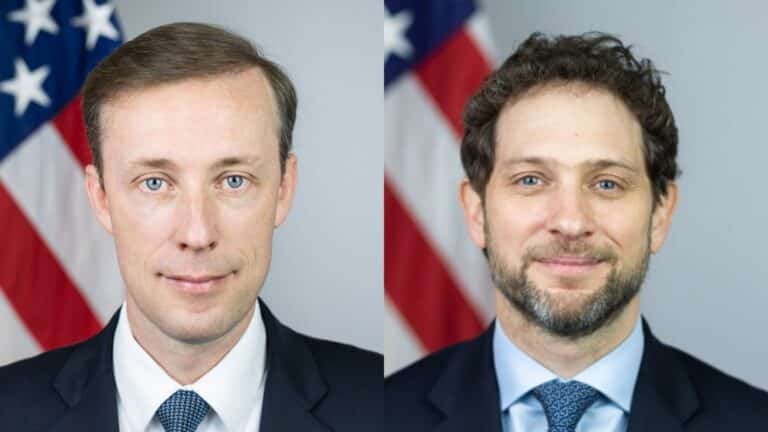
Jake Sullivan and Jon Finer on the US-Iran Deal, Hormuz Realities, and Iran’s Nuclear Future
Yesterday, the US and Iran signed a memorandum of understanding starting the clock on a 60-day truce. The agreement intends to halt attacks, begin lifting the US naval...
Columbia Energy Exchange Podcast
• June 18, 2026
Iran Conflict Brief: The US-Iran Deal and a New Phase of Accommodation
The 109-day-old Iran crisis is heading toward an off-ramp in the form of a not-yet-public Memorandum of Understanding to reopen the Strait of Hormuz. While energy markets are...
Columbia Energy Exchange Podcast
with Karen E. Young
, Richard Nephew
and Ira Joseph
• June 16, 2026

Jessica Uhl on the Fractured Energy Transition: Why Speed Matters Now
The clean energy transition had real momentum at the end of 2024. It was buoyed by federal support, billions of dollars of investment in new technologies, and broad...

Relevant
Publications
G7 Progress on Critical Minerals Diversification Overlooks Demand Side
This Energy Explained post represents the research and views of the author(s). It does not necessarily represent the views of the Center on Global Energy Policy. The piece...