This website uses cookies as well as similar tools and technologies to understand visitors’ experiences. By continuing to use this website, you consent to Columbia University’s usage of cookies and similar technologies, in accordance with the Columbia University Website Cookie Notice.
Energy Explained
Get the latest as our experts share their insights on global energy policy.
New US Tariffs on Solar Products Establish Price Floors, but Onshoring Will Require Capacity Build-out
President Trump issued a proclamation on August 6 imposing tariffs on polysilicon and solar products.

Podcasts
Hear in-depth conversations with the world’s top energy and climate leaders from government, business, academia, and civil society.
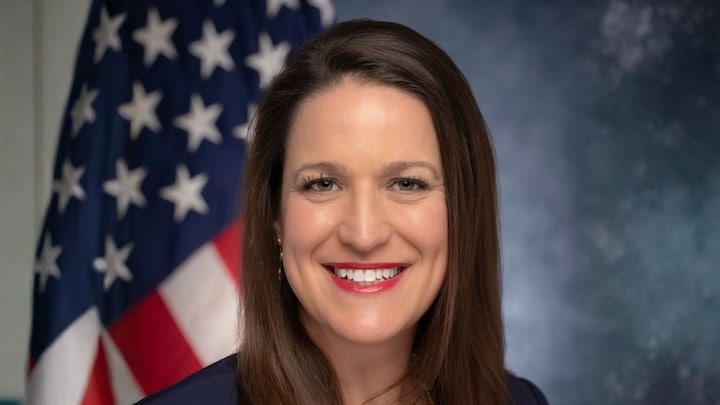
DOE’s Audrey Robertson on Growing US Critical Mineral Supply
Advanced technologies, a return to domestic manufacturing, and the race to control energy production while also confronting surging demand for electricity—all of these factors mean that for the...
Columbia Energy Exchange Podcast
• September 1, 2026
Events
Find out more about our upcoming and past events.
September 10, 2026
• 10:00 am - 11:00 am
edt
Carbon Markets Webinar: The Path Forward for Carbon Credit Markets
PCCMs facilitate the generation, trading, and retirement of carbon credits from projects that remove, reduce, or avoid greenhouse gas emissions. By creating a revenue stream from verified climate...
Event

Podcast
DOE’s Audrey Robertson on Growing US Critical Mineral Supply
September 1, 2026
-
Transcript
-
Audrey Robertson:
What our department is looking at is how can we find solutions that are here, maybe in plain sight, maybe they’ve been there, but they’ve never been economic. How do you get those technologies out of the lab and into the hands of entrepreneurs and practitioners and people who want to grow the business? And critical minerals is a big broad bucket, but really it’s these essential components to building the things we need.
Jason Bordoff:
Advanced technologies, a return to domestic manufacturing, the race to control energy production while also confronting surging demand for electricity. All of these factors mean that for the US, energy security and national security are increasingly centered on critical minerals. But despite being rich in mineral resources, the US finds itself in a challenging spot. The processing and refining of vital materials like copper, lithium, and graphite is largely done overseas, often heavily concentrated in the hands of global competitors like China. This has sparked an urgent bipartisan push to reindustrialize America and secure the supply chains necessary for everything from military defense, to the AI revolution, to the clean energy economy. But can public sector funding truly act as a catalyst for sustainable private enterprise without overregulating the market? How much domestic mining, processing, and recycling can the US really unlock quickly and safely? And what role can emerging base load power technologies like advanced geothermal or small nuclear modular reactors really play in meeting our soaring energy needs?
This is Columbia Energy Exchange, a weekly podcast from the Center on Global Energy Policy at Columbia University. I’m Jason Bordoff. Today on the show, Assistant Secretary Audrey Robertson. She is the Assistant Secretary of Energy and leads the Department of Energy’s Office of Critical Minerals and Energy Innovation, where Audrey oversees one of the nation’s largest energy R&D portfolios. Previously, she co-founded Franklin Mountain Energy, a private oil and gas company in the Permian Basin where she served as CFO and executive vice president. Before that, Audrey was a managing partner at Copper Trail Partners an energy private equity platform. Audrey joined me to talk about her office’s mission to restructure and secure America’s energy supply chains from mining to recycling. We discussed the vulnerabilities in domestic mineral processing, new initiatives like Project Vault and how the administration views a return on investment for the American taxpayer. Audrey shared why she’s bullish on the future of oil and gas and how emerging technologies, from space-based solar to advanced hydropower, might define the next generation of energy.
I hope you enjoy our conversation.
Assistant Secretary Audrey Robertson, welcome for the first time to Columbia Energy Exchange, but welcome back to the Center on Global Energy Policy. We were honored to have you at our big annual energy conference not long ago. And of course, there’s only so much you can get into on a panel, so great to have you back for a deeper conversation.
Audrey Robertson (03:07):
Absolutely, Jason. Thank you so much for having me.
Jason Bordoff (03:09):
So for those who may not be familiar with you or your background or the office, I just want to start there because it’s a both interesting background and interesting one to have the portfolio you do now, investment banking, private equity, oil and gas, now responsible for critical minerals and innovation and affordability and parts of the electricity system. So just tell everyone a little bit about your background and then how you came to have the role you do now and what spurred the desire to enter the public sector.
Audrey Robertson (03:41):
Absolutely. I’m happy to give a quick overview. I am not a traditional member of the Washington Department of Energy crew, if you will. My career, as you mentioned, was in investment banking, private equity. I had my own private equity firm and that rolled into an operating company in the oil and gas space. And most people think oil and gas, what am I doing in this different part of the Department of Energy? But the oil and gas business isn’t just about hydrocarbons, although that was our objective was to be the best at producing low cost, highly efficient oil and gas. But we also built a microgrid. We also redesigned lighting. We used advanced materials and pioneered new types of surfactants and different ways to do things in what I would say would be an industry people think is fairly mature. I love the oil and gas business and sold our company that I co-founded at the very first early days of the administration.
(04:43):
We actually closed the same week as the inauguration. I was so grateful for the opportunity to be in this entrepreneurial ecosystem. A very close friend and business partner, Chris Wright, was nominated to be the secretary of energy. And if there was an opportunity for me to give back to the country that I love so much and has given me so much, any opportunity to serve and give back was one I would say yes to. And with Secretary Wright getting confirmed, there was an opportunity to leave Colorado, and my kids are out of the house, and serve my country. And in coming here, the secretary had a lot of reorganization plans and ideas on how to take this tremendous resource at the department and really focus in on solving the most critical energy challenges of our generation. And that is around providing affordable, reliable, and secure energy, not just in the abstract, but because affordable, reliable, and secure energy means reduced poverty, human flourishing.
(05:59):
And from the perspective of the United States, it meant that we need all of those things to be a nation of strength, to be a nation that builds things, to win the AI race, to really reindustrialize America. So the office I oversee today is called the Office of Critical Minerals and Energy Innovation. And it’s a new office within the department that incorporates several previously, I’d say siloed offices. The Office of Energy Efficiency and Renewable Energy used to incorporate hydropower and geothermal energy, solar, wind, biofuels. We’ve combined these offices and in some cases like geothermal energy, that has moved over to the office that oversees hydrocarbons and subsurface development, if you will. Their skill sets are better matched. My office incorporates those traditional renewables along with the supply chain starting from the mine, so mining technology, refining, processing, metallurgy, all the way through to batteries, magnets, and recycling.
(07:16):
The reason our office is focused on the entire supply chain is that we are needing to execute efficiently and execute quickly when we’re looking at how do we help the Department of War get access to the right types of batteries? What are the new types of batteries that we’re developing at our national labs? Understanding the supply chain required to create the newest type of battery is all within one office. So our focus on innovation as well as our focus on the supply chain necessary to unleash that innovation is all within one roof. And those are our two primary, I would say, science-based and applied science offices. Really our third silo is what we call the Office of Affordability and Consumer Choice, and that incorporates areas such as energy efficiency standards for appliances and building codes, as well as industrial technologies that incorporate energy efficiency. So think large scale heating and air conditioning, research and development, as well as community support and assistance for weatherization.
(08:37):
So that’s kind of the overarching view of our office. And I feel privileged to be at the nexus of all of these important areas, having a background. I’m an accountant by trading, so having a background where I love numbers and I love people and I understand energy, it is a nexus where all of those things come together.
Jason Bordoff (08:59):
It’s a great background and scene setter because there’s so many things you listed there, batteries, critical minerals, renewables, emerging technologies, efficiency that I want to come back to. It’s a remarkably broad portfolio. And as someone, I should say, six weeks away from also having the last kids out of the house, I may need to come back to you for advice on how to cope with that major life change, but great to have people with the kind of private sector experience you have bringing their skills to public service. So thank you for that. Is that a culture shock, the big government bureaucracy versus kind of the energy oil and gas company you started and ran?
Audrey Robertson (09:36):
So it’s not as much a culture shock. And I will say it is such a privilege to work with the people who are here. I joke, Jason, but it is the absolute truth. I had only been to Washington DC three times before this opportunity presented itself and twice were on field trips.This was not a place that I came to visit. My interactions with the federal government were through the BLM office in Carlsbad, New Mexico or the local DMV. I mean, I was not in the political sphere outside of supporting politics because it is what protects our rights and our freedoms and it ensures that the capitalism and democracy are foundational. So I’ve always loved our government. This is a great opportunity in my mind and a true privilege to give back. The difference from a business standpoint is really we are looking to use taxpayer funds in a way that is a catalyst to successful businesses.
(10:43):
We are not looking to give away money. We’re looking to be the impetus to science, innovation, and really that catalyst of change that will help ensure American success and dominance into the next century. And so it’s really having a different benchmark for why and how we’re making money. I feel like how we’re allocating dollars, not making money. In my old world, we know everyone knew what the goal was because you had to make payroll, right? We were there to generate and build a profitable business. Here, the metric on the other side is, are we stewarding these taxpayer dollars in the most efficient way to generate the greatest value for the American people today and in the future? And working for President Trump has been an absolute privilege. Working for Secretary Wright is just an honor.
Jason Bordoff (11:43):
It’s a really important point. I think too often in my view, and this is true on both sides of the aisle, it’s not a partisan comment, the metric of impact, success, how much a legislation cares about an issue or does is measured by dollars spent, not whether the dollars are being spent well. So I think that’s a really important point.
Audrey Robertson (12:02):
The first thing I did when I got into our office was to review all of the existing dollars that were out the door. I had the team go back and add another column to this spreadsheet, and that was what does this investment do for the American people? That column hadn’t been there before.
Jason Bordoff (12:22):
So I want to come back to ask about that, how the administration thinks about return on investment and what’s in the national interest. Maybe I’ll just walk through some of the topics you brought up and critical minerals obviously is top of the agenda in so many ways, including for your office. So just talk a little bit about, this is across the aisle again, the US has identified critical minerals as an important national security priority, but from an energy department perspective, from your perspective, maybe what minerals concern you the most? And then let’s talk about what aspects of that, what are the national security concerns we have? Is it being dependent on imports period? Is it China in particular? Do we have to make everything at home? And that helps understand what the policy agenda looks like to understand the problem.
Audrey Robertson (13:13):
Yeah. Well, I think the policy agenda at the Department of Energy is really to be the center of science and innovation for the US government. Most people don’t know we have 17 national labs that most of the battery technology, not just in the US but around the world has started at these national labs. I mean, when you think about innovation in batteries and magnets, it happens here over decades of funding and analysis. So from a critical minerals standpoint, we are looking for ways to identify the areas of extreme weakness within the manufacturing sector or within the energy, I would say the national security energy industrial complex, if you will. So you could take any piece of the most pressing issues today. We can talk about AI. I am not the expert in AI, but I can tell you that if we lose the race in AI, we’re going to have a very different nation for our children than the one we grew up in, that maintaining our absolute outfront lead and dominance in AI is going to require more power.
(14:35):
It’s going to require … more power is going to require more copper. Copper in this country, we have plentiful resources of actual raw rock that can become copper, but we only have three copper smelters in this country. In the last decade, China’s built 42, I believe.
(14:57):
It doesn’t matter if we have copper in the ground here, if we can’t turn it into a usable resource. So those are the issues we’re looking at. So in the example of copper, are we able to find more effective ways of using science? In this case, is it hydrometallurgy? Is it another form of smelting, of processing, of refining where we can more efficiently produce finished copper? We had a funding announcement earlier this year to produce gallium and we launched an opportunity to have companies compete to produce gallium from existing assets, and they had 12 months to produce it. They had to produce X quantity, and we had great companies from all over the country saying, “We think we can extract gallium from an aluminum smelter here or from red mud there.” And what our department is looking at is how can we find solutions like that that are here, maybe in plain sight, maybe they’ve been there, but they’ve never been economic.
(16:06):
In the case of gallium, we don’t produce gallium in this country at all. And after this funding opportunity, we’re going to have five different companies that have figured out how to extract gallium from existing assets right here in America. That is winning, that is innovation. Those are the types of really phenomenal opportunities that will reshape critical minerals, as you say. And critical minerals is a big broad bucket, but really it’s these essential components to building the things we need.
Jason Bordoff (16:35):
Yeah, that’s why I was asking how you think about which minerals you’re most concerned about, because as you said, the phrase critical minerals gets thrown around, but it means a lot of different things. And the two examples you gave I think are really interesting because they’re, I don’t know if you agree, almost at opposite ends of a spectrum, copper, it’s a very large market. There’s a pretty well-functioning global market for trade. China’s position in production and mining is pretty small. It’s more dominant in processing, so it’s a different part of the supply chain one might be worried about. And gallium is different. It’s not as famous as lithium or cobalt. It’s much smaller, but super important for high performance semiconductors and things like that. And so I’m wondering in that spectrum how you prioritize and then where does that take you in terms of solutions?
(17:19):
Because I have the view, you can tell me if you disagree, that it’s almost not feasible for any country to try to produce everything it needs at home. You do need to work with partners, you do need global trade, but you also might be concerned if 90 whatever percent is just sitting in one place, particularly a potential competitor or adversary depending on what phrase one wants to use. So how do you think about the solutions to being that dependent on China?
Audrey Robertson (17:51):
Well, I think that we’re approaching the problem from multiple angles and it’s not just the Department of Energy and it’s certainly not just myself and my team. This is really a whole of government effort. And having been so new to Washington, I did not realize that the head of critical minerals at the Department of War or the Department of Commerce or at Treasury or at EXIM Bank or at USTR, that they didn’t have this daily communication. We have absolute frequent communication, if not daily, in person, at least weekly, but we’re looking at advancing the United States interests around the globe and here at home, and we all play different roles in that ecosystem. So you asked a very simple question, how do you prioritize? It’s not a simple answer because it is going to be partly how we have partnerships with other countries and whether that’s for raw materials or for processing or for parts of the equation.
(19:02):
Part of it is how here in the United States do we have the resources that can unlock minerals that are in the ground or the reprocessing of minerals? We haven’t really talked about recycling yet. I like to call it urban mining.
Jason Bordoff (19:18):
That was my next question, so we can go there. That was my next question.
Audrey Robertson (19:22):
Unlike oil and gas, most of the things that consume oil and gas are gone when you consume them. I’d say plastics and polymers, there’s some exceptions to that for sure. But when you combust a hydrocarbon, it’s gone. In the critical mineral and mining space, when you produce that metal or that material, it is above ground. It is usually not fully consumed. And so when we can find better ways of recycling and reprocessing to reuse materials above the ground, that is going to be a much quicker way to end up with more product here in the United States that we can use. Today in the recycling space, we send all our black masks back to China because they have the facilities to process and refine in a way that we don’t yet, but we are working very hard to fix that. And a lot of my office oversees a lot of those activities today, and we prioritize those minerals around what is needed in the United States from a national defense, from a economic security and from energy security.
(20:47):
And from those really flow our diagram and our matrix of needs for the country.
Jason Bordoff (20:53):
Is that primarily a technology issue? What does it take to make recycling a bigger piece of the solution here? Is it government incentives, creating market mandates requiring people to recycle or technological breakthroughs, maybe all of those things?
Audrey Robertson (21:09):
All of the above. All of the above. And different pieces of the chain we’re more advanced in than others. So we’ve had great technology breakthroughs in breaking down and recycling parts of black mass, but reconstituting black mass powder into finished metals, back to the copper example, back into usable copper is a whole other process. And so there’s more work to do, but I am so confident that the great work that’s being done at our national labs with partners of ours out private industry in the field, that we are focused on the problem and we’re focused on the innovative solutions that will allow us to get to that conclusion faster than anyone else.
Jason Bordoff (21:57):
What’s your ballpark sense of in meeting the demand growth needs for critical minerals, how big a role recycling could play? Is this sort of something that’s good to do, but it’s going to be pretty small on the margin? Or do you think it could be much, much more substantial in reducing the need for new mining?
Audrey Robertson (22:12):
That’s a really good question. And I don’t think I have the exact answer because it depends on how much recycling is done of which elements. So if we are recycling every EV battery in the US, we’re going to end up with the components of EV batteries, and that’s fantastic. It will go a long way to solving some of those battery supply chain issues. But if we’re talking about recycling all forms of black mass, everything from microchips to cell phones, to computer chips, to mainframes, to servers, we’re going to have a whole host of other, I would say, rare and needed in small quantities, but if we can recover those in a larger scale, it could be meaningful. I don’t have a good answer for you on that one.
Jason Bordoff (23:01):
Yeah, there probably isn’t one because I’ve seen estimates that vary a lot from 10%, 15 to, I think in some scenarios, the IEA has up to 25 to 40% by 2050 with successful scale up of recycling, being able to lower the need for new mining activity. So in any event, I mean, it should be low hanging fruit that we can pick up and do as much as we can with it. And can you say a word about the middle of that supply chain? So much focus, people talk about MP materials and people talk about taking equity stakes and trying to permitting reform to make it easier to mine. You talked about copper. I was at Resolution Copper a year or two ago with things that are a huge resource that haven’t been able to be developed. But the processing, the refining and processing part, how big a challenge that is and what you think policy is doing or should be doing to make more of that possible.
Audrey Robertson (23:56):
Absolutely. Well, I’ll give you an example from last week. I was in Inola, Oklahoma at the Century Aluminum Town Hall meeting where we’re looking to build or help build a company, Century Aluminum based in Chicago, is trying to build the first smelter for aluminum in the United States in 46 years. All of the smelting left the United States over the last 50 years because it is a power hungry industry that is dirty and difficult to manage. And frankly, in the early days of smelting and processing in the US, it did create a lot of harm to the surrounding communities. And so people just allowed these industries to leave instead of what we did in oil and gas, which was innovate to make things cleaner and better in the United States than any other place in the world. I like to joke, Jason, that 25 years ago, United States was not the producer in oil and gas that it was today.
(25:16):
We were being dominated by foreign competitors. We were on a downhill trajectory.
Jason Bordoff (25:21):
Yeah, 15 years ago. Yeah, not even that long ago.
Audrey Robertson (25:24):
Even 15, right? It took innovation and technology to get us to a place today where we are the largest producer in the world, and we do it in the most environmentally friendly way. We produce natural gas and oil better than any other country in the world in concert with our communities in an environmentally friendly way. And I say that because in tying back to the question you asked about processing, we haven’t built processing facilities in this country in 50 years and we’re going to start, but the communities are understandably a little resistant because aluminum smelters that were built 50 or 60 years ago are not in any way like an aluminum smelter that’s being built today. And there’s going to need to be education and opportunities to partner with communities who want these high tech, high spec, more environmentally friendly than anything that they could point a finger at in the United States, these great businesses to come back because they will be the enabler of the next manufacturing re-industrialization of America.
(26:40):
I mentioned Inola, Oklahoma, great town and outside of Tulsa, but I was at their town hall meeting talking about a smelter that the Office of Clean Energy Demonstration is funding. It is state of the art will be the most efficient aluminum smelter in the world, but it’s hard to point to something in the United States that people can look at and get a sense of what is the art of the possible. So we need to do more smelting and more processing, and that is absolutely the missing link today.
Jason Bordoff (27:19):
It’s interesting with your background and to hear the examples you’re drawing on from the Shale Revolution, which was so transformative as we’ve seen in the last few months with the largest ever oil supply disruption and the role the US supply has played in addressing that. And then when you think about, I mean, we both know a lot of people in the oil and gas sector, and I don’t want to speak for them, but my perception, you can tell me if you disagree, is the idea that early stage R&D, like the Department of Energy did for fracking technology, proper environmental standards and efficient permitting, of course there’s a role for that, but mostly we don’t want too heavy a hand of government regulation in private industry and private enterprise. The idea that this happened in the US because of private companies and private land owner rights, not in places with state controlled companies.
(28:07):
Decades ago, we had price controls on oil in this country or heavily regulated gas markets that were then deregulated. A sense that that was kind of moving in the right direction. And I’m curious your take on what we’re seeing again on both sides of the aisle, which is a sense that for national security reasons, there needs to be a much heavier hand of the state in private enterprise, taking equity stakes in companies, setting advanced purchase commitments, setting price floors to give a guarantee to the market. Is that kind of a good development or a risky one?
Audrey Robertson (28:36):
You’re bringing up such an important issue, and I think that while there are many parallels as it relates to oil and gas, right now as it relates to critical minerals and materials around the world, we are not competing in a global marketplace. So oil and gas, you have your Brent, you have your WTI, prices go up and down. They’ve been a hundred dollar difference in my career. Even more than that, $140 swings, but –
Jason Bordoff (29:11):
Almost day-to-day now you see swings like that. Yeah. But let’s
Audrey Robertson (29:13):
Take an example of something like graphite. So when one country, and in this case, most of the countries who have the ability to process and refine something like graphite or copper or really any of the critical minerals, they’re state supported enterprises that are not there operating on a profit margin or for a profit purpose. The United States, the reason that we became such an inventive and innovative culture in the oil and gas space is because you could create a fortune or you could lose a fortune and it was up to you to take that risk, but there was the ability to be in a market that was a global market where there was an economic opportunity. In so many of these critical mineral markets, over the last 20 years, there has been an intentional economic warfare around making them uneconomic at any cost, which is why all of those industries have shut down.
(30:19):
When I’m talking about copper, graphite, aluminum, we could go through all of the critical minerals and look at where they’re being produced, where those raw materials are being sourced from, where the finished product is coming from, and there is not a average cost of production that is anywhere within the realm of possible. So where the government is acting differently today is to try and help these industries become viable long-term businesses. The United States is built on this idea of keeping the government out of private industry, private industry finding those solutions. We will do this, but we are doing it hand in hand as we’ve been the center of science and innovation, as it was with fracking. How do you get those technologies out of the lab and into the hands of entrepreneurs and practitioners and people who want to grow the business? Today, we don’t have the luxury of 15 to 20 years for the fracking boom to happen.
(31:26):
We don’t have that kind of time. We do have a more strategic view on the importance of government funding, but the importance of protecting the taxpayer with that, which is I think an important element of why you’re seeing some equity investments are made and why the structure of deals today may be different than in prior administrations. There’s no such thing as giving money away in this administration. We are making highly strategic investments, and sometimes it’s in the form of equity, sometimes it’s in the form of loans, sometimes it’s the form of grants. It could be any manner of things, but the goal is to create a sustainable business at the other end. We’re not going to reduce our environmental standards or our human rights standards. That is not the country that we are, that’s not what we stand for, but we are going to greatly advance critical minerals processing and smelting by partnership.
Jason Bordoff (32:33):
It’s a really helpful explanation of the difference in those two markets. And I’m wondering if that takes you a different place in terms of how you think about solutions and also if maybe we could comment on helping people understand Project Vault and what it is, how it works, but also what it’s intended to do. I think a lot of people, the lessons from oil security and then you apply them to critical minerals would be premised on what you just said might be wrong, that there’s a big global market and it works really well and then you want to prepare for disruption. So we want a strategic stockpile that you can tap into if there’s an embargo or a war or a hurricane, but that’s a different way to think about something than what you described where I think what you’re trying to do there is spur private investment, become a market stabilizer that crowds in private investment, not just in the US, but maybe in allied countries, which I think takes you to a different set of policy interventions and maybe thinks about something like Project Vault and what it’s trying to achieve and how you design it a little differently than the SPR.
(33:35):
Is that right?
Audrey Robertson (33:36):
I think you’re right. And it’s important to distinguish that the SPR is obviously the strategic petroleum reserve that is designed and managed by the US government to help alleviate volatile global pricing for oil and gas, just the demand shortages that we’ve had, excuse me, the supply shortages we’ve had in the last several months with the Straits of Hormuz being closed, that is run by the federal government and multiple governments around the world based on the IEA. And this happened a long time ago. Project Vault is very different and for a number of reasons. The first is that it’s obviously run by the export import bank and designed –
Jason Bordoff (34:24):
Yeah, just to remind people what it is, this was the. Well, you can describe it, but just for people listening. The effort by the administration, I think to work through agencies like DFC to build that domestic capability, but it’s not a government owned stockpile, right?
Audrey Robertson (34:40):
That was the distinction I was going towards is that it is really the opportunity for OEMs. So think like Boeing, GE, Western Digital, GM, think big companies that are making things in the United States, it’s the opportunity for them to lock in and acquire long-term commitments to any of the 60 critical minerals as designated on the USGS critical mineral list. And it’s a $2 billion loan from the export import bank with nearly $2 billion of private capital that is really designed to create a net positive return for taxpayers and a net positive return for companies who are building things in the United States. So today, if graphite is being sold today at far below the marginal cost of production in any country in the world, if you’re running a company that needs graphite, I understand why you’re going to go buy the lowest cost supply, but that supply is coming at actually a very serious cost, which is if we’re ever in a conflict, if there’s a period of time where that supply is cut off in three years, you can no longer create your product, you can no longer manufacture here, you can no longer build that battery.
(36:06):
So we’re trying to allow, or I should say Project Vault would be, I think if you’re trying to draw the parallel to an SPR, it’s like a civilian SPR. This is not a government owned and government dictated reserve of any kind. It is a voluntary stockpile financed by the export import bank and private individuals, private companies to help companies in the United States reserve the resources they need for the coming decade.
Jason Bordoff (36:42):
And a lot of the policy tools I think often focus on supporting supply, but I’m wondering if you also see the next frontier and maybe Project Vault plays a role in that, in demand side coordination through procurement, off-take support, other mechanisms to provide greater investment certainty, given what you said, which is it’s not necessarily a well-functioning global market and other countries have the ability to undermine that investment outlook and deprive the industry of capital.
Audrey Robertson (37:09):
Yeah, that gets a little trickier. It is more on the policy side, which is not really my kind of down the middle of the fairway lane on where we play. Our office is very involved with Project Vault in that we are part of that nexus of companies that are looking to build things in the United States and the materials they need to do that, but we’re not as involved on that policy side.
Jason Bordoff (37:37):
So you also have the word innovation in your title and in your department that relates a lot to what we were just talking about. Of course, innovation’s a big part of the solution there for the critical mineral challenges and security challenges we face. But DOE funds…talk about how what you do intersects with, of course, the extraordinary national labs that we have and the department runs. DOE funds technologies that can often take a decade or more to commercialize. How do you decide which innovations are worth backing today?
Audrey Robertson (38:06):
I mean, how do we decide? It’s been such a fun process to learn. Coming in, I had a similar view. How are these decisions arrived at? And it’s fascinating. It is really the nexus of leaders in the industry, leaders across the government, the scientists at our national labs, all kinds of different ideas come together. And the way that the Department of Energy functions is to really cast a very wide net. And then as technologies rise through the technology readiness levels, they become eligible for more funding for additional research, additional support. One of the areas that’s been really exciting within our energy innovation pillar is really the change in solar. So 30 years ago we were looking at very expensive solar power. Actually, it’s probably close to 50 years ago, 1970, sorry, even longer, 77, so 50 years ago.
(39:14):
Since 1977, the solar research lab in Golden, Colorado, we have through research done there and innovative technologies developed to the Department of Energy and really launched around the world, we’ve reduced the price of solar panels by 98.5%. Solar panels have a number of applications. We think that’s fantastic. Just this last weekend we ended the One Big Beautiful Bill, the subsidies for solar. That’s fantastic too. The government should not be needing to subsidize a power source that people can elect to put where they want to if it’s affordable, which it is for the applications for which it is intended. Our innovation team, that solar team who’s been working on different solar applications for 50 plus years, we have refocused to work on the importance of solar and space. How do we take the same brilliant minds who have reduced increased efficiency and reduced cost of solar panels?
(40:23):
How do we refocus those efforts? And we have to identifying better ways to power satellites, to power any form of space-based solar utilization. So that’s just part of the fun, innovative areas within the department that really exemplify, I think, the evolution of a skillset and a competency and where it’s going to the future. That’s really where we look to the future and focus on what can be most effective for America.
Jason Bordoff (41:03):
I mean, that example you gave of solar is an interesting one and how much it’s fallen in cost for a variety of reasons, steps other countries have taken like China, early stage investments in research here in this country. And then you said you kind of played into the other words in the department about affordability and consumer choice. So not putting, I think, I don’t want to put words in your mouth, the idea being not putting a thumb on the scale for one technology over another, but let them compete. And I’m wondering in the. I want to give you a chance to respond to questions. I think people might be wondering listening to this, which would be in a world of affordability being a top concern, power demand is suddenly rising again, we kind of need everything. I think people have a sense that the administration not just hasn’t continued to subsidize, but through issues of permitting, particularly for wind, to some extent for solar, have made it harder to deploy those technologies.
(42:04):
Do you think that’s a fair concern? And if so, shouldn’t we try to get every. Shouldn’t all of the above be the answer?
Audrey Robertson (42:10):
The permitting side is not. I can talk about the technology side. Weighing in on the permitting dialogue is a little tricky. I think the goal, and you’re absolutely right, we need more power in this country. For the first time in my lifetime, in your lifetime, our power demands are going to increase exponentially in the next decade. We’re going to need more power in the next five years than we’ve needed in the last 15. And that’s awesome because that means we are building things, we are doing things, we are powering AI, we are innovating. It means we’re going to solve more problems. We’re going to improve every facet of human life from medical innovations to technology innovation. So I think increasing power is a good thing. When it comes to picking winners and losers, when you provide subsidies, you are putting your thumb on the scale and every form of energy has trade-offs, 100%.
(43:22):
But when you look at something like solar, and we were talking before the podcast started about just how hot it was in DC this last weekend, across PJM, solar was five to 7% of the overall power mix over the weekend.
(43:44):
It was not a meaningful contributor to keeping Americans cool in their homes in one of the hottest weekends of the year by far. We need to focus on the reliable, affordable base load power generation, which includes hydropower, which is very exciting. I absolutely adore hydropower. It includes nuclear energy, it includes natural gas, it includes big, beautiful coal. It does not include solar and wind because they are not dispatchable power sources that when you need to run your air conditioner at night and the wind’s not blowing, you are running on one of those other dispatchable, reliable power sources. As it relates to permitting, I don’t have any insight to share there. That is not a particular subject where I can give you any firsthand knowledge.
Jason Bordoff (44:49):
Yeah, I think I was asking because I think it came to the idea of affordability and consumer choice and like Lawrence Berkeley National Lab, part of the Department of Energy has done good work on electricity price increases and what’s driving them. And I think a takeaway from that, at least as I read it, has been policy that forces renewable deployment in places where maybe it doesn’t make sense, can push up power prices, but in other places, Texas is a good example and we’ve seen power prices come down in New Mexico or in North Dakota or Nebraska that actually use a lot of either solar or wind or maybe both. So let’s let people make their choices and develop these things and not make it difficult when it might make sense to put more solar and wind to work. And I think that, as you know, is a concern that some people who are advocates of more renewables have about the administration’s policy.
(45:45):
That’s why I was asking.
Audrey Robertson (45:46):
Yeah, it’s tricky because when a lot of the solar and wind today that has been added in let’s just say last 10 years has so destabilized the grid because of its intermittency, yet it hasn’t meaningfully contributed to the overall power mix, and that’s the challenge.
Jason Bordoff (46:06):
Yeah, but I mean, again, in some places like Texas, it has, right?
Audrey Robertson (46:09):
Yeah. Oh, for sure. Solar can work in different places for sure. But when you’re looking not at the needs of the power consumer, whichever market you’re in, whichever grid you’re on, but you’re looking at, I would say, the tax benefit to the developer or the moral flag waving of whomever’s making that decision to say that there’s a benefit to shutting down a coal plant and putting up a wind farm, well, not if it doubles the cost of power for your community and not when it makes your grid unstable. And so I think that there’s been too many projects that maybe should never have been built that have caused that destabilization where the pendulum I think has probably swung the other way. And somewhere in the middle where you’re making good decisions based on facts and data is always where we should be as a nation.
(47:09):
But the facts and data have to drive the discussion, not the religious view on what form of power is better in my mind. That’s
Jason Bordoff (47:20):
My view.
(47:21):
Yeah, no, that’s helpful. And then some of those other barriers are other things, not just permitting, but foreign entity of concern rules or tariffs, and that ties to the security thing that we were talking about before. I mean, the Biden administration also had tariffs to an extent because you’re trying to solve multiple problems at the same time. Coming back to the innovation agenda more broadly, because you gave solar as a really helpful example, I’m curious, looking over the horizon, what technology maybe you believe is currently underappreciated or under discussed that could become more transformative over the next decade or more?
Audrey Robertson (47:55):
Oh, I mean, there’s nothing that’s going to be more exciting than nuclear, in my view. I think geothermal’s hot on its heels though. I think between nuclear and geothermal, we’re looking as a nation at some truly transformative technologies. We had over the last 15 months, the Department of Energy in partnership with many great companies in the US brought four small modular nuclear reactors critical. That is absolutely game-changing. I mean, more progress was made in 15 months that was really kicked off by President Trump’s executive orders on nuclear than in almost the last 15 years in this space.
Jason Bordoff (48:41):
Is that primarily about financial support or is that about the regulatory process and making it more efficient? Or what do you think has allowed that to happen?
Audrey Robertson (48:50):
All of the above. The executive orders cleared the decks for some permitting issues that were previously very difficult to navigate. I think the general dialogue about what is nuclear energy and the support that I think we’re seeing across the country today hasn’t been magnified the way it needed to be. This is the time. The technology is drastically different than it was 20 years ago, 15 years ago, and we have the right people in the right place with the right incentives to truly transform that industry. I’d say the geothermal is similarly in a position where when people think geothermal, they often think hydrothermal, right? They think geysers coming out of the earth where you capture the heat and fire turbines. That’s a lot of the easy geothermal that we have in the United States, and we have that here. We have it in places like Costa Rica, I think, are almost 100% geothermal because they have natural fault lines that allow them to capture heat.
(50:01):
What we’re talking about is essentially combining the subsurface technology we have for oil and gas with the heat of the earth contained in certain rocks to create a synthetic hydrothermal system. And that also would be a base load power system, which again, back to affordable and reliable and secure, base load power needs to be reliable and geothermal has the real potential to do that. So those are the two, I would say, energy power generation innovations that I am most excited about. But there’s a lot of things like I talked about hydropower earlier. Hydropower in the United States is so important and it has been around for a hundred plus years. We need to make sure we are not only caring for our hydropower systems, but modernizing them as well. I think you live in New York. I spent quite a bit of time living in New York as well, and New York has a relatively steady contribution of hydropower.
(51:14):
Almost 6% of NYSO is hydropower.
Jason Bordoff (51:17):
And just built a large new transmission to bring more in from Canada.
Audrey Robertson (51:20):
From Canada, right. So those are just some of the things where I feel like although hydropower is not a new technology, I think we can breathe some new life into what is an existing technology.
Jason Bordoff (51:35):
You didn’t mention fusion. Are you bullish on that or is that always 20 years away and always will be?
Audrey Robertson (51:41):
There’s been a lot of great strides in fusion. It’s not one that I’ve spent as much time on to be just real candid. I’m probably not smart enough to deal with the guys who deal in fusion, but fusion energy is exciting. I have visited some fusion companies. There’s one neat company in Denver that is making real progress in fusion, and I think my kids will probably live in the era of fusion, but I think this next chapter of my life and yours, I hope that is the era of small modular nuclear and geothermal.
Jason Bordoff (52:18):
Yeah, I’m headed to visit Commonwealth Fusion in a couple of days, so I will report back with. Oh, please do. I’m excited. It is pretty exciting what is happening in that industry. As someone who’s spent such a long career deploying capital, I’m curious if you could comment, private investors always say policy certainty matters more than anything else, and that is not the world we live in. The only thing that seems certain is the policy pendulum, unfortunately, is going to swing pretty sharply every four or eight years. How do you think about that as someone with the background you have now sitting in a policy role? What gives investors confidence that the US will remain a reliable place to invest capital and energy?
Audrey Robertson (52:58):
I think that there’s quite a bit, at least when I look at the portfolio that I oversee today, it is common sense that we need to change the way we talk about mining and to change the way we work on permitting. I think the policy issues you’re referring to do create instability and do restrict long-term investing, but the needs of whether it’s geothermal, whether it’s critical minerals, I think that that need will persist and that within the framework of laws and rules in the United States, I still think relative to other countries, we’re still looking at the most stable, secure place to do business. You’re not going to pick up your aluminum smelter in the United States and move it to Germany. That’s not going to happen. This is still the greatest country in the history of the world with the rule of law and a system of government unparalleled.
(54:09):
And although there is a policy pendulum that moves things from one side to the other, depending on the control within our system of government, that’s the system we’ve got and it’s still, I think, the best one around.
Jason Bordoff (54:28):
Let me see if I can get one last question in, which is not in your portfolio, but I’m just so interested given your background in how you think about the outlook for shale, for US oil and gas production at a time when it takes a lot of work just to stay in place. You hear more voices in the industry saying production’s going to start to plateau or grow much more slowly, even with very supportive policy like the Trump administration is putting in place. What’s your take?
Audrey Robertson (54:55):
I mean, I’m so bullish on oil and gas. In my entire career, we’ve been at the edge of peak oil and it’s going to collapse every two years. But if you look at the numbers, again, let’s go back to the numbers, let’s go back to the data. Even within the shale, the tight shales across the United States, whether we’re looking at the Bakken, we’re looking at the Permian, you name it, we’re still only recovering close to 10% of the hydrocarbons in those rocks. For the rest of my life, we are still going to consume oil and gas as the primary fuels for both transportation, process heat, and in the United States, we are the lowest cost producer of natural gas, which I think is a key to enabling the re-industrialization of the nation. So I am so bullish for oil and gas because the rest of the world wants a life that’s a fraction of the life we have as blessed Americans, and it’s going to be powered by oil and gas and coal, and we can be the provider of those.
(56:02):
The robust opportunity for oil and gas in the United States today, I think is going to be coming from enhanced oil recovery. It’s going to be coming from more efficient, effective ways to produce. We’re already the most environmentally friendly country in the world that produces hydrocarbons. That’s only going to continue. I can tell you from my own personal experience, drilling in the Permian Basin, when we started drilling wells, they took 30 days, 32 days to drill. By fast-forward a few hundred wells, we were drilling wells in under eight days, sometimes 12. Same wells.
Jason Bordoff (56:43):
Or larger, longer.
Audrey Robertson (56:45):
Yes, but innovation in oil and gas has not stopped. It will continue. We will continue to refine how we extract, how we process, how we transport. We’re going to keep doing it in a better way. So I’m super bullish on oil and gas and booyah to all those great oil and gas, both investors and operators, and men and women in the field. I miss them.
Jason Bordoff (57:12):
There is a desk behind you with a lot of paper on it, which suggests to me you have a lot of work to go back to. So I want to say thanks for your time and let you get back to it. Assistant Secretary Audrey Robertson, thanks for making so much time to be with us, talk these issues through, and thank you again for your service.
Audrey Robertson (57:27):
Thank you very much for all the great work that you and your center do. I love reading your materials and listening to the folks on your podcast. So honored to be included amongst them.
Jason Bordoff (57:44):
Thank you again, Audrey Robertson. Thanks to all of you for listening to this episode of Columbia Energy Exchange. The show is brought to you by the Center on Global Energy Policy at Columbia University. The show is hosted by me, Jason Bordoff, and by Bill Loveless. Mary Catherine O’Connor, Caroline Pitman, and Kyu Lee produced the show. Gregory Vilfranc engineered the show. For more information about the podcast or the Center on Global Energy Policy, please visit us online at energypolicy.columbia.edu or follow us on social media at ColumbiaUenergy. And please, if you feel inclined, give us a rating on Apple or Spotify or wherever you get your podcasts. It really helps us out. Thanks again for listening. We’ll see you next week.
Advanced technologies, a return to domestic manufacturing, and the race to control energy production while also confronting surging demand for electricity—all of these factors mean that for the US, energy security and national security are increasingly centered on critical minerals.
But the processing and refining of vital materials like copper, lithium, and graphite is largely done overseas, heavily concentrated in the hands of global competitors like China. This has sparked an urgent, bipartisan push to re-industrialize America and secure the supply chains necessary for everything from military defense to the AI revolution.
So can public sector funding catalyze sustainable private enterprise without over-regulating the market? How much domestic mining, processing, and recycling can the US unlock quickly and safely? And what role can emerging baseload power technologies like advanced geothermal and small modular nuclear reactors play in meeting our soaring energy needs?
Today on the show, Jason Bordoff speaks with the Assistant Secretary of Energy Audrey Robertson about her office’s mission to restructure and secure America’s energy supply chains, from mining to recycling.
Audrey leads the US Department of Energy’s Office of Critical Minerals and Energy Innovation, where she oversees one of the nation’s largest energy R&D portfolios. Previously, she co-founded Franklin Mountain Energy, a private oil and gas company in the Permian Basin, where she served as CFO and executive vice president. Before that, Audrey was a managing partner at Copper Trail Partners, an energy private equity platform.
More Episodes
Editor’s Pick: Rajiv Shah on Delivering Universal Abundant Energy Access
Energy abundance means different things in today’s global context than it did even a decade ago. It is about expanding electricity access while meeting rising energy demand. It...
Columbia Energy Exchange Podcast
• August 25, 2026
Matthew Yglesias on Abundance and the Politics of Energy
Abundance and affordability have become buzzwords among policymakers, who often have sharply different interpretations of how to attain them. To some, an energy abundance agenda means fewer regulatory...
Luisa Palacios on Rebuilding Venezuela’s Oil Industry After the Quakes
It started last year as a pressure campaign at sea, with the United States seizing tankers as part of what President Trump called a “total and complete blockade”...
Javier Blas on Lessons from Closing Hormuz (So Far)
Over the past five months, the Strait of Hormuz has been closed for extended stretches of time, disrupting roughly 10 to 15 million barrels of oil supply each...
Relevant
Publications
The Trump Administration’s Necessary but Insufficient Critical Minerals Investments: Q&A
The White House has just announced over $2 billion in new critical minerals, magnets, and battery investments.

Critical Minerals Governance and Community Benefit Sharing in Mexico
In early 2026, CGEP held a roundtable and several hybrid closed-door meetings in Mexico City on Mexico's mining sector.
G7 Progress on Critical Minerals Diversification Overlooks Demand Side
Raw material vulnerability was once again at the center of the G7 agenda at the summit in Evian, France.

G7 Countries Commit to Diversifying Critical Minerals Supply Without Deciding Who Bears the Cost
Critical minerals were once again near the top of the agenda for G7 leaders as they met in Évian, France, this week, a year after the G7 launched the Critical Minerals Action Plan.