US oil stockpiles offset Saudi Arabia supply worries
Oil prices fell on Wednesday as US crude stockpiles rose, with fears of further escalation in the Saudi Arabia and Houthis conflict
Get the latest as our experts share their insights on global energy policy.
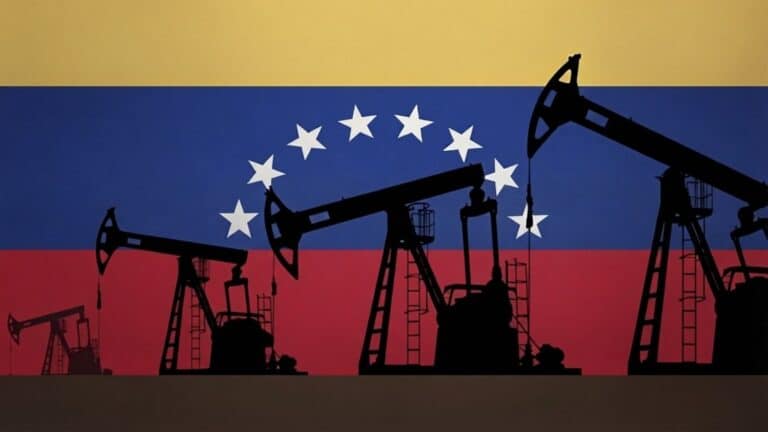
The White House announced last week an oil deal for more than 65 billion barrels of oil reserves in Venezuela and a 35% equity stake in North American Blue Energy Partners (NABEP).
Hear in-depth conversations with the world’s top energy and climate leaders from government, business, academia, and civil society.
More than six months into the war with Iran, the Strait of Hormuz crisis continues to cause turmoil in the Gulf region and global energy markets with no...

Find out more about our upcoming and past events.
Join industry leaders, innovators, employers, and emerging talent for an evening exploring the technologies, trends, and career opportunities shaping the future of climate tech.

President, The Rockefeller Foundation
Rajiv Shah:
When you look across all the sustainable development goals, whether it’s health or food security or women’s empowerment, it is actually energy access that is the key to driving progress across the board. It’s finding those areas of intervention that can at scale bring hope, opportunity, and dignity to billions of people. And that fundamentally is what The Rockefeller Foundation’s been about for a hundred plus years.
Jason Bordoff:
Energy abundance means different things in today’s global context than it did even a decade ago. It’s about expanding electricity access while meeting rising energy demand. It’s about navigating geopolitical fragmentation, limited government support, and shifting development priorities. And it is about leveraging new technologies to deliver reliable power at scale.
But the challenge is not just technological, it’s institutional and financial. Many low and middle income countries face high capital costs, limited access to financing, and policy frameworks that struggle to keep pace with growing demand. Solving this challenge is a priority for both the Center on Global Energy Policy and, of course, The Rockefeller Foundation. And together, we have launched a new high level panel to advance universal energy abundance, an idea that positions reliable, affordable energy as a cornerstone of economic growth, industrialization, and opportunity in emerging and developing economies. So what does it take to move from energy scarcity to energy abundance?
Can international institutions, governments, and investors come together to mobilize the scale of investment required? And how can emerging economies balance the urgency of expanding energy access with the need for affordability, reliability, and sustainability? This is Columbia Energy Exchange, a weekly podcast from the Center on Global Energy Policy at Columbia University. I’m Jason Bordoff.
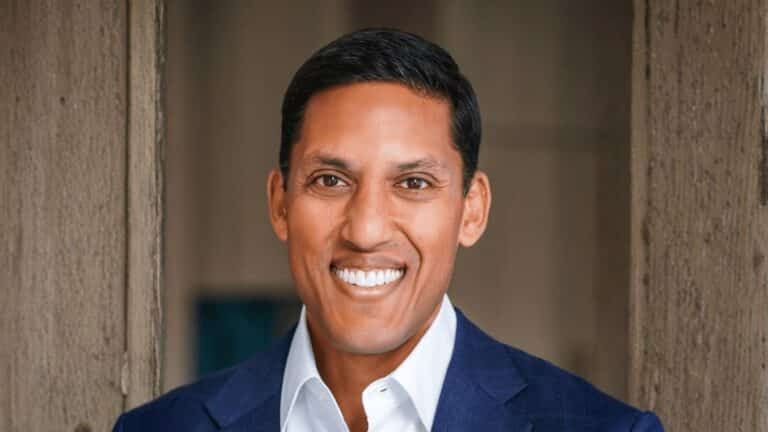
Today on the show, Raj Shah. Raj is the president of The Rockefeller Foundation, where his work is focused on ending energy poverty and ensuring universal access to food. During the Obama administration, he served as USAID administrator. He also served on the National Security Council where he elevated the role of development as part of a bipartisan foreign policy. And he previously served in the US Department of Agriculture and has held leadership roles at the Bill and Melinda Gates Foundation. Raj joined me to discuss our new initiative focused on universal energy abundance.
We talked about why making energy not only accessible, but also consistent and abundant can empower communities around the world to thrive. We discussed the new panel’s effort to build a policy framework for lenders, for governments, and for developers to drive investments in energy, to uplift billions of people globally. And we address the larger issues of conflict and climate change that make this work more difficult, but also more essential. I hope you enjoy our conversation. Raj Shah, welcome to Columbia Energy Exchange for the first time in the decade long history of this podcast. What a treat to have you on.
Rajiv Shah:
Well, thank you, Jason. Your work and the work of the group is just brilliant. I’m excited to be with you.
Jason Bordoff (00:03:18):
Thanks. I know how busy you are, so I’m grateful that you are willing to take the time to talk with us. And I’m surprised you didn’t cancel because I assume the streets of Ann Arbor are rife with celebration today because your alma mater has won the national championship and that must be top of mind for you.
Rajiv Shah (00:03:35):
Congratulations. Well, thank you. I had a long evening last night. As you would imagine, I was born in Ann Arbor, I should point out. I probably bleed blue and of course went there as an undergrad and just love it. So well earned, well earned. And honestly, a dominant performance throughout the tournament, not just one or two games. So I think history will record that this is a special team.
Jason Bordoff (00:04:03):
Well, we’ll start on some good news because there’s a lot of challenges in the world that we’re going to talk about, but congratulations to you and Michigan and all your friends and family and everything in Ann Arbor. We have a lot of things we can talk about, but the immediate purpose in coming together and having a little bit of a conversation is this really exciting announcement that our organizations are coming together this week to put out, which is a high level panel on energy abundance. And this all started when you called me, I don’t remember how many months ago. And I was just wondering if for people listening, you could sort of like play back that conversation because what I remember was points you were making about how for all the extraordinary work The Rockefeller Foundation does to promote economic development around the world, energy is central to that agenda.
And we wanted to tackle it in an ambitious and maybe innovative way. So talk a little bit about why you think energy is so central to that mission.
Rajiv Shah (00:05:03):
Well, first I’d just say the Columbia University Center on Global Energy Policy, your group is, I think, widely respected and universally known as just the best on this topic anywhere on the planet. And so that’s why I called you, other than my personal respect for you, is we take pride at Rockefeller getting to just reach out to the best people in any field and say, “We’d love to think through a difficult challenge with you.” And so that’s why that outreach was made.
Jason Bordoff:
Thank you. I appreciate that.
Rajiv Shah:
Yeah. And at the end of the day, as Chris Wright says, I agree with Chris on some things and not on some others, but I agree with him on this basic point that human uplift over hundreds of years has been fundamentally tied to access to energy, period. And so we know that energy access defines whether or not your labor can be used productively.
(00:06:04):
That’s true if you are in the United States trying to start a small AI startup out of Loudoun County, Virginia, and it’s true if you’re in Northern Nigeria and you’re a female entrepreneur with a small storefront and you need refrigeration in order to keep drinks cold and sell them to customers, if your source of power is backup diesel generation that costs 90 cents a kilowatt hour, you’re basically going to be stuck in a poverty trap that no matter how hard you work, you are deeply limited in your ability to lift your family out of poverty, you’re limited in your ability to send your daughters to school, you’re limited in your ability to be hopeful and share hopefulness about the future. And that fundamentally is what The Rockefeller Foundation’s been about for a hundred-plus years. It’s finding those areas of intervention that can at scale bring hope, opportunity, and dignity to billions of people who are not effectively participating in the human uplift that the rest of the world benefits from.
(00:07:09):
And we have concluded after a whole lot of work that energy access is the critical component to unlock human opportunity at scale throughout developing economies, and that’s why we’re so focused on that area. And that’s why we’re turning to you to figure out, how do we get others to see that opportunity and how do we do the right thing in a complex global energy economy to make sure that the few billion people that fundamentally their economic lives are defined by backup diesel generators and the cost of diesel in those settings can pivot to a much more sustainable and a much cheaper and a much more economically productive source of energy for the future.
Jason Bordoff (00:07:54):
Yeah, that’s really well said and obviously couldn’t agree more given the career spent focused on how to think about the importance of energy as a leading cause of climate change as a source of geopolitical instability, but also energy is prosperity. I mean, full stop, it is.
Rajiv Shah (00:08:11):
Absolutely. And I mean, you’ve spent a career on energy. I’ve not. I went to medical school, right? I was going to be a doctor. I got sidetracked, all this other stuff, spent a lot of time on global health, on agriculture. And what I’ve learned is what we now know from things like the Oxford multi-poverty index and all the studies that led to it, which is when you look across all the sustainable development goals, whether it’s health or food security or women’s empowerment, it is actually energy access that is the key to driving progress across the board. So what you knew instinctively a long time ago, I have learned in just the last decade and I’m thrilled to be aligned on that.
Jason Bordoff (00:08:52):
Yeah. And of course to engage in that agenda, there’s a lot of people who have spent careers on energy, but connecting such disparate groups — or sometimes disparate, they shouldn’t be — focused on economic development in the global south, focused on foreign policy and national security, and people working on energy and on climate change and sort of bringing them all together. And that’s, I know what we’re trying to do through this partnership, which I’m just tremendously excited about because of how much respect I have for you and the extraordinary work that The Rockefeller Foundation does. But as you said, energy to mechanize agriculture, to build industry, to move from two-wheeled vehicles to three and four-wheeled vehicles, to have air conditioning, keep your produce cold while you’re getting it to market or what fishermen produces. It’s just central to improving human wellbeing.
Rajiv Shah (00:09:47):
Could I say one thing about that? When we think about “what is energy access?” What you just described is what we’ve started to call productive energy access. It’s the idea that you have cheap, always on, totally reliable power to be able to pursue the activities you just described and create economic uplift for your communities. And that’s a bit different than the way the United Nations, for example, has measured quote unquote energy poverty. I mean, for a very long time, the UN has said, look, there are about 700 million people on earth who consume less than 150 kilowatt hours per capita per year, which is a light bulb and a small appliance, effectively. And that barrier, that bar is so low that it actually doesn’t capture the idea that you just described. So we think a more viable measure or indicator for our people crossing the barrier and being economically productive because of their energy access is something like a thousand kilowatt hours per capita per year.
(00:10:51):
And when you use that measure, the number of people on earth who live and work in communities below that level shoots up from about 700 million to well north of two billion. And it becomes the fundamental driver of human uplift for those who are effectively left behind in a global economy.
Jason Bordoff (00:11:11):
Yeah. No, super important point. I’m glad you brought it up because there’s, in some sense, nothing new about a focus on energy access, as you said, or electricity access. And we’ll come back to the difference between energy and electricity, but the estimate of about 700 million people who lack access to electricity at all, what we’re talking about here, we’ve created our organizations, the high level panel on universal energy abundance. And the word abundance is a little politicized now. It has different meanings, particularly in the US domestic context, but I think the point you were just making is what we’re trying to get at with this idea that access is important, but it has to go well beyond access if you want people to have enough energy for meaningful prosperity and for significant improvements in their welfare.
Rajiv Shah (00:12:01):
Yeah, that’s right. And I don’t even think of the word “abundance” as being too political. I mean, if you travel to, you saw in Nairobi in the streets when they reduced subsidies for diesel, young people were out in the streets protesting and in some forms rioting. You saw the same in Lagos and in Nigeria and we’ve seen it in country after country and we’re certainly seeing it right now with the impacts of the Iran war on energy prices. I mean, people instinctively know that if you constrain their access to energy, they are going to suffer and suffer deeply. And so if you make abundant their access energy, they’re going to thrive and be hopeful and optimistic and productive about their futures. And so in a global context, hopefully the word is not too political. It’s just something I think young people in particular instinctively understand and it drives a lot of what we see in the political environment around the planet.
Jason Bordoff (00:13:02):
And that number you threw out, I think is important for people to really understand, again, like energy access, which often is defined as making sure everyone has the 700 million people access to electricity for something like 50 to 100 kilowatt hours per person per year to charge cell phones or run a fan or turn on light bulbs. And you throw out a much bigger number, which is 10 to 20 times that amount, a thousand kilowatt hours. So I think that’s the level sometimes referred to by people as the modern energy minimum that some folks like Todd Moss have done good work about to run a refrigerator, small household appliances. Bear in mind, this is still a fraction of what … It’s about a fifth of what a country like Malaysia uses per person. So we’re not talking about suburban homes and SUVs and energy extravagance, but if you want to have, again, just a fifth of what Malaysia has, you’re talking about a number that’s 10 to 20 times larger than the amount of energy typically associated with quantifying how much energy we need for access.
(00:14:10):
That’s, I think, what we’re getting at with abundance and why those numbers are just really, really big. It takes a lot of energy to bring people to that level of small scale agricultural processes, air conditioning, things like that.
Rajiv Shah (00:14:26):
Yeah. Let me give you a really specific example. I was just in Uttar Pradesh in India in a rural community and met with a group of about 20 women who together represented a farmer’s cooperative and they had a contract with the local school feeding program to mill flour, to take grain and produce milled flour, to supplement it with the kinds of vitamins and minerals and supplements that improve nutrition and then sell it into Akshaypatra or the school meals program in India. Their incomes were about 800 rupees a month prior to getting installed solar panels. And the reason was they could run the flower mill they had for about two hours a day. They weren’t sure which two hours because the power would go in and out and they had unreliable and meager access to power. And so even though they technically would qualify as not quote unquote energy poor because they had access to power, they didn’t really have business-like productive access to reliable cheap power.
(00:15:37):
Then we helped them install solar panels and batteries on their roof, and now they have 24/7 power access. They are both paying off the infrastructure cost of installing the solar battery system, selling excess power back into the grid, earning income, and they’re running their mill at six to eight hours a day. The result of all that is their income has gone from 800 rupees a month to 8,000 rupees a month. And when you sit and talk to each of the women, you know what they said to me? They were like, “It’s not just the money. It’s like our husbands treat us differently because we’re seen as economically productive. We’re sending our kids to school.” It’s always the girls who get held back and they’re like, “Now we’re sending the girls to school and my daughter’s going to go to college.” I mean, it’s transformed their sense of dignity, hope, and livelihood.
(00:16:28):
And unfortunately, even in Indian government statistics, they would have counted as having quote unquote access to energy before, but they didn’t have access to dignity, to economic uplift, to opportunity for their kids, and now they do. And all of that is just because we were able to help them get access to reliable, productive power, which has been the game changer for that community.
Jason Bordoff (00:16:54):
And then to make the challenge even more stark, because we’re talking about access, not just access, but meaningful amounts of power, as you said, electricity, those numbers we just talked about 10 to 20 times what typically is associated with the amount of electricity for access. Now, we’re just talking about electricity and globally electricity is just over 20% of final energy consumption. Oil use is twice that amount in emerging markets and developing economies. The industrial sector dominates energy demand, and a lot of those things are harder to electrify. So when you’re looking at all of the uses that people want to have access, ability to use energy for beyond just electricity, the numbers are enormous.
Rajiv Shah (00:17:43):
Yeah, absolutely. And I would say, even if you’re looking in very low income communities, the other source that people don’t think of as much as energy, but it is, is there’s a lot of collecting firewood for cooking. And nearly 1.7 million people are estimated to lose their lives simply from constant inhalation of air pollutants related to what’s considered dirty cooking. And we see in many very vulnerable parts of the world in West Africa, Northeast India, in communities around the Amazon, in Latin America and South America, we see that that also contributes to deforestation and land degradation. It’s usually women and girls and girls in particular that are sent out to collect firewood, which is both dangerous and time consuming and backbreaking labor. And the reality is cooking fuel, as you point out, is a fuel that needs to be part of this transition as well. So I mean, across the board, you’re absolutely right.
It’s not just electrification, it’s about universal energy abundance that helps people live better lives and have more opportunity for the future.
Jason Bordoff (00:18:55):
So that’s the challenge, as hard as it is to give 700 million people access to electricity, defined by a fairly small amount of energy to give people dignity, prosperity, growth, progress requires orders of magnitude more energy than that. So that’s what’s required to really deliver meaningful economic development. And so we have some fantastic people we both work with and we’ve all come together to put together this high level panel on universal energy abundance. I just would love to hear you describe for the audience a little bit sort of what the purpose is, what success looks like, and what we’re hoping that panel will do in the coming two years or so.
Rajiv Shah (00:19:36):
I think at the end of the day, what I’m hoping the panel does is offer a roadmap to countries and to the planet for how we achieve universal energy abundance in the broader context you just described. And in doing so, I think we’ll come out of it with very specific and very practical playbooks that we can offer countries to achieve universal electrification, universal productive electrification, and a sense of how do you get beyond the debates that sort of I think tend to be misguided and help understand how to help countries basically achieve the goals in a way that’s less about politics and more about the math of what’s cheap, what’s accessible, what is sustainable, what is going to work for their economies, for the different types of productive loads they need to plan for and use. And I would just say, I think that mindset of what is the policy framework required to achieve universal energy abundance across the planet is so important.
(00:20:42):
I mean, when we created the Global Energy Alliance in 2021, and it actually got up and running in 2022, we started investing in high leverage projects around the world with the goal of reaching a billion people to move them out of energy poverty. We’ve reached 157 million already, including 44 million in Sub-Saharan Africa that are directly connected through a partnership with the World Bank we call Mission 300. But for us to really scale this to achieve the goal of universal energy abundance, it’s going to be policy, technology, and cooperation that make that happen. And I think this panel is going to set the intellectual framework and the vision for how we make that a reality.
Jason Bordoff (00:21:25):
And then a pretty geographically diverse makeup of the panel, more than half, I think are from the global south, others from various OECD countries, which I assume you agree is important because the perspectives are really different and there’s no one size fits all approach that is going to work from Indonesia to Ethiopia to pick your other regions of the world. You’re going to need to account for very different approaches that are probably taken in these different places.
Rajiv Shah (00:21:56):
Yeah. Easily the most global of any of these things I’ve ever seen and deeply public private, right? So you have folks representing huge private equity infrastructure investors in OECD economies, people representing significant renewable energy companies and developing economies and everything in between.
Jason Bordoff (00:22:18):
Yeah, absolutely. I’m wondering if in all the travel and all the work you’ve done, what strikes you as why it is important that there is that diverse set of perspectives. And again, for example, Indonesia with far flung 17,000 inhabited islands versus Ethiopia with an agriculture dominated economy, how differently do you see different parts of the emerging and developing world thinking about the importance of energy?
Rajiv Shah (00:22:47):
Well, it’s of course very diverse and very different. A piece I would add is the political economy of energy is also very diverse and very different. So in the United States, for better or worse, I would argue very much for worse. We have a sort of, in my view, antiquated debate about the technology set as opposed to a rigorous kind of math-based approach to what’s the best way to deliver, over the long-term, universal energy abundance. But you’re right, if you’re in India, for example, the math is just very different. And if you’re in South Africa, the math is different. If you’re in Nigeria, the math is different. And it also depends on the political economy of like what’s working, what isn’t working. Too often, I think for about a hundred years, or at least for 50 years, the mindset in developing economies has been, let’s quote unquote, fix our utilities because they kind of are underperforming and that will then allow us to reach everybody with energy access.
(00:23:50):
And that’s why in a place like Nigeria, what is Africa’s most populous country and will be one of the most populous countries in the world, 80% of productive power comes from backup diesel generators, from people that are not even using the grid to power their businesses. And the mindset has been, “Okay, how do we make our utilities better? And then we’re going to try to invest in expanding the grid.” That just hasn’t worked. From a political economy perspective, it simply has not worked. And so the idea that you can now replace those diesel generators with distributed renewables and create a policy framework that allows those investors, whether they are small or mid-sized or large, to sell excess power back into the grid, that’s the vision for how you expand the quote unquote grid, as opposed to waiting for the politics of fixing utilities to be the defining feature of whether billions of people have opportunity on this planet.
(00:24:47):
And I think that you could tell a different story in every different place because the politics of energy are just different in different places.
Jason Bordoff (00:24:57):
And one of the other things we have intentionally done and how we’ve constructed the people on the high level panel and also the agenda for the meetings and the recommendations and the report is an important emphasis on the range of technology solutions that are available and needed to deliver universal energy abundance. Solar panels are very cheap. There’s a lot of discussion as there should be on distributed microgrids, which can do an enormous amount of work. But if you’re talking about the amount of energy we started this conversation with, it takes a lot and you might need a much broader set of tools in the toolkit to do that. And those decisions I think need to be made at the national and subnational level, not dictated by external actors.
Rajiv Shah (00:25:39):
Absolutely. And frankly, Jason, we’re going to need your team’s expertise to help define, okay, how do countries that don’t currently have access to small modular nuclear explore that as an application? How do they expand gas as a transitional fuel in a manner that makes sense for their industrial economies, but in a context where because of the larger debates, often investment has been slow or stuck. What is the role of fossil fuels and oil and gas and heavy fuel oil in the future? I mean, some of these economies are still very, very dependent on heavy fuel oil, obviously have become hugely vulnerable to things like the Iran crisis and war that are currently defining energy markets. And so how you create resilience to those types of shocks is also going to be important, and this panel and your team will be able to help us understand what types of tools are at our disposal.
(00:26:43):
And frankly, I think especially for the global context, really understanding that the future is going to be defined by some combination of concessional finance from development banks and local sources of revenue turned into public investment, but largely by private investment, whether that’s local currency denominated private investment or external private investment, that’s going to create some boundary conditions, right? And I think this panel will have to be very realistic about, okay, how are we going to finance the energy transition and the energy abundance we need for the future?
Jason Bordoff (00:27:21):
Yeah, really important points. And we do really want to make sure that we’re thinking about the frontier of energy technology, where things are headed, while being sensitive to the fact that it may ring hollow in parts of the world that use very little energy, did not cause the accumulated emissions problem that we have to date with climate change to say, “Forget coal, go build a small modular reactor” when we’re barely doing that in wealthier countries. But we’re trying to think in a forward-looking way, a decade from now, like beyond what’s on the horizon. And as you said, trying to really grapple with hard tensions. You mentioned at the beginning of the conversation, I agree, our Secretary of Energy, Chris Wright, talks about how much energy it takes to deliver real prosperity to the world, not just access, but abundance, productive energy access, and that is true.
(00:28:10):
It is also true that if you do all of that with oil, gas, and coal, there is environmental and climate implications of that. I think on the other end, there’s sometimes too much people aligning the tensions or the difficult realities that, yes, solar is very cheap and you can do a lot with deploying solar and renewables, but maybe that’s not fully sufficient to meet the level of energy growth we’re talking about. And in my view, tell me if you agree, there actually is a real tension between those two things and we’re going to want this high level panel to engage with that, to grapple with it and kind of put it out there.
Rajiv Shah (00:28:47):
Yeah, I totally agree. I actually think, to be quite honest, I look around at other efforts to think this stuff through, and a lot of it feels like it starts from ideology and ends up with dictates. And I think we have such a talented global group that we’re going to be … And we have the best in class kind of analyst and analytic team in partnership with Columbia University. So I feel like we have the ability to start from what is the goal, universal energy abundance, a clear understanding of that goal includes the two plus billion people who we would define as not having access to the kind of productive power that enables economic viability and growth, and then say, “Okay, how do we solve this problem analytically? What are the best ways to do that?” And when I look at the list of people, I mean, it’s extraordinary group of collaborators and there’s not a person in the group that starts from a deep, firm, ideological basis.
(00:29:52):
No matter their position, they start from a, “How do we solve this problem?” So I think we’ve defined the problem quite well. And now we have the opportunity to produce for the world a set of solutions that are pretty fundamental.
Jason Bordoff (00:30:05):
Yeah. And as you said, sort of looking at the numbers, not starting with ideology, but just kind of figuring out what the analysis shows. The conversations reminding me, I had my friends Junita Norain on this podcast not long ago who’s one of the leading environmentalists in India, spent our life working on environmental issues and deeply focused on how to deploy more renewables, reduce local air pollution and carbon emissions in India and says, and there has to be a role for natural gas in this transition to meet the amount of energy that a country like India needs. And then you say, “Well, how do we think about the carbon emissions impact of that? The fact that the carbon budget is finite?” Her response is, “Well, you guys created this problem. Maybe if the world has a 2050 goal that needs to be averaged out and for us it’s 2070. For you, it’s 2035.” Those are difficult conversations to have. But I think it’s why it’s really important that there’s such a diverse set of perspectives and regions represented on this panel.
Rajiv Shah (00:31:04):
Yeah. And look, I used to run USAID, as you know, which now no longer exists. And to me, it’s a lesson that the kind of development and the international cooperation architecture we built up over 80 years to help countries grow and develop their economies has collapsed to some extent, has been reduced quite significantly and needs to be reimagined in a different context. And I think the context is the one you just described, which is, look, we know we only solve climate change if we work together as a global economy. And we know that countries that are going to dramatically increase their per capita energy consumption over the next 20 years are perhaps the biggest lever we have to preventing the carbon math from causing catastrophic challenges in the future. And yet, I think we now know very clearly that the only way to be effective on the fight against climate change is to make sure it delivers hope and opportunity for people, period.
(00:32:13):
And so if you go to that woman in Northern Nigeria or that woman running that flower mill in Northeast India or a group of kids that are trying to study in Eastern Congo and getting their power from where they get their power, and you tell them, “We have an idea, you stay poor and we will rely on your poverty to contribute to the climate math.” That’s not going to be a viable solution, period. So we have to come up with solutions that say, “We understand that the priority needs to be your sense of hope, optimism, and opportunity. And we can be smart and sophisticated enough as a global community to deliver that in a way that also achieves the goals of protecting our planet.” And I mean, you guys have been dealing with this for a long time, but that has to be the frame for the conversation.
Jason Bordoff (00:33:06):
Yeah, I think that’s right. Thinking about how much energy it takes, the full set of fuels that people will turn to for that and being honest about what the math looks like, and then thinking about how to design approaches that work for all of our goals, energy abundance and prosperity and sustainability and decarbonization. And we’re in a new world now, as you know, with something I’ve written a lot about, of issues of energy security being more top of mind. You could imagine some parts of the world thinking coal provides a lot of energy security and that’s a domestic source. It also creates a lot of jobs and we’re going to have to meet countries where they are and have those conversations about the choices that different countries are going to make as we try to move forward.
Rajiv Shah (00:33:52):
Yeah. I mean, and I assume we’ll debate this in the context of the panel and you’ll have a lot of information to share on it, but I’m assuming when I talk to leaders around the world and heads of state, what I hear is that investments in the build out of new infrastructure related to technologies that are seen as largely of the past, whether it’s coal or heavy fuel oil, are just less attractive as commercial investments, that investors understand where the future is going. And so that is going to be a defining component of how we think about what optimal energy mix looks like in the future. I don’t know if you agree with that or you see the same thing, but it’s pretty stark to me that even if, and this is probably where I disagree with our current energy secretary in the US, but even if there’s advocacy for things, just like when there was advocacy for say distributed solar when it costs a dollar a kilowatt hour and people are like, “Oh, this is great because it’s clean,” that didn’t make any sense. In the same way, advocating for new coal infrastructure build out when that is a much higher upfront capital cost investment than cheaper alternatives seems to me to be unlikely to be persuasive.
Jason Bordoff (00:35:18):
Yeah, no, no, I don’t disagree at all. I think the thing I’ve been thinking about with our friend Meghan O’Sullivan and writing about is in a world where energy is increasingly weaponized. Again, countries are more cognizant of energy security risks that may … What does that lead to, this dynamic? And do countries look to reduce exposure to volatile global markets, to produce more energy at home? For many that’ll mean electrifying more things, trying to reduce trade and imports that I think one hopes that that would mean maybe trying to reduce oil and gas use and electrify more of your economy and produce that electricity with domestic sources like solar and wind. But to think about for countries like Indonesia or South Africa or elsewhere there are countries that have a lot of coal and it’s pretty cheap. And I do see, I want the high level panel to engage with this issue, the way in which political economy, the employment that’s created, the jobs that’s created, and does an energy security focus make things better or worse change the way countries think about the choices they make?
(00:36:25):
Recognizing, as you said, that the good thing is that solar’s quite cheap. It is also the case that there’s a set of energy security risks that people are thinking about with supply chains and do you want to increase your dependence, say on China, which produces 70, 80, 90%, a lot of those clean energy technologies. We’ve seen Pakistan move in that direction, largely because of choices consumers and businesses have made, not necessarily the government, which actually did try to move more in a cold direction and others will think differently about those risks. So I guess what I’m saying is those are, I think, factors that are maybe evolving as the world thinks a little differently about energy security in this kind of new world of fragmentation and competition and conflict that unfortunately we seem to be moving toward.
Rajiv Shah (00:37:12):
Yeah. And I think supply chain resilience, which became such a catchphrase coming out of COVID, is going to be a catchphrase coming out of the Iran conflict, right? So I was just looking at Zambia and they will spend 30 times what it would cost to create a real electrified mobility strategy for the country on fuel imports over the same period of time, and they get it. So they’re coming to us and saying, “Help us make the investment now to be less dependent on global fossil fuel markets in the future.” And that will mean moving our mobility from fossil fuels to electricity and we’re willing to make those investments now in cooperation with Rockefeller and the World Bank and others. And I think you’re going to see that trend in place after place after place. The other thing I think you’re going to see is a real desire as we’re doing in the United States and as they’re doing in India to just build components of the renewable energy supply chain domestically.
(00:38:20):
In those cases, it’s battery manufacturing and obviously it heightens the challenge around critical minerals access, but our panels should explore how viable it is for countries to invest in their own resiliency of supply. In COVID in Africa, they concluded after that horrific experience that, okay, we’re not sure we can trust the global supply base, and so we need our own domestic production, even if it’s seen as somewhat inefficient on a relative basis, simply to protect us from the risks of the fragmented and hyper competitive everyone in it for themselves kind of global geopolitical world we’re entering or in, depending on your perspective.
Jason Bordoff (00:39:07):
And to that point, this high level panel, this topic, how to achieve affordable energy and very large amounts of energy, again, beyond access to give people better standards of living, that seemed incredibly important when we talked about it a year or so ago, but when you’re in one of the worst energy crises we’ve seen and energy prices are soaring right now for lots of people around the world, some can cope with those higher costs, even if there are fiscal challenges in Europe or China or elsewhere, but in lower and middle income countries, we’re seeing real fuel rationing, closing schools, shedding economic activity. It’s really quite devastating. I assume you’re seeing that in the economic development, your work you’re doing day to day right now.
Rajiv Shah (00:39:53):
Absolutely. I would add that, and just like climate change overall has its harshest impacts in the most vulnerable and lower middle income countries around the world by far, we are seeing exactly that with the current oil crisis. I mean, in addition to what you just described, the countries we work in on food security are deeply concerned about a continued closure of the Strait of Hormuz, yielding 20, 30% increases in the price of imported fertilizer and therefore transmitting 20, 30 plus percent increases in the price of grain in countries that are import dependent and fiscally challenged. And those are the types of things. Last time we had a food crisis where prices achieved that level of transformation was probably 2008. And in 2008, there were 46 episodes of political violence in developing countries around the world tied fundamentally to food and energy shocks. And I think we’re going to see something like that again if the strait remains closed and the planting season is affected by accessed fertilizer in this context.
Jason Bordoff (00:41:09):
Yeah, that’s a pretty bleak outlook for parts of the world that were deeply struggling already. I’m glad you brought up sort of climate impacts too, because that’s a really important part of this. And again, you mentioned our Secretary of Energy, Chris Wright at the start. And I remember a piece he had in The Economist when he first took office about the importance of energy for human prosperity and for global development. And a lot of it I was right, I agreed with, and fossil fuels today are 80% of the global energy mix and they play a big role. And then at the very end of the piece, there was a comment like, “So I’m willing to accept the modest trade off of climate change in exchange for all of that human prosperity.” And I remember thinking, “I don’t think the trade off is that modest, but it’s especially, it’s going to hit the parts of the world that we’re talking about and trying to think about hardest.” So that is important to remember when we talk about the tensions between how you meet all of this energy demand growth to the climate change impacts we’re already seeing and we know are going to intensify over time. Those hit lower income countries harder than the rest of us.
Rajiv Shah (00:42:13):
Yeah. I’ll give you two very precise examples. Small shifts in sea levels cause inconveniences and fiscal problems in wealthy economies and they wipe out the living standards and the homes of hundreds of millions of people from Bangladesh going south, again, all directions in developing and emerging economies. Similarly, hotter, drier growing conditions create relatively modest challenges for farmers and production in highly mechanized, high input, wealthier economies, and they threaten to create 30% reductions in food production in the places where that food production is most closely tied to an annual hunger season and most inhabited by the 820 or so million people who go to bed hungry every night. So at the end of the day, it is developing in poorer countries that by far and away experience the human toll of climate change in a way that’s pretty fundamental. And again, I’ve come to the conclusion after working on this issue for a long time, that talking about it in the context of degrees of temperature is an absolute disaster, but-
Jason Bordoff (00:43:33):
Even better in Celsius.
Rajiv Shah:
Exactly. You could get your iPhone out and try to figure out what that actually means. And on a cold day, it sounds appealing. The bigger issue is talking about in the context of what does this do to people’s lives? And if your family goes hungry because your food production has been threatened as a result of changing weather patterns, you don’t have to have a huge kind of intellectual debate about climate change or even what causes it to know that we need to deal with that consequence in very human terms. And I’m telling you folks, especially in developing economies, understand this instinctively, which is why you can actually say, let’s have an energy strategy for energy abundance for your country that is also part of the solution. We don’t want you to have undue burden of solving the problems that rich countries created, but we want to do something that’s sustainable for the long term for you because you understand the linkage.
Jason Bordoff (00:44:37):
Yeah. And I imagine many of those folks you’re talking about that you engage with all the time are seeing the impacts of climate change, seeing how much energy they need and saying, “You guys created a lot of this problem and so you have to help us.” And that takes us to the point about finance. And I’m curious what you would like to see this high level panel do and like, how to engage with the question of finance, which is not a new one, but what remains difficult, unanswered? What are the kind of critical dimensions of how to finance the energy abundance agenda that you want us to engage with?
Rajiv Shah (00:45:16):
Well, others will probably have more sophisticated answers, but I think there are at least three big questions we have to ask and answer. First is, to what degree is public investment a component of the solution going forward? Because there is this mindset that, oh, this should just be private, this is all private infrastructure investment, let’s see what works and let’s try to make it happen and here are the barriers you have to deal with to get private money to flow. All of that is true, but it is still the case that every place on earth that has achieved universal energy access, forget about abundance, just access, has done it with massive amounts of public investment. Here in the United States, for example, we had window after window of building out rural energy infrastructure and public energy infrastructure that allowed almost every American to have unfettered access to electrification and energy broadly.
(00:46:09):
So that’s one. A second is, I do think there’s a very real need to look at what are the challenges threatening real private investment or commercial investment in energy infrastructure, whether that is small scale or large scale infrastructure. And I think we’re going to find that a lot of the barriers are macro barriers. So currency risk, for example, which is not really only tied to the energy sector, but it does present a huge constraint on what becomes possible. And if that makes foreign direct investment far less likely, then how do you motivate more local currency investment and what are the instruments that we can create and expand that make that viable? And then third is transfers. Obviously a huge amount of the global development institutional cooperation that came out of World War II was focused on building infrastructure and developing countries. We stopped doing that and then China became the world’s largest financier through its belt and road initiative, a trillion dollars of largely bad lending tied to opaque rights that they claimed on everything from critical minerals to many, many other elements of assets that countries claim to have and a lot of corruption embedded in those projects and those transactions.
(00:47:31):
But we do need some sort of a capacity to cooperate on a global basis to make this possible. It’s happening in the context of a very real debt crisis that’s unfolding across 40 or 50 lower and middle income countries where in those countries they’re spending more on debt service payments than they are on health and education domestically. And they’re doing that because of the interest rate transformations that happened after COVID, which happened because wealthy economies put so much capital into the markets to protect their own economies, which developing countries were not able to do. So we have to tackle those kind of transfer issues in a very real way and have some point of view of what the solutions in that space might look like.
Jason Bordoff (00:48:18):
You’ve used the word cooperate a few times now, developed and developing economies, public and private sector, and I’m just wondering if you could look at the world we’re in and tell me if that is an antiquated notion or how should the high level panel address the need for cooperation and the reality that we’re in a world that seems to be more fragmenting and competitive and conflict prone than it’s been in a long time.
Rajiv Shah (00:48:47):
Yeah. I think it’s cooperation in the context of a new world order, right? And I don’t believe that the answer is middle income economies or the middle powers to quote the Canadian leader, Mark Carney, coming together to kind of do what they can to solve the world’s problems. That may be part of the solution, but it certainly isn’t going to fix the problem. I think fixing the problem in this context is getting almost everybody understand that cooperation in the context of achieving energy abundance is mission critical to having a safe, secure, and prosperous global economy, and that we each have a huge stake in creating that future. And do our current politics allow us to get there? I don’t really know, but my sense is, I mean, I don’t know how this war will end, but at some point it will. And when it does, we’ll look back and say, “What could we have done to prevent these kinds of conflicts going into the future?” And part of the answer is creating the real global cooperation that countries and peoples know are in our self-interest.
(00:50:05):
The Rockefeller Foundation did a poll of 36,000 people in more than 30 countries, the United States and African economies included. And we found that a vast majority of people want to see more global cooperation, not less. The vast majority of people want to see, more than 90% want to see more cooperation on things like health and food and things that have an underlying humanitarian bent and aura and not less. And that more than 60% want to see more cooperation, even if it costs them resources and even if it’s seen as costly, so long as it’s delivering results. So I think for the panel, I think we have to be results oriented. We have to say that here’s the plan. It requires real cooperation working together, but that cooperation can deliver quantitative and real results that are transparent to the public. And too often, we’ve relegated this work to like experts and world leaders and institutional leaders and heads of state without putting enough effort into making sure we’re being rigorous and transparent about delivering results and making that apparent to people.
(00:51:23):
I mean, I’ve been in black churches in Detroit and evangelical communities in rural Georgia, having this conversation where people say, “Well, gosh, we have so many problems at home. Why are you giving money abroad?” And you say, “Okay, well, we spent this much money, but we saved 36 million lives from HIV/AIDS and protected 14 economies from collapsing in that context. And here’s what that looks like. And by the way, that costs less than 1% of the public budget.” And then folks, the same folks in different parts of this own country say, “Well, why aren’t we doing more? Why are you only doing half of 1% of the federal budget?” And so a lot of this comes down to transparency and demonstrating results and helping, showing people the respect of communicating with them transparently about what you’re trying to do. And I would say that that has to be a part of the mission of this panel.
We can’t just produce something for elites. It has to be something that it becomes broadly accessible and widely accessible to people who want to learn more.
Jason Bordoff (00:52:27):
You’ve answered this question many times before, I know, but what does it look like to do that kind of work you just described moving forward, given that the agency you led in government no longer exists?
Rajiv Shah (00:52:41):
Well, look, an agency is one element. I mean, it’s a lot of lost expertise. It’s a lot of lost institutional capability, and frankly, it’s a lot of lost trust. So when I travel around the world, folks say, “I don’t know if I can trust America. At least the Chinese are here and they’re engaging. And I know if I do a transaction with them, I get my stuff.” And so that trust was built up over 80 plus years after World War II in the context of American values and what it meant to be American. And the idea that this simple concept that dignity is in fact universal and inalienable, it is fundamentally written into America’s founding documents, but it’s also something people everywhere on the planet are inspired by. I mean, you give the choice to a kid who’s come out of a conflict in Eastern Congo or a kid who lives in the Amazon area of Brazil and you say, “Do you want to live in a world defined by those American values or do you want to live in a world defined by more authoritarian values?” The answer is undisputed, it’s American, but we’ve lost a lot of trust and we’re going to have to rebuild that the hard way, I suspect, by showing through our actions, government and private sector, that we are in fact that shining city on the hill.
Jason Bordoff (00:54:06):
And we obviously don’t know how this conflict in the Middle East, this war, is going to end. And we’ve talked a little bit about the food and energy implications of it, but I’m curious your reflections more broadly, not knowing yet how this will unfold, but what do you think some of the longer term implications of what we’re seeing with the war in the Middle East will be for the kind of work Rockefeller does every day?
Rajiv Shah (00:54:25):
Well, I think twofold. One is I was at the Munich Security Conference as you were, and the work you did there was so important to help people see what’s at stake, but I came away with an impression that NATO itself was now defined by an underlying sense of mistrust or an underlying anxiety about whether that alliance will in fact be there operationally when it matters. And I don’t know how to articulate this, but suspect that one of the consequences of this conflict will be further undermining the Atlantic Alliance and NATO, which has been so important to both our security and our sense of common purpose on global and humanitarian affairs. And so I think that’s one consequence. I think another consequence is we are, I believe, if this conflict continues, if the strait remains closed, even for another few weeks, the FAO is saying, if it’s closed for another two weeks, we’re going to miss planting seasons in many parts of the planet and have a long term or a 9-12 month consequence related to food crises.
(00:55:44):
And it’s going to happen in a world where we’ve already dismantled a lot of our humanitarian capacity to help people when they’re hungry. 54 kids died in a refugee camp earlier this year because ready to use therapeutic foods that were nearby in Southern Kenya were not legally allowed to be shared with these children, and so they perished. And that’s an extreme example of acute malnutrition, but on a more modest scale, even subacute malnutrition, which is the usual consequence of these food price shocks, is now something we’re no longer able to deal with as a humanitarian community. So I think we’re going to see some real challenges that start to create instability and anger and resentment. And in my more optimistic days, I’m hopeful that we will come together as a planet and deal with that with the kind of values that we came out of World War II with and the kind of confidence that we used when we signed the Atlantic Charter and the kind of courage we showed when we established some of the norms that are now being threatened through the UN, but only time will tell.
Jason Bordoff (00:56:54):
We’re just about out of time, but I was curious just to come back to, you mentioned Loudoun County earlier in the conversation and I’m curious how you see this. And we also talked about the frontier of technology, the artificial intelligence revolution, which may change the way we all figure out what recipe we’re going to make for dinner or other applications in work and advanced economies. But when you’re looking at the developing world and the humanitarian agenda of Rockefeller, how do you think about the role AI is playing, will play?
Rajiv Shah (00:57:22):
Yeah. Or whether we even have jobs laughing about it, but it’s very real, right? Well, I think for our panel, when we conceive the panel, I don’t think we imagined that a middle class family in Loudoun County, Virginia would have as one of their top three issues on their mind, energy access and energy costs. And now they do because as a share of their disposable income, their energy costs have gone up by a factor of three over just a five-year window and there’s no relief in sight. And I just think in an AI oriented economy on a global basis, access to abundant energy is access to your economic future. And if you price it, if many people feel priced out of that future, they’re going to be deeply resentful and it’s going to define a very, very different kind of world we live in. And so the good news is I think many, many, many more people are aware of how important energy security, energy access, energy pricing and energy abundance are to their future.
(00:58:37):
And the bad news is we’re now facing such accelerated demand for energy from the AI transformation that we have to factor that into our vision of what energy abundance actually is and how it can be delivered.
Jason Bordoff (00:58:54):
Anything we didn’t cover or any final word you want people to take away from this about what the purpose of bringing these organizations together to create this high level panel is?
Rajiv Shah (00:59:03):
Yeah. Well, no, I mean, my final word is really what is what you do every day. I mean, I think we have faith in people, right? We all believe that people coming together from all across the world, public and private, with real knowledge, data, expertise, with the engine of Columbia University and the Center on Global Energy Policy, that that can make a huge difference for the world.
Jason Bordoff (00:59:29):
Raj, you’ve had such a remarkable career bridging public service and philanthropy and always doing it from a place of rigor and impact to tackle some of the most complex global challenges. So really excited to bring our organizations together and grateful to you for making the time to talk with us today as we launch the effort this week.
Rajiv Shah (00:59:47):
Well, thank you, Jason, for your leadership and for making sure this panel becomes a huge success, not just for all of us, but for the world.
Jason Bordoff (00:59:55):
Raj Shah, thank you so much. Thank you again, Raj Shah, and thanks to all of you for listening to this week’s episode of Columbia Energy Exchange. The show is brought to you by the Center on Global Energy Policy at Columbia University. The show is hosted by me, Jason Bordoff, and by Bill Loveless. Mary Catherine O’Connor, Caroline Pitman, and Kyu Lee produced the show. Gregory Vilfranc engineered the show. Special thanks to Jon Elkind and Calli Obern for their support.
For more information about the podcast or the Center on Global Energy Policy, please visit us online at energypolicy.columbia.edu or follow us on social media @ColumbiaUenergy. And please, if you feel inclined, give us a rating on Apple or Spotify or wherever you get your podcasts. It really helps us out. Thanks again for listening. We’ll see you next week.
Energy abundance means different things in today’s global context than it did even a decade ago. It is about expanding electricity access while meeting rising energy demand. It is about navigating geopolitical fragmentation, limited government support, shifting development priorities, and leveraging new technologies to deliver reliable power at scale.
But the challenge is not just technological. It is institutional and financial. Many low- and middle-income countries face high capital costs, limited access to financing, and policy frameworks that struggle to keep pace with growing demand.
Solving this challenge is a priority for both the Center on Global Energy Policy and the Rockefeller Foundation, which together have launched a new high-level panel to advance universal energy abundance. This initiative positions reliable, affordable energy as a cornerstone of economic growth, industrialization, and opportunity in emerging and developing economies.
So what does it take to move from energy scarcity and toward energy abundance? Can international institutions, governments, and investors come together to mobilize the scale of investment required? And how can emerging economies balance the urgency of expanding energy access with the need for affordability, reliability, and sustainability?
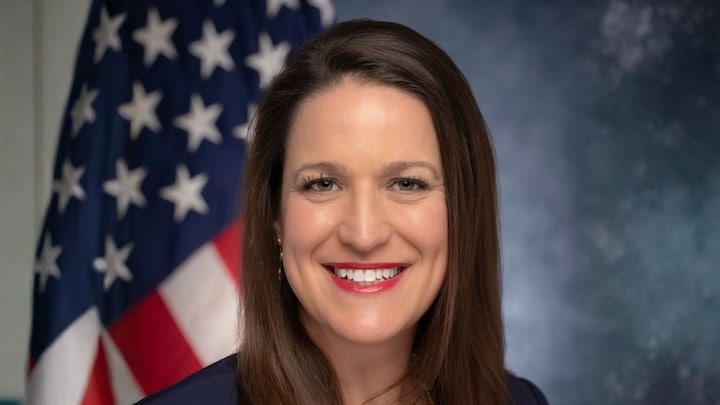
Today on the show, Jason Bordoff speaks with Rajiv Shah, president of The Rockefeller Foundation, about the high-level panel on universal energy abundance and its goals.
Rajiv leads The Rockefeller Foundation’s mission to promote the well-being of humanity by ending energy poverty for more than a billion people, ensuring universal access to food, and strengthening health systems. During the Obama administration, he led the US Agency for International Development as its administrator. He also served on the National Security Council, where he elevated the role of development as part of a bipartisan foreign policy. Earlier in his career, Rajiv developed programs to address climate change and global food security at the US Department of Agriculture and held leadership roles at the Bill & Melinda Gates Foundation.
More than six months into the war with Iran, the Strait of Hormuz crisis continues to cause turmoil in the Gulf region and global energy markets with no...
It's been a tumultuous year for Venezuela, marked by political upheaval and deadly earthquakes. Then, in late August, the Trump administration announced a deal for over 65 billion...

Advanced technologies, a return to domestic manufacturing, and the race to control energy production while also confronting surging demand for electricity—all of these factors mean that for the...
Energy abundance means different things in today’s global context than it did even a decade ago. It is about expanding electricity access while meeting rising energy demand. It...

The economic and humanitarian consequences of the June 24 twin earthquakes in Venezuela continue to emerge.