This website uses cookies as well as similar tools and technologies to understand visitors’ experiences. By continuing to use this website, you consent to Columbia University’s usage of cookies and similar technologies, in accordance with the Columbia University Website Cookie Notice.
Caracas se vê novamente beneficiada por uma alta no preço do petróleo com a guerra na Oriente Médio, mas resta saber se saberá aproveitar a oportunidade, defende a pesquisadora e ex-presidente do conselho da Citgo Luisa Palacios
The conflict in Iran is a reminder of how quickly global energy markets can be disrupted. It also underscores why advances in things like battery technology — from...
This roundtable is open only to currently enrolled Columbia University students. To register, you must sign in with your UNI. Join the Center on Global Energy Policy’s Women...
Event
• Center on Global Energy Policy
1255 Amsterdam Ave, New York, NY 10027
About Us
We are the premier hub and policy institution for global energy thought leadership. Energy impacts every element of our lives, and our trusted fact-based research informs the decisions that affect all of us.
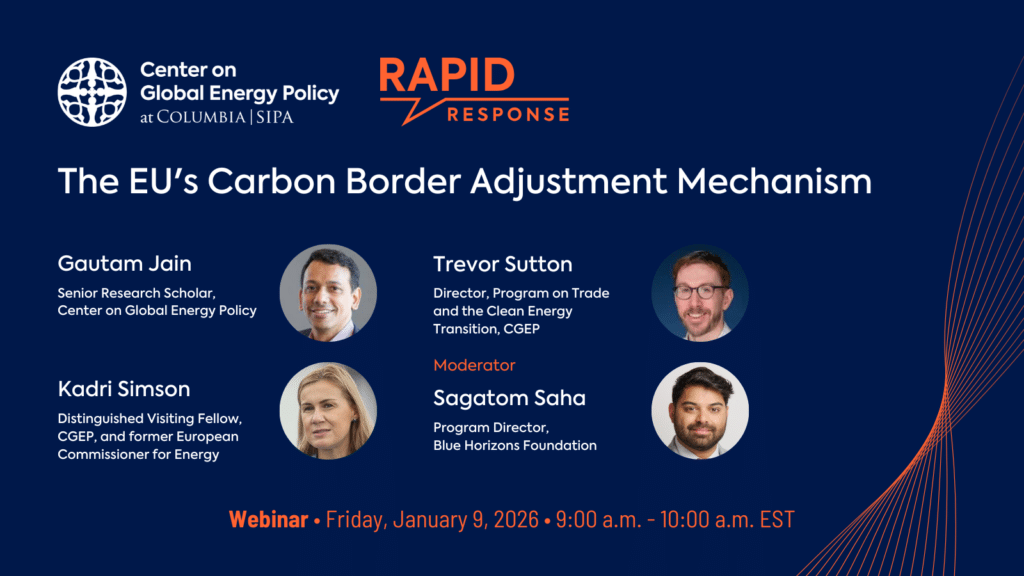
Rapid Response: The EU’s Carbon Border Adjustment Mechanism
Past Event
January 9, 2026
9:00 am - 10:00 am est
Share
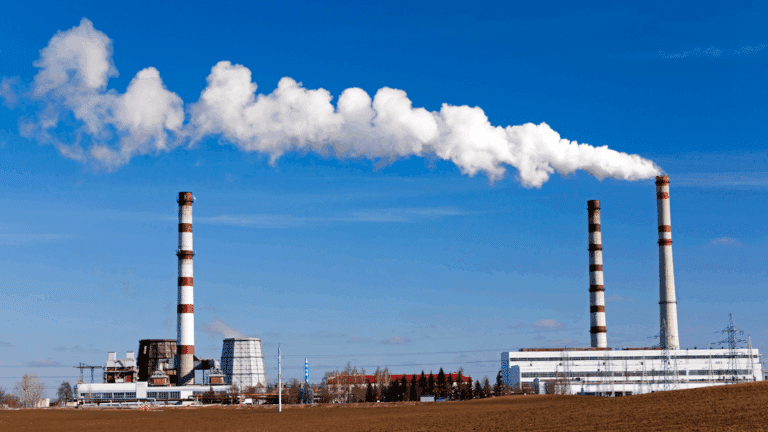
On January 1, 2026, the European Union’s highly-anticipated Carbon Border Adjustment Mechanism (CBAM) will take effect. Introduced in 2023, CBAM will require the importers of certain carbon-intensive goods to pay for the emissions that were generated in their production.
The policy is the first of its kind anywhere in the world and a major use of the EU’s trading power to hold countries to account for their carbon emissions. However, CBAM’s rollout has been met with concerns about how emissions will be measured and higher costs for smaller producers that may have trouble complying.
On December 17, the EU announced several revisions to CBAM. The policy could have huge implications for governments, businesses, and consumers.
Join experts from the Center on Global Energy Policy at Columbia University SIPA for a virtual webinar on how CBAM works, arguments that have been made for and against the policy, and how its implementation is expected to unfold.
Panelists include:
Kadri Simson, Distinguished Visiting Fellow, CGEP, and former European Commissioner for Energy
Gautam Jain, Senior Research Scholar, CGEP
Trevor Sutton, Director, Program on Trade and the Clean Energy Transition, CGEP
Sagatom Saha, Blue Horizons Foundation (moderator)
This public event will be hosted via Zoom. Upon registration, a confirmation email will be sent to you with the Zoom access link for the briefing.
For more information about the briefing, please contact [email protected].
The Center on Global Energy Policy at Columbia University SIPA is pleased to host a virtual webinar with experts from Kenya, India, and Brazil to discuss and better understand the landscape...
Join us on February 25 for an in-depth, student-only conversation. Registration is required, and space is limited. The Center on Global Energy Policy at Columbia University SIPA’s Women...
Event
• Center on Global Energy Policy
1255 Amsterdam Ave Floor 1, New York, NY 10027
Center on Global Energy Policy (CGEP) at Columbia SIPA, the Columbia Global Center in Rio, and Insper are proud to host a high-level discussion on the future of...
Event
• R. Quatá, 300
Vila Olímpia, São Paulo
Brazil