“Everything up in the air”: LNG, the Strait of Hormuz, and Central & Eastern Europe’s energy future
"LNG shipments to Central & Eastern Europe are reliable as long as those gas markets are not overly dependent upon one supplier."
Get the latest as our experts share their insights on global energy policy.
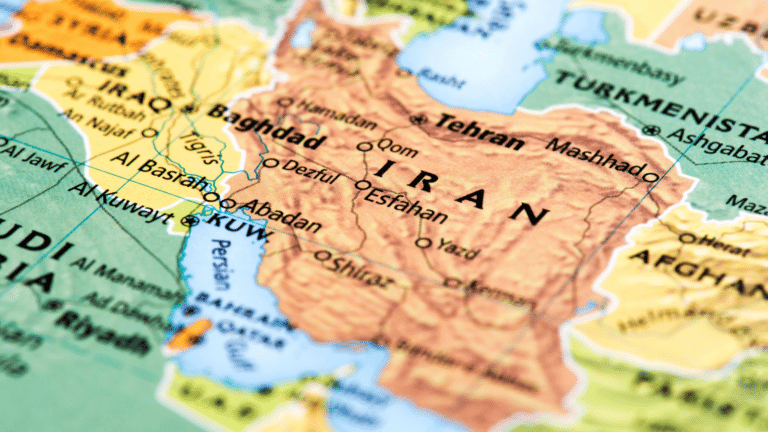
On February 28, the US and Israel launched new attacks on Iran targeting primarily the country's leadership, security forces, and missile program.

Hear in-depth conversations with the world’s top energy and climate leaders from government, business, academia, and civil society.
The global order that shaped the past several decades is giving way to a more fragmented and uncertain world. Long-standing alliances are under strain, economic integration is giving...

Past Event
November 2, 2016
3:00 pm - 5:00 pm
Please join the Center on Global Energy Policy, the Sabin Center for Climate Change Law,a nd The Earth Institute of Columbia University for a conversation with physicist Amory Lovins. Mr. Lovins, consultant to business and government leaders, is cofounder and Chief Scientist of Rocky Mountain Institute. He’s written 31 books and 600 papers, and received the Blue Planet, Volvo, Onassis, Nissan, Shingo, Zayed, and Mitchell Prizes, MacArthur and Ashoka Fellowships, 12 honorary doctorates, the Heinz, Lindbergh, Right Livelihood, National Design, and World Technology Awards, and Germany’s Officer’s Cross of the Order of Merit.
More than a month into the Iran conflict, the United States and Iran are at a critical inflection point.

This roundtable is open only to currently enrolled Columbia University students. To register, you must sign in with your UNI. Join the Center on Global Energy Policy’s Women...

This roundtable is open only to currently enrolled Columbia University students. To register, you must sign in with your UNI. The Center on Global Energy Policy (CGEP) at...

This roundtable is open only to currently enrolled Columbia University students. To register, you must sign in with your UNI. The Center on Global Energy Policy at Columbia...

In March 2012, Israeli Prime Minister Benjamin Netanyahu arrived in Washington to press a US president on slowing Iran’s nuclear ambitions. Inside the White House, the dilemma was stark.

On February 28, the US and Israel launched new attacks on Iran targeting primarily the country's leadership, security forces, and missile program.