Could a strategic lithium reserve kickstart US supply chain development?
NEW YORK -- A strategic lithium reserve is being mooted as a solution to stabilize volatile prices that have hindered American mining projects, allowi
Current Access Level “I” – ID Only: CUID holders, alumni, and approved guests only
Get the latest as our experts share their insights on global energy policy.
This Energy Explained post represents the research and views of the author(s). It does not necessarily represent the views of the Center on Global Energy Policy. The piece...

Hear in-depth conversations with the world’s top energy and climate leaders from government, business, academia, and civil society.
Over the past week, President Trump has intensified pressure on Venezuelan president Nicolás Maduro by targeting the regime’s economic lifeline—oil. The United States has seized two oil tankers...

Find out more about our upcoming and past events.
On January 1, 2026, the European Union's highly-anticipated Carbon Border Adjustment Mechanism (CBAM) will take effect. Introduced in 2023, CBAM will require the importers of certain carbon-intensive goods...
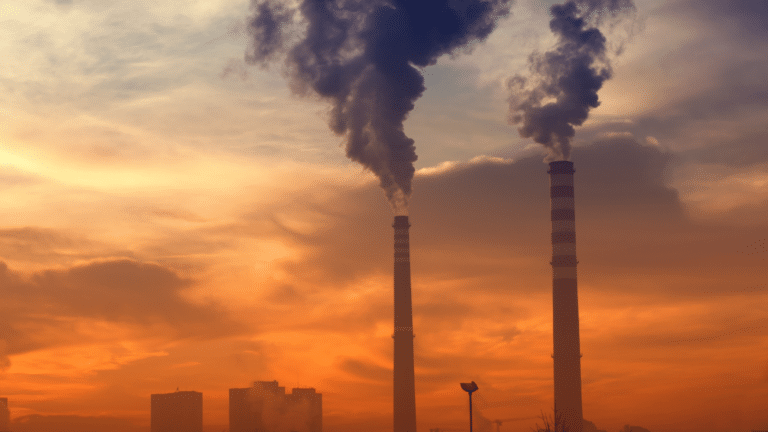
Fifty years ago this week, 20 million Americans came together to march for the planet, demanding action to clean up America’s waterways and air and protect public health. Their efforts launched the first Earth Day and the modern environmental movement. This week on the Columbia Energy Exchange, we reflect back on the U.S. environmental movement in 1970, examine the movement’s successes in reducing pollution, and find lessons for addressing the existential environmental issue of our time — climate change.
To celebrate this historic milestone, we have a special double episode of Columbia Energy Exchange featuring conversations with two champions of the environmental movement — one Republican, one Democrat. On Monday, host Jason Bordoff spoke with former Environmental Protection Agency administrator for President George H.W. Bush, Bill Reilly. And today, he speaks with his former Obama Administration colleague, Gina McCarthy.
Gina served as the 13th administrator of the U.S. Environmental Protection Agency in President Obama’s second term, after serving as assistant administrator for EPA’s Office of Air and Radiation in the first term. Earlier this year, she became president and chief executive officer of the Natural Resources Defense Council, one of America’s most important environmental organizations, founded the same year as the first Earth Day — 1970. Earlier in her career, she held senior environmental policy roles in the state governments in Massachusetts and Connecticut, serving as commissioner of the Connecticut Department of Environmental Protection, deputy secretary of the Massachusetts Office of Commonwealth Development, and undersecretary of policy for the Massachusetts Executive Office of Environmental Affairs. She also spent time after the Obama Administration at the Harvard T.H. Chan School of Public Health, serving as a professor of the practice of public health in the Department of Environmental Health, and is currently chair of the board of advisors at the Harvard Center for Climate, Health, and the Global Environment (C-CHANGE).
They discuss the current state of the environmental movement, progress made to cut pollution and expand clean energy in the U.S., and the challenges that remain to address the threat of climate change. They also discuss the implications of the Covid-19 pandemic, and how the spread of the virus has highlighted the importance of science and preparedness, and the inequitable burdens of environmental pollution on public health.
Over the past week, President Trump has intensified pressure on Venezuelan president Nicolás Maduro by targeting the regime’s economic lifeline—oil. The United States has seized two oil tankers...
If it seems like you're hearing a lot more about geothermal energy lately, that's because this clean, firm energy source is at a technological turning point. With roots...
Investment in clean energy technologies is on course to hit a record $2.2 trillion this year, according to the International Energy Agency. That’s more than twice the amount...

The national conversation around climate change is shifting. There’s more focus on energy affordability and demand, as well as on the dual role artificial intelligence plays as both...

This Energy Explained post represents the research and views of the author(s). It does not necessarily represent the views of the Center on Global Energy Policy. The piece...
Geopolitical uncertainty associated with Russian gas exports could swing the range of those exports by an estimated 150 bcm per year.

From the east to west and north to south, in red states and blue states, attention to data centers is skyrocketing in state capitals across the United States.

Trump’s latest proposal would cede the United States’ AI advantage.