This website uses cookies as well as similar tools and technologies to understand visitors’ experiences. By continuing to use this website, you consent to Columbia University’s usage of cookies and similar technologies, in accordance with the Columbia University Website Cookie Notice.
Energy Explained
Get the latest as our experts share their insights on global energy policy.
New US Tariffs on Solar Products Establish Price Floors, but Onshoring Will Require Capacity Build-out
President Trump issued a proclamation on August 6 imposing tariffs on polysilicon and solar products.

Podcasts
Hear in-depth conversations with the world’s top energy and climate leaders from government, business, academia, and civil society.
Matthew Yglesias on Abundance and the Politics of Energy
Abundance and affordability have become buzzwords among policymakers, who often have sharply different interpretations of how to attain them. To some, an energy abundance agenda means fewer regulatory...

Events
Find out more about our upcoming and past events.
September 10, 2026
• 10:00 am - 11:00 am
edt
Carbon Markets Webinar: The Path Forward for Carbon Credit Markets
PCCMs facilitate the generation, trading, and retirement of carbon credits from projects that remove, reduce, or avoid greenhouse gas emissions. By creating a revenue stream from verified climate...
Event

For the past 68 years, BP has published its Annual Statistical Review of World Energy, an impressive collection of global energy data that offers a retrospective view of what has happened in the world of energy production, consumption, trade, and related issues.
This week, host Jason Bordoff is joined by Spencer Dale, BP’s Chief Economist. He is responsible for advising BP’s board and executive team, and manages BP’s global economics team, providing economic input into the firm’s commercial decisions.
Jason and Spencer discuss trends, key findings and insights from this year’s report, including the fact that as global energy consumption grew rapidly in 2018, carbon emissions rose at their highest rate in seven years. Jason and Spencer discuss the mismatch between growing calls to act on climate change, growing energy demand, and increasing global carbon emissions. They discuss the unique double-firsts in the U.S. last year, recording the single largest-ever annual increases by any country in both oil and gas production. They discuss how an unusually large number of hot and cold days in the U.S., China and Russia drove strong growth in energy consumption in 2018, and the importance of decarbonizing the power sector to meet our global climate goals. They also discussed BP’s role in fighting climate change.
More Episodes
Matthew Yglesias on Abundance and the Politics of Energy
Abundance and affordability have become buzzwords among policymakers, who often have sharply different interpretations of how to attain them. To some, an energy abundance agenda means fewer regulatory...
Luisa Palacios on Rebuilding Venezuela’s Oil Industry After the Quakes
It started last year as a pressure campaign at sea, with the United States seizing tankers as part of what President Trump called a “total and complete blockade”...

Javier Blas on Lessons from Closing Hormuz (So Far)
Over the past five months, the Strait of Hormuz has been closed for extended stretches of time, disrupting roughly 10 to 15 million barrels of oil supply each...

Senator Alan Armstrong on Building American Energy Infrastructure
As the demand for power surges across the US, the debate over how to build energy infrastructure has reached a fever pitch. And while both sides of the...

Relevant
Publications
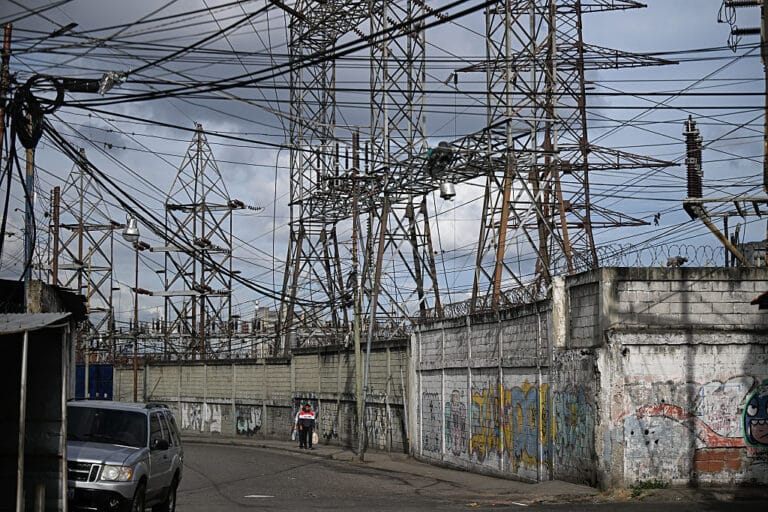
Venezuela’s Overwhelming Electricity Crisis
Simultaneous pressures are colliding at the worst possible time, making power generation a central test of the country’s capacity to recover.
New US Tariffs on Solar Products Establish Price Floors, but Onshoring Will Require Capacity Build-out
President Trump issued a proclamation on August 6 imposing tariffs on polysilicon and solar products.
Asia Pacific: the new epicentre of global energy growth
The centre of gravity of the global energy system has definitively shifted eastward, driven by rapid industrialisation, expanding urban populations, and rising

From New York to Texas, states should respect local control on data centers
Data centers face growing local opposition as states impose moratoriums on hyperscale projects and grid connections. Communities can negotiate deals for tax revenue and jobs.