Trump promoted fossil fuels. His war is pushing the world away from them.
As oil prices spike, governments are slashing fuel use and eyeing renewables — threatening to erode global demand for fossil energy.
Get the latest as our experts share their insights on global energy policy.
On February 28, the US and Israel launched new attacks on Iran targeting primarily the country's leadership, security forces, and missile program.
Hear in-depth conversations with the world’s top energy and climate leaders from government, business, academia, and civil society.
While US and Israeli forces have significantly degraded Iran’s military and nuclear capability, the global energy landscape remains in a precarious position. For weeks, the Strait of Hormuz...
Find out more about our upcoming and past events.
This roundtable is open only to currently enrolled Columbia University students. To register, you must sign in with your UNI. Join the Center on Global Energy Policy’s Women...

In this Columbia Energy Exchange, Center on Global Energy Policy Inaugural Fellow David Sandalow is joined by Washington State Governor Jay Inslee at the 2019 Columbia Global Energy Summit for a conversation on how to bring clean energy lessons from Washington State to Washington, D.C., what the role of nuclear power and carbon capture sequestration should be in the U.S. energy landscape, and the value of perseverance and optimism for delivering on “a goal of a clean energy economy.”
Governor Inslee is a fifth-generation Washingtonian and graduate of the University of Washington and the Willamette University College of Law. He began his political career as a State Representative in 1989, then served in the U.S. House of Representatives from Washington’s 4th and 1st Districts until 2012. He has been Governor of Washington since 2013.
On April 10, the 2019 Columbia Global Energy Summit in New York City hosted top politicians, business leaders, and academics for a range of lively discussions on what to expect in changes to the oil and gas landscape, the latest research on powering the low-carbon transition, navigating U.S. political fields to advance climate solutions, how to assess risk and build grid resilience, and much more.
Columbia University does not support or oppose candidates for political office and any opinions expressed are not those of the University.
While US and Israeli forces have significantly degraded Iran’s military and nuclear capability, the global energy landscape remains in a precarious position. For weeks, the Strait of Hormuz...
During President Trump’s second term, the administration has taken unprecedented action in the US private sector. The federal government’s investments in critical mineral mining and chip manufacturing are...
Today marks the last day of CERAWeek, the annual energy industry conference sometimes described as the Davos of energy. As oil and gas CEOs and government officials gathered...
The Iran conflict has rapidly expanded, drawing in actors across the Middle East and raising concerns about broader regional escalation.
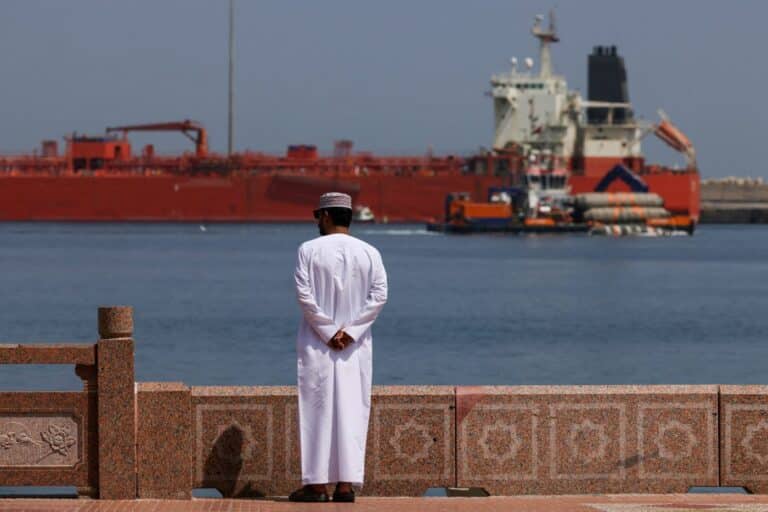
The Iran war will accelerate the region’s economic transformation.

On February 28, the US and Israel launched new attacks on Iran targeting primarily the country's leadership, security forces, and missile program.
The war in Iran has significantly enhanced Latin America's geopolitical advantage as a reliable source of hydrocarbon resources.