Energy Markets Series: Half-Time Talk Weekly Feature Interview
Dr. Tatiana Mitrova, Research Fellow, Center on Global Energy Policy, Columbia UniversityTells Half-Time Talk GI Exclusive Interview: âEnergy Markets Pass th...
Get the latest as our experts share their insights on global energy policy.
Midterm voters gave Democrats control of both chambers of Congress and flipped governorships in states central to data center development.
Hear in-depth conversations with the world’s top energy and climate leaders from government, business, academia, and civil society.
Earlier this month, US voters handed Democrats control of both chambers of Congress and flipped several governorships across the country. The dramatic shift in power raises big questions...

Find out more about our upcoming and past events.
CGEP invites students to join a roundtable discussion with Cassady Walters, Vice President, Power, The Rockefeller Foundation.

From the recent OPEC agreement to energy security issues in Europe, few countries are more important to the global energy picture than Russia. On this episode of the Columbia Energy Exchange, host Jason Bordoff speaks with Dr. Jonathan Eyal, International Director of the Royal United Services Institute, a leading think tank on military and defense issues in the United Kingdom. They discuss: How Russia’s position in the global energy order might shift as a result of growing U.S. and Australian LNG exports; What affect continued, if not harsher, U.S. sanctions will have on the Russia; How Brussels and Eastern Europe should handle energy ties with Russia; The development of Nordstream II; Russia’s Middle East policy and implications for its relationship with OPEC.
Earlier this month, US voters handed Democrats control of both chambers of Congress and flipped several governorships across the country. The dramatic shift in power raises big questions...
Affordability was one of the key issues that drove US voters to the polls last week, and the resulting message for the newly elected Congress is clear: driving...

Energy costs are a big consideration for voters in much of the US today as they head to the polls. But the decisions that shape those costs will...
Every permitting bill promises the same thing: build faster. The harder question is what the trade-offs are, and who bears them. That question is at the heart of...

Midterm voters gave Democrats control of both chambers of Congress and flipped governorships in states central to data center development.
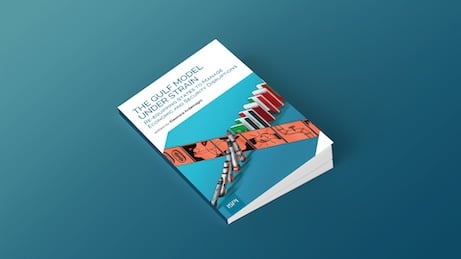
The Iran war is testing the resilience of GCC states. As chokepoints become weapons and US deterrence weakens, how are Gulf countries adapting their defence, energy and connectivity policies to protect economic continuity and advance diversification?
The shift in the balance of political power will help determine which US policies can be funded and sustained over the next two years.