New Report Urges Caution in the Race for Space-Based Data Centers
The report warns that space-based data centers are likely to become a reality within the next few years—well before the risks of large-scale deployment can be fully understood.
CGEP hosted a discussion with Meghan O’Sullivan, Professor of the Practice of International Affairs and the Director of the Geopolitics of Energy Project at Harvard University’s Kennedy School, former Special Assistant to President George W. Bush, and former Deputy National Security Advisor for Iraq and Afghanistan. Dr. O’Sullivan discussed her new book, Windfall: How the New Energy Abundance Upends Global Politics and Strengthens America’s Power.
Affordability was one of the key issues that drove US voters to the polls last week, and the resulting message for the newly elected Congress is clear: driving...
Energy costs are a big consideration for voters in much of the US today as they head to the polls. But the decisions that shape those costs will...
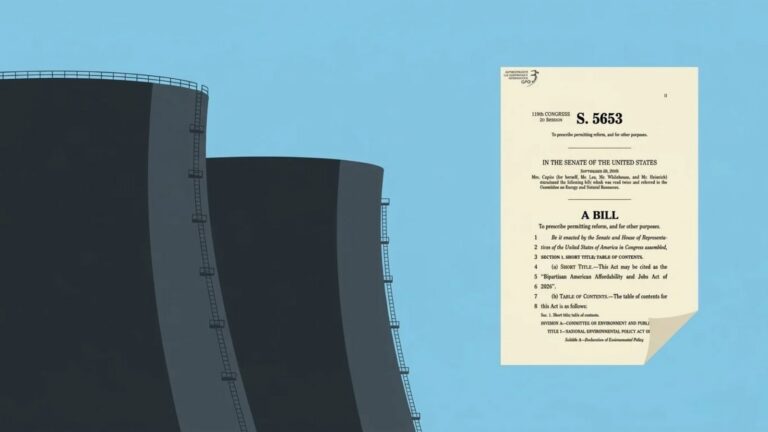
Every permitting bill promises the same thing: build faster. The harder question is what the trade-offs are, and who bears them. That question is at the heart of...
After years of trying, the US may be on the cusp of a nuclear renaissance. Commercial nuclear generation began in this country in 1958. Today, the US has...
When the Strait of Hormuz closed, China's crude imports fell steeply, cushioning the price impact on global markets.
Reporting in the New York Times suggests a key element in the Trump administration's Russia-Ukraine peace plan involves Europe resuming Russian gas imports.
Last week's summit between US President Trump and Chinese President Xi was the second meeting between the two leaders since the US and Israel attacked Iran.
In this edition of Global Institute Dialogues Jason Bordoff discusses how the Iran crisis, China’s electrification strategy, and the US shale revolution have changed energy geopolitics.