This website uses cookies as well as similar tools and technologies to understand visitors’ experiences. By continuing to use this website, you consent to Columbia University’s usage of cookies and similar technologies, in accordance with the Columbia University Website Cookie Notice.
Energy Explained
Get the latest as our experts share their insights on global energy policy.
Congress Asserts Itself in Closing AI Chip Loopholes
Four bills in Congress each close a different route for Chinese access to American computing power.

Podcasts
Hear in-depth conversations with the world’s top energy and climate leaders from government, business, academia, and civil society.
Tim Gould on the IEA’s World Energy Outlook in a Year of Energy Shocks
The global energy system is being reshaped by powerful forces all at once. The Iran war and the disruption of shipping through the Strait of Hormuz have caused...
The Future of Energy Security Study Group
Overview
The global energy system is entering a period of profound change. The 2026 disruption in the Persian Gulf and Strait of Hormuz has exposed the vulnerability of energy supply chains, infrastructure, transit routes, and global markets. Even as immediate disruptions ease, their effects are likely to shape energy policy, investment, trade, and national security for years to come.
The Future of Energy Security Study Group examines how governments, energy companies, investors, and markets should rethink energy security in this changing environment. The group will explore how current disruptions will reshape energy strategies through 2030 and beyond, and what those changes mean for economic development, geopolitical stability, and global cooperation.
The group brings together experts across regions, industry and perspectives for research, virtual discussions, and in-person convenings and simulations. Its objective is to provide a rigorous, nonpartisan forum connecting markets, policy, and empirical analysis to help policymakers prepare for emerging energy security challenges. Members include CGEP scholars, CGEP non-resident fellows, external scholars, former policymakers, investors, and energy industry leaders. Members listed below are those who have committed to contribute analytical work in a forthcoming CGEP publication. Our aim is to provide on the ground empirical analysis and examinations of the challenges to energy security in our current geopolitical environment, and to convey those findings into recommendations for policymakers and shared knowledge for research, policy and business communities.
Study Group Goals
- Examine changing definitions of energy security: Explore affordability, availability, accessibility, and acceptability alongside national power, climate priorities, and resilient energy flows.
- Assess emerging risks and responses: Analyze geopolitical conflict, threats to infrastructure and chokepoints, market behavior, and investment strategies across conventional and clean energy supply chains.
- Bring together diverse perspectives: Convene scholars, policymakers, industry experts, and investors to examine regional challenges and test potential responses.
- Develop research and policy recommendations: Publish foresight papers examining energy security through 2030 and beyond, informing an edited volume and a final US-focused policy study with recommendations for the next administration in 2029.
Research Underway
The Study Group is building toward 18 papers examining the future of energy security in 2030 and beyond.
- Karen Young
The Gulf in the Energy Security Era - Anne-Sophie Corbeau
Lessons From the 2026 Hormuz Crisis for Global Gas Security - Spencer Dale — CGEP Non-Resident Fellow
Energy Security, Energy Transition and the Increasing Electrification of the Energy System - Erica Downs
China’s Approach to Energy Security - Mannat Jaspal & Cauvery Ganapathy — Observer Research Foundation
India’s Energy Security Landscape in the Light of Recent Geopolitical Disruptions - Ira Joseph
Qatar is in a Major Bind - Ken Koyama —CGEP Non-Resident Fellow
Challenges for Energy Security in Japan - Anne Mettler and Tatiana Mitrova
From Sourcing to Survivability: Ukraine Case Study - Robin Mills — CGEP Non-Resident Fellow
Escape Room – The History and Future of Gulf Bypasses - Tatiana Mitrova, Richard Nephew, Doug Arent, and Kate Guy
The Real Cost of Energy Security - Richard Nephew
Why Is Everyone Targeting Energy? - Daniel Sternoff
The Vulnerabilities and Resilience of Oil Markets in the 2026 Hormuz Crisis - Liz Dent and Grant Rumley — Washington Institute
Regional Security in a Post-Epic Fury Middle East
Related Research
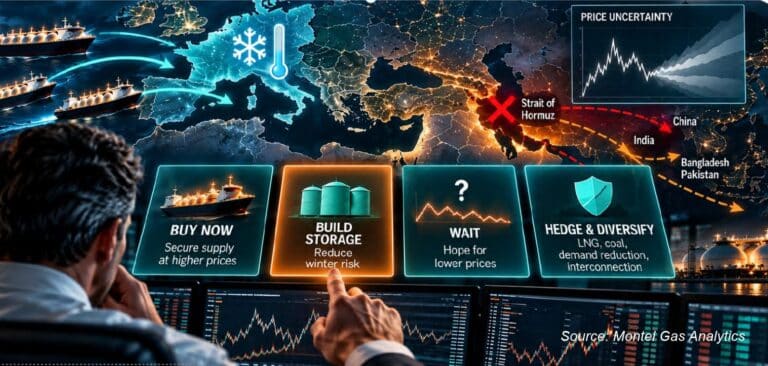
European Gas Security: A Survival Guide for This Winter
This post was originally published in the Montel October Geopolitical Report. In early 2026, everyone was expecting a huge wave of LNG supply to begin having a significant…
Strategic Energy Reserves in the Era of Electrification
External Publication
with Anne-Sophie Corbeau & Lydia Powell
Global Governance Innovation Network
• November 09, 2026
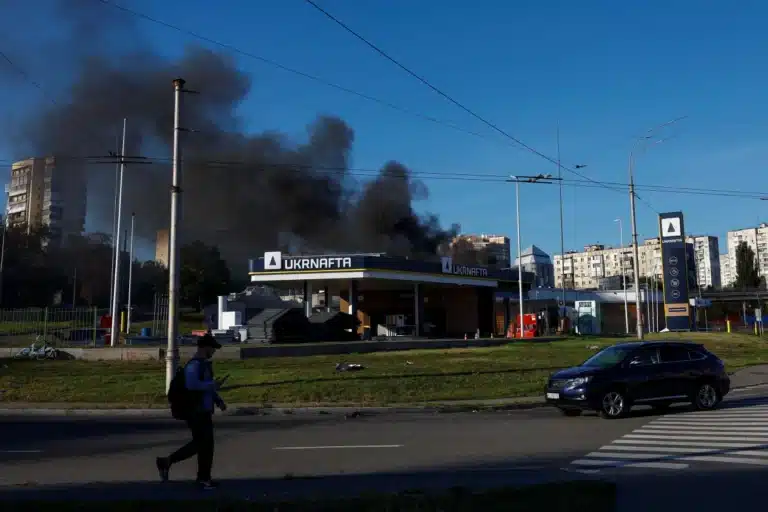
The New Energy Stalemate in Ukraine
Tatiana Mitrova, a fellow at Columbia University’s Center on Global Energy Policy and former energy scholar at Moscow’s Russian Academy of Sciences, and Sergey Vakulenko, an oil and gas expert at Carnegie’s Russia Eurasia Center, argue that Russia and Ukraine are locked in an energy war that has become an adaptation spiral, despite growing human and economic costs and despite current US pressure on Ukraine. They observe Ukraine’s remarkable ability to withstand Russian strikes, while questioning claims that long-range Ukrainian strikes will be able to achieve game-changing damage on Russia. Ukraine and Russia have transformed the role of energy warfare in modern conflict, drawing on low costs drones but also new forms of technological resilience that are likely to make wars longer and more dangerous.
The cyclical unhappiness of the LNG world
For almost seven months, energy markets have looked at LNG flows through the Strait of Hormuz in binary terms: either LNG cargoes go through, or they do not.
Contributing Experts
-
Karen E. Young
Senior Advisor for Scholarly Affairs and Senior Research Scholar
Learn More -
Richard Nephew
Senior Research Scholar
Learn More -
Douglas J. Arent
Global Fellow
Learn More -
Jason Bordoff
Founding Director, Center on Global Energy Policy; Professor, Columbia SIPA; Professor and Co-Founding Dean Emeritus, Columbia Climate School
Learn More -
Anne-Sophie Corbeau
Global Research Scholar
Learn More -
Spencer Dale
Non-Resident Fellow
Learn More -
Liz Dent
Washington Institute
-
Erica Downs
Senior Research Scholar
Learn More -
Cauvery Ganapathy
Observer Research Foundation
-
Kate Guy
Senior Fellow and Managing Director, Geopolitics of Climate Change and the Energy Transition
Learn More -
Mannat Jaspal
Observer Research Foundation
-
Ira Joseph
Senior Research Associate
Learn More -
Ken Koyama
Institute of Energy Economics, Japan
-
Ann Mettler
CGEP Distinguished Visiting Fellow; Formerly Vice President for Europe, Breakthrough Energy and Director-General, European Commission
Learn More -
Robin Mills
Non-Resident Fellow
Learn More -
Tatiana Mitrova
Global Fellow
Learn More -
Grant Rumley
Washington Institute
-
Daniel Sternoff
Senior Fellow and Head of Corporate Partnership Strategy
Learn More