This website uses cookies as well as similar tools and technologies to understand visitors’ experiences. By continuing to use this website, you consent to Columbia University’s usage of cookies and similar technologies, in accordance with the Columbia University Website Cookie Notice.
Energy Explained
Get the latest as our experts share their insights on global energy policy.
Are Bilateral and “Minilateral” Treaties the Precursors to Multilateral Agreements?
The UNFCCC process is marred by gridlock in the COP multilateral framework, threatening joint efforts by countries to mitigate the climate crisis.

Podcasts
Hear in-depth conversations with the world’s top energy and climate leaders from government, business, academia, and civil society.
Katie Auth on How the ‘Modern Energy Minimum’ Can Drive Economic Growth
Despite all the advancements we have achieved globally in recent decades, as many as 750 million people still lack access to electricity. Tackling energy poverty requires far more...

This is the final episode of a five-part series exploring the lithium-ion battery supply chain. If you haven’t listened to the first four episodes, we recommend you start there.
Season 4, Episode 5
Why reaching complete circularity in the battery supply chain means rearranging our collective priorities.
So far over this season we’ve traced the global lithium-ion battery supply chain from mining to processing to manufacturing. And we’ve put it all into a geopolitical and economic context.
In this final installment of our five-part series, we come to the end of the road for a battery.
There are a lot of technical innovations on the horizon when it comes to battery recycling. But are we anywhere close to making the battery economy actually circular?
When you get rid of your car, there is a profitable industry that takes responsibility for the components inside of it. And that’s because we’ve had many, many decades to perfect this process — and develop efficient supply chains. The modern battery supply chain is still a work in progress.
In this episode, we’ll visit a recycling facility, learn how battery recyclers are evolving into battery component manufacturers, navigate the complexities of turning dead batteries into new ones, and explore the concept of circularity.
More Episodes
The Great Battery Manufacturing Race
China has been the world's biggest battery manufacturer for over a decade. By 2022, according to the IEA, China manufactured 76% of the world's batteries. But that's changing.
The Big Switch Podcast
• March 20, 2024

The High Stakes for Battery Ingredients
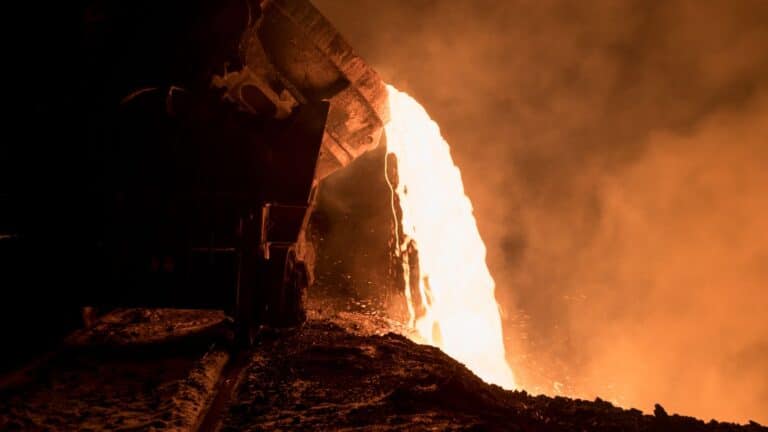
Batteries can replace gasoline in our cars, or diesel in our generators with electricity. But batteries and petroleum-based fuels share something in common: they both rely on energy-intensive processes to turn extracted materials into something useful.
The Big Switch Podcast
• March 13, 2024
The Mining Conundrum For Critical Minerals
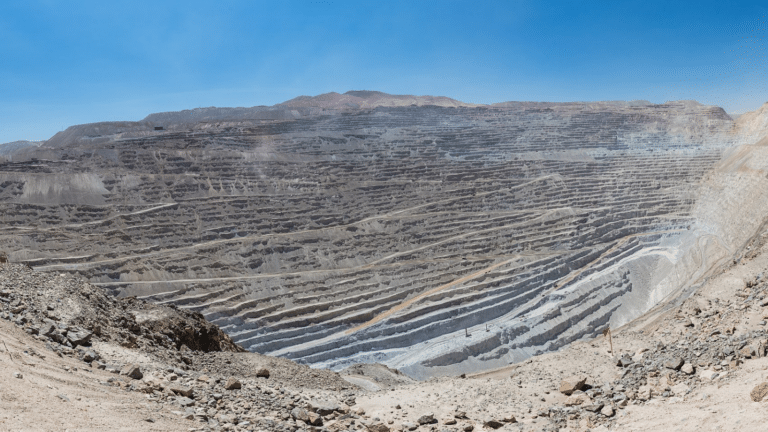
To produce enough batteries to reach global net-zero goals, the International Energy Agency says we'll need to increase production of critical minerals by six fold by 2040. It's a monumental task.
The Big Switch Podcast
• March 6, 2024

Are Batteries the New Oil?
Season 4, Episode 1 Batteries are at the center of the clean energy economy. Will they shape geopolitics in similar ways to oil? We need to electrify much...
The Big Switch Podcast
• February 28, 2024

Relevant
Publications
Making Critical Minerals Bankable: Policy Tools to Unlock Investment
This paper proposes a de-risking framework of policy interventions to provide the risk allocation, revenue certainty and delivery confidence required by mainstream private finance.
White Papers
with Kevin Brunelli, Gautam Jain & Tom Moerenhout •
World Economic Forum
• May 04, 2026

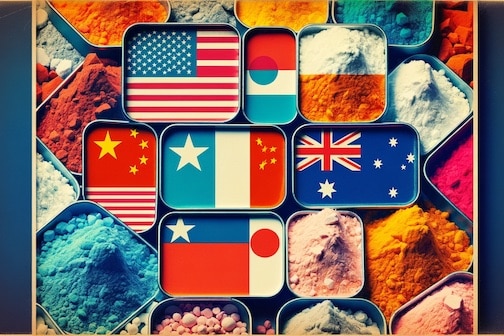
The international trade dimensions of the United States critical minerals security strategy
This paper examines the trade dimensions of the policy instruments employed by the United States to secure critical minerals supply chains. Drawing on policy statements, executive orders, tariff schedules, and six bilateral critical minerals agreements announced in 2025, it assesses how US trade policy has been repurposed to advance supply-chain security objectives. The paper finds that recent US initiatives reflect bipartisan trends in reconfiguring trade policy that predate the Trump administration, even as they introduce new and consequential trade coordination mechanisms that operate outside the World Trade Organization and beyond conventional free trade agreements. Specifically, US critical minerals security strategy now relies on a differentiated set of sector-specific arrangements that combine familiar elements of US international economic engagement with more novel features that increasingly utilize trade policy instruments. What distinguishes these six minerals deals is their systematic coupling with parallel reciprocal trade negotiations, their incorporation of an explicitly ‘America First’ approach to reciprocity, the absence of a clear ideological hierarchy among partner countries, an emphasis on domestic processing and industrialization, and the growing use of exclusion mechanisms targeting third-party actors. The recurrence of these novel elements across diverse minerals deals suggests deliberate design rather than ad hoc experimentation that may have durable restructuring effects across global mineral supply chains. The paper concludes by outlining implications for US policy makers, for partner countries—particularly mineral-producing low- and middle-income economies—and for the architecture of the global trading system.
Improving Critical Mineral Mining Negotiations in Chile: Toward Clearer and More Robust Frameworks for Benefit Sharing with Local Communities
Universidad Adolfo Ibáñez (UAI) Business School, in collaboration with CGEP, organized two closed-door roundtables in the summer of 2025 to discuss local community engagement in the context of lithium and copper extraction within the global energy transition.
Task Force Reports
by Juan Pablo Escudero, Diego Rivera Rivota, Juan Carlos Jobet + 1 more • March 30, 2026