Climate tech can’t scale on corporate generosity alone
Microsoft’s reported pull-back from carbon removal and even 2030 clean energy targets proves that the sector needs policy help.
Explore our expert insights and analysis in leading energy and climate news stories.
Microsoft’s reported pull-back from carbon removal and even 2030 clean energy targets proves that the sector needs policy help.

Get the latest as our experts share their insights on global energy policy.
Two economic planning documents released at the March meeting of China's National People’s Congress include the term "energy powerhouse" for the first time.
Hear in-depth conversations with the world’s top energy and climate leaders from government, business, academia, and civil society.
In moments of geopolitical crisis, energy is never just a backdrop. It's often at the center of the story. Today, as conflict involving Iran sends shockwaves through global...

We need to electrify much of the global economy in order to hit net-zero emissions by 2050. That means installing a lot of batteries in our cars, buildings, and across the grid to balance vast amounts of wind and solar.
The supply chain behind all those batteries could be worth nearly half a trillion dollars by 2030. Whoever controls that supply chain has enormous power – figuratively and literally.
In this episode, we explore the stakes of the battery-based transition. We’ll open up a lithium-ion battery, investigate what’s inside it, and ask whether critical minerals will look anything like oil.
So far over this season we've traced the global lithium-ion battery supply chain from mining to processing to manufacturing. And we've put it all into a geopolitical and economic context.
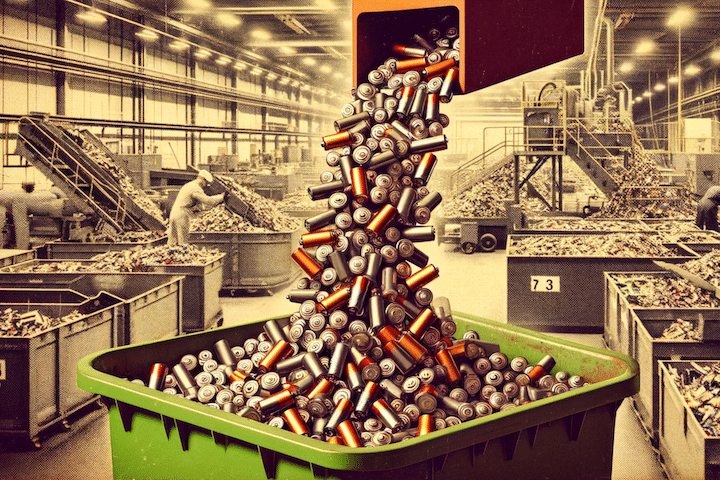
China has been the world's biggest battery manufacturer for over a decade. By 2022, according to the IEA, China manufactured 76% of the world's batteries. But that's changing.
Batteries can replace gasoline in our cars, or diesel in our generators with electricity. But batteries and petroleum-based fuels share something in common: they both rely on energy-intensive processes to turn extracted materials into something useful.
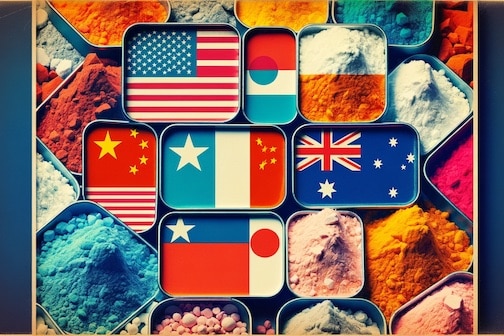
To produce enough batteries to reach global net-zero goals, the International Energy Agency says we'll need to increase production of critical minerals by six fold by 2040. It's a monumental task.

This paper proposes a de-risking framework of policy interventions to provide the risk allocation, revenue certainty and delivery confidence required by mainstream private finance.

This paper examines the trade dimensions of the policy instruments employed by the United States to secure critical minerals supply chains. Drawing on policy statements, executive orders, tariff schedules, and six bilateral critical minerals agreements announced in 2025, it assesses how US trade policy has been repurposed to advance supply-chain security objectives. The paper finds that recent US initiatives reflect bipartisan trends in reconfiguring trade policy that predate the Trump administration, even as they introduce new and consequential trade coordination mechanisms that operate outside the World Trade Organization and beyond conventional free trade agreements. Specifically, US critical minerals security strategy now relies on a differentiated set of sector-specific arrangements that combine familiar elements of US international economic engagement with more novel features that increasingly utilize trade policy instruments. What distinguishes these six minerals deals is their systematic coupling with parallel reciprocal trade negotiations, their incorporation of an explicitly ‘America First’ approach to reciprocity, the absence of a clear ideological hierarchy among partner countries, an emphasis on domestic processing and industrialization, and the growing use of exclusion mechanisms targeting third-party actors. The recurrence of these novel elements across diverse minerals deals suggests deliberate design rather than ad hoc experimentation that may have durable restructuring effects across global mineral supply chains. The paper concludes by outlining implications for US policy makers, for partner countries—particularly mineral-producing low- and middle-income economies—and for the architecture of the global trading system.
Universidad Adolfo Ibáñez (UAI) Business School, in collaboration with CGEP, organized two closed-door roundtables in the summer of 2025 to discuss local community engagement in the context of lithium and copper extraction within the global energy transition.