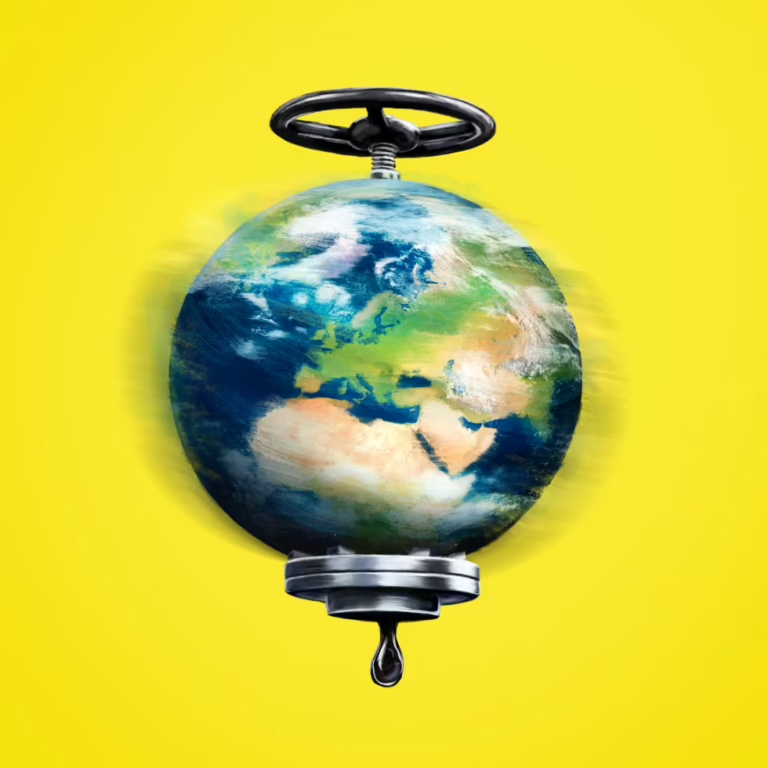
Trump has only one real option to slash gas prices
The energy crisis is a financial nightmare for Main Street and a political nightmare for the White House.
Get the latest as our experts share their insights on global energy policy.
Many analyses of what the conflict in the Middle East means for China's energy security have rightly focused on China's oil and natural gas imports from the region.
Hear in-depth conversations with the world’s top energy and climate leaders from government, business, academia, and civil society.
The Iran crisis is in its 80th day. Right now, roughly 1,500 vessels laden with oil, natural gas, fertilizers, and oil products sit trapped in the Persian Gulf...
Youth Climate Leaders
Negotiators in Glasgow, Scotland have finally come to an agreement aimed at ramping up climate action.
At COP26, host Jason Bordoff and his colleagues at Columbia University helped organize a series of events which convened climate leaders from many regions and different parts of society. One of these events was a roundtable discussion with President Obama and youth climate activists.
In this episode, Jason speaks with Eduarda Zoghbi and Christian Vanizette, two passionate young climate leaders who were part of Columbia’s COP26 delegation.
Eduarda is a graduate student in public administration at Columbia’s School of International and Public Affairs. Her area of concentration is energy and the environment. Eduarda is also a member of the Women in Energy Program at the Center on Global Energy Policy and is currently working to expand the program to young female leaders in Brazil.
Christian is the co-founder of Makesense, a french-based organization that is growing a global network of citizens and entrepreneurs committed to solving environmental and social problems. Christian was an Obama foundation scholar at Columbia University from 2019-2020.
They spoke with Jason about the need for urgency in addressing climate change, why intergenerational action of climate change matters and what progress looks like as we work toward global climate targets.
The Iran crisis is in its 80th day. Right now, roughly 1,500 vessels laden with oil, natural gas, fertilizers, and oil products sit trapped in the Persian Gulf...
Much of the world’s attention today is understandably focused on conflict in the Middle East, and the immediate implications for energy markets and global security. But other regions...
In moments of geopolitical crisis, energy is never just a backdrop. It's often at the center of the story. Today, as conflict involving Iran sends shockwaves through global...
It has been a tumultuous 24 hours for the global energy landscape. Yesterday, the United Arab Emirates sent shockwaves through the oil industry by announcing its withdrawal from...
Many analyses of what the conflict in the Middle East means for China's energy security have rightly focused on China's oil and natural gas imports from the region.