This website uses cookies as well as similar tools and technologies to understand visitors’ experiences. By continuing to use this website, you consent to Columbia University’s usage of cookies and similar technologies, in accordance with the Columbia University Website Cookie Notice.
Energy Explained
Get the latest as our experts share their insights on global energy policy.
Chinese Customs Data Reveal Deeper US Dependence on Chinese Rare Earths
One of the central objectives of the second Trump administration has been to pursue a maximalist trade policy toward China.

Podcasts
Hear in-depth conversations with the world’s top energy and climate leaders from government, business, academia, and civil society.
Jessica Uhl on the Fractured Energy Transition: Why Speed Matters Now
The clean energy transition had real momentum at the end of 2024. It was buoyed by federal support, billions of dollars of investment in new technologies, and broad...

Podcast
Spencer Dale – BP Statistical Review of World Energy 2018
June 25, 2018
Guest
Spencer Dale
Group Chief Economist at BP
For the past 67 years, BP has published its Annual Statistical Review of World Energy, a consolidated data set that spans primary energy, countries, and regions. On a new episode of Columbia Energy Exchange, host Jason Bordoff sits down with Spencer Dale, who serves as Group Chief Economist at BP, to discuss the key themes and insights from the recently released 2018 report. Prior to joining BP in 2014, Spencer was with the Bank of England, where he was Chief Economist and a Member of the Monetary Policy Committee.
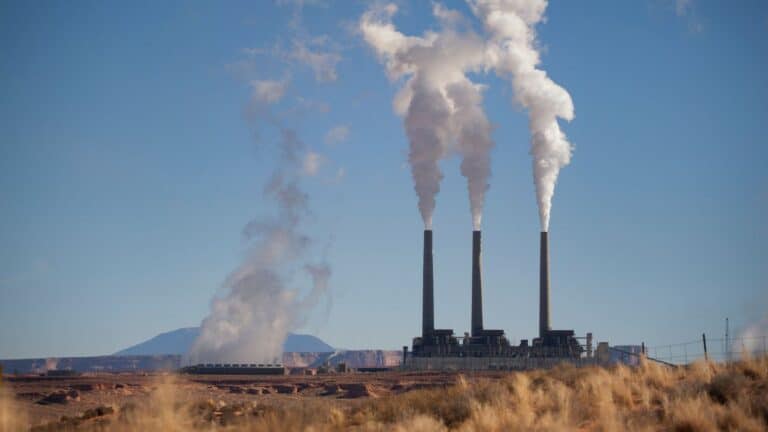
One of Spencer’s key takeaways from the report was that while last year (2017) was an exceptional year for renewables, little progress has been made to reduce coal consumption. In fact, coal continues to demand 38% of the total fuel share mix, the same percentage as 30 years go. As a result, Spencer highlights the importance of targeting efficiencies in the power sector to reduce the consumption of high-carbon energy sources. Spencer and Jason also discussed interesting trends such as the fall in energy intensity and the pivotal roles that China and India will continue to play in the global energy market in the years ahead.
Other topics discussed include Spencer’s thoughts on peak oil demand and what peak oil means for oil majors like BP; the role that EV’s will play in the transportation sector; and the role of sources like natural gas and nuclear power in the energy transition.
More Episodes
Jessica Uhl on the Fractured Energy Transition: Why Speed Matters Now
The clean energy transition had real momentum at the end of 2024. It was buoyed by federal support, billions of dollars of investment in new technologies, and broad...
Ashley Finan and Amy Roma on Speed, Safety, and Reforming Nuclear Energy
For years, the energy transition was discussed as a shift that would happen in steady, predictable increments. But a massive surge in electricity demand in recent years—now colliding...
Columbia Energy Exchange Podcast
• June 2, 2026

Katie Auth on How the ‘Modern Energy Minimum’ Can Drive Economic Growth
Despite all the advancements we have achieved globally in recent decades, as many as 750 million people still lack access to electricity. Tackling energy poverty requires far more...

Speed to Power: Christian Bruch on Siemens Energy’s Turnaround
For years, the energy transition was discussed as a shift that would happen in steady, predictable increments. But the last 24 months have shattered that illusion. Energy providers...

Relevant
Publications

Iran’s Oil Sector Can Likely Weather Production Shut-ins, but Gas Fields Are at Risk
The US blockade of tankers serving Iran's oil exports is intended to cut Iranian oil exports to near-zero.

Assessing US Government Efforts to Support Fossil Fuel–Reliant Communities
The decline of domestic fossil fuel production in the United States poses serious economic risks for communities that rely on fossil fuel industries for jobs and public revenues. Many of these communities lack the resources and capacity to manage those risks on their own. The absence of viable economic strategies for affected regions is a barrier to building the broad, durable coalitions needed for an equitable national transition to cleaner energy sources.
Reports
by Noah Kaufman • February 05, 2026
Six Key Issues That Defined Climate Week 2025
CGEP scholars reflect on some of the standout issues of the day during this year's Climate Week
Blog
by Erica Downs, Dave Turk, Kate Guy, Gautam Jain, Luisa Palacios, David Sandalow, Vivek Shastry & Jack Andreasen Cavanaugh • October 10, 2025