Current Access Level “I” – ID Only: CUID holders, alumni, and approved guests only
Read more about the campus status level system and campus access information.
This website uses cookies as well as similar tools and technologies to understand visitors’ experiences. By continuing to use this website, you consent to Columbia University’s usage of cookies and similar technologies, in accordance with the Columbia University Website Cookie Notice.
As higher energy prices ratchet up projections for inflation, Becky Anderson speaks to Karen Young from The Center on Global Energy Policy at Columbia University about different inflation scenarios.
On March 20, Governor Kathy Hochul proposed significant changes to New York’s Climate Leadership and Community Protection Act (CLCPA), the landmark climate law passed in 2019.
Today marks the last day of CERAWeek, the annual energy industry conference sometimes described as the Davos of energy. As oil and gas CEOs and government officials gathered...
This roundtable is open only to currently enrolled Columbia University students. To register, you must sign in with your UNI. The Center on Global Energy Policy at Columbia...
Event
• Center on Global Energy Policy
1255 Amsterdam Ave, New York, NY 10027
About Us
We are the premier hub and policy institution for global energy thought leadership. Energy impacts every element of our lives, and our trusted fact-based research informs the decisions that affect all of us.
I’m en route home after a week in Europe—first at the Oslo Energy Forum and then at the Munich Security Conference. Munich generated considerable news and drama, but beyond the headlines, what struck me most was how firmly energy security has returned to the center of geopolitical debate.
Before Russia weaponized its gas exports to Europe, energy security had drifted to the periphery of national security discussions. That is no longer the case. In Munich, energy was not a side conversation; it was woven into nearly every major debate about strategic competition, economic statecraft, artificial intelligence, and the future of the transatlantic alliance.
CGEP organized sessions on how to meet the energy and security needs of artificial intelligence and, with our partners at the BMW Foundation, how to strengthen critical mineral and energy supply chain security in an era of fragmenting geopolitics. I participated in discussions on energy infrastructure protection, global gas and LNG markets, energy’s role in European competitiveness, the Global South as a partner in energy trade and transition, and the growing risks climate change poses to security.
Reassurance and Unease
A focal point of the conference was U.S. Secretary of State Marco Rubio’s speech, particularly in light of Vice President JD Vance’s address at last year’s conference, which many Europeans viewed as a sharp rebuke of European political and cultural trends. Rubio’s remarks were far better received. European Commission President Ursula von der Leyen called them “very reassuring,” and several officials interpreted his tone as an effort to reaffirm America’s commitment to the transatlantic relationship.
After the shock of President Trump’s Greenland threats during Davos, many Europeans appeared relieved by the more conciliatory language. Yet beneath the surface, unease remains. As Foreign Policy’s Ravi Agrawal reported, private conversations revealed concern about calls to defend “Western civilization” against mass migration and warnings about “civilizational erasure.”
On energy, Rubio argued, “To appease a climate cult, we have imposed energy policies on ourselves that are impoverishing our people, even as our competitors exploit oil and coal and natural gas and anything else—not just to power their economies, but to use as leverage against our own.”
It is fair to say that some climate policies—both in Europe and at times in the United States—have been shaped more by ideology than economic and technological realities. Europe shuttered portions of its legacy energy system, including nuclear, before zero-carbon alternatives were fully scaled. Certain renewable mandates have raised costs in ways that merit scrutiny. A recent study from Lawrence Livermore National Laboratory underscores how policy design can materially affect affordability outcomes.
But it goes too far to suggest that climate policies are “impoverishing our people,” particularly when U.S. oil and gas production and exports surged in recent years—including under President Biden. More concerning is rhetoric that dismisses climate change as ideological fiction, especially mere days after the Trump administration sought to reverse the EPA’s determination that greenhouse gas emissions from vehicles threaten Americans’ public health and welfare.
There can and should be debate about the best tools to reduce emissions—about the role of markets versus mandates, about nuclear or carbon capture, about sequencing and cost. But there should be little disagreement that climate change is driven primarily by human activity and that continued warming carries profound risks for human welfare.
The Return of the Energy Weapon
Many conversations in Munich echoed the arguments Meghan O’Sullivan and I made in our Foreign Affairsessay last year, “The Return of the Energy Weapon.”
Energy has re-emerged as a defining feature of geopolitical competition:
It sits at the core of a fragmenting global order in which economic interdependence is increasingly seen as vulnerability.
It is central to the growing use of coercive economic statecraft—sanctions, export controls, tariffs, and supply chain restrictions.
It provides political justification for a heavier state role in private enterprise in the name of national and economic security.
It is a decisive factor in the race for leadership in artificial intelligence.
And, although it receives less attention in security forums, it remains the primary driver of global climate change.
Three broad themes stood out across the week’s discussions.
Dependence and Diversification
The question I was asked most often—both in Munich and in Norway—was whether Europe can depend on the United States as a reliable LNG supplier.
Norway remains Europe’s largest source of gas, but the United States now provides roughly a quarter of EU gas imports. At the same time, the EU has finalized a plan to eliminate Russian gas imports by the end of 2027, even though Russia still supplies a meaningful share of Europe’s gas (more than 20 percent as much gas as it did before the invasion of Ukraine).
A decade ago, Akos Losz and I wrote in Foreign Affairs about the coming surge of U.S. LNG under the subheading “The Benign Energy Superpower.” We wrote: “The option to import U.S. LNG would help Europe reduce Russia’s geopolitical leverage. If Russia were to threaten to turn off the taps, a more interconnected and integrated European gas market could bring in alternative sources of gas more easily.” We concluded by arguing that the emergence of the U.S. as a “global gas superpower” would “improve the energy security of its allies and undermine the geopolitical leverage of its adversaries.”
That is exactly what happened after Russia invaded Ukraine. Yet this week, I heard several European leaders privately say they do not want to trade dependence on Russia for dependence on the United States.
They worry that a future U.S. administration could weaponize gas exports amid broader economic disputes. They worry that gas dependency could be weaponized by a Trump administration that has shown a willingness to use tools of economic coercion as leverage to extract concessions. They worry that if U.S. gas prices spike—because of a surge in demand for LNG exports and gas to power data centers, severe weather, or infrastructure bottlenecks and outages—politicians on both sides of the American aisle could call for export restrictions to ease high domestic prices. And they worry, albeit less so, that a future Democratic administration might impose some sort of export restrictions for climate reasons.
As CGEP scholars Anne-Sophie Corbeau and Tatiana Mitrova recently argued, Europe must reduce vulnerability to both fossil fuel exporters and clean technology powers—by recalibrating regulation, accelerating electrification, and designing security strategies around resilience rather than replacement of one dependency with another.
These concerns extend beyond energy. As David Sanger reported from Munich, European leaders are increasingly discussing “de-risking” from the United States itself—a remarkable shift that underscores how recent threats, particularly over Greenland, have shaken trust in American reliability. CGEP’s Ann Mettler made a similar point in her dispatch from Munich.
State Capitalism and the Cost of Security
The second theme was that the energy security threat landscape is expanding—while the cost of mitigating those risks is rising.
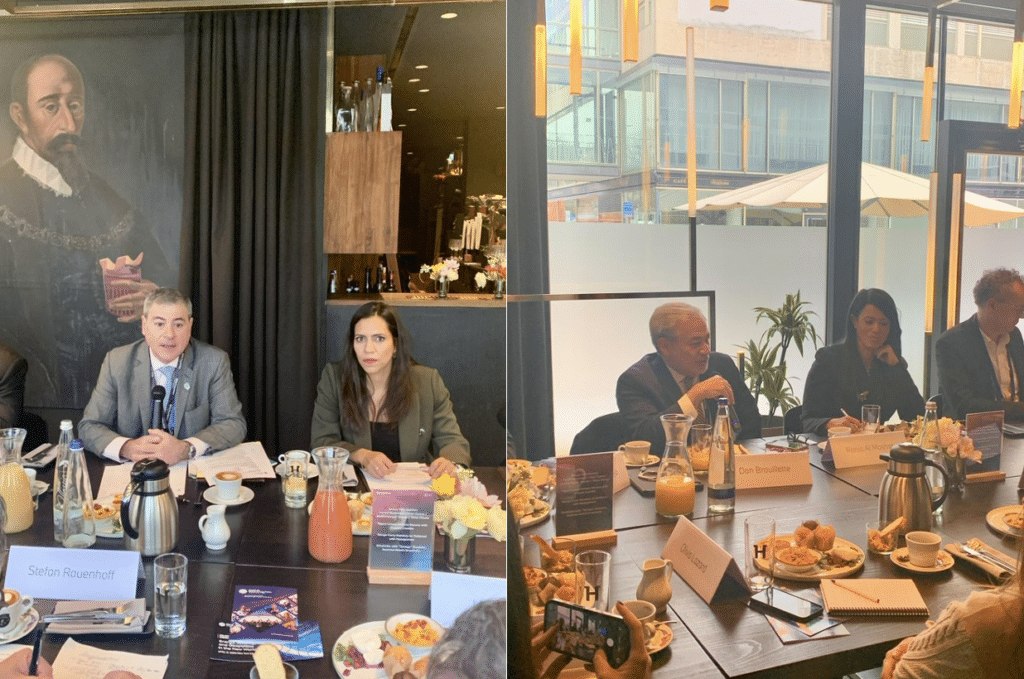
Critical mineral security featured prominently. China’s dominance in refining and processing, combined with rising demand for electrification, semiconductors, and defense systems, has heightened concern. In a highly substantive, two-hour roundtable we hosted with the BMW Foundation, participants went beneath superficial descriptions of why dependence on China is problematic to explore more deeply distinctions between stock and flow vulnerabilities, differences across mineral markets, exactly how China manipulates commodity prices, and the policy tradeoffs involved in tools such as price floors, strategic stockpiles, and accelerated permitting. Former Trump Energy Secretary Dan Brouillette, current Acting Undersecretary of Energy Alex Fitzsimmons, EU Commissioner Jessika Roswall, Hitachi Energy CEO Andreas Schierenbeck, German Parliamentary State Secretary Stefan Rouenhoff, S&P’s Carlos Pascual, and others contributed significantly to the dialogue.
Physical and cyber threats to energy infrastructure were also front of mind. Protecting grids, pipelines, LNG terminals, and digital systems in peacetime—and especially in wartime—requires investment. These challenges were addressed at some depth in the Energy Security Roundtable hosted by MSC and ONS that Meghan and I co-chaired.
The challenge is that security resembles insurance: it is costly, and the benefits are realized only when crises occur. Diversification, redundancy, grid resilience, and strategic stockpiles all require capital beyond what markets alone may provide. Governments are increasingly stepping in—but fiscal space is limited, particularly in Europe, where defense spending and demographic pressures are mounting.
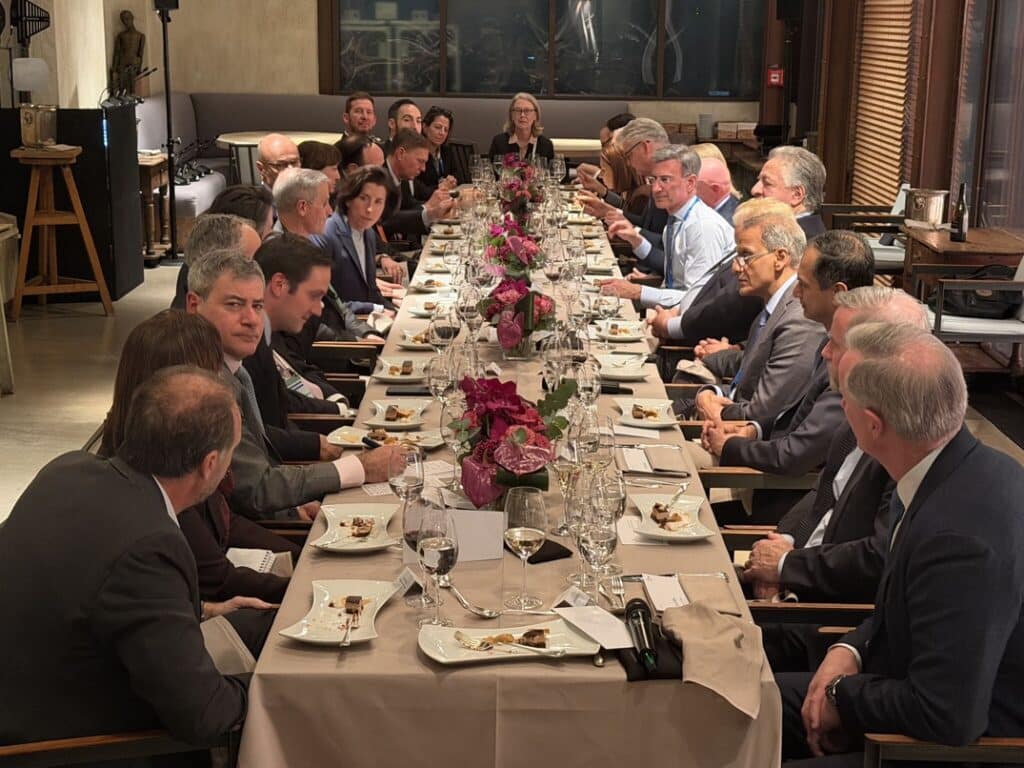
At a high-level dinner hosted by Lazard CEO Peter Orszag, I expressed concern that the trend toward state capitalism may too often allow policymakers to intervene in private enterprise in the name of national security without clearly identifying the precise problem they seek to solve. In such cases, subsidies, mandates, or trade restrictions risk being adopted for traditionally protectionist reasons under the banner of national security. Precisely defining the risk—why, for example, Chinese solar panel imports might pose a different security concern than battery imports—is essential to ensure the appropriate policy response. Since it is unrealistic to eliminate China’s dominant position in many supply chains, it is necessary to widen the aperture to include policies that derisk that dependence, such as the Trump administration’s creation of a critical mineral stockpile last week.
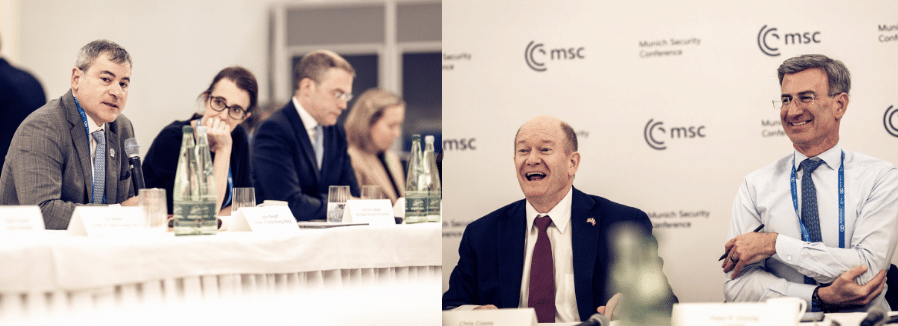
Investment in energy security and grid resilience is particularly challenging at a moment when energy affordability has become a central political issue. That tension was front and center in a roundtable CGEP hosted on meeting rising electricity demand, securing power-sector supply chains (including copper and other critical inputs), using AI to better manage grid operations and flex data center energy demand, and addressing national security risks associated with chip exports and overseas data centers. The discussion underscored how deeply intertwined energy, technology, and security have become. Tremendously valuable perspectives from Lazard CEO Peter Orszag, Senator Chris Coons, Congressman Jim Himes, Acting Undersecretary of Energy Alex Fitzsimmons, and new CGEP fellows Jonathan Black and Ann Mettler enriched the conversation. I’ll explore how the Trump administration is approaching rising electricity demand and power prices, among many other issues, on CGEP’s podcast tomorrow with Undersecretary Fitzsimmons.
Importantly, conversations also emphasized the role of energy efficiency, mineral recycling, and innovations in energy storage, material science, or computing power of chips that could curb how much energy and materials are needed—what Amory Lovins called “the soft path.”
Partnership, Not Autarky
Finally, it was clear that energy security cannot mean energy autarky.
Despite the transatlantic tensions, partnership is essential. The scale and efficiency of China’s energy and material supply chains are simply too great to offset meaningfully without close coordination between the United States and Europe. As competition with China intensifies and Russia continues to weaponize interdependence, the transatlantic partners share exposure—and shared interests.
But cooperation must reflect political realities: energy abundance and affordability are paramount in the United States; climate-compatible competitiveness and security dominate in Europe. Bridging those priorities requires trust, policy alignment, and durable institutions.
Discussions about clean energy trade with the Global South underscored that diversification of mineral and clean energy supply chains will depend on meaningful economic partnerships with emerging economies. Countries in Latin America and Africa understandably seek downstream value creation—not merely extraction.
Energy security in a fragmented world will require broader coalitions, not narrower blocs.
Leaving Munich, I was struck by how much the conversation has shifted. Energy is no longer simply about markets or even about climate. It is about power—economic, technological, and geopolitical.
But the solution to weaponization is not isolation. It is smarter interdependence—diversified, resilient, and rooted in partnership.
Scenes from Munich and Oslo
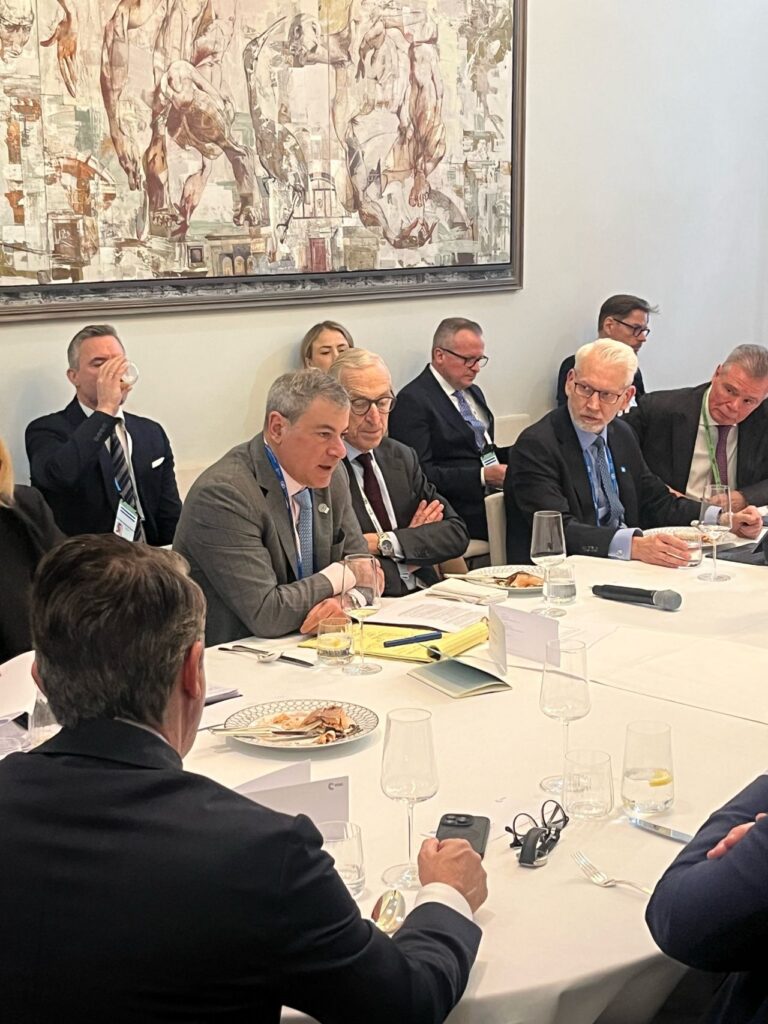
Chairing the “Power Play: Evaluating AI, Energy Demand, and Geopolitics” Roundtable hosted by CGEP.
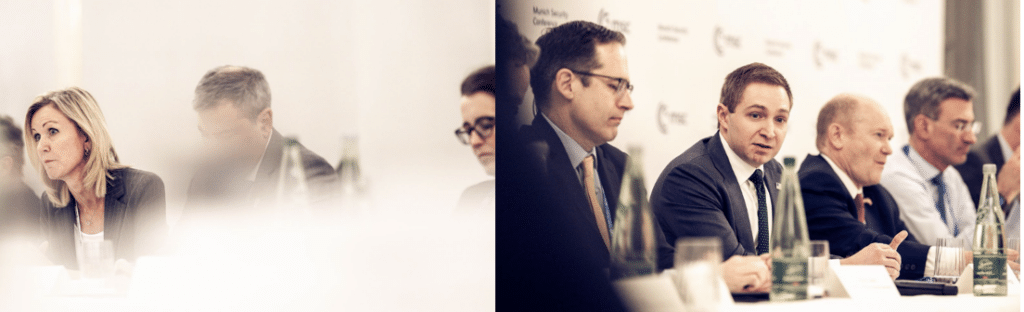
Chairing alongside Meghan O’Sullivan the MSC and ONS Energy Security Roundtable: “Power Protection: Fortifying Energy Infrastructure and Supply Chains”.
Chairing the joint CGEP and BMW Foundation “Securing Energy Supply Chains: Minerals, Markets, and Geopolitical Risks” Roundtable.
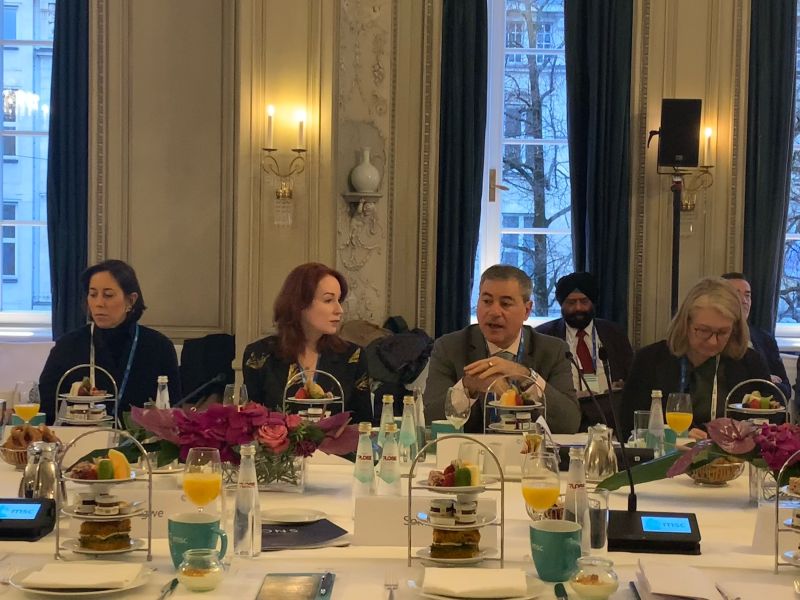
Speaking at a roundtable on natural gas and geopolitics hosted by UNIPER.
Sharing my thoughts on state capitalism, industrial policy, and energy at Lazard’s annual dinner with Peter Orszag, Senator Mark Kelly, and Secretary Gina Raimondo.
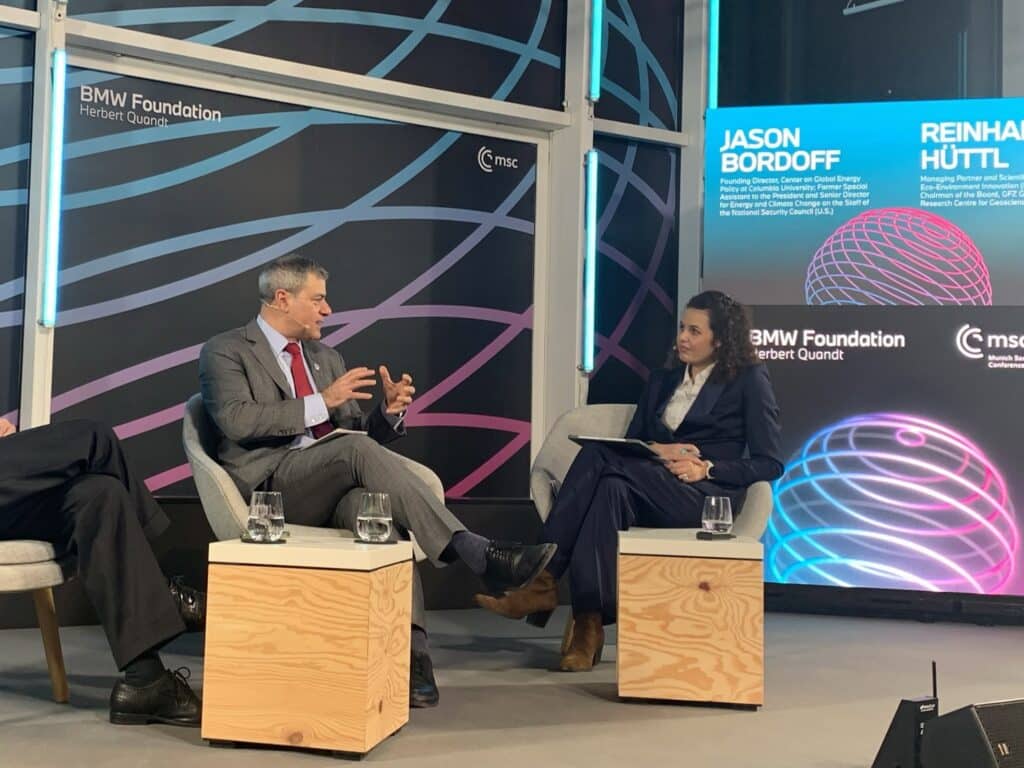
Speaking at the BMW Foundation’s Energy Security Hub in Munich about what a long-term strategy should look like for Europe to bolster its industrial competitiveness and energy security. You can watch the full conversation here.
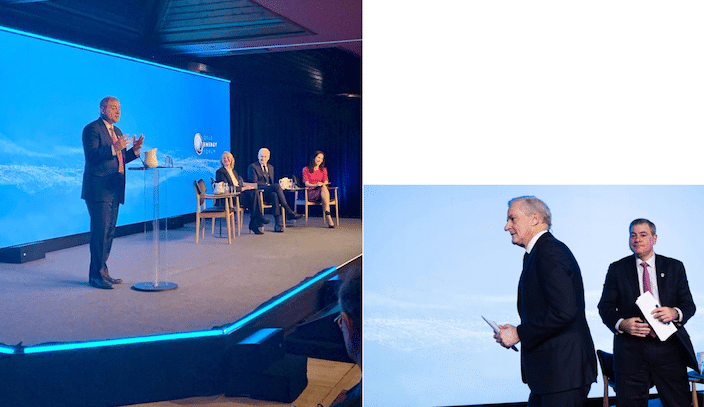
Delivering a keynote at the Oslo Energy Forum with Prime Minister Jonas Gahr Støre and European Commission Energy Director-General Ditte Juul Jorgensen.
A mass transition to green energy could help to quell future international conflicts that stem from the control of oil, energy and climate change experts told ABC News.
The war in Iran is not just another energy shock. It is arriving at a moment when Europe is already under cumulative strain: a war on its eastern border, the lingering aftershocks of the 2022 energy crisis, industrial decline, political fragmentation, fiscal limits, and a widening debate over how much of its own security it must now provide.