This website uses cookies as well as similar tools and technologies to understand visitors’ experiences. By continuing to use this website, you consent to Columbia University’s usage of cookies and similar technologies, in accordance with the Columbia University Website Cookie Notice.
The White House announced last week an oil deal for more than 65 billion barrels of oil reserves in Venezuela and a 35% equity stake in North American Blue Energy Partners (NABEP).
This week, Chinese President Xi Jinping travels to Washington for a state visit with President Trump, their second face-to-face meeting this year. Energy is likely to be high...
The Center on Global Energy Policy at Columbia University SIPA will host a series of energy and climate focused events this September during Climate Week NYC.
Event
About Us
We are the premier hub and policy institution for global energy thought leadership. Energy impacts every element of our lives, and our trusted fact-based research informs the decisions that affect all of us.
This white paper was made possible with support from the Alfred P. Sloan Foundation. It represents the research and views of the authors. It does not necessarily represent the views of the Alfred P. Sloan Foundation, the Center on Global Energy Policy, or Columbia University. The piece may be subject to further revision.
Key Takeaways
Amid a rollback of federal support for energy assistance, weatherization, and energy efficiency programs, cities are increasingly taking on a more significant role in addressing household energy insecurity (EI).
However, cities’ ability to act is heavily shaped by their enabling environment—the institutional context in which they operate, including municipal authority and capacity, state policy and funding, utility regulation, and the extent of municipal participation in utility regulatory proceedings.
A case study of three cities—New York, Atlanta, and Denver—and a broader scan of US municipalities show that cities are pursuing a range of interventions beyond utility bill assistance, including housing and building policy, weatherization and home repair, benefits access and navigation, resilience initiatives, community partnerships, and, where possible, engagement in utility and regulatory processes.
These initiatives can be classified into three tiers of enabling environments—Basic, Intermediate, and Advanced—to help cities identify approaches tried by other cities under similar conditions, assess which may be feasible for them now, and consider which changes to their enabling environment could expand their options over time.
Introduction
High and volatile energy costs continue to strain household budgets in cities across the United States. This burden disproportionately falls on low-income households and renters, who often have limited financial cushion to absorb price increases and limited resources or authority to make energy-saving improvements to their homes. Household energy costs are expected to continue increasing as new sources of electricity demand, including large industrial customers such as data centers and other large loads, place additional strain on energy systems and contribute to higher system costs.[i] Moreover, the environmental burdens associated with energy production and consumption remain concentrated in historically overburdened communities.[ii] Together, these pressures are contributing to energy insecurity (EI)—the inability to adequately meet basic household energy needs, including heating, cooling, lighting, cooking, and operating appliances and electronics.[iii]
The responsibility to address EI is increasingly falling to cities and states amid longstanding limitations in federal energy assistance programs (EAPs), uncertainty over their future, federal funding cuts, and a federal policy orientation increasingly focused on rapidly expanding infrastructure and reducing regulatory oversight. Whereas state governments shape the legal, regulatory, and funding environment within which EI initiatives operate, the role of city governments has varied across contexts and remains less documented. Yet cities are positioned to play a more active role because of their proximity to communities, understanding of local needs, and ability to coordinate across local actors. This white paper, which emerged from the Cities Uniting to Reduce Energy Insecurity (CUREi, pronounced “Cure EI”) initiative at Columbia University led by Professors Diana Hernández and Sheila Foster, explores the role of cities in addressing EI by analyzing the actions cities are currently taking; the policy and programmatic options available to them within their existing enabling environment—the institutional, policy, regulatory, and fiscal contexts that shape the actions municipalities can take[iv]; and the broader range of actions that could become available under more supportive conditions.[v]
The white paper focuses on three cities that are already collaborating in the CUREi initiative: New York City, New York; Denver, Colorado; and Atlanta, Georgia. These cities were selected because the authors had existing relationships with city staff that facilitated their participation and engagement throughout the research project and because they reflect distinct governance structures, regulatory environments, levels of state support, and municipal capacity. These differences can help facilitate an understanding of how cities pursue household EI initiatives under different enabling environments. Research involved discussions with city staff through both joint and individual convenings, as well as a review of programs and initiatives already in place.
The three case studies illustrate how the three cities differ in terms of both enabling environment and the actions they can pursue:
New York City operates within the most extensive state policy and regulatory environment of the three cases and plays an active role in implementing programs, developing local legislation and strategies, and increasingly engaging in state legislative and utility regulatory processes.
Denver operates within a supportive state policy and regulatory environment featuring a distinctive implementation model in which intermediary organizations, particularly Energy Outreach Colorado (EOC), play a central coordinating role among state government, utilities, local governments, and communities, while the city has developed an extensive portfolio of housing- and building-focused initiatives.
Atlanta operates within a more limited state policy environment, with municipal government and community organizations assuming comparatively larger roles in coordinating partnerships, filling service gaps, and advancing local initiatives.
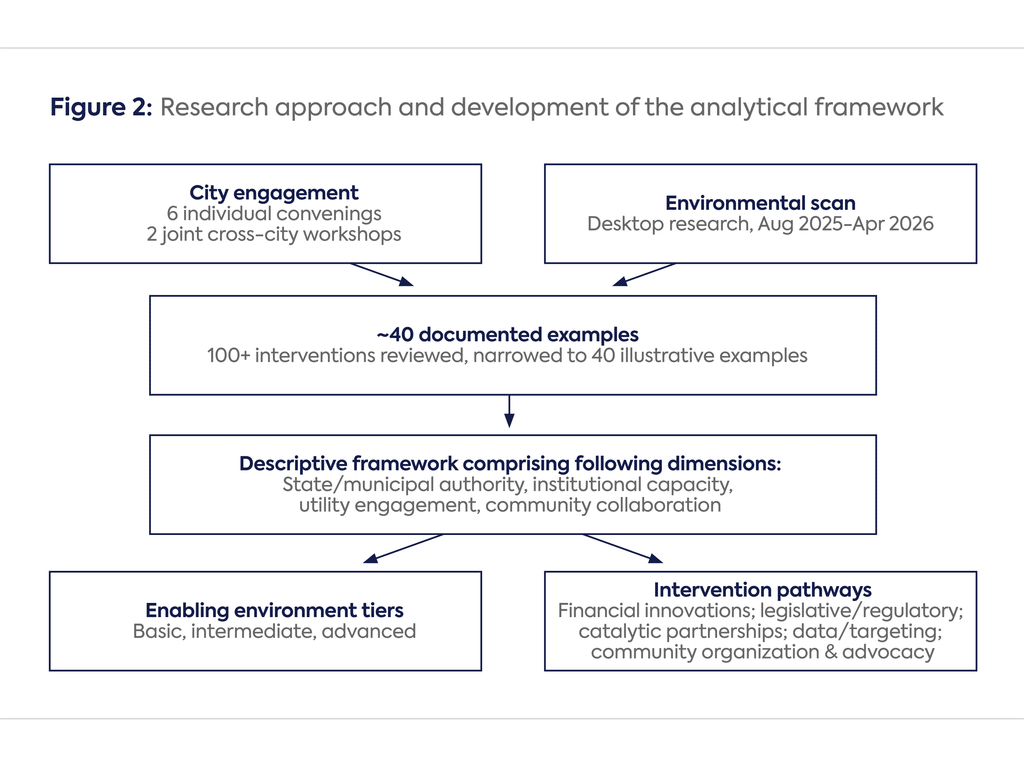
To situate the three case studies in a broader context, the authors subsequently conducted an environmental scan[vi] of municipal initiatives across the United States that are relevant to one or more dimensions of household EI. Of more than 100 initiatives identified, 40 illustrative examples were selected based on the availability of information about the institutional conditions shaping their development and implementation. These were then organized into five programmatic pathways: financial innovations; legislative and regulatory approaches; catalytic partnerships; data and targeting strategies; and community organization and advocacy.
Drawing on both the case studies and the broader environmental scan, the authors developed a descriptive framework characterizing the institutional contexts in which cities pursue household EI initiatives. This framework includes four dimensions: state-level support, municipal authority, municipal institutional capacity, and municipal engagement (or lack thereof) with utility decision-making. Based on these dimensions, three broad tiers of enabling conditions are proposed: Basic, Intermediate, and Advanced. These tiers only describe different implementation contexts observed in the course of the research. They are not intended to rank cities or initiatives, prescribe particular approaches, or evaluate program effectiveness.
The resulting framework provides a practical starting point for cities to identify policies and programs that municipalities with similar enabling conditions have tried and consider whether and how those or similar approaches might be pursued. The framework may also help cities identify ways to strengthen their enabling conditions, such as institutional capacity, engagement with utility decision-making, and state-level support, and consider how changes in those conditions may expand their opportunities for action. It is intended as a descriptive set of potential pathways under different enabling environments, not as formal recommendations or a comprehensive guide. The categories are provisional and intended to inspire future research that refines or challenges them.
Background
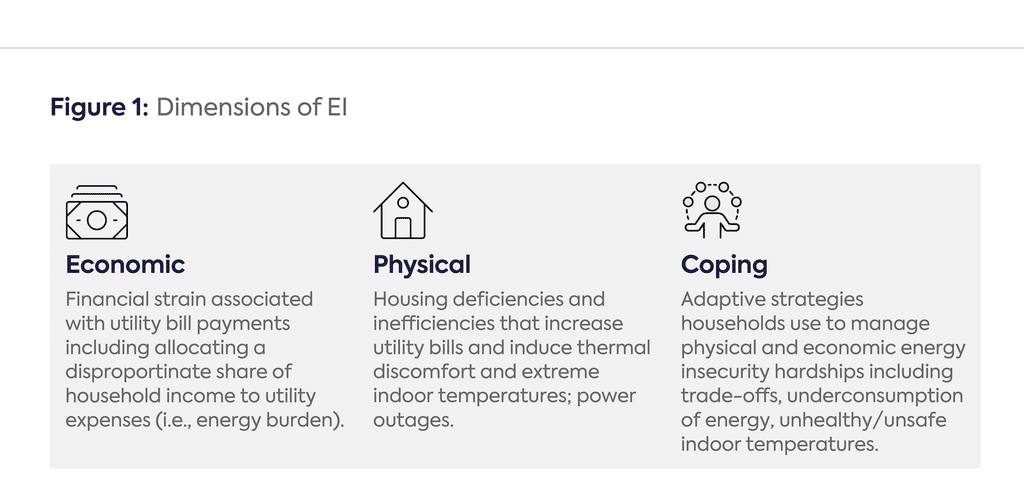
EI is multidimensional, encompassing economic, physical, and coping dimensions (Figure 1).
Household EI is measured based on a range of indicators—including difficulty paying utility bills, utility disconnections, unhealthy indoor temperatures, energy-limiting behaviors, and trade-offs between energy and other essential household expenses[vii]—that capture different aspects of these three dimensions. In 2024, 43.6 million US households (32.9 percent) experienced some form of EI, up from 33.6 million (27.2 percent) in 2020, a 21 percent relative increase over four years.
Consistent city- and community-level measures of EI remain limited.[viii] However, data on energy burden[ix]—a commonly used affordability indicator relevant to the economic dimension of EI, measured as the percentage of household gross income spent on energy expenses—are more widely available and show variation across and within the three cities. Median energy burden is estimated at 2.9 percent among New York City households, 3.5 percent in Atlanta, and 1.7 percent in Denver. Among low-income households, median energy burden increases substantially, to 9.2 percent in New York City, 7.9 percent in Atlanta, and 4.8 percent in Denver.[x] While energy burden does not measure household EI as a whole, these figures show that citywide averages can mask much greater affordability pressures among low-income households within each city.
However, while energy burden serves as a useful indicator of household EI, it captures only one component of its economic dimension and does not capture its physical and coping dimensions. Reflecting the comprehensive, multidimensional approach to EI, this white paper therefore considers not only energy cost burdens but also housing conditions that affect energy efficiency, comfort, and the coping strategies households deploy to manage the physical and economic dimensions of EI.
Methodology
This white paper is grounded in the co-city methodology, a collaborative governance framework that conceptualizes cities as platforms for shared problem-solving among public agencies, community organizations, academic institutions, and other stakeholders within an enabling environment, a core pillar of the framework.[xi] This approach treats representatives of participating city governments, referred to throughout this paper as “city partners,” not as passive subjects of analysis but as co-producers of knowledge, emphasizing mutual learning, shared agenda setting, and iterative refinement of strategies. Accordingly, this study involved close engagement with city partners through individual and cross-city workshops and drew on their knowledge and perspectives to inform the identification and interpretation of municipal initiatives, institutional conditions, and implementation challenges.
Case Studies
The white paper uses a comparative case study approach involving New York City, Denver, and Atlanta to explore how different enabling environments shape the types of actions cities can take to address EI. Case studies are a useful tool in public policy, public administration, and urban planning research for examining emergent issues where evidence is limited, theoretical understanding is still developing, or context is integral to understanding how a phenomenon unfolds.[xii] They allow for in-depth examination of a small number of cases in context and, in some cases, can generate insights with broader relevance.[xiii] In this study, the approach allowed the authors to examine the broad landscape of municipal action within each city. Specifically, the analysis considered state-level support, municipal authority and capacity, engagement with utility decision-making, and the role of community organizations and other local partners.
Case Study Data Collection and Analysis
Research for the case studies involved a review of existing city programs, policies, and strategies, broader desktop research, and ongoing engagement with city partners through six individual convenings and two joint cross-city workshops.[xiv] The convenings and workshops focused on the cities’ approaches to EI, including current initiatives, the actors involved and their respective roles, and the broader conditions shaping municipal action. They also explored opportunities for collaboration across cities. The information collected was then organized into three categories: city government, state government, and community organization. Within each category, the authors documented the principal organizations, policies, legislation, agencies, regulatory bodies, and programs relevant to addressing EI; the principal implementation challenges and institutional constraints identified by city partners; and the approaches and initiatives they described to address those challenges, where available. The authors then analyzed the cities comparatively across the categories to identify patterns in the relationships between institutional conditions and forms of municipal action, which informed the enabling environment framework developed below.
Environmental Scan
The subsequent environmental scan of municipal EI initiatives across the United States was designed to complement the case studies by identifying additional examples of municipal action under different enabling conditions. The scan was an iterative rather than exhaustive process that took place between August 2025 and April 2026, though additional initiatives were identified through continued research and conversations with city partners. It involved reviewing publicly available material on municipal programs, legislation, regulatory decisions, partnerships, and implementation approaches related to household EI, as well as examples shared by city partners of initiatives they were following or considering. Some of the initiatives identified address household EI exclusively. Others address climate, housing, utility, affordability, resilience, and environmental justice policy but include components related to one or more dimensions of household EI, such as household energy costs, housing quality and energy efficiency, access to energy assistance, affordability, and equity. Of more than 100 initiatives identified, 40 illustrative examples were selected based on the availability of information about the institutional conditions shaping their development and implementation, including relevant policies, funding mechanisms, partnerships, and institutional arrangements. These 40 examples informed the development of the intervention pathways introduced in the second part of the paper.
Key insight: Enabling Environments Shape the Parameters of Municipal Action
A key insight from the three city case studies and the broader environmental scan was that enabling environments surrounding municipal action structure the scope and nature of EI interventions. Several factors consistently influenced the types of interventions cities were able to pursue: state-level support, municipal authority, municipal institutional capacity, and engagement with utility decision-making.
Tiered Intervention Opportunities
Guided by polycentric governance frameworks[xv] and urban climate governance scholarship,[xvi] the interventions were then organized into three tiers based on their implementation prerequisites across three criteria: the type of municipal authority and state support required; the municipal capacity needed; and the degree of dependence on external actors. The tiers are as follows:
Basic Tier: The interventions required only baseline administrative powers (e.g., the ability to contract with service providers, coordinate across city agencies, or manage information systems) and could be implemented unilaterally or through partnerships with entities that cities can directly contract with or fund.
Intermediate Tier: The interventions required either a moderate level of regulatory authority (e.g., building code powers or franchise negotiation capacity) or partnerships with external entities where cities have some ability to influence decisions (e.g., upcoming franchise renewals, Public Service Commission [PSC] intervention opportunities, or coalition pressure), along with specialized technical expertise or sustained cross-agency coordination.
Advanced Tier: The interventions required substantial statutory authority (e.g., utility municipalization or community choice aggregation [CCA]) available only where state law explicitly authorizes it, depended fundamentally on state legislative or regulatory action, or required sophisticated technical and legal capacity beyond what most cities can readily develop.
The tiers describe different levels and combinations of enabling conditions available to cities. They are not intended as a ranking of cities or an assessment of performance, but rather as a way of understanding the enabling environments in which cities are pursuing EI efforts. When the framework was initially presented to city partners, they recognized their respective institutional contexts within the tiers, suggesting that the categories provided a reasonably accurate characterization of the conditions in which cities operate. Applying the tiers to other cities can help test and refine the framework and assess its utility across a broader range of contexts.
Whereas the tiers describe the enabling conditions under which cities can pursue different interventions, the interventions identified through the case studies and environmental scan were organized into five programmatic pathways, each representing a broad type of municipal action: financial innovations; legislative and regulatory approaches; catalytic partnerships; data and targeting strategies; and community organization and advocacy. The pathways are descriptive, not prescriptive, and analyzing the desirability or effectiveness of the interventions they contain is beyond the scope of this white paper, though this could be a fruitful topic for future research. Together, the enabling environment tiers and intervention pathways provide a framework for understanding the types of municipal interventions observed under different enabling environments.
Case Studies
This section presents three case studies—New York, Denver, and Atlanta—of municipal action addressing household EI within different enabling environments. The case studies map the policy, institutional, and organizational landscape surrounding municipal action, as well as the municipal actions themselves; they do not evaluate program effectiveness or compare cities based on outcomes. Each case study begins with a brief overview of the city’s overall approach to addressing household EI and the roles played by community organizations, state government, and city government. Then, within each of these spheres, the principal legislation, regulatory institutions, agencies, planning efforts, programs, and partnerships relevant to household EI are described. Where available, the case studies also summarize the principal implementation challenges and institutional constraints raised by city partners during the convenings, along with the approaches they described for addressing them.
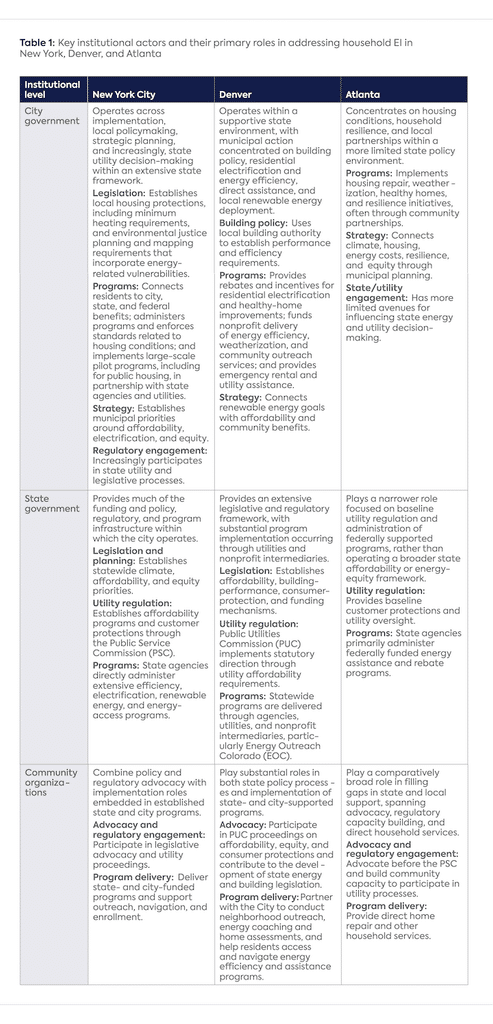
Table 1 summarizes the principal institutional actors involved in addressing household EI in the three cities and their primary roles. Appendix Table A provides a more comprehensive inventory of the legislation, policies, regulatory institutions, agencies, programs, and organizations discussed in the case studies, along with their lead institutions and roles within the broader institutional landscape.
New York City
New York City’s approach to addressing EI takes place within an extensive network of state legislation, regulatory institutions, funding programs, municipal initiatives, and community organizations. Major initiatives related to energy affordability, housing conditions, energy efficiency, electrification, and renewable energy access are established at the state level through legislation, regulatory action, and public investment. State agencies, particularly New York State Energy Research and Development Authority (NYSERDA), administer a broad portfolio of programs related to building retrofits, energy efficiency upgrades, electrification, and access to renewable energy, while the PSC has established policies and programs aimed at addressing the economic dimension of EI through bill discount programs such as the Energy Affordability Program (EAP), customer protections, and other regulatory proceedings affecting residential energy costs.[xvii]
At the municipal level, New York City has adopted laws related to housing quality and environmental justice, implements and coordinates many state-funded initiatives, and increasingly contributes research, pilot projects, and policy recommendations that inform state regulatory and legislative discussions. Community organizations operate across state and city institutional levels through advocacy, service delivery, and resident engagement.
City Government
New York City has developed an extensive municipal role to address EI that spans local legislation, program implementation and coordination, housing enforcement, long-term strategic planning, and increasingly, engagement in state utility regulatory and legislative processes.
Legislation
The New York City Council has adopted several local laws relevant to household EI, particularly in the areas of housing quality and environmental justice. The Housing Maintenance Code establishes minimum indoor temperature requirements and obligates residential building owners to provide adequate heat to tenants to meet those standards during the heating season.[xviii] Local Law 60 of 2017 requires the city to conduct an environmental justice study and maintain an interactive environmental justice map to identify communities experiencing disproportionate environmental and energy burdens and provide data that can help the city target areas where environmental, housing, and energy-related vulnerabilities overlap.[xix] Local Law 64 of 2017 requires the city’s Environmental Justice Interagency Working Group to prepare an Environmental Justice Plan, providing guidance for incorporating environmental justice considerations, including energy-related issues, into municipal planning and decision-making.[xx]
Regulatory Engagement
New York City has also taken an increasingly active role in informing state utility policy and legislation, particularly on issues related to energy affordability for residents. For example, the city participated in the PSC’s energy affordability proceeding by filing a petition and presenting findings from its 2019 Energy Cost Burden Study to inform proposed changes to the methodology and assumptions used to calculate low-income discounts.[xxi]More recently, in 2026, the city established a dedicated utility advocacy function and appointed a public utility advocate to strengthen municipal engagement in PSC proceedings, advocate for affordable utility rates and the expansion of EAPs, and increase public participation in utility decision-making.[xxii]
Program Implementation
City agencies implement and coordinate a range of initiatives related to housing quality, energy affordability, resilience, tenant outreach, and enrollment in available assistance programs, often in partnership with state agencies, utilities, and community organizations. For example, city-run platforms such as ACCESS NYC provide a single point of entry to information about and screening for multiple city, state, and federal benefits, while agencies such as the Department of Housing Preservation and Development (HPD) and the Department of Buildings (DOB) administer programs and enforce standards related to housing conditions that can affect household thermal comfort and energy costs. The city also supports learning through large-scale pilots that intersect with state priorities, such as the New York City Housing Authority (NYCHA) participation in the Clean Heat for All Challenge, which installs electric heat pump systems in public housing and is intended to inform scalable approaches to heating electrification in low-income multifamily buildings.[xxiii] Separately, the Mayor’s Office of Intergovernmental Affairs coordinates the city’s engagement with the state government in Albany and the federal government in Washington, D.C., through its State and Federal Legislative Affairs offices.[xxiv]
Strategic Planning
Finally, the city has also developed its own strategic planning efforts through the Mayor’s Office of Climate and Environmental Justice. PowerUp NYC, the city’s first-ever Long-Term Energy Plan, outlines municipal priorities related to affordability, electrification, community solar, tenant protections, and equitable access to clean energy. While many of the legislative, regulatory, and funding mechanisms relevant to household EI are established at the state level, PowerUp NYC identifies opportunities for additional action at the municipal level, including reducing the cost of electrifying low- and moderate-income housing, expanding technical assistance and financing, strengthening tenant protections, leveraging city-owned property for community solar, and advocating for more equitable utility rate structures. As described by city partners, these priorities reflect a broader municipal vision for affordability and equity that, in several areas, extends beyond the current state policy framework.
State Government
State legislation, regulatory institutions, planning processes, and agencies constitute much of the policy, regulatory, and funding framework within which EI initiatives in New York City operate.
Legislation and Planning
New York’s legislative framework establishes several long-term priorities related to climate, energy affordability, and environmental justice. The Climate Leadership and Community Protection Act (CLCPA)[xxv] requires that at least 35–40 percent of the benefits of investments in clean energy and energy efficiency be delivered to disadvantaged communities (DACs). To support implementation of this requirement, the Act established a Climate Action Council responsible for developing the state’s Scoping Plan and a Climate Justice Working Group (CJWG) responsible for identifying DACs using statewide eligibility criteria that guide the allocation of these investments.[xxvi] New York’s criteria for identifying DACs include energy poverty and energy cost burden as specific indicators, and state policy allows low-income households outside DACs to qualify for targeted clean energy and energy-efficient investments.[xxvii]
The draft State Energy Plan builds on this legislative framework by translating the state’s climate and energy goals into a long-term planning framework for the energy transition. It also addresses the affordability implications of electrification and the role of energy efficiency and electrification investments in reducing household energy expenditures, particularly for low- and moderate-income households.[xxviii] NYSERDA’s Energy and Climate Equity Strategy further identifies approaches for embedding equity into program design and implementation,[xxix] while the Extreme Heat Action Plan outlines statewide actions to reduce heat-related risks through community engagement, resilience planning, and investments targeting DACs.[xxx]
Utility Regulation
On the affordability dimension, the PSC established the EAP in 2016, which directs investor-owned utilities to provide bill discounts intended to cap household energy burdens at or below 6 percent of income for eligible low-income customers, complementing existing assistance programs such as the Home Energy Assistance Program (HEAP).[xxxi] Through data matching, customers are automatically enrolled in existing benefit programs such as HEAP, the Supplemental Nutrition Assistance Program (SNAP), Supplemental Security Income (SSI), and Temporary Assistance for Needy Families (TANF), with utilities assigning discount tiers that determine the size of the monthly bill credit. The program operates year-round and complements other forms of assistance, including HEAP and weatherization services.[xxxii] The PSC has also adopted statewide customer protection measures affecting residential utility service, including protections against utility disconnections during periods of extreme heat.[xxxiii]
Programs
State agencies, particularly NYSERDA, administer a broad portfolio of programs responsible for implementing these legislative and regulatory priorities. Several initiatives focus on reducing household energy consumption and improving housing conditions, including EmPower+, which funds energy efficiency improvements for income-qualified households,[xxxiv] and the Appliance Upgrade Program, which pays for or subsidizes the replacement of old, inefficient appliances with high-efficiency models to reduce electricity use and lower household bills.[xxxv] Other programs incorporate energy affordability and access to clean energy. Solar for All, for example, provides eligible low- and moderate-income households with automatic utility bill credits through community solar subscriptions without requiring rooftop solar or upfront investment.[xxxvi] The Energy Affordability Guarantee pilot complements certain EmPower+ electrification projects by providing bill assistance intended to ensure that participating households do not spend more than 6 percent of household income on electricity following electrification.[xxxvii]
NYSERDA also administers initiatives designed to improve access to available resources and strengthen program delivery. Regional Clean Energy Hubs fund community organizations that help residents, affordable housing providers, and small businesses identify available programs and assist with enrollment, while the Energy Equity Collaborative brings community organizations and other partners into the program design and implementation processes to promote more equitable and responsive programs for DACs.
Community organizations
Community organizations play two broad roles in New York’s approach to EI: leading advocacy efforts for related legislation, programs, and customer protections; and helping to operationalize state and city initiatives by delivering services and connecting households to programs.
Advocacy
Statewide advocacy group coalitions such as NY Renews played a central role in the passage of the CLCPA through coordinated organizing, lobbying, and advocacy.[xxxviii] In utility regulation, nonprofit organizations such as WE ACT for Environmental Justice (WE ACT), Earth Justice, Alliance for a Green Economy, and the Public Utility Law Project play a key role in representing the interests of low-income and other DACs and advocating for changes that benefit them or reduce harms. This is vital in the context of an otherwise difficult and inaccessible regulatory process.
Program Delivery
Community organizations also support the implementation of state-funded programs, such as the Weatherization Assistance Program (WAP), Regional Clean Energy Hubs, and the EAP, by navigating residents to available resources and facilitating enrollment.[xxxix]
Denver
Colorado has a relatively comprehensive statewide framework for addressing household EI. Unlike in New York, however, the framework relies heavily on intermediary organizations to implement programs rather than on direct implementation by state agencies. In other words, the state establishes the legislative, regulatory, and funding framework, while statewide nonprofit organizations, particularly EOC, coordinate implementation among state agencies, utilities, local governments, and community organizations. Within this arrangement, Denver focuses primarily on housing, buildings, and local program delivery and has developed an extensive portfolio of municipal initiatives in these areas that complement state programs.
City Government
At the municipal level, Denver has developed a broad role in addressing household EI through local legislation, program implementation, strategic planning, and partnerships with community organizations.
Building Policy
The city has used its local authority over buildings to establish a comprehensive municipal building performance initiative. Energize Denver sets local building performance requirements through benchmarking and efficiency standards.[xl] Meanwhile, the Energize Denver Energy Navigation (EDEN) pilot program provides technical assistance and pre-construction grants to support compliance with these requirements among smaller equity-priority buildings.[xli]
Programs
The city has also developed programs that directly support household energy improvements and affordability. The Denver Climate Action Rebates (CARe) program provides point-of-sale rebates for residential electrification,[xlii] while the Healthy Homes Program combines home assessments, indoor air quality improvements, and incentives for appliance replacement and heat pump installation.[xliii] Through the Office of Human Rights and Community Partnerships, Denver also invests approximately $2 million annually in nonprofit organizations delivering energy efficiency services, weatherization assistance, and community outreach.[xliv] Additionally, Denver administers the Temporary Rental and Utility Assistance Program, which combines emergency rental assistance with utility bill support for eligible households.[xlv]
Strategy
Denver’s 100 percent renewable electricity action plan sets out the City’s strategy for achieving 100 percent renewable electricity while incorporating equity and affordability considerations. Among its initiatives is expanding access to renewable energy through community solar gardens on municipal property, which will provide utility bill savings to income-qualified residents.[xlvi]
State Government
At the state level, legislation, the Colorado Public Utilities Commission (PUC), state agencies, and statewide program administrators establish the policy and administrative framework within which Denver carries out its efforts to address EI.
Legislation
State legislation establishes many of the institutional and funding mechanisms that support household energy affordability and efficiency: The 2021 Utility Bill Assistance Contributions Act (HB21-1105) created the Energy Assistance System Benefit Charge, providing a dedicated funding source for energy assistance administered through EOC[xlvii]; the 2021 Energy Performance for Buildings Act (HB21-1286) established statewide energy building benchmarking and performance requirements for covered buildings; the 2021 Measures to Modernize the PUC Act (SB21-272) sought to modernize the PUC and required it to integrate equity considerations into utility regulation; and the 2025 Utility Consumer Protection Act (HB25-1234) strengthened procedural protections for households applying for energy assistance and facing potential utility disconnections.[xlviii]
Utility Regulation
Within this legislative framework, the Colorado PUC has translated statutory direction into utility affordability requirements—most notably by requiring investor-owned electric utilities to offer Percentage of Income Payment Plans (PIPPs) that limit participating households’ energy costs to 6 percent of income for electrically heated homes and 5 percent for homes primarily heated with natural gas.[xlix]
Programs
Whereas New York administers many EI initiatives directly through NYSERDA, Colorado relies heavily on the statewide nonprofit coordinating organization EOC to implement such programs. A range of affordability and home improvement programs fall within EOC’s portfolio, including Colorado Affordable Residential Energy (CARE),[l] the Home Energy Rebate Program,[li] WAP delivery,[lii] and community solar subscriptions.[liii] EOC’s work is supported by a dedicated, state-authorized funding stream through the EASBC, established in 2021 to fund low-income energy assistance and related programs in place of an earlier severance tax allocation. This relatively stable funding structure has helped position EOC as a central intermediary in Colorado’s energy-assistance system.
Other statewide programs complement this structure through different administrative arrangements. The Colorado Department of Human Services administers the Low-Income Energy Assistance Program (LEAP)[liv] and Energy Electronic Benefit Transfer (EBT), a onetime $21 cash assistance payment for energy costs available to SNAP households that have not received LEAP in the past 12 months,[lv] while investor-owned utilities administer PIPPs. Together, these programs provide income-based bill assistance alongside the home energy upgrades coordinated by EOC.
Community Organizations
As in New York, community organizations in Denver operate across multiple levels of governance rather than constituting a separate level. They play particularly important institutional roles in both state policy development and local program implementation.
Advocacy
Community organizations participate directly in state legislative and regulatory processes.
Several organizations, including Western Resource Advocates (WRA),[lvi] Southwest Energy Efficiency Project (SWEEP),[lvii] Earthjustice,[lviii] and the Natural Resources Defense Council (NRDC),[lix] regularly participate in Colorado PUC proceedings and advocate for policies intended to expand affordability, equity, and consumer protections. They have also contributed to major state legislation. For example, WRA played a key role in developing the Measures to Modernize the PUC Act (SB21-272), which introduced an explicit equity mandate for the PUC, while the NRDC played an active role in advancing the Energy Performance for Buildings Act (HB21-1286), which established statewide building energy performance standards.[lx]
Program Delivery
Community organizations also play a central role in implementing state- and city-led programs. Through partnerships with Denver’s Office of Human Rights and Community Partnerships, organizations such as the Energy Resource Center, Groundwork Denver, and Mile High Youth Corps conduct neighborhood outreach, provide energy coaching and home assessments, and help residents identify and access available energy efficiency and assistance programs.[lxi]
Atlanta
Atlanta operates within a more limited state policy and regulatory framework for addressing household EI than New York City and Denver. Rather than a robust set of statewide affordability policies, energy justice legislation, or coordinated planning frameworks that explicitly integrate household EI into state energy policy, Georgia’s enabling environment is characterized by community organizations, utility-administered assistance programs, and municipal initiatives focused primarily on housing conditions and household resilience. As a result, Atlanta’s approach to EI is defined less by vertically coordinated state-city action and more by local partnerships that fill institutional and programmatic gaps.
City Government
In this context, Atlanta’s EI efforts focus on areas where the city has the greatest ability to act, including housing quality, healthy homes, weatherization, and partnerships with community organizations. Given that the city also has limited ability to shape statewide energy policy and utility regulation, city partners emphasized the substantial institutional influence of Georgia Power, the main utility serving Atlanta, describing it as a de facto fourth leg of government, and noted the difficulty of navigating the regulatory process to advance meaningful affordability protections, such as a PIPP. They also observed that state-level politics influence the distribution of program resources, which they perceive as often flowing away from the Atlanta metro area toward other parts of the state. In response to these state-level challenges, the city has focused on building coalitions horizontally with other cities across Georgia.
Programs
Many city initiatives focus on reducing the physical drivers of household EI through housing improvements. Programs such as WeatheRISE, delivered through partnerships with community organizations, provide weatherization and energy efficiency upgrades for income-qualified households.[lxii] Other initiatives address housing conditions that contribute to both high energy costs and poor health outcomes. These initiatives include Care and Conserve, roof replacement assistance, and healthy homes programs focused on mold, lead, radon, electrical safety, heating and cooling systems, and other housing deficiencies.[lxiii]
Building on these initiatives, Atlanta is working to develop ways to better coordinate existing resources. ROOTED: Critical Home Repair and Weatherization Network is a new initiative designed to connect residents with critical repair, environmental remediation, weatherization, and energy efficiency programs through a centralized Retrofit Navigator. Led by the Mayor’s Co-Design Lab in partnership with community organizations and public agencies, the initiative aims to streamline access to home improvement resources and explore longer-term financing pathways to sustain these efforts.
Strategy
Atlanta has also developed a broader strategic vision for climate resilience, clean energy, and equitable development through the Clean Energy Plan, the Resilient Atlanta Strategy, and the Atlanta Climate Action Plan. These citywide plans and strategies establish priorities that have a direct bearing on household EI, including improving housing quality, reducing energy costs, ensuring climate resilience, and empowering communities. However, city partners emphasized that limited dedicated funding continues to constrain efforts to translate them into enduring programs.
State Government
Compared with New York and Colorado, Georgia’s role in addressing EI is considerably narrower. State policy is primarily focused on baseline utility regulation and administering federally funded assistance programs rather than establishing a broader framework for energy affordability or equity.
The principal statewide protections consist of utility customer protection requirements administered through the Georgia PSC, including seasonal disconnection restrictions during cold weather and temporary protections during National Weather Service heat advisories or excessive heat warnings.[lxiv] While these protections provide important safeguards to vulnerable customers, they do not establish broader affordability planning requirements or utility obligations of the kind found in New York or Colorado.
Similarly, statewide programming remains relatively limited, with existing programs centering largely on administering federal resources. The Georgia Department of Human Services administers the Low Income Home Energy Assistance Program (LIHEAP) through Community Action Agencies, while the Georgia Environmental Finance Authority (GEFA) administers federally funded home energy rebate programs supporting electrification and home efficiency improvements. Utility-administered affordability initiatives, such as Georgia Power’s Income-Qualified Discount, provide additional assistance but mainly operate through utility programs rather than within a statewide affordability strategy.
Community Organizations
Community organizations play a more expansive role in Atlanta than in New York and Denver. Rather than primarily complementing state programs, many of these organizations perform functions that city and state agencies or formal statewide initiatives perform elsewhere. They simultaneously advocate for policy change, participate in utility regulation, build community capacity to engage in regulatory processes, and directly deliver programs that address household EI.
Advocacy and Regulatory Engagement
Organizations such as the Partnership for Southern Equity (PSE), the Southern Environmental Law Center (SELC), Southface Institute, and Georgia Interfaith Power and Light (GIPL) engage in advocacy and participate in regulatory proceedings before the Georgia PSC. For example, the PSE’s Fight the Hike campaign mobilized public participation in Georgia Power’s rate proceedings,[lxv] while Southface Institute and GIPL provide education and training to help community members participate more effectively in Georgia Power’s Integrated Resource Plan process.[lxvi]
Community organizations also serve as major program delivery partners, including for Nehemiah Project’s Senior Home Repair Program and Atlanta Habitat for Humanity’s Repair with Kindness. These programs provide critical home repairs for low-income households, seniors, veterans, and residents with disabilities, addressing housing deficiencies that contribute to high energy costs and unsafe living conditions.[lxvii]
Challenges Across the Three Cities
Across the three case studies, city partners identified a range of challenges that they have encountered in developing and implementing efforts to address household EI. This section organizes these challenges thematically and, where possible, highlights initiatives the cities have implemented or are pursuing to address them.
Challenge 1. Funding Constraints and Uncertainty
New York City: Funding Instability
City partners noted that, amid uncertainty around federal funding, ensuring households can afford and access reliable energy services poses a major challenge. New York City has begun exploring measures to preserve benefit levels during fiscal shocks and is developing a policy brief on safeguards against backsliding in efforts to address EI. At the same time, the city still relies on federal safety-net programs as eligibility gateways: SNAP and TANF status are commonly used to auto-enroll residents into energy affordability and efficiency programs such as HEAP, EAP, WAP, NYSERDA EmPower+, Solar for All, and state arrears relief. While this linkage helps expand access, it also creates a vulnerability: Cuts to federal benefits or tightened eligibility criteria can jeopardize households’ access to energy assistance. Recent federal proposals for stricter work requirements or shorter benefit durations illustrate the risk that low-income households can lose access to energy programs precisely when affordability pressures are increasing.
Denver: Budget Constraints and Fiscal Uncertainty
City partners reported that budget pressures have compounded Denver’s operational challenges in addressing EI. As of October 2025, the mayor’s revised 2026 budget projects a $200 million shortfall driven by slower revenue growth and rising costs, necessitating significant staff reductions across city departments. Denver’s Office of Climate Action, Sustainability, and Resiliency (CASR) is operating under a substantially reduced budget, which may limit the pace and scale of energy efficiency, rebate, and building performance programs.[lxviii]
These local constraints are occurring alongside reductions in federal support. The US Department of Energy has canceled more than $7.5 billion in renewable energy project funding nationwide, including approximately $500 million allocated to Colorado,[lxix] resulting in the delay or cancellation of dozens of projects and grants intended to support state and local renewable energy and affordability efforts. Together, local budget cuts and federal funding rollbacks create uncertainty about program continuity and long-term planning.
Atlanta: Funding Constraints and the Absence of Stable, Long-Term Financing Mechanisms
Atlanta does not have a single, dedicated budget line for addressing EI, relying instead on a patchwork of short-term grants, limited city allocations, and selective state and federal funding sources. While Georgia has adopted certain renewable energy financing tools, such as the Commercial Property Assessed Clean Energy program authorized under House Bill 206, these tools are limited to commercial properties and do not support residential EI needs.[lxx]
Moreover, Atlanta is increasingly struggling to identify sustainable financing pathways to maintain and scale EI initiatives amid reduced state support and widening gaps in federal funding. Georgia’s downsizing or cancellation of clean energy projects has resulted in substantial lost investment and jobs.[lxxi] Recent federal rollbacks in renewable energy funding and incentives have only exacerbated the financing challenge,[lxxii] and Atlanta also lacks mechanisms to sustain programs when federal funding is rescinded or expires. City partners also noted difficulties in ensuring that project-specific funding is used for long-term housing and energy improvements—key underlying causes of EI—rather than households’ immediate energy payment needs, which hinders the city’s ability to move from short-term relief toward durable retrofits and resilience-focused investments.
Challenge 2. Gaps in Program Coverage and Access
New York City: Growing Demand and Undercoverage of Moderate-Income Households
As energy costs rise, already limited affordability funding may become more constrained, which risks crowding out moderate-income households that continue to face high energy burdens but fall above existing eligibility thresholds, an issue known as undercoverage. This gap is likely to widen as energy costs and cooling needs increase unless program eligibility and funding structures are adapted to expand coverage. The 2025 decision to expand the EAP to include moderate-income households is a step in this direction. While this change improves coverage, however, it does not fully address the gap between growing need and finite funding, particularly as system costs continue to rise.
New York City: Seasonality and Administrative Gaps in Affordability Programs
The seasonal structure of several core EI programs presents an ongoing challenge for consistent affordability support. This is most evident in the interaction between the federally funded HEAP and the state-funded EAP. Utilities auto-enroll customers into EAP once they are verified as receiving qualifying public benefits, most commonly HEAP but also SNAP, SSI, or TANF. Because HEAP serves as the primary enrollment gateway, many households only access EAP after applying for HEAP during its seasonal application window. This structure creates timing gaps in which households may miss months of EAP bill credits while waiting for the HEAP enrollment window to open or for their HEAP status to be recognized by EAP. It also contributes to undercoverage among otherwise eligible households that do not apply for HEAP, as well as administrative delays stemming from verification and data-matching backlogs.
Denver: Undercoverage Driven by Administrative Barriers and Program Design Trade-Offs
City partners reported that undercoverage—the share of eligible households that do not ultimately receive program benefits—poses a central challenge to Denver’s EI programs. On the operational side, the CASR designs rebate and incentive programs with an explicit focus on minimizing leakage, defined as benefits flowing to households or projects outside intended eligibility criteria. While this approach is intended to improve targeting and preserve limited resources, it can also create barriers to participation. Extensive documentation, verification requirements, and application complexity can discourage eligible residents from applying or completing enrollment, particularly among households facing time constraints, language barriers, or limited access to information. In practice, efforts to tightly control leakage may also curtail program participation.
The same tension applies to Denver’s regulatory tools, including Energize Denver, where earlier iterations of the ordinance generated significant backlash, particularly from segments of the business community, prompting the city to revise compliance pathways and timelines. This reflects a broader challenge of maintaining ambitious performance standards while ensuring feasibility and buy-in across diverse building owners and stakeholders. Addressing this challenge will require simplifying administrative processes, expanding outreach, and better balancing program precision with accessibility and uptake.
Atlanta: Data Fragmentation and Logistical Barriers to Program Access
While Atlanta has substantial data on local energy burdens and household vulnerability, it has struggled to translate that data into coordinated, user-centered program delivery. The proliferation of overlapping programs and eligibility rules has made it difficult for residents to understand how to access and combine available resources, including rebates, incentives, and assistance programs. In response, the city is pursuing initiatives such as ROOTED to improve coordination across existing housing repair, weatherization, and energy efficiency resources.
Challenge 3: State Policy and Institutional Constraints
New York City: State Policy Misalignment
New York City has generally pursued more ambitious and proactive climate and energy goals than New York State, creating both opportunities and friction in addressing EI. While the city has developed local strategies that integrate affordability, housing quality, and decarbonization, the pace and scope of state policy and funding continue to shape how far these efforts can expand. For example, delays in finalizing statewide initiatives such as New York’s proposed Cap-and-Invest Program (NYCI) have postponed the availability of potential new funding streams for energy equity and affordability investments in the city. More broadly, city partners emphasized that many initiatives remain dependent on state legislative, regulatory, and funding decisions.
L4 Atlanta: Limited State-Level Support and an Insufficient Safety Net
Atlanta’s efforts to address EI operate within a state context of limited policy alignment, statutory support, or sustained funding. Unlike New York and Colorado, Georgia does not have a consolidated state framework for energy affordability, equity, or EI, leaving its cities with fewer tools to build coordinated programs. This has placed pressure on Atlanta to initiate city-led responses that extend beyond its traditional jurisdictional authority. Programs such as WeatheRISE Atlanta were launched in part to compensate for the insufficiency of Georgia’s state-level LIHEAP support relative to local needs. However, the lack of strong state backing limits the scale and durability of these efforts and their integration with utility and regulatory systems, forcing the city to rely on temporary or pilot-based interventions.
Challenge 4: Affordability Pressures and Implementation Trade-Offs
New York City: Equity Risks and Cost-Shifting
New York City faces ongoing concerns that efficiency and affordability investments may not translate into benefits for tenants absent strong safeguards. In rental housing, particularly multifamily buildings, rebates and retrofits can be capitalized into higher rents or fees, shifting costs onto tenants and undermining affordability goals. While the city seeks to keep household energy burden under the 6 percent target and to pair building upgrades with anti-displacement tools, outcomes depend heavily on sustained funding and enforcement capacity. To address these challenges, the city is working to better identify coverage gaps and hard-to-reach populations, including tenants whose utility costs are bundled into rent and therefore less visible in traditional assistance programs. The city is also prioritizing multifamily housing over single-family homes, recognizing differences in ownership structures, cost recovery, and incentives, and is exploring pathways to electrify energy-insecure buildings without transferring costs to tenants.
Denver: Rising Utility Rates and Affordability Pressures
Rising utility rates present an additional challenge for Denver’s EI strategy. Even as the city invests in building efficiency and renewable energy programs, increasing electricity and gas costs can offset household savings, particularly for renters and low-income residents who have limited control over building systems. Without stronger coordination between utility rate-setting, affordability programs, and city-led interventions, the intended benefits of efficiency upgrades and rebate programs may not reach the households that need them.
From Evidence to Action: Tiers of Municipal Action to Address EI
While the case studies explore how three cities are addressing household EI within their own institutional contexts, the environmental scan broadened the lens to identify examples of municipal action from across the United States. In analyzing these examples, the authors identified four recurring factors related to the institutional context in which municipal actions were developed and implemented: state-level support, municipal authority, municipal capacity, and the city’s relationship with utility decision-making. The examples were then categorized according to these factors.
Municipal Authority
The initiatives identified frequently relied on particular powers and tools available to municipal governments, including authority over building codes, housing standards, land use, permitting, enforcement, and finances, such as the ability to levy taxes or fees, bonding capacity, or other revenue mechanisms that can support sustained programming. In some cases, municipal ownership or operation of utility infrastructure provided a distinct pathway, while in others municipal action relied on specific grants of authority under state law.
Municipal Capacity
Existing administrative and organizational infrastructure also appeared to play a role in supporting the development and implementation of initiatives. This included staff expertise, interagency coordination, relationships with community-based organizations, existing program platforms and data systems, the ability to dedicate and sustain budgetary resources, and the operational capacity needed to implement, target, and evaluate interventions over time. Many initiatives drew on different combinations of these existing municipal resources and capabilities.
State-Level Support
State policy and funding also emerged as important factors shaping resources and policy tools available to cities. This includes the broader legal, regulatory, and funding environment created by the state, as well as the scope of PUC authority, the design of energy planning mandates, the presence of weatherization and bill-assistance infrastructure, utility obligations to serve low-income households, and legislative provisions such as home-rule authority or requirements that utilities coordinate with municipalities. The case studies illustrate different configurations of these conditions: New York City and Denver operate within relatively extensive state policy and program frameworks, while Atlanta operates within a more limited state framework.
Utility Relationship
Many of the initiatives identified also depended on some degree of interaction with utility decision-making, whether through direct municipal control, utility partnerships, franchise relationships, or participation in regulatory processes.Cities served by municipal utilities tend to have more direct control over rates and program design, while cities served by investor-owned utilities generally have less control but can still exercise varying degrees of leverage or regulatory influence. The examples reflected these different forms of municipal engagement with utilities and utility oversight.
Together, these four factors informed a descriptive framework for municipal contexts comprising three broad tiers: Basic, Intermediate, and Advanced. The tiers describe differences in implementation feasibility rather than policy importance. They are not intended to suggest that cities should progress through the tiers or that interventions in higher tiers are preferable to those in lower tiers. Instead, they provide a way to organize examples of municipal action according to the enabling environments typically associated with their development and implementation. The tiers are organized around the starting places available to cities for taking action, acknowledging that some cities operate under more constrained circumstances while others have greater flexibility.
Basic Tier Pathways are interventions that cities can generally pursue across a range of enabling environments, using administrative authority, existing delivery systems, and comparatively modest resource commitments.
Intermediate Tier Pathways are interventions that require a stronger enabling environment, such as greater municipal authority, more developed institutional infrastructure, stronger cross-sector coordination, or more stable funding.
Advanced Tier Pathways are interventions that depend on the most supportive enabling environment, including robust state-level support, substantial local capacity, or, in some cases, meaningful leverage over utility regulation, infrastructure, or long-term capital planning.
What follows is a detailed description of the tiered intervention opportunities and programmatic pathways, with illustrative examples drawn from cities across the US.
Basic Tier
Basic Tier interventions rely primarily on administrative authority, existing municipal functions, and partnerships that most cities can establish without requiring substantial changes to state law or utility governance. They generally require comparatively modest institutional capacity and can often be implemented through existing municipal departments, community organizations, or interagency collaboration.
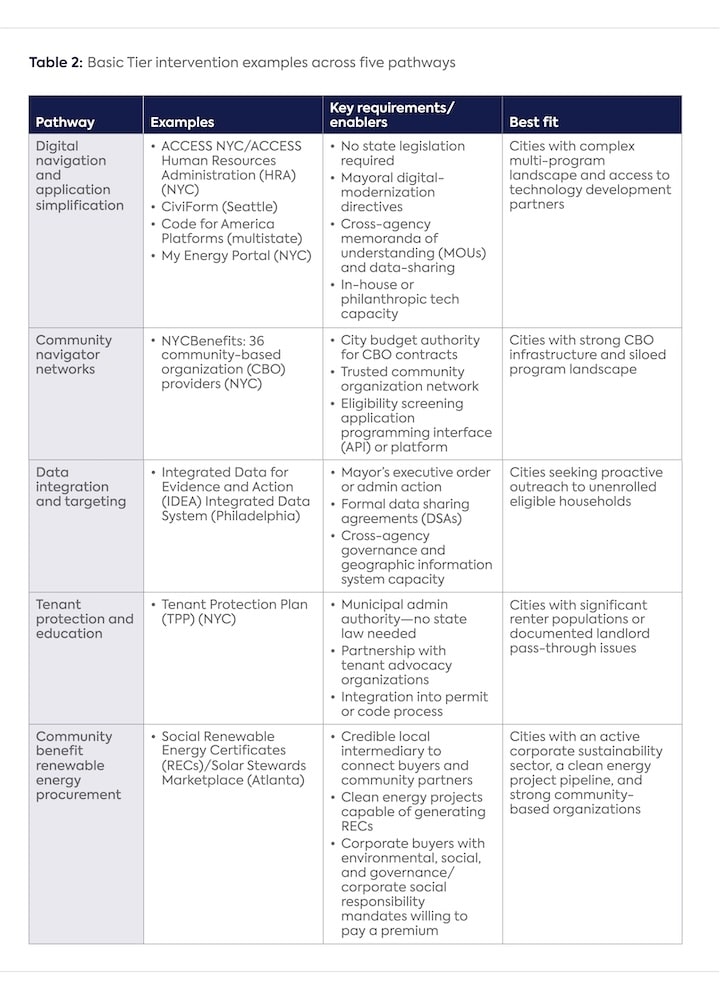
Table 2 summarizes the Basic Tier interventions across five types of intervention pathways—categories of municipal programs and policies—along with their key enablers and best-fit contexts. The examples were identified through the case studies and broader environmental scan and are intended to demonstrate the range of municipal actions associated with these implementation conditions, rather than prescribe a specific sequence of action.
Digital Navigation and Application Simplification
Digital navigation tools are online platforms that help residents identify programs for which they are eligible, guide them through the application process, and reduce the paperwork burden that keeps many households from accessing the assistance they need. These tools do not require new state legislation; they can be developed through city leadership, cross-agency coordination, and, in many cases, philanthropic technical assistance.
Illustrative Examples:
ACCESS NYC/ACCESS Human Resources Administration (HRA) (New York City): An integrated eligibility-screening and application platform covering more than 70 public benefit programs. ACCESS NYC provides eligibility information and screening, while ACCESS HRA is the transaction portal through which residents complete applications for specific benefits, including SNAP, cash assistance, and the Fair Fares transit subsidy. Together, they are managed by the NYC Department of Social Services (DSS) and HRA, in partnership with the Service Design Studio, the Office of Technology and Innovation (OTI), Blue State Digital, Amazon Web Services, and the Mayor’s Public Engagement Unit. Funding comes from the NYC Opportunity Innovation Budget and the multibillion-dollar DSS/HRA operating budget rather than a standalone line item. Local Law 96, which strengthened language-access requirements, and mayoral directives on digital modernization created the institutional conditions for a unified, mobile-friendly system.
CiviForm (Seattle): A unified application platform that streamlines applications for low‑income residents to more than 20 programs across 10 agencies, including utility-discount programs, childcare subsidies, and food assistance.[lxxiii] The platform reduces the time burden for applicants by eliminating redundant questions, using progressive disclosure, and pre-filling information. Since its implementation, average application time fell from approximately 30 minutes to 6 minutes.[lxxiv] CiviForm was developed by Seattle’s Innovation and Performance Team with support from 20 full-time fellows from Google.org and the design firm Exygy. Funding comes from city innovation budgets, philanthropic technical assistance from Google.org, and agency operating funds rather than a standalone appropriation.[lxxv] The platform was enabled by mayoral directives on digital modernization and interagency agreements allowing shared eligibility logic and data flows. It also incorporates the latest US Web Design Standards and meets the highest level of federal accessibility requirements.[lxxvi]
Code for America (multiple cities): A national nonprofit that partners with government agencies to modernize and simplify applications for public benefits, including SNAP, Medicaid, TANF, LIHEAP, childcare assistance, and tax credits.[lxxvii] The organization’s human‑centered digital tools streamline eligibility workflows, reduce application times, and improve outreach and completion rates. Code for America works with city, state, and federal agencies through memoranda of understanding (MOUs), procurement agreements, and data-sharing contracts. This allows cities without in-house capacity to develop and maintain digital benefits tools to draw on external expertise. The organization is funded through government contracts and private philanthropy.[lxxviii]
Community Navigator Networks
Community navigator networks fund trusted community-based organizations to provide direct, in-person assistance with benefit applications. These organizations meet residents where they are—in community centers, libraries, and faith institutions—and help them navigate the complexity of multiple benefit programs. This model is especially powerful for households facing language barriers, limited digital access, or distrust of government institutions.
Illustrative Example:
NYC Benefits (New York City): A city-funded network of 36 community organizations that helps residents enroll in public benefit programs using shared screening tools and multilingual resources developed by the city. HRA and the OTI developed two tools to support navigators: a Benefits Screening application programming interface (API) that allows providers to assess residents’ eligibility across programs[lxxix] and a Benefits and Programs Content Dataset available in 11 languages.[lxxx] The program is funded through city budget appropriations, with approximately $250,000 per year allocated to the initiative and an additional $200,000 to $350,000 per year for technical assistance and backbone provider support.[lxxxi] The enabling conditions for this model are minimal: city budget authority, an existing network of community organizations, and a platform or API through which navigators can efficiently screen clients. No state legislation was required for NYC Benefits.
Data Integration and Proactive Targeting
Data integration programs use existing administrative data, such as utility billing records, tax filings, and social services enrollment records, to proactively identify households that are likely eligible for assistance and either enroll them automatically or prompt targeted outreach. These approaches shift the burden of connecting to aid from residents to government, helping to reach households that are unlikely to find their way to an application portal.
Illustrative Example:
Integrated Data for Evidence and Action (IDEA) (Philadelphia): An integrated municipal data system that links administrative information across agencies—including water billing and arrears, tax records, social services enrollment, broadband programs, and transit eligibility—to identify households eligible for assistance and support proactive outreach and enrollment across multiple programs. For households that meet an income threshold, are already enrolled in SNAP or Medicaid, or live in a high-burden census tract, IDEA can automatically trigger enrollment in water discounts (typically at or below 150 percent Federal Poverty Level),[lxxxii] transit subsidies, and connectivity programs. IDEA operates under city authority—with no state legislation required—relying on the Mayor’s executive authority and interagency data sharing agreements (DSAs) that govern data use, privacy, and matching.[lxxxiii] Funding comes from water utility revenues, city general funds, and philanthropic and technical assistance support from Bloomberg and Harvard’s Data-Smart initiative.[lxxxiv] Additional support is provided by the Managing Director’s Office, which supplies governance and coordination, and the Water Revenue Bureau and Department of Revenue, which supply core data and program levers (e.g., water discounts and tax relief), while philanthropic partners (e.g., Bloomberg and Harvard Data‑Smart) contribute technical assistance. IDEA’s enabling environment is characterized by strong internal data governance, legal capacity to draft DSAs, and political support for proactive, data‑driven enrollment rather than purely application‑driven models.
Tenant Protection and Education
Tenant-facing interventions address a fundamental problem in multifamily housing: landlords capturing the financial benefits of energy assistance and efficiency investments rather than passing the savings on to tenants. These interventions can take the form of mandatory disclosure requirements, know-your-rights campaigns, or mechanisms designed to ensure that benefits reach households directly.
Illustrative Examples:
Tenant Protection Plan (TPP) (New York City): New York City’s tenant protection framework includes both project-specific construction safeguards and broader cross-agency efforts to protect renters from unsafe conditions, landlord misconduct, and avoidable disruption.[lxxxv] One component of this framework is the TPP, which requires owners to document how construction-related impacts, such as dust, noise, pests, and interruptions to heat, water, and other essential services will be managed. The DOB reviews and enforces these requirements through the permitting process. The broader tenant protection framework was recently reinforced by the city’s revitalization of the Mayor’s Office to Protect Tenants through Executive Order 03.[lxxxvi]
Community Benefits Renewable Energy Procurement
Some cities have explored renewable energy procurement models that explicitly direct financial benefits from clean energy projects to communities experiencing high energy burdens. Rather than focusing solely on renewable energy generation, these approaches connect energy procurement with community benefit agreements, bill assistance, workforce development, or other locally defined priorities. They typically require partnerships among renewable energy developers, corporate purchasers, community organizations, and trusted intermediaries.
Illustrative Example:
Social Stewards Marketplace (Atlanta, GA): Social Renewable Energy Certificates (RECs) are certificates associated with solar projects that provide direct benefits to historically underserved communities. Founded in 2016, Solar Stewards operates a patented marketplace connecting corporate buyers, known as Climate Stewards, with solar projects sited in or serving underserved communities.[lxxxvii] Corporate buyers purchase Social RECs as part of meeting their sustainability goals,[lxxxviii] with projects supporting schools, affordable housing, places of worship, and nonprofits. The model is supported by regional clean-energy projects capable of generating RECs, a verified tracking system such as M-RETS, corporate buyers willing to pay a community premium, and a credible local intermediary and community partners. Because this model is relatively new, transparent verification through clear contracts, REC registry documentation, and evidence that community benefits were delivered is integral to establishing credibility.
Intermediate Tier
Intermediate Pathways require stronger enabling conditions than the Basic Tier, including some municipal authority over buildings or utilities, productive partnerships with serving utilities, or a state-level policy environment that makes certain tools legally available. Cities in this tier can formalize utility partnerships, establish building performance standards, create green financing institutions, and mount targeted multifamily programs. These measures, however, require investments in legal, technical, and institutional capacity that not every city can make.
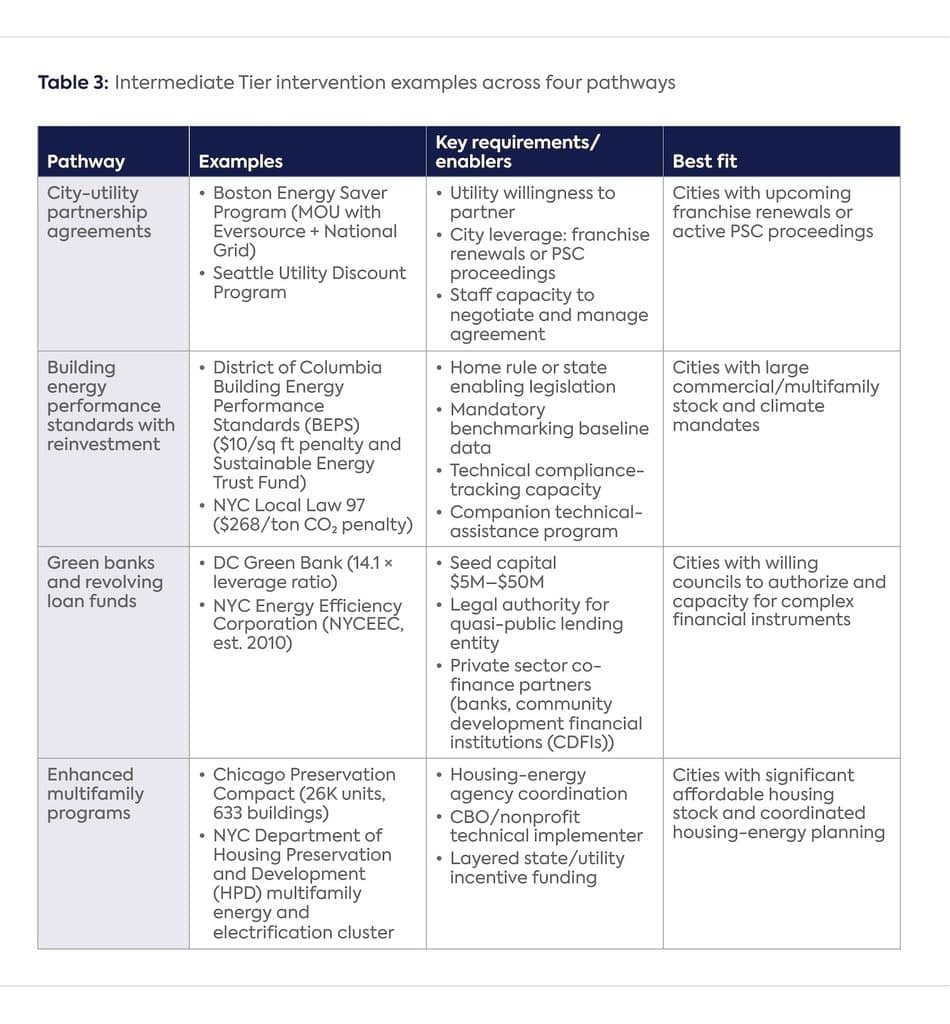
Table 3 summarizes the programs and policies identified through the case study analysis and broader environmental scan and classified within the Intermediate Tier. It organizes these examples across the four intervention pathways and identifies their key enablers and best-fit contexts.
City-Utility Partnership Agreements
Formal partnerships between cities and utilities, whether investor-owned or municipal, can help expand EAPs without requiring new state legislation. These agreements typically take the form of MOUs that define shared goals, resource commitments, and accountability mechanisms. They are most effective when cities have meaningful leverage over utilities through franchise agreement negotiations, PSC proceedings, or municipal ownership.
Illustrative Example:
Boston Energy Saver (Boston, MA): A free city-run service that provides one-on-one guidance to renters, homeowners, and small businesses on identifying and accessing rebates, no-cost upgrades, and other available energy programs.[lxxxix] Households meeting the 2025–26 income threshold (up to $67,709 for a two-person household, with sliding thresholds for larger household sizes) may qualify for no-cost weatherization and electrification upgrades.[xc] The program was launched administratively by the City of Boston’s Environment Department in 2025 and formalized by an MOU with Eversource and National Grid signed on March 17, 2025. It builds on Massachusetts’ statewide Mass Save program, administered by Eversource and National Grid, by adding city coordination capacity. Under the MOU, partners committed to delivering 5,000 heat pumps and 10,000 weatherizations between 2025 and 2027.[xci]
Building Energy Performance Standards with Reinvestment
Building energy performance standards require large buildings to meet energy-efficiency or carbon-emission targets within defined compliance periods. When penalties for noncompliance are directed into a dedicated reinvestment fund, rather than a general budget, they can generate a durable revenue stream for low-income energy assistance and affordable housing retrofits. The design of the reinvestment mechanism can be as important as the standard itself.
Illustrative Example:
District of Columbia Building Energy Performance Standards (BEPS). DC established BEPS through the Clean Energy DC Omnibus Amendment Act of 2018 as a core part of its Clean Energy Plan.[xcii] The standards require buildings over 10,000 square feet to meet minimum energy performance thresholds, measured using Energy Star median scores by property type, across three compliance cycles through 2040. Noncompliance carries a penalty of $10 per square foot, capped at $7.5 million per building. Critically, penalty revenues flow into the Sustainable Energy Trust Fund, which supports clean energy and efficiency programs, BEPS implementation, and low-income and affordable housing energy upgrades.
DC built BEPS on top of a mandatory benchmarking requirement that had been in place since 2013 for buildings over 50,000 square feet, providing the baseline data necessary to set meaningful performance standards. Companion institutions, the Building Innovation Hub, the Affordable Housing Retrofit Accelerator, and the DC Green Bank, were developed alongside BEPS to support compliance and ensure equitable implementation.[xciii]
Green Banks and Revolving Loan Funds
Green banks are public or quasi-public institutions that use a relatively small amount of public seed capital to attract and leverage private investment in clean-energy and efficiency projects that might otherwise be difficult to finance at scale. They can provide a financing pathway for affordable multifamily housing and community-serving buildings in places where the economics of energy retrofits are complex and conventional lenders are reluctant to participate.
Illustrative Example:
The DC Green Bank. Established in 2018 through a DC Council enabling act, the DC Green Bank began operations in 2020.[xciv] It provides loans, co-lending arrangements, and credit support to borrowers that may struggle to access private financing for clean-energy and efficiency upgrades, including affordable multifamily housing owners, nonprofits, and community-serving buildings. Seed funding came from District appropriations, and the bank has also drawn on federal climate-related funding opportunities when available. The bank is governed by an independent board within the DC Green Finance Authority and partners with the District Department of Energy and Environment and the private sector, including banks, community development financial institutions (CDFIs), and developers.
NYC Energy Efficiency Corporation (NYCEEC). Launched in 2010 with American Recovery and Reinvestment Act stimulus funding channeled through New York City, NYCEEC is one of the earliest city-level green financing institutions in the United States. It later became an independent nonprofit, which afforded it greater operational flexibility while maintaining a public-interest mission. The corporation provides loans and predevelopment financing to building owners for energy efficiency and electrification upgrades, with a focus on affordable housing and other mission-driven organizations and institutions. NYCEEC works with the NYC government, NYSERDA, banks, CDFIs, and affordable housing developers. The compliance requirements introduced by Local Law 97 have significantly increased demand for the retrofit financing that NYCEEC provides.[xcv]
Enhanced Multifamily Programs
Targeted multifamily programs address the structural complexity of improving energy performance in affordable and naturally occurring affordable housing, where building owners, tenants, financing constraints, and regulatory requirements all interact. These programs typically require coordination among city energy and housing agencies, a technical implementing partner, and layered funding from utility efficiency portfolios, state programs, and philanthropic sources.
Illustrative Examples:
Chicago Preservation Compact. A public-private initiative convened by the Community Investment Corporation (CIC), with Elevate Energy as the primary technical implementing partner, the Chicago Preservation Compact focuses on preserving naturally occurring affordable housing and reducing operating costs through energy-efficiency retrofits. The Compact partners with the City of Chicago Department of Housing, ComEd, Peoples Gas, and the MacArthur Foundation, which provided founding philanthropic support.[xcvi] Funding comes from utility energy-efficiency portfolios approved through Illinois Commerce Commission regulatory proceedings,[xcvii]philanthropic grants,[xcviii] approximately $23 million in Chicago Recovery Plan allocations, CIC financing tools, and owner capital.[xcix]The compact functions through voluntary collaboration among its partners, with each contributing distinct roles in financing, implementation, and outreach. No state legislation was required.
NYC HPD Multifamily Energy and Electrification Initiatives. The NYC HPD coordinates a portfolio of programs that deliver energy-efficiency, weatherization, and electrification upgrades to regulated and subsidized multifamily buildings with at least 3 and no more than 50 units, including the Multifamily WAP,[c] the Green Housing Preservation Program (now retired and incorporated into broader programming),[ci] Clean Heat for All,[cii] the NYC Accelerator,[ciii] and the Small Affordable Multifamily Energy Studies program.[civ] HPD partners with Con Edison, NYSERDA, Enterprise Community Partners, local retrofit contractors, and community housing organizations to provide or connect building owners with financing and incentives, technical assistance, energy assessment, and support with planning and implementing upgrades. The enabling framework is provided by Local Law 97 compliance requirements and HPD’s preservation mandate. All units remain rent-stabilized for the term of the HPD agreement, and owners may not seek rent increases associated with major capital or individual apartment improvements financed through HPD or related project loans.[cv]
The Integrated Physical Needs Assessment tool provides a standardized method for evaluating a building’s physical needs and identifying potential energy-efficiency, water conservation, and health-related improvements, helping to integrate these considerations into capital planning for affordable multifamily buildings.[cvi]
Advanced Tier
Advanced Pathways depend on favorable state policy, substantial municipal powers, or significant financial and institutional resources. For example, CCA requires state authorization; meaningful intervention in utility rate cases requires legal standing and sustained expertise; and cap-and-invest revenue reinvestment depends on an existing state program. These pathways are not available to every city today, but understanding them can help cities that are already positioned to pursue them and those seeking to create the conditions that would make them possible.
Table 4 summarizes the interventions included in the Advanced Tier across the four intervention pathways and identifies their key enablers and best-fit contexts. The examples, drawn from the case study analysis and broader environmental scan, illustrate approaches that generally depend on greater state authority, municipal capacity, or state-city coordination than those in the preceding tiers.
Municipalization or CCA
Two pathways fundamentally change a city’s relationship to how electricity is sourced and delivered: CCA and full utility municipalization. CCAs allow cities to pool the purchasing power of their residents and businesses to procure electricity without taking ownership of distribution infrastructure. Municipalization involves a city purchasing the physical utility network outright. Both require state-level enabling conditions, and municipalization in particular is a long, costly, and legally complex undertaking.
Illustrative Examples (CCA):
CleanPower SF (San Francisco). California authorized CCA in 2002, and San Francisco established its CCA program in 2004. CleanPowerSF began serving customers in 2016, purchasing electricity on their behalf while PG&E delivers electricity and maintains grid infrastructure.[cvii] Customers are automatically enrolled, with the option to opt out, and can choose between different levels of renewable content. CleanPowerSF is operated by the San Francisco PUC and, with 24 other CCA programs, falls under the regulatory framework of California’s PUC, which requires participating municipalities to submit implementation plans, demonstrate financial feasibility, ensure customer protections, and partner with utilities. [cviii] CleanPowerSF also supports the city’s climate and renewable energy goals by allowing the municipality to procure cleaner electricity on behalf of participating CleanPowerSF customers.[cix]
Rockland Community Power (Rockland County, NY). New York authorized CCA in 2016 through a PSC order establishing program rules, design standards, and an approval process for interested municipalities.[cx] NYSERDA has also promoted CCA development by providing guidance as a part of its now-defunct clean energy program.[cxi] After receiving state authorization, participating municipalities must pass local ordinances for a CCA program. Rockland Community Power, a countywide program spanning nine municipalities, launched in 2020 in partnership with Joule Community Power, which serves as its technical operator. Orange and Rockland continue to deliver electricity and maintain the grid.[cxii] Residents are automatically enrolled, with the option to choose between different renewable content levels or opt out entirely.[cxiii]
Boston Community Choice Electricity (Boston, MA). Massachusetts authorized CCA in 1997—the first state to do so—through the Utility Restructuring Act, establishing the framework for municipal aggregation.[cxiv] Boston’s CCA launched in February 2021 following unanimous City Council approval in 2017 and is the largest CCA in the state with over 200,000 customers. Residents are automatically enrolled, though they can opt out without penalty, and may choose between three tiers of renewable content.[cxv] The program falls under the regulatory framework of the Massachusetts Department of Public Utilities (DPU), and Eversource Energy delivers the electricity, maintains grid infrastructure, and handles customer billing.
Illustrative Examples (Utility Municipalization):
Winter Park Electric Utilities (Winter Park, FL). Winter Park’s municipalization in 2005 offers one of the clearest contemporary examples of a successful transition from private to public utility ownership. The process began in 2001, when the city declined to renew its 30-year contract with Progress Energy (now Duke Energy) due in large part to persistent outage complaints, and drew on the example of neighboring Orlando Utilities Commission.[cxvi] Despite significant opposition from the private utility, which spent $500,000 campaigning against the effort,[cxvii] 69 percent of residents voted in favor of a $49.8 million bond to purchase the distribution system in a 2003 referendum.[cxviii] The Florida Municipal Home Rule Powers Act of 1973[cxix] and Chapter 180 of the Florida Legislature provided the legal basis for the acquisition.[cxx] The transition presented numerous operational challenges, including a lack of communication from the incumbent utility about maintenance plans and a system configuration in which the city’s east and west sides were not connected by transmission and distribution lines. To address these challenges and build operational knowledge, the city contracted with the California utility ENCO in 2005 for a 12-year period,[cxxi] during which the city gradually assumed greater control over the utility system. One of the public utility’s most significant subsequent actions was undergrounding the overhead electric lines to reduce weather-related outages and protect oak trees. The undergrounding of the entire electric system is slated for completion by 2030, although the project has experienced delays related to the pandemic.[cxxii]
Boulder Local Power (Boulder, CO). Boulder’s decade-long municipalization attempt (2010–20) is as instructive as that of Winter Park. The city declined to renew its franchise with Xcel Energy in 2010, citing concerns about Xcel’s coal-heavy generation. Despite having home-rule legal authority under Colorado’s 1970 constitutional amendment,[cxxiii] Boulder faced years of litigation from Xcel, which refused to negotiate a voluntary sale and repeatedly challenged Boulder’s legal capacity to operate a utility. By 2020, the city had spent nearly $30 million on legal fees, studies, and regulatory filings without reaching the condemnation process.[cxxiv] Boulder decided to pause the effort and negotiated a 20-year franchise agreement with Xcel that created a clean-energy framework aligned with the city’s climate goals.[cxxv] The agreement ended both the lawsuit and Boulder’s pursuit of direct control over its energy mix.
Hudson Valley Power Authority Act (Hudson Valley, NY). Central Hudson Gas and Electric, which serves approximately 315,000 electric and 90,000 gas customers across eight counties,[cxxvi] developed a reputation for billing errors and poor customer service beginning around 2021.[cxxvii] As community frustration grew, local governments and advocacy organizations began exploring public power alternatives. In 2024, legislators introduced the Hudson Valley Power Authority Act to establish a publicly owned utility for the region. The bill has been reintroduced in subsequent legislative sessions but has stalled over disagreements about feasibility and cost. New York’s home-rule authority provides the legal basis for municipalization, and the state has established precedents through existing public power entities, including the New York Power Authority and the Long Island Power Authority.[cxxviii] However, the regional scope of the effort adds complexity: The process would require PSC regulatory review, legal due process, and coordination across multiple counties and municipalities.[cxxix] The effort is therefore currently focused on building consensus among town and village leaders as a first step toward advancing the bill in Albany.[cxxx]
City Engagement in State Utility Regulation
State PUCs and PSCs regulate investor-owned utilities’ rates, programs, and capital investments. Cities that become formal intervenors in these proceedings can influence outcomes across a wide range of utility actions, from the rates households pay to utilities’ capital investments in low-income communities. This pathway is ongoing rather than episodic: Cities that are most effective in pursuing it maintain a long-term institutional presence in regulatory proceedings and represent the needs of local communities.
The scope of possible advocacy includes:
Energy-infrastructure planning proceedings: advocating for investments in underserved areas and stronger consideration of cumulative burdens and community impacts
Revenue-requirement debates: ensuring community affordability challenges are reflected in this stage of rate-setting
Customer classification: seeking separate low-income and high-demand industrial classifications
Equitable rate design: including lifeline rates, inclining block rates, and income-based fixed charges
PIPPs and EAPs
Disconnection protections
Illustrative Examples:
Ann Arbor Rate Case Intervention (Ann Arbor, MI). Ann Arbor intervened in investor-owned DTE Electric’s 2025–26 rate case before the Michigan PSC (Case No. U-21860) using a small in-house team led by the city attorney and the sustainability director, with support from outside technical consultants. Consultant engagements cost approximately $15,000–$50,000 and were supported in part by a roughly $70,000 grant from the Utility Protections Board. The city’s intervention addressed utility capital spending, gas infrastructure depreciation, reliability incentives, and demand response. The case resulted in $133 million in disallowed capital spending and retention of a system-wide demand response. The model relies on specialized in-house legal expertise, sustained relationships with technical consultants, and external funding to support participation in utility rate cases.[cxxxi]
New York City Rate Case Intervention (New York, NY). New York City has participated as a formal intervenor in PSC proceedings since the 1970s.[cxxxii] This long history of engagement has established the city as a credible party with the standing to submit data requests, file policy arguments, and negotiate joint proposals alongside other stakeholders.
Cap-and-Invest and Carbon Revenue Reinvestment
Cap-and-invest programs set a declining limit on greenhouse gas emissions, require covered companies to purchase allowances at auction, and direct the resulting revenue toward climate and community investments. For cities, these programs offer the opportunity to advocate for allocating proceeds toward local energy affordability, weatherization, and bill assistance rather than leaving decisions about how the funds are used to the state.
Illustrative Examples:
● New York Cap and Invest (NYCI) Program. New York’s proposed Cap-and-Invest program is designed to advance the state’s obligations under the CLCPA. Led by the Department of Environmental Conservation (DEC) and NYSERDA, NYCI would establish a declining pollution cap, require covered companies to purchase emissions allowances at quarterly auctions, and channel the revenue into a Climate Action Fund. The fund would support climate programs and consumer affordability measures, with environmental-justice provisions directing a share of proceeds toward DACs.[cxxxiii] Implementation of the proposed program has been delayed. In 2025, environmental and community organizations sued the New York State DEC over its failure to issue emissions regulations required under the CLCPA. A state court subsequently ordered DEC to issue compliant regulations, but DEC appealed. In 2026, amendments to the CLCPA extended the deadline for those regulations to 2028, effectively mooting the deadline-based litigation.[cxxxiv]
● California Cap and Trade/Cap and Invest. Administered by the Air Resources Board under AB 32 and subsequent legislation,[cxxxv] the program has been operating since 2013 and is among the most established cap-and-invest schemes in North America. The California Air Resources Board conducts allowance auctions quarterly, with proceeds flowing into the Greenhouse Gas Reduction Fund and reinvested through the California Climate Investments framework. State law requires that at least 35 percent of these investments benefit disadvantaged and low-income communities.[cxxxvi]
Integrated State-City Programs
State energy programs and city delivery infrastructure work best when they reinforce each other rather than operate in parallel. States establish funding levels, eligibility criteria, and performance goals, while cities provide the community outreach, navigator networks, and technical assistance needed to connect households to state energy programs. Effective integration requires trust, shared data systems, and aligned goals.
Illustrative Example:
Green Jobs-Green New York (GJGNY) and NYC Clean Energy Hubs, New York. NYSERDA administers the GJGNY program, which provides low-interest financing (4–8 percent for up to 15 years)[cxxxvii] for home energy-efficiency upgrades and supports 12 Regional Clean Energy Hubs across the state, including three NYC-specific hubs serving all five boroughs.[cxxxviii] The NYC hubs provide the local delivery infrastructure through community-based outreach, free and low-cost home energy assessments through the EmPower+ program, GJGNY financing, workforce training partnerships, and direct referrals to the federal WAP.[cxxxix]
Conclusion
Cities are playing an increasingly important role in addressing household EI, but they do so under markedly different institutional conditions. The examples presented in this white paper illustrate the range of ways municipalities are engaging with affordability, housing quality, energy efficiency, utility decision-making, and community partnerships, depending on the authority and resources available to them.
Rather than prescribing a single approach, this white paper offers a framework for understanding the institutional contexts in which municipal interventions emerge and a menu of illustrative policy options that cities can adapt to their own circumstances. Given the relatively limited attention to the municipal role in addressing household EI, there is considerable opportunity to build on this work by applying the framework to additional cities and testing and refining the tiers and pathways across a wider range of institutional contexts. Future research could also examine the implementation and outcomes of the interventions identified here. As cities continue to expand their role in addressing household EI, this framework can serve as a foundation for continued learning, collaboration, and refinement of municipal approaches.
Appendix
About the Authors
Qëndresa Krasniqi is a Research Associate at Columbia University’s Center on Global Energy Policy. Her work focuses on climate-induced energy insecurity, utility affordability, and regulatory reform. Her research examines how extreme weather, power outages, and high energy burdens affect historically marginalized communities. She conducts research and coordinates cross-sector convenings to develop policy recommendations that inform grid modernization, emergency response, and utility rate-setting with equity and affordability at the center. Qëndresa also holds a concurrent role at Columbia Climate School’s National Center for Disaster Preparedness (NCDP), where she works on vulnerability metrics, hazard projections, rural disaster risk, and equity-informed emergency planning.
Qëndresa holds a Master of Public Administration in Development Practice from Columbia University’s School of International and Public Affairs, and a Bachelor of Arts in Financial Economics from Methodist University. Previously, she has taught economics and worked on policy analysis and mixed-methods research with the Intergovernmental Panel on Climate Change (IPCC), the World Food Programme (WFP), and the European Stability Initiative (ESI).
Sheila Foster is a professor at Columbia University’s Climate School and an affiliated faculty member at Columbia Law School. Professor Foster is a leading scholar of environmental and climate justice. Throughout her career, Foster has worked with local governments, federal agencies, and public officials on environmental and climate policy. Foster led the advisory committee of the Global Parliament of Mayors from 2017 to 2020. She currently co-chairs the New York City Panel on Climate Change and is a member of the city’s Environmental Justice Advisory Board. In addition, Foster co-directs LabGov, an applied research laboratory that pioneered the co-city approach, helping to create more collaborative and community-oriented solutions for a range of urban challenges. The co-city approach is outlined in her award-winning MIT Press book, Co-Cities: Innovative Transitions toward Just and Self-Sustaining Communities. Foster is a member of the Academic Body of the Norman Foster Institute on Sustainable Cities.
Dr. Vivek Shastry is a Senior Research Associate at Columbia University’s Center on Global Energy Policy (CGEP), where he supports research, strategic initiatives, and development for the Center’s Energy Opportunity Lab. His research focuses on the intersection of energy and development policies in emerging economies, as well as pathways to energy affordability in the United States.
Prior to joining CGEP, Dr. Shastry was a researcher in the LBJ School of Public Affairs at the University of Texas at Austin, where his work focused on the impacts of productive uses of energy, energy access for rural healthcare, and data-driven public policy analysis. He has published over a dozen peer-reviewed articles on energy poverty, energy transitions, and energy in the built environment. His work has appeared in leading journals including Energy for Sustainable Development, Energy Research & Social Science, and the Energy Law Journal. In addition to an interdisciplinary research portfolio, he brings a grounded field perspective through his time as a Program Manager at SELCO Foundation.
Dr. Shastry holds a PhD in Public Policy, an MS in Sustainable Design, and an MS in Community and Regional Planning from the University of Texas at Austin, and a bachelor’s degree in Civil Engineering from National Institute of Technology Karnataka. He is a JN Tata Fellow and was a JJ “Jake” Pickle Fellow at the LBJ School of Public Affairs, where he currently serves on the alumni board.
Nikolas Deligiannis is a Research Fellow working with Dr. Sheila Foster at the Columbia Climate School while pursuing his M.A. in Climate & Society. His work includes a thesis examining the Co‑Cities framework in rural communities across the United States. He currently contributes to two initiatives: the CUREi Pilot Project and the North Tulsa Community Land & Governance Project, supporting research, community engagement, and policy innovation.
Heeseo Kim is currently pursuing an M.S. in Sustainability Management at Columbia University, where she is expected to graduate in December 2026 and serves as a David Leuschen Global Energy Fellow at the Center on Global Energy Policy. She previously graduated magna cum laude from Cornell University’s SC Johnson College of Business with a B.S. in Hospitality Administration and a minor in Real Estate. Her interests lie at the intersection of sustainability, infrastructure, real assets, and finance, with a focus on how investment can create long-term economic and social value.
Heeseo has experience across investment banking, infrastructure finance, and project finance, with exposure to domestic and cross-border transactions. Her prior work includes financial analysis and modeling for M&A, capital-raising, infrastructure finance, and large-scale infrastructure portfolios. She has also supported sustainability-focused initiatives spanning electric vehicle infrastructure and sustainable development. Through her academic and professional experiences, she has developed a strong interest in sustainable finance, infrastructure investment, and the role of institutional capital in advancing long-term development.
Olivia Kim is a junior at Harvard University concentrating in Social Studies with a secondary field in Economics. Her research interests center on the intersection of energy insecurity and public health, an area she has explored through several lab and public policy roles. Olivia’s enthusiasm for the energy space began in 2025–26 with lab research at Columbia University’s Energy Opportunity Lab. She continues to build on this work as a policy lead for the Harvard Undergraduate Clean Energy Group, advising organizations like the Rocky Mountain Institute on public utility affordability programs’ effectiveness.
In the public health space, Olivia currently serves as a research assistant to the Harvard Population Wellness Lab and coordinates across Massachusetts state agencies to increase uptake of Social Security benefits among bereaved children. In summer 2025, she also interned in the Executive Office of the California Department of Finance, where she collaborated with the Health Unit to analyze county-level verification processes and recipient impacts of H.R. 1’s Medicaid work verification requirements.
Helen Yibrah is a recent graduate of Columbia University with a B.A. in Sustainable Development. She is an Energy Equity Fellow at The Greenlining Institute, where she focuses on California energy policy. Her background includes research and policy internships with the Sabin Center for Climate Change Law, Public Citizen, and Kinetic Communities Consulting. Helen is committed to advancing energy equity and climate action through legal and policy pathways.
Dr. Diana Hernández, a tenured Associate Professor at Columbia University’s Mailman School of Public Health, is the Founding Principal Investigator of the Energy Equity, Housing, and Health Program and co-Director of the Energy Opportunity Lab at the Center on Global Energy Policy.
Dr. Hernández is a pioneering sociologist and leading authority on energy insecurity, a concept she defined and operationalized through groundbreaking mixed-methods research. Rooted in community engagement and policy innovation, her work addresses systemic barriers to energy access for disadvantaged populations and tests promising interventions. She is lead author of Powerless: The People’s Struggle for Energy (with Jennifer Laird, Russell Sage, April 2025), the first major book on energy insecurity in the U.S.
Dr. Hernández has authored over 100 peer-reviewed articles as well as book chapters, and policy briefs in top-tier journals and secured nearly $10 million in competitive funding from federal agencies and philanthropies. A sought-after thought leader and speaker, Dr. Hernández has delivered more than 300 invited lectures and presentations. She is regularly featured in national media, has served in key leadership roles including as a mayoral appointee to NYC’s Environmental Justice Advisory Board and is the recipient of multiple honors, including induction into Columbia’s Academy of Community and Public Service.
As native of the South Bronx, Dr. Hernández has led small-scale social impact real estate projects where she has implemented clean energy and energy efficiency deep retrofits. A proud product of NYC public schools and Section 8 housing, she earned a BA from Hunter College and a PhD from Cornell University in Sociology.
[iii] D. Hernández, “Understanding ‘Energy Insecurity’ and Why It Matters to Health,” Social Science & Medicine (2016): 167(C),1–10, https://www.sciencedirect.com/science/article/pii/S0277953616304658; D. Hernández and J. Laird, Powerless: The People’s Struggle for Energy (New York: Russell Sage Foundation, 2025).
[vi] An environmental scan involves collecting and synthesizing information from multiple sources to understand existing programs, policies, practices, and opportunities within a particular area and inform decision-making.SeeB. Harris and J. Brooker, “Environmental Scanning: A Look to the Future,” New Directions for Evaluation 2025,185–186 (2025): 33–41, https://doi.org/10.1002/ev.20633; D. K. Koo, P. W. O’Carroll, A. Harris, and K. B. DeSalvo,“An Environmental Scan of Recent Initiatives Incorporating Social Determinants in Public Health,” Preventing Chronic Disease 13 (2016): E97, https://doi.org/10.5888/pcd13.160133.
[viii] E. L. Siegel, K. Lane, A. Yuan, L. A. Smalls-Mantey et al., “Energy Insecurity Indicators Associated with Increased Odds of Respiratory, Mental Health, and Cardiovascular Conditions,” Health Affairs 43, no. 2 (2024): 260–268, https://doi.org/10.1377/hlthaff.2023.01052; D. Hernández and E. Siegel, “Energy Insecurity and Its Ill Health Effects: A Community Perspective on the Energy-Health Nexus in New York City,” Energy Research & Social Science, 47, 78–83, 2019, https://doi.org/10.1016/j.erss.2018.08.011.
[ix] Energy burden is measured as the ratio of household energy costs to income. Households spending over 6 percent of their income on energy are considered energy burdened, while those spending more than 10 percent are considered severely energy burdened. As a proxy for energy (un)affordability, however, this measure does not consider energy expenditures relative to other household expenses. In cities, housing costs tend to consume a higher share of household income, leaving less income available for other necessities, including energy. In addition, it does not account for the effects of housing conditions on a home’s energy system. For example, renters in urban multiunit housing, although they may benefit from sharing energy costs with property owners or operators, often have little or no control over investments (or lack thereof) in the physical condition of their home, which can significantly affect the efficiency and overall adequacy of their energy system. These conditions may lead households to under-consume energy to save on their bills or to use an oven or space heater instead of their heater system despite the associated health and safety risks.
[xiv] Denver individual convenings: July 28, 2025 and May 18, 2026; New York City individual convenings: July 30, 2025 and May 19, 2026; Atlanta individual convenings: July 30, 2025 and June 4, 2026; joint cross-city workshops: September 29, 2025 and May 19, 2026.
[xxv] Implementation of aspects of the CLCPA continues to evolve through ongoing state policy, budgetary, and regulatory decisions. This white paper describes the legislative and institutional framework in place during the study period rather than evaluating subsequent implementation or policy changes.
[xxxii] In 2025, the Commission expanded this framework through the Enhanced Energy Affordability Policy, extending bill discounts to additional low- and moderate-income households that were previously ineligible for the existing program. Pending state legislation such as the NY HEAT Act would further expand the Commission’s role by requiring it to develop a statewide plan to protect residential customers from excessive household energy burdens, effectively placing the 6 percent affordability benchmark into statute if enacted.
[xxxix] Bronx and Brooklyn: implemented through a member network that includes (among others) Association for Energy Affordability, Center for NYC Neighborhoods, Solar One, Bronxworks, The HOPE Program, CAMBA, Bronx Neighborhood Housing Services, and NHS Brooklyn.
Manhattan: hosted by WE ACT with partners including Pratt Center, the Association for Neighborhood and Housing Development, Kinetic Communities Consulting, USL Technology, and Green City Force.
Queens and Staten Island: led through a hub partnership that includes (among others) Neighborhood Housing Services of Queens, Neighborhoods for a Sustainable Future, Kinetic Communities Consulting, Youth Wins Coalition, New Women New Yorkers, and the Business Outreach Center Network.
[cxiv]An Act Relative to Restructuring the Electric Utility Industry in the Commonwealth, Regulating the Provision of Electricity and Other Services, and Promoting Enhanced Consumer Protections Therein, Acts of 1997, ch. 164, Mass. Gen. Laws ch. 164, § 134 (1997), https://malegislature.gov/Laws/SessionLaws/Acts/1997/Chapter164.
[cxxxiv] New York Lawyers for the Public Interest, Citizen Action of New York et al. v. New York State Department of Environmental Conservation, https://www.nylpi.org/case/citizen-action-of-new-york-et-al-v-new-york-state-department-of-environmental-conservation/; New York State Law Reporting Bureau, (2025, October 24). Matter of Citizens Action of New York v. New York State Department of Environmental Conservation, 2025 NY Slip Op 25305 (October 24, 2025); J. Binder and V. Nolette, Unpacking New York State’s Rollback of Its Landmark Climate Law, Climate Law Blog, Sabin Center for Climate Change Law, Columbia Law School, June 5, 2026.
September 21-25, 2026 | Columbia University | New York City
The Center on Global Energy Policy will host a series of energy
and climate focused events this September during Climate Week NYC.