How Ukraine’s drone strikes on Russia crippled the world’s second-largest diesel supplier
President Donald Trump has blamed Ukraine for surging diesel prices that are hurting Republicans' election chances with the midterms just two weeks away.
This website uses cookies as well as similar tools and technologies to understand visitors’ experiences. By continuing to use this website, you consent to Columbia University’s usage of cookies and similar technologies, in accordance with the Columbia University Website Cookie Notice.
Our work is committed to independent and nonpartisan research that meets the high standards of academic integrity and quality at Columbia University.
Our initiatives and programs are designed to address critical needs in key focus areas around energy and climate policy.
Explore our expert insights and analysis in leading energy and climate news stories.
President Donald Trump has blamed Ukraine for surging diesel prices that are hurting Republicans' election chances with the midterms just two weeks away.
Get the latest as our experts share their insights on global energy policy.
Reporting in the New York Times suggests a key element in the Trump administration's Russia-Ukraine peace plan involves Europe resuming Russian gas imports.
Hear in-depth conversations with the world’s top energy and climate leaders from government, business, academia, and civil society.
After years of trying, the US may be on the cusp of a nuclear renaissance. Commercial nuclear generation began in this country in 1958. Today, the US has...
Find out more about our upcoming and past events.
Registration is closed. Join Women in Energy and Pillsbury in Washington, D.C., for a conversation examining the key trends and developments shaping the energy industry, where opportunities are...
We are the premier hub and policy institution for global energy thought leadership. Energy impacts every element of our lives, and our trusted fact-based research informs the decisions that affect all of us.
Narayan Subramanian is a Non-Resident Fellow at the Center on Global Energy Policy and an adjunct assistant professor at the Columbia Climate School. He is an expert in clean energy finance and policy, with a focus on deploying infrastructure and strengthening the supply chains that underpin the energy transition.
Subramanian served as a political appointee in the Biden-Harris administration from 2021-2025. Most recently, he was the Director for Energy Transition at the White House National Security Council. In that role, he initiated cross-agency efforts to assess the strengths and vulnerabilities of the U.S. energy industrial base, helping inform strategic decisions by U.S. international agencies and their collaboration with development finance institutions. He also led international energy diplomacy with key U.S. partners to align trade and investment strategies shaping clean energy supply chains.
Prior to the White House, he served at the Department of Energy (DOE) as Advisor to the Secretary of Energy and Legal Advisor in the Office of General Counsel. At DOE, Subramanian helped design and implement landmark Bipartisan Infrastructure Law and Inflation Reduction Act programs. He overaw the creation of new offices, developed a department-wide industrial strategy framework, and launched the “Cleanup to Clean Energy” initiative which repurposed former nuclear sites for clean energy development. Subramanian also chaired DOE’s Innovative Funding Mechanisms Working Group, expanding the use of flexible contracting tools to reduce commercialization and bankability barriers for DOE-funded projects.
As an enthusiast of DOE history, Subramanian led the review of Secretary Jennifer Granholm’s effort to reconsider and ultimately vacate the Atomic Energy Commission’s 1954 decision stripping J. Robert Oppenheimer of his security clearance.
Prior to his government service, Subramanian was an advisor to the Elizabeth Warren presidential campaign on climate and energy policy. He also served as an advisor to the Republic of the Marshall Islands during the Paris Agreement negotiations. He has done extensive research and writing on energy systems planning and reform. His commentary and analysis have been featured in outlets such as the New York Times, Foreign Policy, Politico, Scientific American, and the National Geographic.
Subramanian holds a J.D. from Columbia Law School, an M.P.A. from Princeton University’s School of Public and International Affairs, and a B.S. in Earth & Environmental Engineering from Columbia University.
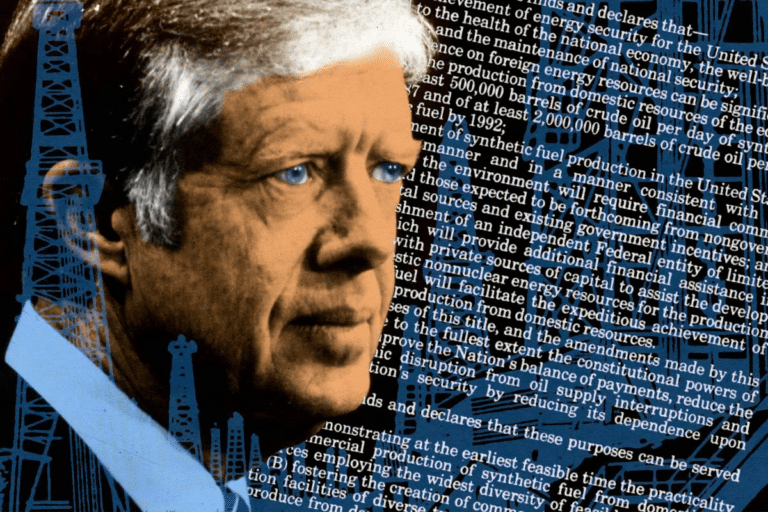
Lawmakers today should study the Energy Security Act of 1980.
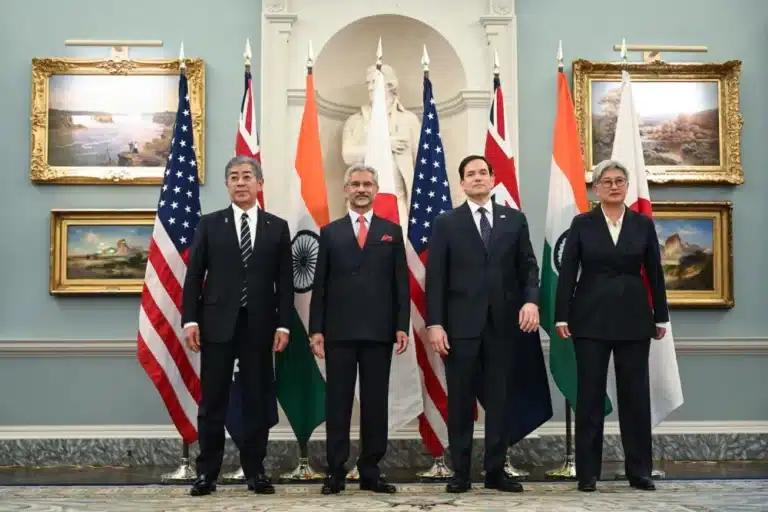
Each country in the alliance offers distinct strengths.
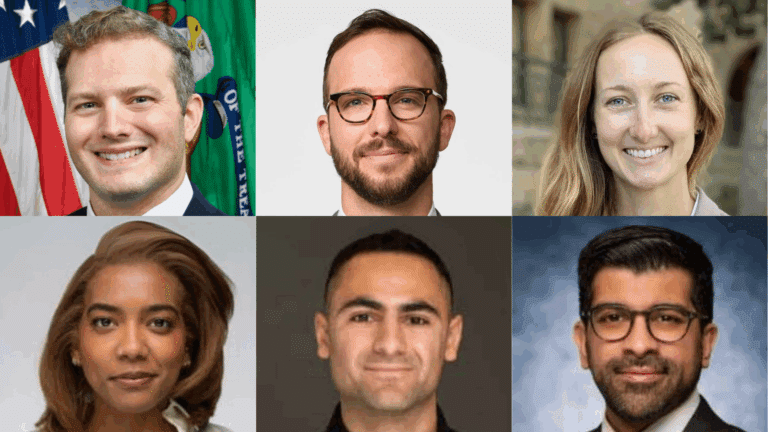
The Center on Global Energy Policy (CGEP) at Columbia University SIPA today announced new personnel additions who bring extensive experience from government and the private sector to the...
Get the latest news and research on energy & climate policy.
"(required)" indicates required fields