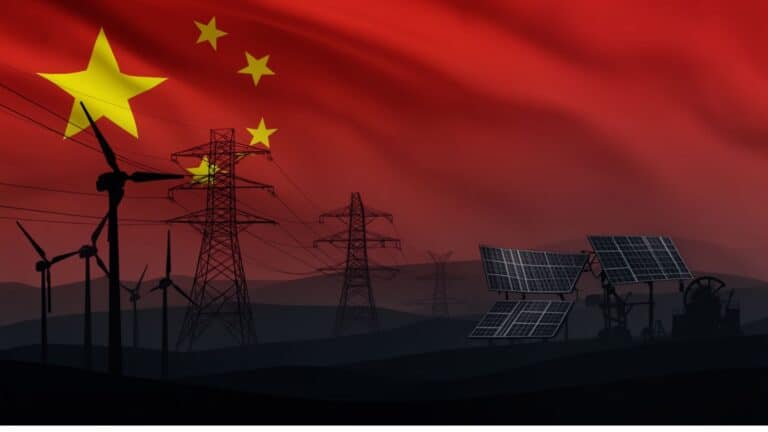
Trump promoted fossil fuels. His war is pushing the world away from them.
As oil prices spike, governments are slashing fuel use and eyeing renewables — threatening to erode global demand for fossil energy.
This website uses cookies as well as similar tools and technologies to understand visitors’ experiences. By continuing to use this website, you consent to Columbia University’s usage of cookies and similar technologies, in accordance with the Columbia University Website Cookie Notice.
Our work is committed to independent and nonpartisan research that meets the high standards of academic integrity and quality at Columbia University.
Our initiatives and programs are designed to address critical needs in key focus areas around energy and climate policy.
Explore our expert insights and analysis in leading energy and climate news stories.
As oil prices spike, governments are slashing fuel use and eyeing renewables — threatening to erode global demand for fossil energy.
Get the latest as our experts share their insights on global energy policy.
On February 28, the US and Israel launched new attacks on Iran targeting primarily the country's leadership, security forces, and missile program.
Hear in-depth conversations with the world’s top energy and climate leaders from government, business, academia, and civil society.
While US and Israeli forces have significantly degraded Iran’s military and nuclear capability, the global energy landscape remains in a precarious position. For weeks, the Strait of Hormuz...
Find out more about our upcoming and past events.
This roundtable is open only to currently enrolled Columbia University students. To register, you must sign in with your UNI. Join the Center on Global Energy Policy’s Women...
We are the premier hub and policy institution for global energy thought leadership. Energy impacts every element of our lives, and our trusted fact-based research informs the decisions that affect all of us.
Senior Lecturer, School of International and Public Affairs
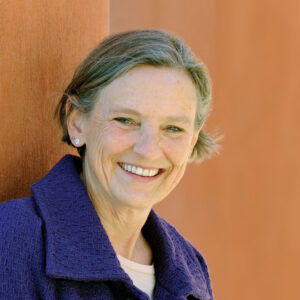
Lisa Anderson is Senior Lecturer at the Columbia University School of International and Public Affairs and Gruss-Lipper Visiting Scholar in Middle East Policy Studies at the Woodrow Wilson School at Princeton University.
Dr. Anderson served as President of the American University in Cairo for five years, from 2011-2016. Prior to her appointment as President, she was the University’s provost, a position she had assumed in 2008. She is Dean Emerita of the School of International and Public Affairs at Columbia, where she led the school from 1997-2007. She was on the faculty of Columbia since 1986; prior to her appointment as Dean, she served as Chair of the Political Science Department and Director of Columbia’s Middle East Institute; she held the James T. Shotwell Chair in International Relations in the Political Science Department. Before coming to Columbia, she taught at Harvard University in the Government and Social Studies departments.
Dr. Anderson’s research has included work on state formation in the Middle East and North Africa; on regime change and democratization in developing countries; and on social science, academic research and public policy both in the United States and around the world. Among her books are The State and Social Transformation in Tunisia and Libya, 1830-1980 (1986) and Pursuing Truth, Exercising Power: Social Science and Public Policy in the Twenty-first Century (2003); she has also published numerous scholarly articles.
Dr. Anderson is a trustee of the Aga Khan University and a member of the advisory board of the Hertie School of Governance in Berlin and the Sciences Po’s School of Public Affairs in Paris. She is a member emerita of the Board of Directors of Human Rights Watch, served as President of the Middle East Studies Association in 2003 and as Chair of the Board of the Social Science Research Council (1998-2008). She is a member of the American Academy of Arts and Sciences and the Council on Foreign Relations.
Get the latest news and research on energy & climate policy.
"(required)" indicates required fields