La caída a largo plazo de suministro de Qatar no provocará escasez, pero se notará en la factura del gas
Apenas el 3% del gas licuado que importa España viene del emirato, con Italia y Bélgica como los más afectados en Europa
Current Access Level “I” – ID Only: CUID holders, alumni, and approved guests only
Get the latest as our experts share their insights on global energy policy.
On March 20, Governor Kathy Hochul proposed significant changes to New York’s Climate Leadership and Community Protection Act (CLCPA), the landmark climate law passed in 2019.

Hear in-depth conversations with the world’s top energy and climate leaders from government, business, academia, and civil society.
Today marks the last day of CERAWeek, the annual energy industry conference sometimes described as the Davos of energy. As oil and gas CEOs and government officials gathered...

Find out more about our upcoming and past events.
This roundtable is open only to currently enrolled Columbia University students. To register, you must sign in with your UNI. The Center on Global Energy Policy at Columbia...

Tatiana Mitrova:
We are now experiencing the shock that we were testing in many scenarios in energy security discussions for the last 30 years. The oil market has changed, the gas market has changed.
Erica Downs:
The conflict in the Middle East is vindicating China’s approach to energy security, this push to electrify everything. I suspect that we are going to see China just continue to bet big on that.
Sergey Vakulenko:
Just a few months of revenues, even at high prices, is a price too small for Mr. Putin. So he’s trying to weaponize it at a crucial moment.
Jason Bordoff:
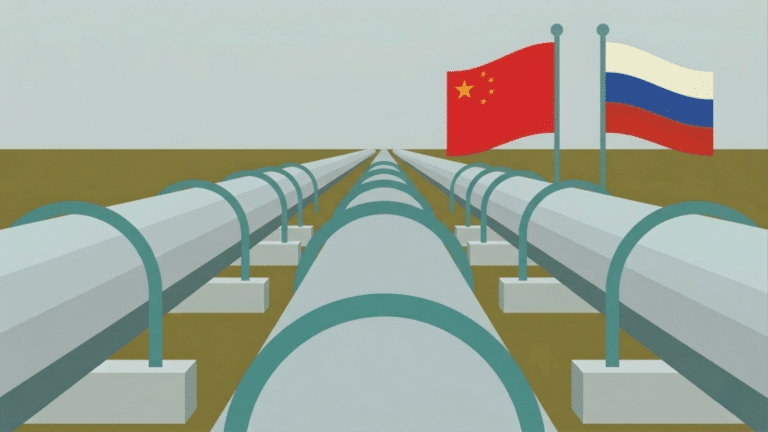
Since the US Israeli bombing campaign began in Iran, energy markets around the world have been on edge as the conflict threatens immediate and long-term energy supplies. We’ve seen major disruptions throughout the Gulf region with the closure of the Strait of Hormuz and massive price spikes and swings in oil and in natural gas. This is of course, exposing serious vulnerabilities across global energy markets, and it’s putting a spotlight on what’s happening in the deeply integrated markets of Russia and of China. Even before the conflict started, Russia’s energy sector was struggling under the weight of infrastructure damage inflicted by Ukrainian forces and by the weight of sanctions. But now Russia has emerged as perhaps an unlikely safety valve for the market benefiting from the massive supply shortages. Meanwhile, China finds itself in a precarious balancing act. It’s being forced to look at alternative markets for relief and is reportedly reviving discussions around major energy projects such as the Power of Siberia 2 natural gas pipeline with Russia.
So how’s Russia responding to the current crisis and how is the crisis impacting China, which is particularly exposed to disruptions in Gulf energy flows? How might this crisis change Russia’s approach to the European energy market? And is the conflict accelerating a deeper fragmentation moving toward a world of competing energy blocks rather than a single global energy market?
This is Columbia Energy Exchange, a weekly podcast from the Center on Global Energy Policy at Columbia University. I’m Jason Bordoff. Today on the show I’m sitting down with three experts on the Russian and the Chinese energy sectors. Erica Downs, Tatiana Mitrova, and Sergey Vakulenko. Tatiana and Erica are both research fellows here at the Center on Global Energy Policy. Tatiana has deep expertise in Russian and global energy markets, and Erica focuses on Chinese energy markets and geopolitics. Sergey Vakulenko is a senior fellow at the Carnegie Russia Eurasia Center. Prior to this, he led strategy, innovations and sustainability at the Russian oil producer, Gazprom Neft.
We talked about how the crisis in the Middle East is impacting Russia and China and what each stands to gain or to lose. We discussed how this conflict is pushing China towards self-sufficiency and it’s moved toward electrification, and we talked about how this might impact the proposed Power of Siberia 2 pipeline. I hope you enjoy our conversation. Tatiana Mitrova, Erica Downs, and Sergey Vakulenko. It’s great to have you all on Columbia Energy Exchange. Thanks for making time to be with us.
Tatiana Mitrova (03:31):
Thank you for the invitation.
Sergey Vakulenko:
Pleasure to be here.
Erica Downs:
Happy to be here.
Jason Bordoff (03:35):
So I wanted to have you all on just because there’s been obviously a huge amount of focus on the conflict in the Gulf, the attacks on Iran, the retaliation impacts to the Strait of Hormuz, and lots of discussion about how different countries are being impacted by this. Key players in this are Russia and China in particular. I’m sure we’ll talk about Europe and many other players too, but few people understand those critically important energy players, China and Russia, the way the three of you do. So I wanted to talk about that. We’ll go from there and expand the conversation a little bit. Sergey and Tatiana had a great recent piece and Foreign Affairs that I want to come to about how Ukraine is responding to its war and Russia’s invasion and degrading in your view, degrading Russia’s long-term structural capacity as an oil and gas producer.
(04:26):
But let’s start with what is happening in the immediate crisis. You guys wrote again, you wrote this sworn affairs article not long ago arguing that Russia is having its capacity as an oil and gas producer undermined and degraded. And yet every headline I read is that the big winner from this crisis right now is Russia. So Tatiana, can you start and then I’ll come to you Sergey. Just talk a little bit about the role Russia is playing and is it in fact Russian oil that’s going to make up the difference for what’s lost in the Gulf and is it a windfall for Putin?
Tatiana Mitrova (04:59):
Well, Jason, first of all, Russia indeed faces structural limits and it became visible on the fourth year of the war. Actually, the oil sector has been quite resilient for several years. But the raw limits of this resilience and all the accumulated barriers, they start to show up. Most of production is still coming from the Western Siberian legacy fields, which have rather strong decline rates. There are very limited investments in the new developments because the government is squeezing all the revenues from the oil companies in order to sustain its military machine.
Jason Bordoff (05:43):
And just to level set for people listening, we’re talking about strategic petroleum reserves a little more these days. And of course the Biden administration sold off nearly 200 million barrels because of fears that Russian oil supply would be lost after the invasion of Ukraine. In fact, Russian production has been pretty resilient in the face of this war and in the face of these sanctions. It hasn’t fallen much, if at all has it?
Tatiana Mitrova (06:07):
There was a slight decline. It was about 1 million burs per day during this whole period, and the experts stayed pretty stable, especially all the seaborne crude if you look at the numbers. So basically, and even if you look at the drivers behind these numbers, I would say that OPEC plus decisions on the volumes were much stronger than all the sanctions and restrictions. But anyway, the investment squeeze and the maturity of the existing fields and the sanctions on the technologies and OPEC plus governance, basically they up with sustaining the current operations, but removing the future, the future development, the new investments, and as I said, it’s becoming visible. Now, the current situation in the Gulf, it’s generally a blessing for the Russian authorities because in January, February this year, they were already very alarmistic discussions in Moscow like we are losing oil and gas revenues, budget deficit is going through the roof, what should we do?
(07:24):
And now suddenly Russian Urals jumps from $40 per barrel to $72 per barrel and all the discounts, which were like $12 $15 per barrel, they are reducing to $3 $4 per barrel. Everybody wants all these sanctioned Russian oil in water, on water, but the structural capacity of Russia to replace Iran is extremely limited. Iran basically was providing 1.5 – 2 million barrels per day. Russia’s realistic spare capacity at best estimate would be like 300,000 maybe. Sergey will correct me, but that’s what I see. So it’s only a small fraction and basically it’s just this oil on waters that can find home quickly that will halt Russian budget. But basically any additional increase in the volumes, neither on the production side nor on the infrastructure capacity is possible. So Russia will not replace Iran. That’s my vision.
Jason Bordoff (08:41):
Sergey, let’s stay with oil for a moment. We’ll come to gas in a second. But you agree with that assessment. There’s not much capacity even with the Trump Treasury Department announcing they’re going to try to ease sanctions and let India and others buy some Russian oil. This is maybe stuff that was in storage on the water, but we’re not seeing a production increase. You agree with that?
Sergey Vakulenko (09:02):
So we actually saw probably for the first time that when optic class quarters went up, Russia couldn’t follow them. In fact, Russian oil production declined. Partially it was because Lukoil platforms in the Caspian Sea were attacked by drones, so their production was out and that was roughly the 250,000 – 300,000 barrels per day, and that’s pretty much the amount that the production went down. But why wouldn’t production be going up with OPEC quota? And the reason for that is that Russian production these days is quite similar to the way it is in the US. You stop drilling, six months later, your production profile is going down, and if you look at drilling profile and numbers have become available. Just quite recently, we see a pronounced dip in the last six months of 2025 that was controlled by two things. A oil price was going down, and the ruble was exceptionally strong.
(10:06):
So Russian oil companies were having liquidity squeezed, and at the same time, they had to divert their funds to fix their refineries that were quite heavily hit by Ukrainian attacks. So they were taking money off drilling because they couldn’t borrow because the cost of borrowing in Russia’s prohibitively high. So they’ve reduced drilling as a result. Just a few months later, production went down. Of course, if they have an outlook that oil prices are going to be high for the next couple years, they could jack up drilling by probably 20% or so and then production would follow just like it does in the US, but it’s also remains to be seen. So that has never happened before.
Jason Bordoff (10:57):
And that’s just explained. It’s not shale production, but it’s just the nature of the geology that it follows a similar rapid depletion cycle and short?
Sergey Vakulenko (11:10):
It’s semi traditional brown fields, onshore brown fields, probably similar to the central Permian basin, something like that. It’s a thousand meters horizontals with probably 10 frack stages, something like that. And these wells, they have decline of could easily be 20, 30 years in their first life year of life. It slows down later, but in the first year it’s something like that. So it is, it’s quite similar to shale while geologically it’s not shale.
Jason Bordoff (11:43):
So what I hear you both saying is Russia’s not going to be a source that bails out the oil market if it loses huge amounts of supply in any near term timeframe, but in the relatively short term, they could increase production in response to higher price signals and maybe capture more revenue. Tell me if that’s right, but is the bigger effect that the discount at which Russian oil is sold into the global market is going to narrow potentially quite a bit given what’s happening right now with the crisis in the Strait of Hormuz and in the Persian Gulf? And that is maybe the biggest way in which it doesn’t necessarily help the global market, but it helps Putin and Russia.
Sergey Vakulenko (12:21):
It does indeed. The way it goes is if you have a surplus in the market like we had until the attacks, until this Persian Gulf War, a buyer has a luxury of choosing between sanctioned risk-prone Russian barrels and some other barrels and they wouldn’t be able to replace all the Russian volumes. But for every parcel of Russian oil, there is an alternative and this would help them to drive the prices down. Now there is no such luxury as there wasn’t such luxury say a year ago. So when surplus appears, discounts widen, when there is no choice and no alternative, they become extremely narrow and yes, then it helps Putin. Helps his finances and helps Russian oil companies to drive their production up.
Jason Bordoff (13:15):
You agree Tatiana?
Tatiana Mitrova (13:17):
Yes and no. Yes in terms of the current situation and short term outlook. Regarding the longer term outlook, so if we imagine the most catastrophic scenario, straight of our most close to not for weeks, but for months or even years, which I cannot imagine so far, I still doubt that Russian oil companies will manage to significantly increase their output even given higher revenues from the oil sales because they will not know how sustainable this situation is. So if this higher oil is for longer because you are investing a tremendous amount of money not to gain revenues for one year, you are planning for a much longer time horizon. And as the budget and the whole Russian economy is under increasing stress, there are lots of other factors not related to oil domestically. On the macro level, I think the government would really limit their ability to massively invest in the new production. That’s my vision.
Jason Bordoff (14:39):
Just quick follow up and then I’ll come to Erica. So the announcement by the Trump administration that it was issuing waivers to allow for the purchase of some Russian oil from a country, namely India, that is mostly about floating oil and floating storage, extra barrels that can come to the market. It’s not changing Russia’s production that can help alleviate loss supply to an extent, but that’s not a long-term change in production. Am I understanding it right?
Tatiana Mitrova (15:05):
Jason, I would even say that it’s just a formal legitimization of something that would have happened anyway because Indian refinery started to reach out to the Russian suppliers even before this. They were, because they have reserves for like eight days, they need oil badly and they do not care where this oil is coming from any longer.
Sergey Vakulenko (15:29):
Two points on this, well first, indeed, this obligation for 30 days is going to help more the traders rather than Russian oil companies or the Russian budget. As the Russian budget is concerned, this oil has been sold already. So water under the bridge. And second thing indeed, or the correction tool that Donald Trump had to convince India with a kind word and strong measures to not buy Russian oil have been just paused by the US Supreme Court and he needs to find some new tools to convince India not to buy. So that all has also helped even before the war started.
Jason Bordoff (16:11):
Erica China is a huge oil and gas importer, the world’s largest and relies heavily on Iran. So there’s a sense that it is quite negatively impacted by the loss of the supply through the Strait of Hormuz. It has to look elsewhere. Is it going to look to Russia? Does this bring the two countries closer together from an energy standpoint?
Erica Downs (16:31):
So I think Chinese buyers will be looking to Russia to replace volumes that are lost from the Middle East. And this isn’t just the Iranian barrels, but it’s virtually all of China’s oil imports from the region minus Oman because the rest of those countries that export to China do so through the Strait of Hormuz. Now China is fortunate in that it has stockpiled a lot of oil. They have 1.4 billion barrels in commercial and strategic storage. And so even if China can’t access a drop of oil from the Middle East for the next six months, it can tap into those reserves. Now I think Beijing would prefer not to do that. There’s reporting that China is reaching out to Iran to see if it can navigate navigate safe passage for its energy shipments through the Strait of Hormuz, which reminds me of what happened back in 2024 when we saw the Chinese and the Russians negotiate with the Houthis for safe passage for their ships through the Red Sea.
(17:55):
So that’s going on. But yes, I do think to the extent that they can get some more crude from Russia that would be desirable. And I also want to flag who the main buyers of Iranian crude are in China, and these are the teapot refineries. These are relatively small outfits and they depend on the discounts they can get on sanctioned barrels, or at least they were depending on these discounts prior to February 28th. And this is making for a very tough time for them. The longer this crisis and the longer the flow of oil from the Gulf to China is disrupted, they lost some of their discounted barrels with the US actions in Venezuela that had teapots turning to Iran to purchase Iranian heavy to replace some of that Venezuelan oil that they were anticipating not getting. And now of course they have 1.4 million barrels per day of Iranian crude that currently is not flowing to them. Now there is a fair amount of Iranian and Russian oil in floating storage in Asia, or at least there was right before the conflict broke out. And there’s also some Iranian crudes sitting in bonded storage in China. So there’s a little bit of flexibility here for the teapots, but of course, even if they look to get more Russian crude, those discounts will be long gone I suspect.
Jason Bordoff (19:32):
And just you’ve written a lot about the teapot refineries in China. So just to understand for listeners who may be unfamiliar with teapots, why that matters, they depend on discounts. So when the prices go up, does that just mean the price of the pump for people in China goes up? Or is there something more consequential about the fact that these teapot refineries are somehow different from the refining sector as it operates elsewhere that has some broader effect?
Erica Downs (19:55):
Yeah, so the teapots are much more risk tolerant with respect to sanctions than the refineries owned by China’s big national oil companies or the refining units that are part of these world scale integrated refining and petrochemical complexes that have sprung up in China over the past five years. China’s national oil companies got out of the business of importing Iranian crude back in 2019 precisely because they were concerned about the risk of being sanctioned by the United States and losing access to the US dollar financial system. Whereas I suspect if you look at the teapots who are left buying Iranian crude today, they don’t have that concern. They may have little or no concern about losing access to the US dollar financial system. So they’re willing to take that risk to get that discount because they need those discounts to boost their bottom line and in some cases to ensure their survival.
Jason Bordoff (21:01):
And just talk about how this crisis you think affects the way China thinks about energy security policy. I think tell me if I’m right, as long had a policy of ensuring diversification of where it gets its oil from and it’s also had a strategy for quite some time, not just to building up big buffers, as you said, a huge strategic stockpile but electrifying more of its economy to reduce its dependence on imports and then producing as much of that electricity as possible from domestic sources like solar and wind and coal. Are they sitting there thinking like, well that turned out to be a pretty good bet and maybe we want to be more of what Tatiana and Anne-Sophie have written about is an electro state or how are they thinking about their energy policy and response at a macro level, you think?
Erica Downs (21:49):
So the conflict in the Middle East is vindicating China’s approach to energy security over the past two decades. That includes what they’ve been doing to ensure security of oil and natural gas supplies in terms of diversifying suppliers, diversifying import routes, notably through overland pipelines from Russia and Central Asia, building up the SPR. But it also vitiates this push to electrify everything. And I suspect that we are going to see China just continue to bet big on that because the conflict drives home the point that it is preferable to be self-sufficient or self-reliant in energy. And for China, if they’re going to increase their self-reliance or their self-sufficiency in energy, it’s going to come through further electrification.
Jason Bordoff (22:50):
So Sergey and Tatiana, let’s come to your Foreign Affairs piece. I just want to understand what you just talked about, which is Russia’s near term ability to increase production. The outlook for Russia’s oil production will stand oil for a second long term, and it has seemed to an outsider like myself perhaps that it’s been pretty resilient. But you argued that the Ukrainian strikes against Russian energy facilities have really done some long-term damage, and I’m wondering if that is having an effect today. Would we be seeing a different response from Russia and what does that mean longer term for Russia’s oil sector? Give me an update on how to think about the effectiveness of what Ukraine’s campaign against Russia’s oil sector. Maybe Tatiana, I’ll start with you and then come to Sergey.
Okay, Jason. Well, indeed it was counterintuitive that all the Western sanctions together didn’t show any significant effect on the Russian oil production and only the recent small drones strikes on Russian infrastructure visually resulted in some decline. I think it’s not actually the fair picture because as I’ve mentioned, the problems in the Russian oil sector, they have been accumulating for several years. The drone attacks from Ukraine definitely played their role, they’ve changed their nature as we’ve written together with Sergey in this Foreign Affairs article. The tactics of these attacks became different. They are now much more massive and in several waves, so they do not allow oil companies actually to recover. They attack the same side again and again several times in a row. And together with the fact that all oil industry was already functioning under extreme stress, this additional smaller drop has actually changed the situation.
(25:06):
Very recent attacks which Sergey mentioned in Caspien on oil assets. This is also showing the new quality, how far these drone attacks can go and how massive damage they can create. And obviously we are also observing now in the Gulf the prolongation of the same drone warfare. It is really quite a new factor for all the energy security discussion, at least at this scale. So Russian oil industry doesn’t definitely collapse on the Ukrainian attacks. It’s still very resilient. It can reconfigure, it has still some reserves, but it’s becoming more and more difficult. It’s like attacks of a thousand bites. You don’t feel too painfully each of them, but when they build on each other, you start to bleed and you lose your energy and power. This is what is happening. To make it clear, I mean I don’t see Russian oil sector or Russian economy collapsing anytime soon. It still can sustain the status quo for quite a long time, many years if not decades, but the flexibility, adaptability, and this impulse for the development, it’s done.
Sergey Vakulenko (26:36):
I was just getting from the level of metaphor to the specifics. What was going on: the light drones that deliver 2030 kilos of explosives, they can’t really destroy an atmospheric refining unit and it just could make a hole in it and start the fire. Well, what’s inside the column burns down and then the hole could be plugged. Seemingly that’s it. But in reality, what happens, you have a large steel vessel that’s being heated and then it cools down slowly and you know what happens with steel if it’s treated this way, what we don’t know what happens to steel vessels all that size if they’re treated this way repeatedly. I doubt that anybody has ever even modeled this. And so what it does, this repeated treatment is that it slowly but steadily takes lives out of [unlcear] it creates metal fatigue and so on.
(27:40):
So the reasonable life of many of these atmospheric units and many of them were actually built and new in the previous decade is being reduced probably by a year, probably by five, at every attack. But sooner or later something has to give and it’s now a matter of accumulated damage that at some point might come to be revealed damage. That’s the downstream story we were discussing in the article. I have an upcoming well long paper actually. Tatiana has seen a draft. On the prospects of Russia upstream focusing on short, medium and long-term prospects of it, which also has a picture that because of many years of underinvestment, even without Ukrainian attacks, but because of the war strain, because the government has been raiding the oil industry, it is just destined and doomed to decline and this is a decline that would be difficult to arrest and reverse.
Jason Bordoff (28:49):
Yeah, I’m just saying another word about that, the sort of scale of the decline. Remind people how much Russia is producing today and what you see the production outlook as in a world where at least separate from this conflict, which is pushing up oil prices, there’s a growing sense among at least some people, that the medium term outlook is one where shale is plateauing, at least maybe before people locked in hedges at these current prices, demand is still rising and there’s a lot of question about where the oil is going to come from to meet rising demand. It sounds like you’re saying that’s not in that context. You see Russian production falling timeframe
Sergey Vakulenko (29:26):
At the moment, Russia is producing 9.3 million barrels per day of oil plus another million barrels per day of condensate. Condensate, of course, is linked to gas production, which is well pretty much flat. And with oil, I can see it declining by 3% per annum, maybe even more slowly but steadily with this profile, it would take it until at least 2040 to halve. Again, there are some similarities with what was going on in the US from 1970 until pretty much 2009, this could be a similar trajectory. Russia still has quite a lot of shale-like reserves. Problem is the cost of maintaining that decline. The slow decline is something like 15 $20 a barrel. The cost of maintaining the plateau, plugging that bridge could be $40, $45 a barrel, and that’s the money that Russian oil companies do not have at the moment because they’ve been rated by the government.
Jason Bordoff (30:36):
I want to talk about natural gas for a moment. Maybe Erica, you could start by reminding everyone listening about how important the Strait of Hormuz is to global gas supplies, particularly from Qatar. Super important to China obviously, and how does China cope with the loss of its gas imports?
Erica Downs (30:54):
So China imports about 30% of its LNG through the Strait of Hormuz. Almost all of that’s supplied by Qatar with a very, very small volume coming from the UAE and China has less flexibility to deal with a disruption in its LNG supplies than its oil supplies. That being said, if we look at –
Jason Bordoff (31:28):
Just explain for people why, I mean a little surprising because people would say you could shift to solar and wind, you could shift to coal. There’s more substitution where gas is used, whereas not as much substitution for oil. Why is there less flexibility?
Erica Downs (31:41):
It has to do in part with what China has in storage, right? We talked about how they have these vast strategic and commercial reserves, whereas they don’t have very much natural gas in storage. There’s a little bit that they could tap into, but not enough that it’s going to let them potentially survive month after month after month without Qatar LNG and no painful consequences. That being said, if you look at the volume of gas that China gets from Qatar, and you look at it as a share of China’s total natural gas supply, so domestic production plus imports, it’s about 6%. And so when you look at 6%, that sounds like it’s not quite as catastrophic as it could be. My sense is that we’re probably going to see, I think what China’s probably going to do is what we saw happen after the start of the war in Ukraine, which is that Chinese LNG importers will simply buy less because of the higher prices.
(32:53):
There has been reporting in industry press that traders at state owned energy companies are saying, we’re not going to turn to the spot market right now because of the prices. We’re not going to completely rule it out longer term, but right now we’re just not going to buy. And I guess if you’re in you’re China and you are going to lose, have your supply of LNG disrupted in terms of the time of year, things could be a lot worse, right? Where it’s March now, China’s transitioning away from the winter heating season, so that’s another mitigating factor.
Sergey Vakulenko (33:35):
Just a quick question, isn’t there an irony that China in its strife to move away from oil, was converting more and more of its particular lorries fleet to LNG and LNG becoming its road fuel and not only energy fuel and because of that as difficult to cut or substitute that part of demand with coal or something else?
Erica Downs (33:58):
Certainly an unintended consequence, yes.
Jason Bordoff (34:01):
The lion’s share of Chinese gas consumption is industry like heavy heat and residential, is that right?
Erica Downs (34:08):
Yeah.
Jason Bordoff (34:09):
And then I guess maybe transport and power, I don’t know exactly which is higher, but they’re both much smaller.
Erica Downs (34:14):
Yeah they’re much smaller. Industry alone accounts for about half of China’s natural gas consumption,
Sergey Vakulenko (34:21):
Both as energy and as feedstock, right?
Erica Downs (34:23):
That’s my understanding, yes.
Jason Bordoff (34:26):
Tatiana, let me come to you to talk a little bit about impact on the global gas market, lost LNG supplies. Does Russia have a role in making up for that at all? Is it just reaping some higher prices and are you seeing changes in flows in terms of how, what Russia’s role is in responding to this current conflict when it comes to gas?
Tatiana Mitrova (34:47):
It’s quite ironical and controversial because yeah, being one of the largest world gas producers, actually Russia these days cannot affect significantly the situation due to the infrastructure limitations. So it cannot dramatically increase gas exports to China simply because the power of Siberia, one is at full utilization for Eastern pipeline is not built yet. Power of Siberia is somewhere in discussion and Russian l and g tankers actually right now, it’s a no navigation along the northern sea route. So they have to go long way around Europe. Recently one of the Russian LNG tankers was hit close to Malta and Libya is probably again the first time in the world history military attack and massive fire on the LNG tanker. So now they will have to go around Africa to reach China, which makes it a very, very long journey. And we know that both Arctic LNG 2 and Yamal LNG, they are very limited in terms of tankers availability, which means that they cannot actually increase the volumes even if they had this desire. But why I said it’s ironical because actually recently Russian president Putin decided to use this situation to put additional pressure or first of all on the Europeans saying that Russian government will regard an opportunity to terminate Russian LNG supplies to Europe before the Europeans official deadline. Just to remind people, by April 25th, all the annual LNG contracts with Russia should be terminated. And by the end of this year, by January 1st, 2027, all Russian LNG supplies to Euro should stop.
Jason Bordoff (37:07):
Just remind people how much gas Europe is still getting from Russia, both pipeline and LNG.
Tatiana Mitrova (37:14):
Actually we are talking about approximately like 20 BCM of pipeline gas 20 BCM of LNG. In total it’s about like 13 – 15% of European imports. Just for comparison, back in 2021, before the war Russia provided 40% of European imports.
Jason Bordoff (37:36):
I think it was about 150 BCM. And you’re saying now it’s down to around 40
Sergey Vakulenko (37:40):
150 pipeline alone plus LNG?
Tatiana Mitrova (37:43):
Yeah, yeah.
(37:45):
So Europeans feel uncomfortable. They are not actually relying much on Qatari LNG to make it clear, Qatar was supplying like 50, sorry, 20 BCM to Europe. But the very fact of Hormuz closure drives all the global LNG prices up. Asian customers are looking for the spot cargoes and spot prices go up, which means that Europeans are also facing higher prices because their underground storages by the end of the winter on nearly depleted. This year it’s well below 20%. So it’s the lowest in five years level lower even than after the beginning of the war in Ukraine. So for Europe it’s quite an unpleasant situation. And after these announcements of Putin and Novak, it is becoming even more unpleasant because psychologically each additional billion cubic meters that disappears potentially from the market makes consumers even more nervous. I think that basically it’s much more of a political game rather than economic.
(39:08):
It’s rather to build these additional power and relationship with the countries in EU like Hungary and Slovakia, which are very skeptical, and also all these hybrid games with supporting like the right wing parties inside EU because all this criticism on phasing out Russian gas and exposing European customers to higher prices, it’s a typical slogan of the right wing parties. So yeah, Putin is playing this card, but basically even if he wanted, I don’t think that he could significantly increase gas supplies to Europe. The only potential route is Yamal-Europe via Poland. I cannot imagine Poland agreeing to that. Turkstream is working at full capacity Ukrainian transit before ceasefire or some sort of freezing. This conflict is also not probable. So Nord Stream is destroyed. That’s it.
Jason Bordoff (40:23):
So Europe’s in a tough spot. Natural gas prices in Europe have gone up even more in percentage terms than oil prices have, and they have a plan by 2027 to bring Russian gas, which is still not insignificant to zero. And of course the Qatari LNG is at least for the time being lost to the global market. So Sergey, do you see Russia trying to weaponize that vulnerability in Europe or do you see Europe backtracking because they need the gas?
Sergey Vakulenko (40:56):
I would think that just a few months of revenues even at high prices is a price too small for Mr. Putin. So I think he would be looking for much more than just money in this game with Europe. And he would try to gain some concessions and softening of European stance, like for example, at the very least, quashing this 20th package and the promise is to buy Russian gas for longer or maybe softening it stands on the peace agreement and so on. And then he finds its opportune, particularly as war in Ukraine is moving somewhat towards a ceasefire, a peace deal of sorts. It’s convenient for him. But an idea where he would just come to rescue for just a couple months, I don’t think it’s very attractive to him. So he’s trying to weaponize it at a crucial moment.
Jason Bordoff (42:04):
Erica, as Tatiana said, gas is a bit less fungible than oil, so the revenue is less consequential for Putin, but still sort of needs the European market maybe to some extent unless he finds other markets. And so a question is whether you think China is going to think differently about trying to deepen its natural gas ties with Russia? And obviously the biggest question there is this Power of Siberia 2 pipeline that’s been talked about for quite some time. I’m curious if you think China will think differently about it. And then Tatiana and Sergey, I’m curious if you think Russia will think differently about it and what that means for negotiating the terms that might make it actually happen.
Erica Downs (42:42):
So when it comes to thinking about the impact of the events in the Middle East on China’s thinking about energy security over the longer term, I do think one of the interesting questions that crops up is sort of the age old debate about pipelines versus tankers, and does the disruption of 30% of China’s LNG imports make Power of Siberia 2 more attractive to the Chinese? Now when Tatiana and our colleague Anne-Sophie and I wrote about this in September after China and Russia signed their legally binding memorandum of understanding on Power of Siberia 2, one of the points we made was that a lot is going to depend on price and volume. If China can get a good price, maybe lower than what they’re paying for Power of Siberia 1 gas, if they have a lot of flexibility with respect to the volumes they can take IE not committing to taking 55 BCM all the time, then that makes the project more attractive.
(43:57):
And so if you add in sort of the current upheaval in global energy markets, I think it probably makes pipeline deliveries more attractive. However, China does not want to be too dependent on any single supplier. And last year Russia accounted for 30% of China’s gas imports and that’s pipeline plus LNG with the bulk being the pipeline gas delivered through Power of Siberia. So again, it sort of puts China in this position where they have to weigh the risks and benefits of being dependent perhaps increasingly dependent on LNG imports, or do they want to double down on gas from Russia?
Jason Bordoff (44:54):
Tatiana, how do you see the way Russia is thinking about the terms to which it would agree, the price to which it would agree for this pipeline relationship, and then in the broader context of this world of great power competition and geopolitical fragmentation where it seems like we’re headed toward maybe competing axes of energy where countries like Russia and China, Iran, Venezuela, may or may not be becoming more closely aligned. Does this crisis move us more in that direction or less in that direction?
Tatiana Mitrova (45:29):
Great question, Jason. So first of all, on Russia’s perspective, and I’m sure Sergey will add a lot on that, basically Russia doesn’t have a lot of choice. There are not so many customers for its gas these days. So if it wants to monetize it, and it definitely wants, then China is the first candidate. It already has become the largest single buyer of Russian pipeline gas and of Russian LNG. And obviously it’s not the best customer to be frank, especially compared with the Europeans who were paying premium prices and were not as tough negotiators as Chinese. But okay, there is no alternative. So I think Russia would accept nearly any conditions from China or which are allowing Gazprom to break even with this project, which gives China a lot of flexibility in these negotiations. And as we were arguing with Erica and Anne-So previously for China, this pipeline is more as an option.
(46:42):
As an insurance, you keep it. If you have 55% take or pay a level, you may use it or not use it depending on what is happening with the LNG supplies, with the maritime routes and whatever. So I think this consideration will be there in the negotiations.
Regarding the second part of your question, which I think is really critical for the understanding of the global picture, indeed, we are observing growing fragmentation of the energy markets. And it started not yesterday actually, in 2022, it received a good boost with the Russia-Ukrainian war. As of now, it is about 13% of the global oil, which is under sanctions – globally traded oil. These are significant volumes. And China has been carefully creating this alternative universe with its own financial institutions, with its own insurance, with the trading routes. Basically the same institutions as the US have for oil trade. Iran, Venezuela, Russia. These were the main components of these alternative axis. As we see recently, Venezuela fell down, Iran is under attack. So for China it is critically important to sustain this trading universe independent from the US. And in this respect, Russia is becoming even more important like the last ally left in this whole axis.
Jason Bordoff (48:49):
Sergey, what would you add to that in terms of the perspective on the Russian China gas relationship and that broader kind of realignment that Tatiana was talking about.
Sergey Vakulenko (48:58):
There is an article which is coupling years old with it aged well on the economics of power of February one and power of February two. And definitely Russia pulled a short straw there. Russian gas is the cheapest by far that China is buying from anywhere else. It’s substantially cheaper even than pipeline gas coming from Central Asia. And Russia realistically cannot count for much more for the Power of Siberia 2 gas than for Power of Siberia 1. But the upstream cost of the power of Siberia of 1 gas is extremely low. So even with that, Russia might be able to make some money, probably not too much rent, but China until recently was asking for even less. However, I think what’s going on now, and this is a tectonic shift and Chinese outlook, is probably that China is going to value differently overland routes, over sea routes because seeing now what a disruption in a choke point can do to your energy security, well, all of the LNG that comes to China, except for Russian one, at least some of the Russian LNG is coming through these choke points like [unclear].
(50:14):
So with that, an overland route going over secure territory brings its own value. It’s not only Russian, it’s also Turkmenistan gas, the line D, but there wouldn’t be enough. So with that in mind, China might actually offer Russia a sweetener, a slightly better price. It wouldn’t break, it wouldn’t bankrupt China to do so. So Power of Siberia 2 under these circumstances might have higher chances of going ahead, and most likely this sale might be priced in Euros. It might be still indexed to international oil prices like most of the Chinese pipeline contracts are. But now we’re observing a situation where Yuan has become or is becoming an international, not necessarily reserve currency, but settlement and payment currency. And I think this rabbit is out of the box already.
Jason Bordoff (51:21):
So we’re just about out of time, but let me just ask each of you for sort of a final comment. This has been a fascinating discussion, especially to consider China and Russia because of all the headlines which are China, China’s the big loser, and Russia’s the big winner from everything happening in the Gulf right now. And I was just wondering if each of you could react to that broad perception, where it’s right, where it’s oversimplified and wrong. Maybe Erica, I’ll start with you, which it’s a little bit of a softball because you and I just are co-authoring a piece today about why maybe that isn’t quite the right way to think about this. So I’ll start with you.
Erica Downs (51:55):
Yeah, so two thoughts. The first one is that if we do see the current conflict in the Gulf as a catalyst for Power of Siberia 2, finally making it off the drawing board, then I think this would be another way in which Russia wins from the current events in the Gulf, right? Because if Chinese concerns about imported LNG sort of tip the balance in China’s calculus in terms of Power of Siberia 2, then that might be good news for Russia since they’ve been wanting to see this pipeline built for some time. And then I would also say that yes, I mean I do think that even though China is feeling some or is likely to feel some short-term pain from the events in the Middle East, I think this is very likely going to be a situation of long-term gain for China, both in terms of increasing its energy, self-sufficiency, decreasing its reliance on imported fossil fuels. And perhaps in terms of making the green technologies that it exports a lot of even more attractive to other countries who also may be looking at what’s going on in the Middle East and thinking maybe we don’t really want to be too dependent on imported oil or gas or fuel oil. And if Chinese solar panels, for example, provide us with affordable, reliable energy that comes from within our borders, then that sounds pretty good.
Jason Bordoff (53:36):
Sergey, is Russia the unqualified big winner from all of this?
Sergey Vakulenko (53:40):
I would say most of the winds are transient except maybe for part of Power of Siberia 2. And these winds, they probably pull Russia a little bit from the hole it dug itself in over the last four years, but probably undoes something like 20% of the damage that Russia has incurred since 2022. So yes, it is a winner, but in the big scheme of things, it is still a loser. And for China it might mean a change, a shift in priorities, but not Russia of a loss.
Jason Bordoff (54:19):
Tatiana?
Tatiana Mitrova (54:19):
Yeah, it’s difficult to say better than Serge just did. I want a hundred percent agree. I want to make one step back and look at the overall situation. We are now experiencing the shock that we were testing in many scenarios or in energy security discussions for the last 30 years. It’s the most apocalyptic scenario of, or Hormuz’s closure. Nothing could be worse with Ras Laffan and Ras Tanura being attacked. What else? Yeah, and well, oil is at a rather high level, but not going through the roof yet. China is not collapsing. The world keeps going. This is a big change. The oil market has changed, the gas market has changed. And I think basically China’s strategy on becoming a real electro state, it is working pretty well and it is changing not only China itself, but the whole energy universe that it is creating. So here I would say that it further looks as a winner, at least as a longer term winner. And this fast power of petro states, which are affecting chokepoints and supplies and tankers, it is now in confrontation with the much slower but very strong power of electro states based on manufacturing, based on standards and equipment, which is very long-term asset. So I think the situation which is unfolding right now, it has to be processed in a more general way, not trying to name short-term winners or losers. It is a critical point for the global energy trade history, and I’m pretty sure it will change a lot.
Jason Bordoff (56:26):
Just a quick follow up, sorry, because we didn’t really talk about it, but in terms of the longer term structural harm, Sergey, I’m just wondering if you could say a word about the recent, meaning November, US sanctions against Russian majors like Lukoil and Rosneft and the forced sale of assets. Where does that stand and how should we think about the damage done to Russia by those actions?
Sergey Vakulenko (56:48):
Oh, Russian majors were striving to become global oil companies with Russian roots on par, with Shells, Exxons and the titans of this world. And pretty much all of this work that they spent decades on came to nothing with this latest round of sanctions and Lukoil having to conduct a fire sale of its assets. And Rosneft seeming to dig in and seeing its assets being nationalized or seized by the governments who couldn’t afford to see an important pieces of their energy infrastructure to be sanctioned. And this is really an undoing of 25 years of effort.
Jason Bordoff (57:41):
I have kept you all way too long and we could still go on for a long time, but I think this crisis is not going to end anytime soon. So as you said, Tatiana, prices are only $90, but I’m not sure they’re going to stay there. We’ll find out, certainly not if the Strait of Hormuz remains largely closed for any extended period beyond this. But this was a fascinating conversation, super important to understand both Russia and China in greater depth as it relates to the global oil and gas market, European energy security and the current crisis in the Gulf. So Tatiana Mitrova, Erika Downs, Sergey Vakulenko, thank you so much for making time to be with us. Really, really appreciate it.
Erica Downs (58:20):
Thank you. Thank you. Thank
Sergey Vakulenko (58:22):
You, Jason.
Jason Bordoff (58:27):
Thank you again, Erica Downs, Tatiana Mitro and Sergey Vakulenko. And thanks to all of you for listening to this week’s episode of Columbia Energy Exchange. The show is brought to you by the Center on Global Energy Policy at Columbia University. The show is hosted by me, Jason Bordoff and by Bill Loveless. Mary Catherine O’Connor, Caroline Pitman, and Kyu Lee produce the show. Gregory Vilfranc engineers the show. For more information about the podcast or the Center on Global Energy policy, please visit us online at energypolicy.columbia.edu or follow us on social media at @ColumbiaUEnergy. And please, if you feel inclined, give us a rating on Apple, Spotify, or wherever you get your podcasts. It really does help us out. Thanks again for listening. We’ll see you next week.
Since the US-Israeli bombing campaign began in Iran, energy markets around the world have been on edge as the conflict threatens immediate and long-term energy supplies. We’ve seen major disruptions throughout the Gulf region, with the closure of the Strait of Hormuz and massive price spikes and swings in oil and natural gas.
This is of course exposing serious vulnerabilities across global energy markets and it’s putting a spotlight on what’s happening in the deeply integrated markets of Russia and China.
Even before the conflict started, Russia’s energy sector was struggling under the weight of infrastructure damage inflicted by Ukrainian forces. But now Russia has emerged as an unlikely safety valve for the market, benefiting from the massive supply shortages.
Meanwhile, China finds itself in a precarious balancing act; it is being forced to look at alternative markets for relief and is reportedly reviving discussions around major energy projects, such as the Power of Siberia 2 natural gas pipeline with Russia.
So how is Russia responding to the current crisis? And how is it impacting China, which is particularly exposed to disruptions in Gulf energy flows? How might this crisis change Russia’s approach to the European energy market? And is the conflict accelerating a deeper fragmentation — moving toward a world of competing energy blocs rather than a single global energy market?
Today on the show, Jason Bordoff speaks with Erica Downs, Tatiana Mitrova and Sergey Vakulenko about how the crisis in the Middle East is impacting Russia and China and what each country stands to gain or lose.
Tatiana is a global fellow at CGEP. She has deep expertise in Russian and global energy markets, including production and pricing.
Erica is a senior research scholar at CGEP, where she focuses on Chinese energy markets and geopolitics.
Sergey is a senior fellow at the Carnegie Russia Eurasia Center. Prior to this, he led strategy, innovations, and sustainability at the Russian oil producer Gazprom Neft.
Today marks the last day of CERAWeek, the annual energy industry conference sometimes described as the Davos of energy. As oil and gas CEOs and government officials gathered...
The Iran conflict has rapidly expanded, drawing in actors across the Middle East and raising concerns about broader regional escalation.
Nearly a month in, the conflict in Iran appears to have hit a critical inflection point. Over the weekend, President Trump gave Iran a 48-hour ultimatum to open...
As the conflict in the Middle East enters its 20th day, events on the ground have shifted into a critical new phase marked by direct strikes on core...

On February 28, the US and Israel launched new attacks on Iran targeting primarily the country's leadership, security forces, and missile program.
The Iran conflict could increase the appeal of Russia as an energy supplier for China.
The war in Iran is not just another energy shock. It is arriving at a moment when Europe is already under cumulative strain: a war on its eastern border, the lingering aftershocks of the 2022 energy crisis, industrial decline, political fragmentation, fiscal limits, and a widening debate over how much of its own security it must now provide.
Media reports suggest the Trump Administration is considering restrictions on US oil exports.