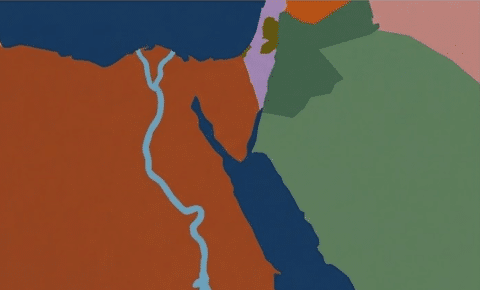
“Everything up in the air”: LNG, the Strait of Hormuz, and Central & Eastern Europe’s energy future
"LNG shipments to Central & Eastern Europe are reliable as long as those gas markets are not overly dependent upon one supplier."
Get the latest as our experts share their insights on global energy policy.
On February 28, the US and Israel launched new attacks on Iran targeting primarily the country's leadership, security forces, and missile program.
Hear in-depth conversations with the world’s top energy and climate leaders from government, business, academia, and civil society.
It’s been a head-spinning day in the Iran war. Earlier today, following a temporary truce between Lebanon and Israel, Iran announced that the Strait of Hormuz would be...

Find out more about our upcoming and past events.
The Columbia Global Energy Summit 2026 is an annual event dedicated to thought-provoking discussions around the critical energy and climate challenges facing the global community.
The Center on Global Energy Policy hosted a panel discussion on
the Paris Agreement and what it means for the various international
stakeholders including governments, the renewable energy industry
and other business sectors. Distinguished experts on the panel
included Dr. Thani Al Zeyoudi, Minister
of Climate Change and Environment for the United Arab
Emirates, Adnan Amin, Director-General
of the International Renewable Energy Agency
(IRENA), Dr. Joe Aldy, Associate Professor of
Public Policy, Kennedy School of Government at Harvard University
and a Fellow at the Center, and Delphine
Eyraud, French Ministry of Ecology, Sustainable
Development and Energy. The event was hosted by David
Sandalow, Inaugural Fellow at the Center on Global Energy
Policy.
This event originally took place on April 20, 2016.
It’s been a head-spinning day in the Iran war. Earlier today, following a temporary truce between Lebanon and Israel, Iran announced that the Strait of Hormuz would be...
With an April 21 deadline looming, the Middle East remains suspended in a volatile state of war and peace. Regional mediators are scrambling to broker a second round...
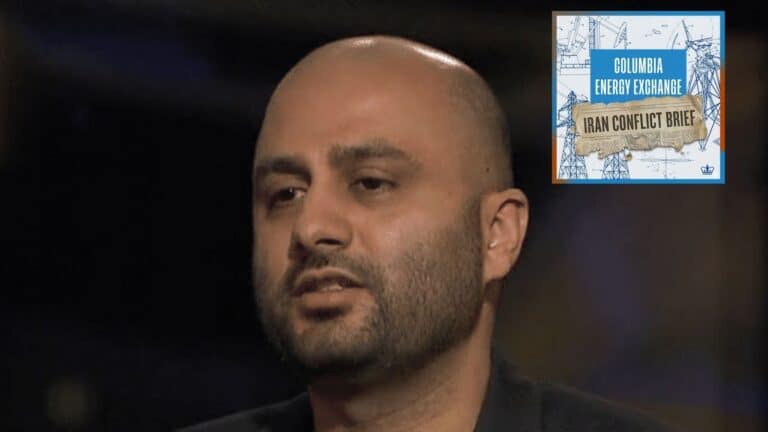
Energy abundance means different things in today’s global context than it did even a decade ago. It is about expanding electricity access while meeting rising energy demand. It...
The conflict in Iran is a reminder of how quickly global energy markets can be disrupted. It also underscores why advances in things like battery technology — from...

In March 2012, Israeli Prime Minister Benjamin Netanyahu arrived in Washington to press a US president on slowing Iran’s nuclear ambitions. Inside the White House, the dilemma was stark.
On February 28, the US and Israel launched new attacks on Iran targeting primarily the country's leadership, security forces, and missile program.
The Iran war has disrupted Eastern Mediterranean gas production, exports, and development, threatened regional energy infrastructure, and increased political and investment uncertainty.