Congress Looks to Charge Data Centers Billions in Sweeping Energy Plan
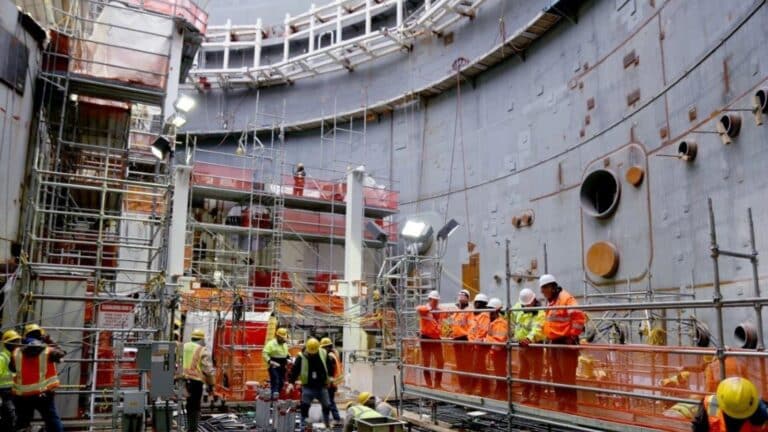
The permitting bill could make it easier to build data centers for A.I. but a novel provision would also force data centers to pay much more for power.
Get the latest as our experts share their insights on global energy policy.
The shift in the balance of political power will help determine which US policies can be funded and sustained over the next two years.
Hear in-depth conversations with the world’s top energy and climate leaders from government, business, academia, and civil society.
Affordability was one of the key issues that drove US voters to the polls last week, and the resulting message for the newly elected Congress is clear: driving...

Find out more about our upcoming and past events.
Putting data centers in space once seemed fanciful. Today, a growing number of companies have started doing so.

On a special episode of Columbia Energy Exchange, Jason Bordoff and Deputy Secretary of the U.S. Department of Energy, Dan Brouillette, discuss energy policy under the Trump Administration. This conversation took place in front of a live audience at the Center on Global Energy Policy’s fifth annual Global Energy Summit in April.
Deputy Secretary Brouillette has three decades of experience in the public and private sectors. He served as Senior Vice President and head of public policy for USAA, and Vice President at Ford Motor Company where he led the automaker’s domestic policy teams and served on its North American Operating Committee. He served as Chief of Staff to the U.S. House of Representatives Committee on Energy and Commerce, and he was Assistant Secretary of Energy for Congressional and Intergovernmental Affairs in the George W. Bush administration. He is also an Army veteran.
Jason and Deputy Secretary Brouillette covered a range of topics including the outlook for nuclear energy, shifts in natural gas markets and U.S. energy exports, as well as what “energy dominance” and “energy realism” mean to this administration and how they are guiding policy.
Affordability was one of the key issues that drove US voters to the polls last week, and the resulting message for the newly elected Congress is clear: driving...
Energy costs are a big consideration for voters in much of the US today as they head to the polls. But the decisions that shape those costs will...

Every permitting bill promises the same thing: build faster. The harder question is what the trade-offs are, and who bears them. That question is at the heart of...

After years of trying, the US may be on the cusp of a nuclear renaissance. Commercial nuclear generation began in this country in 1958. Today, the US has...

The shift in the balance of political power will help determine which US policies can be funded and sustained over the next two years.