Everyone Wants in on Brazil’s Rare Earths
But is Brasília ready to meet the moment?
This website uses cookies as well as similar tools and technologies to understand visitors’ experiences. By continuing to use this website, you consent to Columbia University’s usage of cookies and similar technologies, in accordance with the Columbia University Website Cookie Notice.
Our work is committed to independent and nonpartisan research that meets the high standards of academic integrity and quality at Columbia University.
Our initiatives and programs are designed to address critical needs in key focus areas around energy and climate policy.
Explore our expert insights and analysis in leading energy and climate news stories.
But is Brasília ready to meet the moment?
Get the latest as our experts share their insights on global energy policy.
The Center on Global Energy Policy is providing live updates on key developments related to the Iran crisis. Check back here for the latest.
Hear in-depth conversations with the world’s top energy and climate leaders from government, business, academia, and civil society.
Grid operators sit at the center of many of the biggest forces reshaping the global energy system. They’re navigating rising electricity demand, a lack of transmission infrastructure, shifting...

Find out more about our upcoming and past events.
We are the premier hub and policy institution for global energy thought leadership. Energy impacts every element of our lives, and our trusted fact-based research informs the decisions that affect all of us.
Professor, Department of Mechanical Engineering, The Fu Foundation School of Engineering and Applied Science
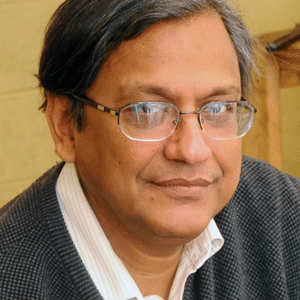
Vijay Modi is a professor in the Department of Mechanical Engineering at Columbia University. (Ph.D. Cornell 1984, postdoctoral work MIT 1984–1986). His expertise is in the field of: energy sources and conversion, heat/mass transfer, and fluid mechanics. His current areas of research interest are related to: energy infrastructure, CO2 sequestration (with Prof. Lackner in Earth and Environmental Engineering), fuel cells, distributed sensing/control of flow, and heat transfer.
Following the historic Paris Agreement last weekend, the Columbia SIPA Center on Global Energy Policy collected commentary on the agreement from several of our scholars and Faculty Affiliates across Columbia University
Get the latest news and research on energy & climate policy.
"(required)" indicates required fields