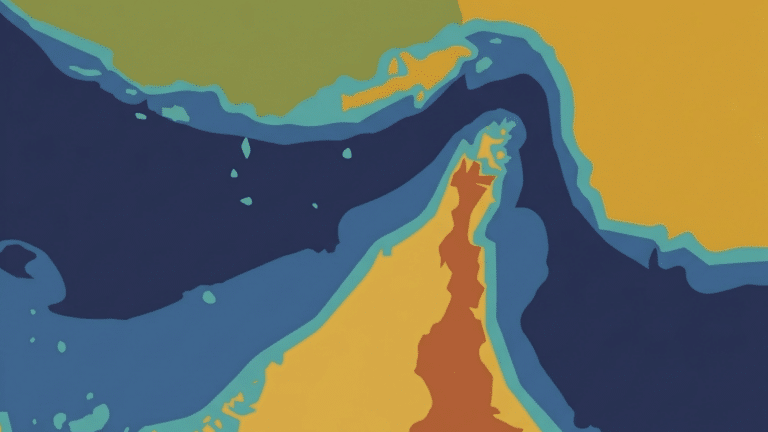
La caída a largo plazo de suministro de Qatar no provocará escasez, pero se notará en la factura del gas
Apenas el 3% del gas licuado que importa España viene del emirato, con Italia y Bélgica como los más afectados en Europa
Current Access Level “I” – ID Only: CUID holders, alumni, and approved guests only
This website uses cookies as well as similar tools and technologies to understand visitors’ experiences. By continuing to use this website, you consent to Columbia University’s usage of cookies and similar technologies, in accordance with the Columbia University Website Cookie Notice.
Our work is committed to independent and nonpartisan research that meets the high standards of academic integrity and quality at Columbia University.
Our initiatives and programs are designed to address critical needs in key focus areas around energy and climate policy.
Explore our expert insights and analysis in leading energy and climate news stories.
Apenas el 3% del gas licuado que importa España viene del emirato, con Italia y Bélgica como los más afectados en Europa
Get the latest as our experts share their insights on global energy policy.
The war in Iran has significantly enhanced Latin America's geopolitical advantage as a reliable source of hydrocarbon resources.
Hear in-depth conversations with the world’s top energy and climate leaders from government, business, academia, and civil society.
During President Trump’s second term, the administration has taken unprecedented action in the US private sector. The federal government’s investments in critical mineral mining and chip manufacturing are...
Find out more about our upcoming and past events.
This roundtable is open only to currently enrolled Columbia University students. To register, you must sign in with your UNI. The Center on Global Energy Policy at Columbia...
We are the premier hub and policy institution for global energy thought leadership. Energy impacts every element of our lives, and our trusted fact-based research informs the decisions that affect all of us.
Elizabeth and James Killian Professor of Economics, MIT
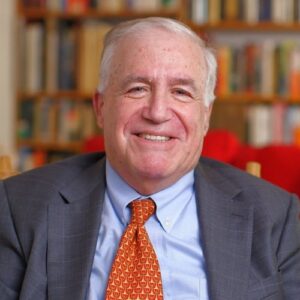
Paul Joskow is the Elizabeth and James Killian professor of economics at the Massachusetts Institute of Technology (MIT). He was the president of the Alfred P. Sloan Foundation from 2008 through 2017, and returned to MIT in 2018. Professor Joskow has been with MIT since 1972, where he was the head of the MIT Department of Economics from 1994 to 1998 and the director of the MIT Center for Energy and Environmental Policy Research from 1999 to 2007.
He received a BA from Cornell University (with distinction) and a PhD from Yale University. Professor Joskow’s teaching and research areas include industrial organization, energy and environmental economics, competition policy, and government regulation of industry. He has published about 125 papers and 8 books in these areas.
He is a past president of the International Society for New Institutional Economics, a distinguished fellow of the Industrial Organization Society, a distinguished fellow of the American Economic Association, a fellow of the Econometric Society, a fellow of the American Academy of Arts and Sciences, a fellow of the Econometric Society, and a member of the Council on Foreign Relations. He has served on the boards of the New England Electric System, National Grid PLC, TC Energy, State Farm Indemnity, Exelon Corporation (current), Putnam Mutual Funds (current), and the Whitehead Institute of Biomedical Research (current, vice chair).
Get the latest news and research on energy & climate policy.
"(required)" indicates required fields