NY energy experts, advocates say Iran war shows need for Hochul to implement climate law
Gov. Hochul’s reliance on fossil fuels may end up costing more than renewables, clean energy advocates say.
Get the latest as our experts share their insights on global energy policy.
On February 28, the US and Israel launched new attacks on Iran targeting primarily the country's leadership, security forces, and missile program.

Hear in-depth conversations with the world’s top energy and climate leaders from government, business, academia, and civil society.
While US and Israeli forces have significantly degraded Iran’s military and nuclear capability, the global energy landscape remains in a precarious position. For weeks, the Strait of Hormuz...
Find out more about our upcoming and past events.
This roundtable is open only to currently enrolled Columbia University students. To register, you must sign in with your UNI. Join the Center on Global Energy Policy’s Women...


Today we greatly enjoyed hosting Dr. Tatiana Mitrova, Global Fellow at the Center on Global Energy Policy, Director of the New Energy Advancement Hub, and Senior Research Fellow at the Oxford Institute for Energy Studies.
El alivio de las sanciones sobre el petróleo de Rusia decretado por el Gobierno de EEUU concederá miles de millones de dólares extra al presupuesto del Kremlin y mejorará su posición negociadora ante Occidente
For decades we’ve seen nations exercise geopolitical dominance tied to their production and control of fossil fuels – especially oil. But that leverage may be changing. Last year, China installed nearly twenty times the amount of wind and solar as the United States. In this essay in The National Interest, the authors lay out a global political and economic realignment already underway. Petrostates, like those in OPEC, are increasingly at odds with electrostates like China and many in the EU. This isn’t to say that electrostates are not without resource challenges – they’re seriously dependent on mineral supply chains – but the challenges are different, as are the opportunities. When 70% of the world’s population lives in fossil-fuel-importing countries, how are these diverging resource paths shaping the global balances of power? Guests: Tatiana Mitrova, Global Fellow, Center on Global Energy Policy, Columbia University Vijay Vaitheeswaran, Global Energy & Climate Innovation Editor, The Economist Li Shuo, Director, China Climate Hub at the Asia Society Policy Institute For show notes, related links, and episode transcript, visit https://climateone.org/podcasts Highlights: 00:00 – Intro 04:30 – Tatiana Mitrova on petrostates and the idea of electrostates 10:00 – Electrostates are already taking market share from petrostates 13:30 – How Mitrova sees balance of power shifting as world electrifies 17:15 – Vijay Vaitheeswaran on the concept of an electrostate 26:00 – How cheap electricity could allow developing nations to skip over fossil fuels 34:00 – Vaitheeswaran on how U.S. should take on industrial policy in this moment 38:00 – Li Shuo: China’s latest 5-year plan suggests it will double down on clean tech sector 41:00 – China installed nearly twenty times wind and solar as U.S. last year 49:30 – China is on track to become firs ********** Support Climate One by going ad-free! By subscribing to Climate One on Patreon, you’ll receive exclusive access to all future episodes free of ads, opportunities to connect with fellow Climate One listeners, and access to the Climate One Discord. Sign up today at patreon.com/ClimateOne. Ad sales by Multitude. Contact them for ad inquiries at multitude.productions/ads Learn more about your ad choices. Visit megaphone.fm/adchoices
Helium has emerged as a key focus for the tech sector as industry watchers cast their minds to the implications of a prolonged Iran war.
High oil prices are boosting the Kremlinâs coffers, helping plug a budget hole and sustain the war effort in Ukraine. But beyond oil, a global scramble for natural gas and fertilizer supplies, also choked off by the Iran conflict, could further boost Russiaâs financial gains.
The president has fashioned the U.S. into a petrostate, in which all roads lead to his own enrichment.
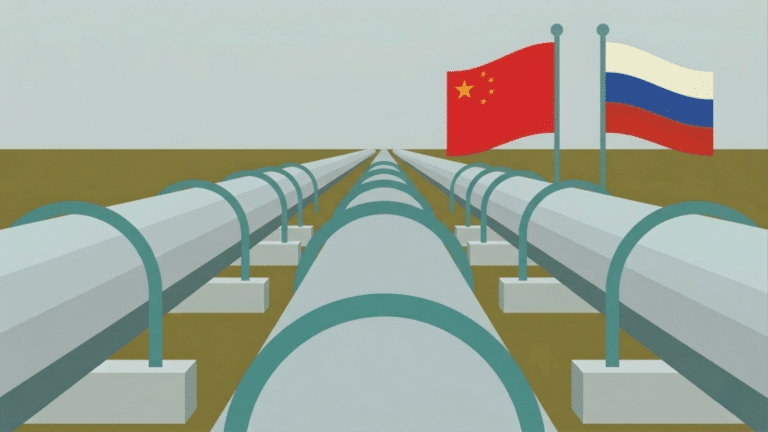
The Iran conflict could increase the appeal of Russia as an energy supplier for China.
The Iran war is adding impetus to reconciliation efforts between Armenia and Azerbaijan, as the region seeks to position itself as a new trade corridor between Europe and energy-rich central Asia, with…