This website uses cookies as well as similar tools and technologies to understand visitors’ experiences. By continuing to use this website, you consent to Columbia University’s usage of cookies and similar technologies, in accordance with the Columbia University Website Cookie Notice.
Last week's summit between US President Trump and Chinese President Xi was the second meeting between the two leaders since the US and Israel attacked Iran.
Carbon credit markets have become one of the most hotly debated tools in the fight against climate change. Supporters call them essential to closing the gap between corporate...
Apply to Register The Center on Global Energy Policy at Columbia University SIPA’s Women in Energy initiative invites Columbia University students to a roundtable discussion with Pam Brown,...
Event
• Center on Global Energy Policy
Large Conference Room
About Us
We are the premier hub and policy institution for global energy thought leadership. Energy impacts every element of our lives, and our trusted fact-based research informs the decisions that affect all of us.
This Country Framework is part of the Regulatory Frameworks for Project-Based Carbon Credit Markets. To learn more click here.
Overview
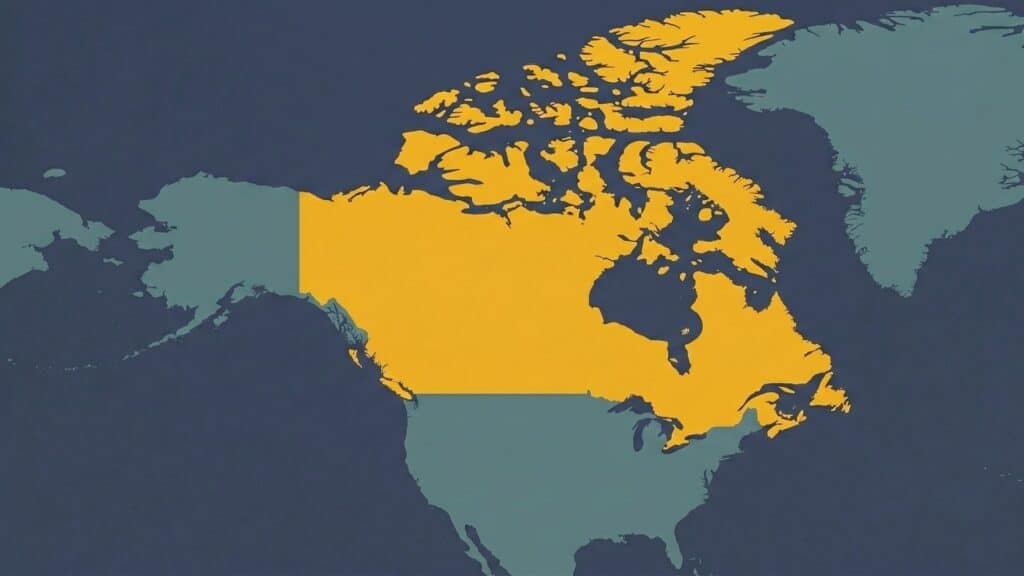
Canada’s compliance carbon market framework is defined at the federal level through a comprehensive set of legislative and regulatory measures designed to price greenhouse gas (GHG) emissions and create a credible offset mechanism to support compliance and voluntary mitigation. The cornerstone of this system is the Greenhouse Gas Pollution Pricing Act, which established both a fuel charge and an output-based pricing system (OBPS) for industrial emitters.1 Within this broader policy architecture, Canada’s Greenhouse Gas Offset Credit System Regulations (SOR/2022-111)—hereafter referred to as the federal offset regulation—provide the legal foundation for the creation, issuance, and use of offset credits by the federal Canadian government.2 The system is administered by the Environment and Climate Change Canada (ECCC) federal department3 and functions in parallel with the federal OBPS to ensure that regulated entities and voluntary participants can access high-integrity credits that represent verified emission reductions or removals.4
Under the federal framework, offset credits are tradable instruments representing one ton of carbon dioxide equivalent (tCO₂e) reduced or removed from the atmosphere.5 The credits are generated by project proponents that undertake eligible activities according to ECCC-approved methodologies, referred to as federal offset protocols.6 Each project must undergo independent third-party verification and must register in the federal Credit and Tracking System (CATS), which records the issuance, transfer, and retirement of offset credits.7
While this study focuses exclusively on Canada’s federal system, it is worth noting that certain provinces and territories operate their own regulatory carbon markets that include offset systems—notably Québec, British Columbia, and Alberta. Québec participates in the Western Climate Initiative alongside California, operating a linked cap-and-trade program with joint auctions. British Columbia maintains an independent provincial output-based pricing system and offset regime, while Alberta administers the Technology Innovation and Emissions Reduction Regulation system, which includes its own compliance-grade offset credits. These systems coexist with the federal framework: In provinces with systems assessed as meeting the carbon pricing benchmark, the federal OBPS does not apply, whereas in others it serves as the backstop system. The federal offset regulation, however, functions independently and applies nationally, except where provincial offset protocols already apply.8
Canada’s federal offset system regulations are already legally binding, with clearly articulated measurement, reporting, and verification (MRV); additionality; and permanence requirements. It does not limit its scope and includes reduction and sequestration projects, although the offset credits traded are primarily focused on agriculture, forestry, waste, and technology-based project types that meet ECCC-approved protocols.9 Landfill methane recovery and destruction, reducing GHG emissions from refrigeration systems, reducing methane emissions from beef cattle, and improving forest management on private land are among the earliest eligible activities.10 Future expansions are planned to include agriculture, forestry, and direct air capture projects, as referenced in ECCC’s regulatory road map and related ministerial statements.11
The federal offset regulation complements Canada’s existing carbon pricing system and seeks to provide a lower-cost compliance option for covered facilities, while maintaining the environmental integrity of Canada’s national GHG reduction targets. At the same time, the system allows voluntary market participants—such as corporations seeking to meet internal net-zero targets—to purchase and retire federal offsets.12 Canada encourages voluntary corporate use of high-integrity offset credits and points companies toward frameworks such as the Net-Zero Challenge and Voluntary Carbon Markets Integrity Initiative (VCMI) for guidance on how to do so credibly. At the 2025 United Nations Climate Change Conference in Belém, Brazil, Canada joined the Coalition to Grow Carbon Markets and endorsed the Shared Principles for Growing High-Integrity Use of Carbon Credits by Companies and Other Buyers.13
I. Supply-Side Regulations
Available supply-side regulations under the federal system are established in the federal offset regulation and corresponding ECCC offset protocols. Together, they define the processes for offset credit generation, verification, and issuance, and set the integrity standards for Canada’s project-based offset credit market.
A. Regulatory Framework
Market Classification: Canada’s framework combines compliance-grade and voluntary-eligible offset credit generation. Federal credits can be used by regulated facilities for compliance purposes or purchased voluntarily by non-regulated entities.
Regulatory Status: The system is fully operational and legally binding at the federal level, though it is designed to complement existing provincial and territorial systems. It supports voluntary use of offset credits for companies that are not under the compliance umbrella but wish to address the impact of their emissions through the use of compliance-grade offset credits.14
Key Authorities: Oversight lies with ECCC, under the authority of the Minister of Environment.15 The Standards Council of Canada (SCC) is also referenced as the accrediting authority for verification bodies, while the American National Standards Institute (ANSI) National Accreditation Board is recognized under the verification framework.16
Sanctions: The Minister of Environment may suspend or revoke offset credits in cases of non-compliance, misrepresentation, or double counting. The regulation also provides for administrative monetary penalties under the Greenhouse Gas Pollution Pricing Act enforcement regime.17
B. Credit Generation Standards
Eligible Activities: Canada’s approved federal offset protocols cover a broad range of activities, including the following:18
Landfill methane recovery and destruction;
Reductions of GHG emissions from refrigeration systems;
Improved forest management on private land;
Reducing enteric methane emissions from beef cattle;
Direct air capture and geological storage (preliminary draft protocol);
Improved forest management on public land (under development); and
Bioenergy with carbon dioxide capture and geological storage (under consideration for development).19
These activities collectively aim to mobilize mitigation across industrial, waste, and land-based sectors.
For federal OBPS-regulated entities, offset credits must be issued under the federal offset regulation, serialized and retired in CATS, and verified by third parties accredited under ISO 14065 (the international standard for bodies that validate and verify GHG information).20
Methodology Framework: Each protocol defines quantification, monitoring, and verification procedures specific to the project type. Methodologies must comply with the federal offset regulation and are published by ECCC.21
MRV Requirements: All projects must submit detailed measurement and verification reports verified by accredited third parties, with conservative quantification of emission reductions and robust data management. Verification bodies must be accredited under ISO 14065 and must conduct their work in accordance with ISO 14064-3 (the international standard specifying how verification and validation of GHG statements should be carried out).22
Registry System: CATS serves as Canada’s central registry, recording project registration, offset credit issuance, transfers, and retirements. The system ensures traceability, transparency, and protection against double counting.23
C. Integrity Principles
Additionality Tests: Projects must demonstrate that the emission reductions or removals are beyond regulatory requirements and common practice. ECCC applies a “regulatory additionality” test.24
Permanence Safeguards: To be considered permanent, each ton of CO₂e removed from the atmosphere must stay removed for at least 100 years. The regulations establish an environmental integrity account into which the Minister of Environment deposits a percentage of the offset credits generated by a project for each calendar year. This account comprises a pool of credits acting as a form of insurance for the environmental integrity of the federal offset system. When there is a reversal of GHG reductions determined to be out of the proponent’s control (i.e., an involuntary reversal), the Minister of Environment will revoke a corresponding number of offset credits deposited by the minister into the environmental integrity account. Acknowledging implementation challenges, the mechanism also allows for ton-year and hybrid ton-year quantification methods, which quantify the climate benefit of withholding carbon from the atmosphere annually over a reporting period. As these methods credit partial rather than permanent removal, projects using them would generate fewer credits than projects meeting the full 100-year permanence standard.25
Quantification Standards: Projects must apply federal GHG offset protocols that contain conservative estimation methods, account for leakage and uncertainty, and use the global warming potentials consistent with Canada’s national inventory.
Double-Counting Prevention: Credits are serialized uniquely within CATS and cannot be used by multiple entities or under more than one jurisdictional target.26
D. Sustainable Development
Co-Benefits: The federal offset regulation supports projects that contribute to ecosystem integrity, biodiversity conservation, and sustainable land use. Many protocols explicitly reference co-benefits such as soil health improvement and renewable energy deployment.27
Net-Zero Compatibility: No requirement for credit generators to be net-zero compatible has been established.
II. Demand-Side Regulations
A. Use Authorization Framework
Applications Allowed: Federal offset credits may be used for compliance by regulated facilities under the OBPS (surplus credits and offset credits may be used to meet up to 75 percent of the compliance obligation), used for compliance under the Clean Electricity Regulations, or purchased voluntarily by entities seeking to offset emissions.28
Regulatory Status: The use of federal offsets is authorized for regulated entities and permitted for voluntary use without additional approval.29
Oversight Bodies: The Minister of Environment, through ECCC, oversees the issuance, use, and retirement of federal offset credits under the federal offset regulation. Verification bodies involved in credit validation verification must be accredited under ISO 14065 by an accreditation body recognized under the International Accreditation Forum—in Canada, the SCC, and in the United States, the ANSI National Accreditation Board. There is no separate governing authority for voluntary buyers, who operate within the same registry and integrity framework.30
Standards Integration: There is no explicit requirement for alignment with external frameworks such as the Science Based Targets initiative or VCMI; however, integrity standards derive from the supply-side MRV and verification rules.
Enforcement Mechanisms: The Minister of Environment retains powers under the Greenhouse Gas Pollution Pricing Act to revoke credits or impose penalties for misuse, fraud, or non-compliance.31
B. Corporate Use Requirements
Mitigation Hierarchy: These have not been formally defined.
Scope Coverage: These have not been specified.
Quality Standards: These have not been specified.
Accounting Treatment: Credits are recorded in CATS; voluntary retirement is publicly visible, ensuring transparency.
C. Transparency and Assurance
Public Reporting: The public registry provides information on parties that hold offset credits and retire offset credits for regulatory compliance or for voluntary purposes.
Third-Party Verification: Verification is mandatory at the supply side; corporate claims are not independently audited.
Science-Based Targets: These are not required at the federal level.
Policy Advocacy: None is specified in the data provided.
D. Market Integrity Protection
Anti-Greenwashing: The concept of greenwashing is alluded to as “engagement . . . for the purpose of promoting directly or indirectly in a way that is false or misleading.” Persons or companies engaging in this behavior shall face a fee determined by the commissioner, tribunal, or federal court. The fee shall not exceed CAD 1,000,000 (approximately USD 730,000) for individuals or CAD 15,000,000 (approximately USD 11,000,000) for corporations.32 Integrity assurance is achieved through MRV and registry transparency.
Co-Benefits Delivery: Co-benefits must be addressed within project design, not through separate demand-side mechanisms.
III. Market-Side Regulations
The federal offset market infrastructure is built around registry operations and ministerial oversight. Trading remains bilateral, with no centralized exchange.
A. Infrastructure Framework
Market Structure: The federal offset system issues offset credits under the authority of the federal offset regulation; these offset credits can be traded bilaterally between entities. There is no federal marketplace or exchange mechanism.33
Registry Operations: CATS is the sole registry used for issuance and tracking. Future updates are expected to allow broader participant access and improved transparency.34
Data Standards: All project and credit data must be submitted electronically and comply with federal IT and data retention requirements.35
B. Trading and Participation
Eligibility Rules: Only entities meeting the definition of “project proponent” under sections 4–8 of the federal offset regulation (i.e., corporations, partnerships, associations, or individuals designated as project proponents) may register and manage projects.36 Facilities in the federal OBPS may acquire credits through private trading. Trade in offsets is negotiated between proponents, and the terms of credit trade are agreed between buyers and sellers. Brokerage services for facilitated transactions and reducing transaction costs are permitted.37
Trading Mechanisms: Transfers occur through bilateral agreements, logged in CATS. No federal auction or exchange mechanism exists.38
Settlement Systems: None are specified.
Price Discovery: No formal mechanism exists; prices remain confidential between parties.
Oversight Authority: The Minister of Environment through ECCC is the authority.39
Legal Classification: The Canada Revenue Agency classifies offsets within existing tax and accounting concepts, primarily as “emission allowances” or “intangible property used in a business.” Under the Excise Act, an emission allowance is “a tradable instrument issued under a regulatory framework that represents a quantity of greenhouse gas emissions.”40 For tax purposes, emission allowances are valued at acquisition cost and any gains may be treated as business income.41
Federal offset credits are tradeable units issued under the federal offset regulation, each representing one ton of verified GHG reduction or removal achieved according to an approved federal protocol. Credits are serialized and recorded in CATS, which serves as the official tracking system.42
C. Market Integrity Safeguards
Anti-Manipulation and Fraud Prevention: Integrity safeguards rely on verification, serial number tracking, and ministerial enforcement powers.
Transparency and Reporting Requirements: The registry provides project and credit details to prevent duplication and ensure accountability.
D. Financial and Cross-Border Integration
Financial Regulation Integration: Canada has not integrated carbon offsets into its securities-law framework at a federal level because securities regulations fall under provincial jurisdiction. Offset credits are governed under federal environmental legislation and administered through environmental regulatory processes. Securities law applies only on a contingent basis where an offset-related product independently meets the statutory definition of a security or derivative.43 No formal regulatory harmonization exists between environmental authorities and provincial securities regulators for carbon offset markets.
Cross-Border Trading Framework: None has been formally established; exports of federal credits are not explicitly permitted but may occur through private arrangements, provided no double counting occurs.
E. Development Road Map
Infrastructure Plans: Continued expansion of protocols and registry functionality is planned.
International Cooperation: Although not specified, Canada participates in Article 6 negotiations under the Paris Agreement.
Regulatory Evolution: The federal government intends to expand eligible project types and improve alignment with other domestic systems.
Enforcement Enhancement: There have been no disclosures of future market-side enforcement enhancements.
Last week's summit between US President Trump and Chinese President Xi was the second meeting between the two leaders since the US and Israel attacked Iran.
In this edition of Global Institute Dialogues Jason Bordoff discusses how the Iran crisis, China’s electrification strategy, and the US shale revolution have changed energy geopolitics.