This website uses cookies as well as similar tools and technologies to understand visitors’ experiences. By continuing to use this website, you consent to Columbia University’s usage of cookies and similar technologies, in accordance with the Columbia University Website Cookie Notice.
Last week's summit between US President Trump and Chinese President Xi was the second meeting between the two leaders since the US and Israel attacked Iran.
Carbon credit markets have become one of the most hotly debated tools in the fight against climate change. Supporters call them essential to closing the gap between corporate...
Apply to Register The Center on Global Energy Policy at Columbia University SIPA’s Women in Energy initiative invites Columbia University students to a roundtable discussion with Pam Brown,...
Event
• Center on Global Energy Policy
Large Conference Room
About Us
We are the premier hub and policy institution for global energy thought leadership. Energy impacts every element of our lives, and our trusted fact-based research informs the decisions that affect all of us.
This Country Framework is part of the Regulatory Frameworks for Project-Based Carbon Credit Markets. To learn more click here.
Overview
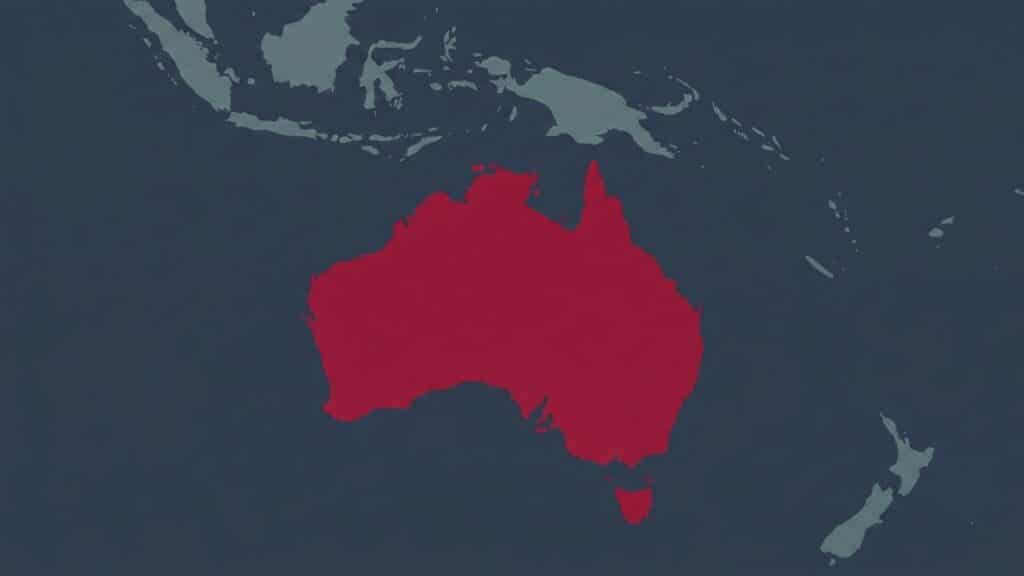
Australia has built a mature, dual-track carbon market that combines a national project-based carbon crediting scheme with a baseline-and-credit regime for its largest emitters. At the core of supply is the Australian Carbon Credit Unit (ACCU) Scheme, enabled by the Carbon Credits (Carbon Farming Initiative [CFI]) Act 20111 and related rules, which issues one ACCU for each ton of CO₂-equivalent (tCO₂e) avoided or removed through approved mitigation projects across land use, agriculture, industrial processes, waste, energy, and transport. ACCUs are defined by law as personal property and treated as “tradable financial products” under the Corporations Act 2001, so financial services in ACCUs generally require an Australian Financial Services Licence (AFSL).2 The scheme is administered by the Clean Energy Regulator (CER),3 with policy oversight from the Department of Climate Change, Energy, the Environment and Water (DCCEEW),4 and periodic integrity reviews by the Climate Change Authority (CCA).
On the demand and compliance side, Australia operates the Safeguard Mechanism,5 a baseline-and-credit system under the National Greenhouse and Energy Reporting (NGER) scheme, which applies to industrial facilities emitting more than 100,000 tCO₂e per year. Following reforms effective July 1, 2023, the Safeguard sets declining facility baselines (roughly 4.9 percent per year through 2030) aligned with national climate targets and requires covered facilities to surrender ACCUs or Safeguard Mechanism credits (SMCs) for emissions above their baseline. This dual-track design makes ACCUs fungible across voluntary and compliance uses, while SMCs function as a compliance-only unit specific to Safeguard facilities.
Both pillars sit within a legislated long-term climate framework. The Climate Change Act 2022 enshrines a target to cut national emissions 43 percent below 2005 levels by 2030 and reach net-zero by 2050,6 with the government subsequently announcing a 2035 target of 62–70 percent below 2005 levels. The ACCU Scheme is explicitly framed as an instrument to mobilize private finance for abatement in support of these goals and is undergoing continuous integrity reform following the CCA’s 2023 Review of the Carbon Credits Act7 and the government’s response. Market infrastructure is also being upgraded: In November 2025, the CER completed migration of ACCUs to a new application programming interface (API)–enabled Unit and Certificate Registry,8 which consolidates ACCUs and SMCs on a single digital platform,9 while international exchanges such as the Chicago Mercantile Exchange (CME) have launched physically settled ACCU futures,10 deepening price discovery and hedging options alongside Australia’s largely over-the-counter (OTC) spot market. At the same time, Australia is exploring―but has not yet implemented―formal Article 6 export pathways for ACCUs, with current policy prioritizing their role in domestic decarbonization and emerging cooperative initiatives on voluntary market integrity rather than authorizing ACCUs as internationally transferred mitigation outcomes.
I. Supply-Side Regulations
Australia operates one of the world’s longest-running project-based carbon credit systems, the Australian Carbon Credit Unit Scheme, established under the Carbon Credits (CFI) Act 2011,11 which provides the legal basis for crediting, project registration, and unit issuance. Under this framework, the Clean Energy Regulator issues one ACCU12 for each verified ton of CO₂-equivalent avoided or removed through approved methodologies, forming the core supply mechanism for both voluntary offsetting and compliance surrender.
A. Regulatory Framework
Market Classification: Australia combines a voluntary crediting program (the ACCU Scheme) with a compliance market (the Safeguard Mechanism). Projects approved under ACCU generate credits usable either voluntarily or for Safeguard compliance.13
Regulatory Status: Australia’s project-based carbon credit market (PCCM) operates under a fully binding legal framework established by the Carbon Credits (CFI) Act 201114 and the Carbon Credits (CFI) Rule 2015,15 which together govern project eligibility, additionality, crediting periods, monitoring, reporting, audits, and ACCU issuance. Methodologies (“ACCU methods”)16 are also legally binding legislative instruments approved by the minister under part 2 of the CFI Act, with compliance required for credit issuance. Administration is executed by the CER, which enforces statutory requirements, conducts audits, maintains the ACCU registry, and issues units in accordance with the CFI Act. Policy guidance is issued by the DCCEEW,17 but the regulatory framework itself is binding, not voluntary.
Key Authorities:
CER administers ACCU projects, issues credits, and enforces compliance.18
DCCEEW sets climate policy and methodology priorities.19
Emissions Reduction Assurance Committee (ERAC; transitioning to the Carbon Abatement Integrity Committee) provides independent statutory integrity oversight for methodology development and reviews compliance with the Offsets Integrity Standards (OIS).20
Climate Change Authority21 conducts independent statutory reviews of the ACCU Scheme and the National Greenhouse and Energy Reporting system every three years to ensure they remain fit for purpose and support Australia’s net-zero goals.
Australian Securities and Investments Commission (ASIC)22 regulates ACCUs and SMCs as financial products under the Corporations Act 2001, overseeing licensing, conduct, and disclosure requirements for market participants.
Australian Competition and Consumer Commission (ACCC)23 enforces the Australian Consumer Law to prevent misleading environmental claims (greenwashing) regarding carbon neutrality, offsets, and sustainability.
Sanctions: Non-compliance with ACCU project requirements, including false or misleading reporting, failure to monitor and report, or breach of audit and recordkeeping rules, triggers enforcement action,24 including civil penalties, enforceable undertakings, relinquishment of ACCUs, and suspension or revocation of project declarations. The CER may also cancel or require relinquishment of units issued in error.
B. Credit Generation Standards
Eligible Activities: Eligible project types span vegetation management and reforestation, soil carbon sequestration, agricultural and livestock methane abatement, landfill gas capture, waste and industrial fugitives, energy efficiency, and renewable energy generation, subject to approved ACCU methods.25
Methodology Framework: All crediting follows legally approved “method determinations” under Sections 106–133 of the CFI Act.26 ERAC reviews methods for consistency with the Offsets Integrity Standards, which require that abatement be real, additional, permanent, and verifiable.27
Measurement, Reporting, and Verification (MRV) Requirements: Projects must submit monitoring reports and independent audits by registered greenhouse and energy auditors accredited under the National Greenhouse and Energy Reporting Act 2007.28
Registry System: All issuances, transfers, and cancellations occur within the Australian National Registry of Emissions Units (ANREU), which records unique unit serial numbers and credit ownership.29 ANREU is being modernized into the Unit and Certificate Registry for cross-scheme compatibility.30
C. Integrity Principles
Additionality Tests: Projects must satisfy the statutory OIS, including regulatory surplus, conservative estimation, and avoiding abatement that is already required by law through compliance with approved ACCU methods. The ERAC reviews all methods to ensure additionality and consistency with the OIS.31
Permanence Safeguards: Sequestration projects must commit to 25-year or 100-year permanence periods,32 with requirements to report and address any reversals, and may incur buffer deductions as set out in method determinations.
Quantification Standards: Emissions reductions or removals must be quantified using method-specific baselines, conservative assumptions, and measurement rules referencing the National Greenhouse and Energy Reporting (Measurement) Determination 2008.33
Double-Counting Prevention: All ACCUs carry a unique serial number recorded in ANREU, which prevents duplicate issuance or transfer and provides unit-level traceability.34
D. Sustainable Development
Co-Benefits: Although co-benefits are not required for ACCU issuance, many land-sector projects generate outcomes such as improved soil health, water quality, biodiversity enhancement, and regional employment. Developers commonly disclose these voluntarily through market frameworks supported by the Carbon Market Institute (CMI) and private standards.
Net-Zero Compatibility: The Climate Change Act 2022 legally anchors Australia’s targets of a 43 percent emissions reduction below 2005 levels by 2030 and net-zero by 2050, ensuring that ACCU generation contributes to nationally determined contribution (NDC) implementation.35
II. Demand-Side Regulations
On the demand side, Australia’s Safeguard Mechanism, reformed effective July 1, 2023, introduces declining facility-level baselines set to fall by an average of 4.9 percent per year through 2030 for large industrial facilities emitting more than 100,000 tCO₂e annually.36
A. Use Authorization Framework
Applications Allowed:
Voluntary claims: Organizations may purchase and retire ACCUs for use in Climate Active certification37 or other voluntary emissions-reduction claims. Climate Active provides a voluntary carbon-neutral standard requiring accredited offsets.
Compliance integration: Facilities with reported Scope 1 emissions greater than 100,000 tCO₂e must surrender ACCUs or Safeguard Mechanism credits38 to meet declining baselines; noncompliance attracts enforcement by the CER.39
NDC alignment: The Australian government procures ACCUs via Emissions Reduction Fund (ERF) contracts;40 these units (and compliance surrenders) feed Australia’s national progress rather than private voluntary retirements.
Regulatory Status:
Binding obligations: Under the Safeguard Mechanism, covered facilities are required to surrender ACCUs or SMCs for their excess emissions.41
Guidance-based voluntary claims: Climate Active standards are optional for corporations, but misleading environmental claims are prohibited under the Australian Consumer Law and Corporations Act 2001.
Oversight Bodies:
DCCEEW sets policy for the ACCU Scheme, the Safeguard Mechanism, and broader emissions-reduction architecture.42
ASIC regulates financial products and financial services, including sustainability-linked financial products, and enforces greenwashing prohibitions where offset claims relate to financial disclosures or investment products.43
CER administers the Safeguard Mechanism, including ACCU and SMC surrender obligations;44 manages ANREU,45 which records ACCU issuance, transfer, and retirement; and ensures statutory compliance with the CFI Act and the NGER scheme.
CCA conducts independent reviews of the Safeguard Mechanism, ACCU Scheme integrity, and Climate Active settings.46
ACCC enforces the Australian Consumer Law against misleading environmental or offset claims.47
Standards Integration: There is no legal obligation for corporations to follow the Science Based Targets initiative (SBTi), the Voluntary Carbon Markets Integrity Initiative (VCMI), or the Integrity Council for the Voluntary Carbon Market (ICVCM) in Australia. However, Climate Active and the CCA reference these initiatives as best-practice guidance for corporate decarbonization strategies and voluntary offset use.48
Enforcement Mechanisms:
Compliance enforcements (the Safeguard Mechanism): This includes facilities covered by the Safeguard Mechanism that exceed their emissions baselines without surrendering sufficient ACCUs, or SMCs face civil penalties under the NGER Act, enforceable undertakings, infringement notices, and potential publication of non-compliance by the CER.49
Greenwashing:50 This includes ASIC and ACCC51 actions, including infringement notices, civil penalties, and corrective disclosures.
B. Corporate Use Requirements
Mitigation Hierarchy: Climate Active requires “measure-reduce-offset” (i.e., quantify emissions, implement reductions, and only offset residuals).52 The CCA recommends stronger gross-reduction expectations for certified entities.53 For entities outside Climate Active, there is no statutory “reduce-first” rule, but Australian Accounting Standards Board (AASB S2) Climate-Related Disclosures54 requires reporting of climate-related targets and transition plans as well as planned use of carbon credits to achieve any net greenhouse gas (GHG) target, so companies must explain how much of their strategy relies on offsets versus gross reductions.
Scope Coverage: There is no law that limits which scopes (1, 2, or 3) can be covered by offsets in voluntary claims, provided claims are not misleading under the Australian Consumer Law. Climate Active’s standards allow certification that covers Scope 1, Scope 2, and relevant Scope 3 emissions, depending on the certification type (organization, product, building, event, precinct).55
Quality Standards: Climate Active recognizes ACCUs and certain international credits (e.g., verified carbon units from Verra and verified emission reductions issued by Gold Standard)56 that meet program eligibility criteria (scheme, vintage, project type, host country rules). Eligible offsets must be disclosed in the public disclosure statement (PDS), including unit type, registry, serial numbers or hyperlinks, vintage, and volumes used, banked, or carried forward. The CCA has recommended that Climate Active and Australian users increasingly align offset use with emerging VCMI and ICVCM integrity frameworks and strengthen offset-quality screens over time.57
Accounting Treatment: For mandatory climate reporting, the AASB S2 requires entities to disclose gross GHG emissions (by scope) and, separately, their net emissions targets and planned use of carbon credits (i.e., offsets58 are not netted away inside the main scope metrics; their role in achieving “net” outcomes must be explicitly described). Climate Active requires a PDS detailing gross emissions, reductions, and offsets retired.59
C. Transparency and Assurance
Public Reporting:
Climate Active: Certified entities must publish an annual PDS detailing, including emissions inventory methodologies, Scope 1, Scope 2, and relevant Scope 3 emissions, emissions-reduction actions, and offsets retired (type, vintage, registry, and serial numbers).60
AASB S2 (climate-related financial disclosures): Large entities must lodge climate disclosures with ASIC as part of their general-purpose financial reports, including Scope 1, Scope 2, and Scope 3 emissions (separately reported), climate targets and progress, and reliance on offsets to achieve net targets.61
Third-Party Verification:
Climate Active: Certification requires independent verification of the emissions inventory and offset claims, with periodic technical reviews by assessors appointed under the Climate Active program rules.
Australian Accounting Standards Board: Climate disclosures will be subject to phased assurance requirements, limited assurance in early implementation years, and transition toward reasonable assurance later in the decade. Assurance is provided by the entity’s financial auditor under the Corporations Act 2001.
Science-Based Targets: There is no legal requirement to obtain SBTi validation; AASB S2 mandates disclosure of targets and progress, not third-party target validation.
Policy Advocacy: No mandatory buy-side requirements have been specified for offset volume, sector, or use intentions.
D. Market Integrity Protection
Anti-Greenwashing: ASIC issues infringement notices, civil penalties, stop orders, and corrective disclosures for misleading or unsubstantiated sustainability-related claims made in financial products or investment contexts. ACCC62 enforces the Australian Consumer Law, targeting deceptive or misleading environmental and offset claims, and has the authority to seek civil penalties, court-enforceable undertakings, and public corrective statements.
Co-Benefits Delivery: No demand-side legal mandate to prioritize co-benefit credits has been specified; programs like the Aboriginal Carbon Foundation’s Core Benefits Framework provide optional verification for social, cultural, and environmental outcomes.63
III. Market-Side Regulations
A. Infrastructure Framework
Market Structure: Australia operates a hybrid market design, in which the government registry is the system of record for units, while price discovery and trading occur mainly on private platforms.
The Clean Energy Regulator’s new Unit and Certificate Registry replaced ANREU via a staged migration starting in November 2025.64 It records issuance, transfer, relinquishment, and retirement of ACCUs and SMCs, but it is not a trading venue; it functions as an API-enabled digital infrastructure layer.
Spot ACCU trading is predominantly OTC through brokers and electronic platforms (e.g., CBL or Xpansiv),65 with CER data showing a large share of secondary volume occurring off-registry and then settled through registry transfers.
A physically settled ACCU futures contract is listed on the New York Mercantile Exchange (NYMEX; CME Group), launched in October 2024, providing a transparent forward price curve and risk-management tool for project developers, Safeguard facilities, and intermediaries.66
The Australian government considered but has not launched a centralized national carbon exchange; consultation responses from industry players, including the CMI, are on record in the Safeguard and ACCU Scheme consultation processes.
Registry Operations: The Unit and Certificate Registry is designed as the “cradle-to-retirement” ledger for Australian carbon and related units. It maintains unit-level serialization linked to project ID, method, vintage, and (where applicable) location, and supports retirement tagging for claims. Migration from ANREU to the new registry is being implemented in phases, with ACCUs and SMCs moved into a single registry environment to support cross-scheme settlement (Safeguard, ACCU Scheme, and future unit types). The CER has explicitly positioned the registry as API-first, enabling third-party connectivity (brokers, exchanges, corporate systems) and future interoperability with other national or international infrastructures.67
Data Standards: Electronic submissions follow standardized formats; MRV aligns with ISO 14064 principles; CER’s new Unit and Certificate Registry consolidates ACCUs and SMCs in a centralized digital platform that serves as the authoritative record of all unit holdings and transactions.68 A national carbon-data platform was recommended by the Chubb Review to integrate ACCU and Safeguard Mechanism data for enhancing transparency, integrity analysis, and policy evaluation.69
B. Trading and Participation
Eligibility Rules: Individuals, companies, partnerships, trusts, and governments can open registry accounts to hold and transfer ACCUs or SMCs, subject to identity checks and a fit and proper person test.70 ACCUs and SMCs are “regulated emissions units” and treated as financial products,71 so anyone providing financial services in relation to them (dealing, advising, market-making, or operating a platform) will generally require an AFSL, in line with ASIC RG 236 and INFO 156.72
Trading Mechanisms:
Spot or physical market: Most ACCU trading is OTC or brokered, with execution commonly occurring on electronic platforms such as Xpansiv or CBL,73 followed by settlement in the registry.
Derivatives: The CBL ACCU futures contract is listed on NYMEX (CME Group) and went live for trading in October 2024.74 These contracts are physically settled, referencing CBL’s spot ACCU market.
Settlement Systems:
Spot: ACCU or SMC spot trades are settled bilaterally by transferring units between accounts in ANREU and the new Unit and Certificate Registry.75 The registry is not a central counterparty and does not provide delivery versus payment; cash settlement is handled off-platform between the parties.
Futures: CBL ACCU futures are cleared by CME Clearing with margining. On expiry, contracts can be physically delivered into ANREU, with CBL facilitating deliveries according to NYMEX contract rules.
Price Discovery: Government reverse auctions under the Emissions Reduction Fund acted as a key price signal historically, but the last ERF auction was in March 2023,76 and no further auctions are scheduled. Today, price formation occurs mainly via brokered OTC trades and platform prints (CBL or Xpansiv, brokers), published indices (e.g., spot ACCU assessments from market data providers), and the NYMEX CBL ACCU futures forward curve.77 CER’s Quarterly Carbon Market Report (QCMR) discloses issuance, volumes, and surveyed price ranges.78
Oversight Authority:
CER administers the ACCU Scheme, the Safeguard Mechanism, and ANREU’s new registry; publishes market data in the QCMR; and monitors compliance.
ASIC regulates financial services and market conduct in relation to regulated emissions units and associated products, including AFSL requirements and greenwashing for financial products.
ACCC enforces Australian Consumer Law for misleading or deceptive environmental and offset-related claims in the broader economy.
Legal Classification: There is no ACCU-specific accounting standard, so entities apply general Australian Accounting Standards (International Financial Reporting Standards aligned). The treatment depends mainly on purpose and intent.
Personal Property: ACCUs are defined by statute as personal property representing one ton of CO₂e avoided or removed under the Carbon Credits (CFI) Act 2011.79 In parallel, ACCUs are classified as “regulated emissions units” and therefore as “financial products” under the Corporations Act 2001, meaning that financial services involving ACCUs and their derivatives (including dealing, broking, advising, and market-making) are subject to AFSL and market conduct requirements.80 Ownership, transfer, surrender, and cancellation of ACCUs are recorded in the Australian National Registry of Emissions Units, which was replaced by the Unit and Certificate Registry in November 2025.81
Inventory (AASB 102): If ACCUs are held for resale (e.g., by traders, brokers, or project aggregators) or will be consumed in producing other goods or services, they are usually treated as inventory,82 measured at lower cost and net realizable value.
Intangible Assets (AASB 138): If ACCUs are held for the entity’s own use to offset its emissions as part of a long-term decarbonization strategy (rather than for trading), they can meet the definition of an intangible asset83 (identifiable, nonmonetary, without physical substance, from which future economic benefits are expected). These may be measured under the cost model or revaluation model if there is an active market.
Expense (Profit and Loss): Where ACCUs are purchased and immediately surrendered to offset current-period emissions, some entities recognize them as an expense when surrendered, particularly where they do not meet their own asset recognition thresholds (e.g., immaterial holdings or policy choice).84
C. Market Integrity Safeguards
Anti-Manipulation and Fraud Prevention: The CFI Act 2011 and CER powers provide civil penalties, relinquishment, and suspensions for false reporting and fraud; ASIC enforces market misconduct and misleading conduct under the Corporations Act 2001;85 CME surveils the ACCUs futures market.
Transparency and Reporting Requirements: Public data includes the ACCU project and contract register (project, method, location, issuance, contract status),86 Safeguard facility emissions baselines, and Climate Active public disclosure statements for certified entities.87 CER publishes QCMR,88 which includes issuance volumes, trading insights, spot and forward pricing surveys, surrender data, and market trends.
D. Financial and Cross-Border Integration
Financial Regulation Integration: ASIC refers to ACCUs and SMCs as regulated emissions units, which are financial products under the Corporations Act 2001. This means that if anyone provides a financial service in relation to either ACCUs or SMCs, they may require an AFSL.89 Taxation depends on the entity’s use of ACCUs:90
When held for sale in a carbon trading business, the income from trading stock is treated as ordinary income.
When held for long-term investment or compliance purposes, ACCUs are regarded as capital assets and the resulting profit or loss is subject to capital gains tax rules.
When issued to project proponents, the value of ACCUs is generally treated as ordinary income at the time of issuance.
The AASB S2 mandates disclosure of entity’s holdings, entity’s planned use of carbon credits to offset GHG emissions to achieve any net GHG emissions target, and climate metrics in sustainability reporting.91
Cross-Border Trading Framework: No international transfer of ACCUs is currently permitted, and at this time, Australia has no intention to engage in international carbon markets to meet its climate commitments.92
E. Regulatory Advancement Development Road Map
Infrastructure Plans: The Unit and Certificate Registry is being rolled out in stages, with the migration of ACCUs and SMCs from ANREU initiated in late 2025, creating a consolidated, API-enabled digital registry to support future interoperability.93 CER has indicated that third-party API access will be expanded after migration is complete, enabling brokers, exchanges, and corporate systems to integrate directly with registry services. While the government has consulted on the feasibility of a national carbon exchange, no launch or formal policy commitment has been made. The Climate Change Authority’s 2023 ACCU review recommended developing a national carbon-data platform94 integrating ACCU and Safeguard data, which the government is still assessing.
International Cooperation: The Australian government participates actively in UN Framework Convention on Climate Change Article 6 negotiations. However, Australia currently has no intention to engage in international carbon markets, including Article 6.2 cooperative approaches or the Carbon Offsetting and Reduction Scheme for International Aviation,95 to meet its climate commitments, and has not authorized ACCUs for international transfer96 as Internationally Transferred Mitigation Outcomes (ITMOs) or permitted ACCU exports.
Regulatory Evolution: The launch of physically settled ACCU futures on NYMEX (CME Group) and the expansion of brokered OTC forwards and options have strengthened price discovery and risk-management tools for project developers and Safeguard facilities. In parallel, AASB S2 introduces mandatory climate-related disclosures, including emissions, targets, and offset reliance, bringing carbon units into mainstream corporate reporting.97
Enforcement Enhancement: CER’s 2025–2026 priorities emphasize strengthening the ACCU Scheme’s integrity and Safeguard Mechanism compliance. ASIC has intensified enforcement against greenwashing, misleading offset claims, and noncompliant climate disclosures using civil penalties, infringement notices, stop orders, and compulsory corrective statements.98
Australian Office of Financial Management, Australian Government Climate Change Commitments, Policies and Programs, February 2024, https://www.aofm.gov.au/media/1076.↩
Last week's summit between US President Trump and Chinese President Xi was the second meeting between the two leaders since the US and Israel attacked Iran.
In this edition of Global Institute Dialogues Jason Bordoff discusses how the Iran crisis, China’s electrification strategy, and the US shale revolution have changed energy geopolitics.