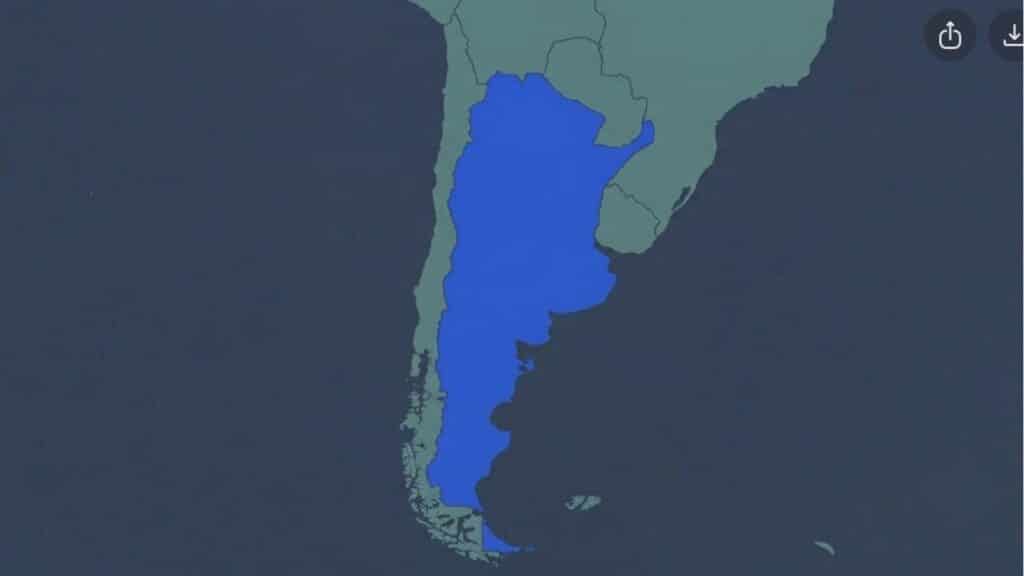
This Country Framework is part of the Regulatory Frameworks for Project-Based Carbon Credit Markets. To learn more click here.
Overview
As part of its climate finance strategy, Argentina will use carbon markets to fulfill its successive nationally determined contributions (NDCs), as well as its Adaptation Communications, Long-Term Low-Emission Development Strategy, National Plan for Adaptation and Mitigation to Climate Change, and jurisdictional climate response plans. The broader strategy will encompass both compliance and voluntary markets at the regional, national, and international levels.1
Argentina’s carbon market architecture remains under construction. At the national level, the government is developing a blended approach that anticipates both voluntary and compliance market mechanisms, guided by the National Strategy for the Use of Carbon Markets (ENUMeC). Legislative efforts are underway to establish a national voluntary carbon market (VCM), and policymakers continue to explore the design of an emissions trading system (ETS).2 In parallel, several provinces—including Misiones, Santa Fe, Jujuy, and Córdoba—have introduced their own regulatory initiatives, with Misiones advancing a jurisdictional REDD+ (Reducing Emissions from Deforestation and Forest Degradation) program in 2025.3
Argentina’s trading ecosystem is still emerging. Market activity currently takes place primarily through the private platform Bolsa Argentina de Carbono (BACX), which, supported by ACX technology, provides a global marketplace for carbon credits.4 While BACX enables digital trading of credits across international standards, it is not yet integrated into the country’s national registry of climate change mitigation projects (Registro Nacional de Proyectos de Mitigación [RENAMI]),5 nor is it subject to government oversight. Market-side rules—covering participation criteria, data standards, price-discovery mechanisms, settlement requirements, and trading integrity—remain under development. Over time, RENAMI is expected to play a central coordinating role as Argentina defines its regulatory framework, aligns with Article 6 of the Paris Agreement, and strengthens governance across supply-, demand-, and market-side dimensions.6
I. Supply-Side Regulations
Argentina currently has no guidelines for a compliance market, although it is reportedly evaluating the possibility of creating an emission trading system and participating in Article 6 of the Paris Agreement.7 While there is also no clear supply-side guidance for the voluntary market, Argentina’s regulatory framework includes guidance for eligibility to be included in RENAMI, which encompasses credits traded in the VCM.8 In December 2023, President Javier Milei proposed creating a national cap-and-trade system as part of an omnibus reform bill, but the measure was removed from the April 2024 draft, leaving its future unclear.9
A. Regulatory Framework
- Market Classification: There is no guidance or set of regulations yet for the compliance market. There is broader guidance on RENAMI, where credits issued in the VCM may be registered.
- Regulatory Status: No binding regulatory status on the supply side has been established. The government has established the national registry for carbon markets, RENAMI, which keeps track of all Argentina-based projects and the status of credits issued on a voluntary basis.10
- Key Authorities: Multiple draft bills were introduced in the Argentine National Congress in 2024 to establish a national framework for carbon markets. While the proposals differ in scope and institutional design, at least one designates the Undersecretariat of Environment—which currently oversees the implementation of Argentina’s climate policy—as the National Enforcement Authority. In this role, it would be responsible for approving a National Strategy for Carbon Market Utilization, defining eligible project types, managing RENAMI, and issuing technical guidelines.11 However, none of the initiatives has obtained committee opinion to date, and the institutional architecture remains under legislative discussion.12
- Sanctions: No sanctions have been officially implemented. If the regulation proposed by the Argentine National Congress is adopted, violations—such as failure to register projects in RENAMI within 30 days of credit issuance, disclosure of issuance or transfer of credits, or providing false or misleading information—would lead to sanctions. These include warnings; temporary disqualification from registering new projects or transferring or modifying certified emission reductions for up to five years; and fines of up to 1,000 times basic public administration salaries at the entry level in the national public administration, with proceeds directed to environmental protection, corrective and compensatory environmental measures, and/or cancellation of project registration.13 The severity of the sanctions would depend on the gravity of the infraction and harm to public interest. Fines would be allocated to the relevant environmental protection area.14 Exact corrective measures are not specified.
B. Credit Generation Standards
- Eligible Activities: Projects that can be registered under RENAMI include emission reduction and sequestration projects, particularly in the REDD+, AFOLU (energy, agriculture, forestry, and other land uses), waste management, and IPPU (industrial processes and product use) sectors. Credits must stem from projects developed in Argentina and be registered under United Nations Framework Convention on Climate Change (UNFCCC) mechanisms (i.e., the Paris Agreement Crediting Mechanism) or international standards such as Verified Carbon Standard and Gold Standard.15
- Methodology Framework: The proposed regulatory framework references the following carbon market standards, frameworks, and mechanisms: Verified Carbon Standard, Gold Standard, Global Carbon Council, Plan Vivo, Architecture for REDD+ Transactions’ REDD+ Environmental Excellence Standard (ART-TREES), American Carbon Registry, Climate Action Reserve, Bio Carbon Registry, Fondo Verde para el Clima (Green Climate Fund), REDD+, Forest Trends’ International Database on REDD+ Projects and Programs, and IHS Markit.16 Compliance with Article 6 is also planned, although it is still under development in accordance with the Argentine regulation.17 At this stage, RENAMI does not issue credits or certify projects, but rather serves as a database for projects issued in other international standards.18
- Measurement, Reporting, and Verification (MRV) Requirements: Argentina maintains the National Greenhouse Gas Inventory (INGEI), operating under Argentina’s Climate Impact Directorate of the Undersecretariat of Environment, which follows Intergovernmental Panel on Climate Change (IPCC)-aligned methodologies.19 RENAMI does not contain an approval or crediting MRV system of its own, but does require structured reporting, including project details (location, sector, methodology), issued units, retired and canceled credits, project status, and verification of listing in a public carbon credit registry.20
- Registry System: RENAMI is Argentina’s national registry system for mitigation projects, managed by the National Directorate of Sustainable Development and Climate Management within the Undersecretary of the Environment of the Nation. It functions as a transparency and tracking Excel database rather than a crediting or approval authority. RENAMI compiles project data from public carbon-crediting registries (e.g., Verra, Gold Standard, UNFCCC, and ART-TREES). Currently, few projects are listed in RENAMI due to its voluntary nature, with more than half of the listed projects already expired.21
Going forward, credits under RENAMI are expected to be assigned a unique identifier and include the project identification number from the issuing registry.22 The Argentine government recognizes the need for transparency in the implementation of its national climate change policy, in line with national regulations and international goals.23
C. Integrity Principles
- Additionality Tests: None have been defined yet by the Argentine government, but the need is recognized.24 Credits under RENAMI follow the methodologies of international public registries, which include safeguards to ensure additionality for credit issuance.
- Permanence Safeguards: Credits registered under RENAMI follow international standards, which have their own independently verified methodologies, including permanence safeguards with specific time periods and credit type. At this stage, the Argentine regulation has no permanence safeguards of its own.25
- Quantification Standards: Emission reduction quantification toward Argentina’s NDC target is carried out in compliance with INGEI, which is the country’s official IPCC-aligned accounting system.26
- Double-Counting Prevention: Credits established under RENAMI follow methodologies from international public registries, which include safeguards to ensure avoidance of double counting.27
D. Sustainable Development
- Co-Benefits: ENUMeC states that Argentina intends to promote projects with environmental and social co-benefits, consistent with the country’s broader climate and sustainable development goals. However, adherence is encouraged, not legally mandated.28
- Net-Zero Compatibility: The information registered in RENAMI feeds into Argentina’s reporting obligations under the UNFCCC. RENAMI’s structure and scope will be adjusted in accordance with UNFCCC requirements and Article 6 implementation.29
II. Demand-Side Regulations
There are currently no official demand-side regulations for project-based carbon credit markets (PCCMs) in Argentina. One of ENUMeC’s nine principles identifies oversight of private market participation as a strategic pillar of Argentina’s national carbon market strategy, although no further details have been disclosed.30
A. Use Authorization Framework
- Applications Allowed: There is no current information on how credits may be used by companies for emission abatement.
- Regulatory Status: There is currently no regulatory framework for the demand side.
- Oversight Bodies: No oversight bodies have been identified.
- Standards Integration: No standards have been identified.
- Enforcement Mechanisms: No enforcement has been determined.
B. Corporate Use Requirements
- Mitigation Hierarchy: There is currently no guidance on the mitigation hierarchy for the demand side.
- Scope Coverage: There is currently no guidance for scope coverage.
- Quality Standards: No demand-side quality standards have been determined.
- Accounting Treatment: No guidance for demand-side accounting treatment has been established.
C. Transparency and Assurance
- Public Reporting: No public reporting guidance has been established.
- Third-Party Verification: No guidance on third-party verification for demand-side PCCM engagement has been established.
- Science-Based Targets: No guidance on alignment to science-based targets has been established.
- Policy Advocacy: No guidance on policy advocacy has been established.
D. Market Integrity Protection
- Anti-Greenwashing: No guidance on anti-greenwashing frameworks has been established.
- Co-Benefits Delivery: No guidance on alignment to specific co-benefits has been established.
III. Market-Side Regulations
Argentina’s market-side framework remains in early development, with no formal government-run trading platform and limited statutory rules governing market operations. The national registry, RENAMI, functions as the core infrastructure for project-level tracking, but it does not yet govern the buying, selling, or settlement of carbon credits. Market activity occurs primarily through the private BACX platform (run in partnership with ACX, an electronic exchange that enables the trading, clearing, and settlement of standardized carbon credits, mainly from the VCM), which offers digital trading for multiple international certification standards and implements its own due diligence for clients, projects, and risk-management systems, including insurance tools. This platform is not formally regulated or endorsed by the government.31 However, the government has stated its intention to promote the integrity of the VCM alongside regulated markets.32
The Buenos Aires stock exchange (BYMA) also provides a database for carbon credit transactions (under the name “carbon certificates”) for companies seeking to offset their emissions voluntarily. BYMA states explicitly that the National Securities Commission (CNV) is not the authority of application and does not supervise carbon certificate trading, limiting its role to authorizing BYMA to conduct this complementary activity in OTC transactions.33 As of January 2026, two projects are listed on the exchange’s database.34
Key regulatory gaps include the absence of defined market participation criteria, a lack of price-discovery mechanisms, no government-specified rules, and no dedicated market-supervision authority. ENUMeC recognizes these gaps and identifies the development of market failures, infrastructure, and Article 6 alignment as priority future tasks. Overall, Argentina’s market-side regulations currently center on RENAMI for transparency and MRV, while other elements of market function―including trading platforms, data standards, cross-border trading, and enforcement―remain under design.
A. Infrastructure Framework
- Market Structure: Argentina currently operates only a VCM structure with no government-run trading platform. The government has expressly stated its intention to promote high-integrity voluntary markets alongside any future regulated schemes.35 A private platform, BACX (promoted by ACX), has emerged to facilitate digital trading credits across multiple standards (e.g., Verified Carbon Standard, Gold Standard).36 BYMA provides a parallel Excel database for credit listing, but it does not offer trading or registry capabilities. Trading is carried out on an over-the-counter basis. Further details on the exact functioning and authorities are not yet available.
- Registry Operations: Registration through RENAMI―which serves as the national tracking system for projects, issuance, transfers, and retirements―remains voluntary.37 BACX does not operate a government‑approved registry but connects to external registries and relies on its own accreditation process.38 BYMA similarly does not operate a national registry; instead, it relies on existing project registries and uses Argentina’s central securities depository, Caja de Valores S. A. (CVSA]), along with National Association of Securities Dealers Automated Quotations (NASDAQ) systems, for custody, ownership tracking, transfers, and retirement of Verified Carbon Units (VCUs) listed in its database.39
ACX supports BACX as its technology backbone, enabling digital trading of Argentina-based projects. However, ACX/BACX is not integrated into RENAMI and does not have a regulatory mandate within the national registry system. Projects registered in RENAMI may be traded on BACX if they meet the relevant certification standards, but reconciliation between market transactions and RENAMI records is not yet formalized. The government has not established requirements for trading platforms to synchronize with RENAMI.
- Data Standards: Government rules for credit data standardization are under development. BACX requires projects and participants to be accredited through its internal due diligence process and recognizes third‑party ratings from BeZero, Calyx Global, and Sylvera.40 BYMA requires issuers to register on BYMA Digital, submit a sworn declaration, transfer VCUs into custody, and comply with platform validation prior to trading.41
B. Trading and Participation
- Eligibility Rules: Argentina has not yet defined formal government rules for market participation. ENUMeC acknowledges the need for such criteria, but they remain under development.42 BACX requires project developers and buyers to undergo an accreditation process before being allowed to trade or list projects.43 BYMA requires traded credits to be “certified and verified,” with each VCU representing the reduction or elimination of one carbon dioxide–equivalent ton in the atmosphere.44
- Trading Mechanisms: The government has not issued rules on acceptable market mechanisms. BACX currently provides a fully digital trading environment that supports credits across various certification standards.45 BYMA conducts trading primarily through auction mechanisms (“BYMA Subastas”), with spot settlement periods, and allows request-for-quote functionality for indicative pricing.46
- Settlement Systems: No government-defined settlement rules exist. BACX applies its own digital settlement framework and offers insurance-backed risk mitigation (via Lockton, a privately held insurance brokerage firm) to cover delivery, cancellation, political risks, and registry risks.47 BYMA applies exchange-style settlement through CVSA custody and NASDAQ systems, enabling secondary trading of VCUs prior to retirement.48
- Price Discovery: Argentina does not yet have regulated price-discovery mechanisms. Trading occurs largely through over-the-counter-style mechanisms or within the BACX platform, which does not yet offer fully transparent market-wide pricing. BYMA introduces structured auction-based price formation, although this remains platform-specific rather than mandated by law.49
- Oversight Authority: RENAMI serves as the oversight authority for project registration and tracking, but there is no government authority overseeing trading platforms or secondary-market activity. BACX operates without formal state supervision. BYMA explicitly states that the CNV does not supervise carbon certificate trading, meaning market-side oversight remains exchange-driven rather than regulator-driven.50
- Legal Classification: At this stage, there is no regulatory guidance on accounting treatment for PCCMs in Argentina. Carbon credits in Argentina are not currently classified as a financial instrument, nor are they integrated into Argentina’s financial regulatory system.
C. Market Integrity Safeguards
- Anti-Manipulation and Fraud Prevention: Argentina has not yet established statutory anti-manipulation rules for market-side activities. BACX implements private safeguards, including insurance mechanisms, but these are not government requirements.51 The government notes that market-integrity frameworks are necessary and under development.52 BYMA relies on exchange-level controls, custody arrangements, and mandatory retirement procedures to prevent double claiming of carbon credits, but these safeguards are not government-mandated.53
- Transparency and Reporting Requirements: RENAMI requires transparency at the project level, but detailed market-side disclosure requirements have not yet been issued. ENUMeC indicates that broader transparency measures for market activity will be developed.54 BYMA enhances market transparency by publicly displaying retired credits on its platform and issuing formal retirement certificates via CVSA.55
D. Financial and Cross-Border Integration
- Financial Regulation Integration: Argentina does not currently classify carbon credits as financial instruments nor integrate carbon market oversight into its financial regulatory system. Trading platforms remain outside securities-law jurisdiction. BYMA confirms that carbon certificates are not treated as securities and are traded outside the public offering regime, keeping them outside Argentina’s financial regulatory perimeter.56
- Cross-Border Trading Framework: Argentina has expressed an intention to align with Article 6 mechanisms, but specific rules for international transfers, corresponding adjustments, and bilateral cooperation frameworks have not yet been released.57
E. Development Road Map
- Infrastructure Plans: The government has identified the need to define participation rules, clarify credit-use governance through RENAMI, and determine whether private platforms such as BACX will have a role within a regulated framework. Future regulation is expected to cover trading infrastructure, settlement rules, and minimum data standards.
- International Cooperation: Argentina intends to align with Article 6 for future cross-border activity, though formal cooperation agreements have not yet been put into place.58
- Regulatory Evolution: The government is developing more detailed definitions of market functioning, including requirements for project registration, credit tracking, and oversight of market conduct.59
- Enforcement Enhancement: Enforcement approaches for market-side conduct are expected to be developed as part of the upcoming regulatory framework.
References
- Boletín Oficial de la República Argentina, “Aviso 298356 (Primera Sección),” November 14, 2023, https://www.boletinoficial.gob.ar/detalleAviso/primera/298356/20231114. ↩
- Ibid. ↩
- Quantum Commodity Intelligence, “Argentine Province Closer to Issuing Verra Jurisdictional Credits,” September 16, 2025, https://www.qcintel.com/carbon/article/argentine-province-closer-Quanto-issuing-verra-jurisdictional-credits-48785.html; IETA (International Emissions Trading Association), IETA LAC Policy Brief: Carbon Markets in the LAC Region, October 2023, https://www.ieta.org/uploads/wp-content/Resources/Busines-briefs/2023/IETA_LAC-Policy-Brief_Oct31-Eng.pdf; IETA (International Emissions Trading Association), “Business Brief: Argentina,” August 2025, https://www.boletinoficial.gob.ar/detalleAviso/primera/298356/20231114. ↩
- ACX, “Argentina’s Carbon Market: A Hybrid Path to 2050 Neutrality,” August 7, 2025, https://acx.net/acx-commentary/argentina-carbon-market/. ↩
- Argentina.gob.ar, “Registro Nacional de la Ciencia Climática,” Ministry of Environment and Sustainable Development, Government of Argentina, accessed February 28, 2026, https://www.argentina.gob.ar/jefatura/ambiente/Desarrollo-Sostenible-y-Gesti%C3%B3n-Clim%C3%A1tica/la-ciencia-climatica/registro-nacional. ↩
- Boletín Oficial de la República Argentina, “Aviso 298356 (Primera Sección),” November 14, 2023, https://www.boletinoficial.gob.ar/detalleAviso/primera/298356/20231114; Subsecretaria de Ambiente Argentina, Registro Nacional de Proyectos de Mitigación del Cambio Climático (RENAMI): Memoria Técnica, 2025, Dirección Nacional de Desarrollo sostenible y Gestión Climática, 5, September 2025, https://www.argentina.gob.ar/sites/default/files/2025_memoria_de_registro_nacional_de_proyectos_de_mitigacion_renami_0.pdf. ↩
- Ministerio de Ambiente y Desarrollo Sostenible, Estrategia Nacional para el Uso de los Mercados de Carbono, Secretaria de Cambio Climático, Desarrollo Sostenible e Innovación, 17, August 2023, https://www.marval.com/archive/a_newsletters/Nacion-%20ResolucionMADS-385-2023-Anexo.pdf. ↩
- Subsecretaria de Ambiente Argentina, Registro Nacional de Proyectos de Mitigación del Cambio Climático (RENAMI): Memoria Técnica, Dirección Nacional de Desarrollo Sostenible y Gestión Climática, v. 4, 12–19, September 2025, https://www.argentina.gob.ar/sites/default/files/2025_memoria_de_registro_nacional_de_proyectos_de_mitigacion_renami_0.pdf. ↩
- Gold Standard, “America Carbon Market Regulations Tracker: Argentina I,” Carbon Market Regulations Tracker, November 10, 2025, https://www.goldstandard.org/carbon-market-regulations-tracker-america. ↩
- Subsecretaria de Ambiente Argentina, Registro Nacional de Proyectos de Mitigación del Cambio Climático (RENAMI): Memoria Técnica, Dirección Nacional de Desarrollo Sostenible y Gestión Climática, v. 4, 10–12, September 2025, https://www.argentina.gob.ar/sites/default/files/2025_memoria_de_registro_nacional_de_proyectos_de_mitigacion_renami_0.pdf. ↩
- Honorable Cámara de Diputados de la Nación Argentina, “Proyecto de Ley Exp. 6538-D-2024,” Comisión de Economía, https://www.diputados.gov.ar/comisiones/permanentes/ceconomia/proyecto.html?exp=6538-D-2024. ↩
- Subsecretaria de Ambiente Argentina, Registro Nacional de Proyectos de Mitigación del Cambio Climático (RENAMI): Memoria Técnica, Dirección Nacional de Desarrollo Sostenible y Gestión Climática, v. 4, 9, September 2025, https://www.argentina.gob.ar/sites/default/files/2025_memoria_de_registro_nacional_de_proyectos_de_mitigacion_renami_0.pdf; International Emissions Trading Association, “IETA Business Brief: Argentina,” August 2025, https://www.ieta.org/uploads/wp-content/Resources/Busines-briefs/2025/IETA_Business_Argentina-Final-August2025-FINAL.pdf. ↩
- Ibid. ↩
- H. Cámera de Diputados de la Nación, “Proyecto de Ley,” Bill S-2134/2024, 5, 2024, https://www4.hcdn.gob.ar/dependencias/dsecretaria/Periodo2024/PDF2024/TP2024/6538-D-2024.pdf. ↩
- Subsecretaria de Ambiente Argentina, Registro Nacional de Proyectos de Mitigación del Cambio Climático (RENAMI): Memoria Técnica, Dirección Nacional de Desarrollo Sostenible y Gestión Climática, v. 4, 9, September 2025, https://www.argentina.gob.ar/sites/default/files/2025_memoria_de_registro_nacional_de_proyectos_de_mitigacion_renami_0.pdf. ↩
- Ibid., 10–12. ↩
- Ibid., 4. ↩
- Ibid., 7. ↩
- Subsecretaria de Ambiente Argentina, “Inventario Nacional de Gases de Efecto Invernadero y Monitoreo de Medidas de Mitigación,” accessed April 2, 2026, https://inventariogei.ambiente.gob.ar/. ↩
- Subsecretaria de Ambiente Argentina, Registro Nacional de Proyectos de Mitigación del Cambio Climático (RENAMI): Memoria Técnica, Dirección Nacional de Desarrollo Sostenible y Gestión Climática, v. 4, 8–9, September 2025, https://www.argentina.gob.ar/sites/default/files/2025_memoria_de_registro_nacional_de_proyectos_de_mitigacion_renami_0.pdf. ↩
- Argentina.gob.ar, “Registro Nacional de la Ciencia Climática,” Ministry of Environment and Sustainable Development, Government of Argentina, accessed February 28, 2026, https://www.argentina.gob.ar/jefatura/ambiente/Desarrollo-Sostenible-y-Gesti%C3%B3n-Clim%C3%A1tica/la-ciencia-climatica/registro-nacional. ↩
- Subsecretaria de Ambiente Argentina, Registro Nacional de Proyectos de Mitigación del Cambio Climático (RENAMI): Memoria Técnica, Dirección Nacional de Desarrollo Sostenible y Gestión Climática, v. 4, 9, September 2025, https://www.argentina.gob.ar/sites/default/files/2025_memoria_de_registro_nacional_de_proyectos_de_mitigacion_renami_0.pdf. ↩
- Ministerio de Ambiente Y Desarrollo Sostenible, “Resolución 363/2021,” RESOL-2021-363-APN-MAD, December 29, 2021, https://www.argentina.gob.ar/normativa/nacional/resoluci%C3%B3n-363-2021-358905/texto. ↩
- Ministerio de Ambiente y Desarrollo Sostenible, Estrategia Nacional para el Uso de los Mercados de Carbono, Secretaria de Cambio Climático, Desarrollo Sostenible e Innovación, 41, August 2023, https://www.marval.com/archive/a_newsletters/Nacion-%20ResolucionMADS-385-2023-Anexo.pdf. ↩
- Ibid. ↩
- Subsecretaria de Ambiente Argentina, “Inventario Nacional de Gases de Efecto Invernadero y Monitoreo de Medidas de Mitigación,” accessed April 2, 2026, https://inventariogei.ambiente.gob.ar/. ↩
- Subsecretaria de Ambiente Argentina, Registro Nacional de Proyectos de Mitigación del Cambio Climático (RENAMI): Memoria Técnica, Dirección Nacional de Desarrollo Sostenible y Gestión Climática, v. 4, 10–11, September 2025, https://www.argentina.gob.ar/sites/default/files/2025_memoria_de_registro_nacional_de_proyectos_de_mitigacion_renami_0.pdf. ↩
- Ministerio de Ambiente y Desarrollo Sostenible, Estrategia Nacional para el Uso de los Mercados de Carbono, Secretaria de Cambio Climático, Desarrollo Sostenible e Innovación, 11, August 2023, https://www.marval.com/archive/a_newsletters/Nacion-%20ResolucionMADS-385-2023-Anexo.pdf. ↩
- Subsecretaria de Ambiente Argentina, Registro Nacional de Proyectos de Mitigación del Cambio Climático (RENAMI): Memoria Técnica, Dirección Nacional de Desarrollo Sostenible y Gestión Climática, v. 4, 7, September 2025, https://www.argentina.gob.ar/sites/default/files/2025_memoria_de_registro_nacional_de_proyectos_de_mitigacion_renami_0.pdf. ↩
- Ministerio de Ambiente y Desarrollo Sostenible, Estrategia Nacional para el Uso de los Mercados de Carbono, Secretaria de Cambio Climático, Desarrollo Sostenible e Innovación, 42, August 2023, https://www.marval.com/archive/a_newsletters/Nacion-%20ResolucionMADS-385-2023-Anexo.pdf. ↩
- ACX, “Argentina’s Carbon Market: A Hybrid Path to 2050 Neutrality,” August 7, 2025, https://acx.net/acx-commentary/argentina-carbon-market/. ↩
- Ministerio de Ambiente y Desarrollo Sostenible, Estrategia Nacional para el Uso de los Mercados de Carbono, Secretaria de Cambio Climático, Desarrollo Sostenible e Innovación, 10, August 2023, https://www.marval.com/archive/a_newsletters/Nacion-%20ResolucionMADS-385-2023-Anexo.pdf. ↩
- Bolsas y Mercados Argentinos, Guía Informativa: Mercados de Carbono 2024, 3, 2024, https://cdn.prod.website-files.com/6697a441a50c6b926e1972e0/68d4444d2842a5a444de284a_BYMA-Guia_MVC.pdf. ↩
- Ibid., 3, 13. ↩
- Ministerio de Ambiente y Desarrollo Sostenible, Estrategia Nacional para el Uso de los Mercados de Carbono, Secretaria de Cambio Climático, Desarrollo Sostenible e Innovación, 10, August 2023, https://www.marval.com/archive/a_newsletters/Nacion-%20ResolucionMADS-385-2023-Anexo.pdf. ↩
- ACX, “Argentina’s Carbon Market: A Hybrid Path to 2050 Neutrality,” August 7, 2025, https://acx.net/acx-commentary/argentina-carbon-market/. ↩
- Subsecretaria de Ambiente Argentina, Registro Nacional de Proyectos de Mitigación del Cambio Climático (RENAMI): Memoria Técnica, Dirección Nacional de Desarrollo Sostenible y Gestión Climática, v. 4, 12–19, September 2025, https://www.argentina.gob.ar/sites/default/files/2025_memoria_de_registro_nacional_de_proyectos_de_mitigacion_renami_0.pdf. ↩
- ACX, “Argentina’s Carbon Market: A Hybrid Path to 2050 Neutrality,” August 7, 2025, https://acx.net/acx-commentary/argentina-carbon-market/. ↩
- Bolsas y Mercados Argentinos, Guía Informativa: Mercados de Carbono 2024, 12–13, 2024, https://cdn.prod.website-files.com/6697a441a50c6b926e1972e0/68d4444d2842a5a444de284a_BYMA-Guia_MVC.pdf. ↩
- BACX, “Accredit,” accessed April 2, 2026, https://www.bacx.com.ar/en/acreditarse; BACX, “Why Choose BACX?” accessed April 2, 2026, https://www.bacx.com.ar/en/#por-que-bacx. ↩
- Bolsas y Mercados Argentinos, Guía Informativa: Mercados de Carbono 2024, 12, 2024, https://cdn.prod.website-files.com/6697a441a50c6b926e1972e0/68d4444d2842a5a444de284a_BYMA-Guia_MVC.pdf. ↩
- Ministerio de Ambiente y Desarrollo Sostenible, Estrategia Nacional para el Uso de los Mercados de Carbono, Secretaria de Cambio Climático, Desarrollo Sostenible e Innovación, 41–42, August 2023, https://www.marval.com/archive/a_newsletters/Nacion-%20ResolucionMADS-385-2023-Anexo.pdf. ↩
- BACX, “Accredit,” accessed April 2, 2026, https://www.bacx.com.ar/en/acreditarse. ↩
- Bolsas y Mercados Argentinos, Guía Informativa: Mercados de Carbono 2024, 3, 2024, https://cdn.prod.website-files.com/6697a441a50c6b926e1972e0/68d4444d2842a5a444de284a_BYMA-Guia_MVC.pdf. ↩
- ACX, “Argentina’s Carbon Market: A Hybrid Path to 2050 Neutrality,” August 7, 2025, https://acx.net/acx-commentary/argentina-carbon-market/. ↩
- Bolsas y Mercados Argentinos, Guía Informativa: Mercados de Carbono 2024, 12, 2024, https://cdn.prod.website-files.com/6697a441a50c6b926e1972e0/68d4444d2842a5a444de284a_BYMA-Guia_MVC.pdf. ↩
- ACX, “Argentina’s Carbon Market: A Hybrid Path to 2050 Neutrality,” August 7, 2025, https://acx.net/acx-commentary/argentina-carbon-market/. ↩
- Bolsas y Mercados Argentinos, Guía Informativa: Mercados de Carbono 2024, 12–13, 2024, https://cdn.prod.website-files.com/6697a441a50c6b926e1972e0/68d4444d2842a5a444de284a_BYMA-Guia_MVC.pdf. ↩
- Ibid. ↩
- Ibid., 3. ↩
- ACX, “Argentina’s Carbon Market: A Hybrid Path to 2050 Neutrality,” August 7, 2025, https://acx.net/acx-commentary/argentina-carbon-market/. ↩
- Ministerio de Ambiente y Desarrollo Sostenible, Estrategia Nacional para el Uso de los Mercados de Carbono, Secretaria de Cambio Climático, Desarrollo Sostenible e Innovación, 10, August 2023, https://www.marval.com/archive/a_newsletters/Nacion-%20ResolucionMADS-385-2023-Anexo.pdf. ↩
- Bolsas y Mercados Argentinos, Guía Informativa: Mercados de Carbono 2024, 12–13, 2024, https://cdn.prod.website-files.com/6697a441a50c6b926e1972e0/68d4444d2842a5a444de284a_BYMA-Guia_MVC.pdf. ↩
- Ministerio de Ambiente y Desarrollo Sostenible, Estrategia Nacional para el Uso de los Mercados de Carbono, Secretaria de Cambio Climático, Desarrollo Sostenible e Innovación, 38, August 2023, https://www.marval.com/archive/a_newsletters/Nacion-%20ResolucionMADS-385-2023-Anexo.pdf. ↩
- Bolsas y Mercados Argentinos, Guía Informativa: Mercados de Carbono 2024, 12–13, 2024, https://cdn.prod.website-files.com/6697a441a50c6b926e1972e0/68d4444d2842a5a444de284a_BYMA-Guia_MVC.pdf. ↩
- Ibid., 3. ↩
- Ministerio de Ambiente y Desarrollo Sostenible, Estrategia Nacional para el Uso de los Mercados de Carbono, Secretaria de Cambio Climático, Desarrollo Sostenible e Innovación, 12, August 2023, https://www.marval.com/archive/a_newsletters/Nacion-%20ResolucionMADS-385-2023-Anexo.pdf. ↩
- Ibid. ↩
- Ibid., 24–27. ↩