Après la Russie, comment le piège du gaz naturel américain s’est refermé sur l’Europe
DÉCRYPTAGE - Les Vingt-Sept cherchent désormais des solutions pour sortir de cette nouvelle dépendance à l’égard d’un État qui ne leur veut pas toujours du bien.
Current Access Level “I” – ID Only: CUID holders, alumni, and approved guests only
Get the latest as our experts share their insights on global energy policy.
Securing critical minerals is a top priority of governments around the world.

Hear in-depth conversations with the world’s top energy and climate leaders from government, business, academia, and civil society.
Under the second Trump administration, the US Department of Energy significantly shifted its priorities to align with its “energy dominance" agenda. But one significant point of continuity with...

Find out more about our upcoming and past events.
This workshop will be conducted in two parts: Part one on February 16 from 1:00 PM to 2:00 PM EST, and Part two on February 18 from 1:00 PM to...

This is the second episode of a five-part series exploring the European energy crisis in the wake of Russia’s invasion of Ukraine. If you haven’t listened to the first episode, we recommend you start there.
Germany has grown its wind and solar sectors dramatically over the past 20 years. And yet, when Russia’s invasion of Ukraine sparked an energy crisis, Germany fired up idle coal plants and began importing natural gas from around the world.
So why couldn’t renewables in Germany—and in Europe more broadly—meet the energy gap in this time of need?
In this episode, we cover the origin story of Germany’s renewables boom—including a nuclear disaster and an anti-nuclear political movement. Then, we examine the implications of the shutdown of nuclear power and the rise of renewables for the power sector.
We look at the long-ignored part of German energy—gas heating—and how electrification could help Germany make better use of its strong wind and solar industries.
And finally, we discuss the role of hydrogen, batteries, and other low-carbon technologies in balancing renewables on the grid.
So far over this season we've traced the global lithium-ion battery supply chain from mining to processing to manufacturing. And we've put it all into a geopolitical and economic context.
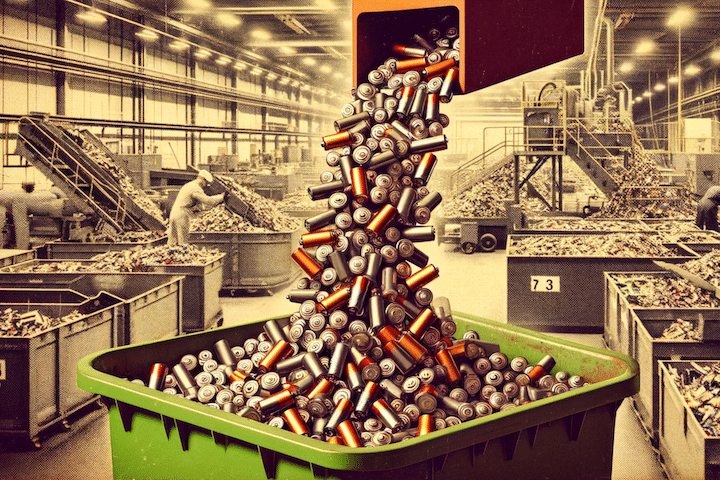
China has been the world's biggest battery manufacturer for over a decade. By 2022, according to the IEA, China manufactured 76% of the world's batteries. But that's changing.
Batteries can replace gasoline in our cars, or diesel in our generators with electricity. But batteries and petroleum-based fuels share something in common: they both rely on energy-intensive processes to turn extracted materials into something useful.
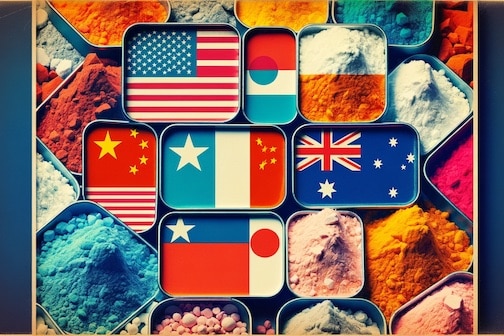
To produce enough batteries to reach global net-zero goals, the International Energy Agency says we'll need to increase production of critical minerals by six fold by 2040. It's a monumental task.

Two trade agreements recently negotiated by the Trump administration contain novel and coercive provisions with little precedent in US trade policy or the global trade system.
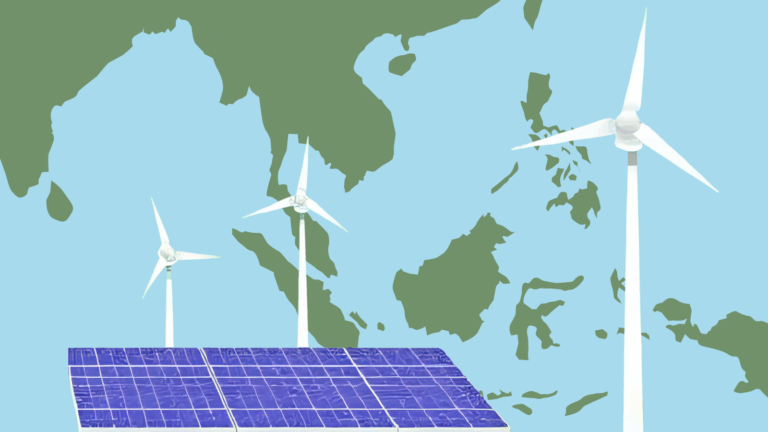
CGEP scholars reflect on some of the standout issues of the day during this year's Climate Week

Gulf Cooperation Council (GCC) countries have not only the world's lowest costs for oil and gas production but also the lowest costs for electricity generated from renewable energy sources.
