New Report Urges Caution in the Race for Space-Based Data Centers
The report warns that space-based data centers are likely to become a reality within the next few years—well before the risks of large-scale deployment can be fully understood.
This website uses cookies as well as similar tools and technologies to understand visitors’ experiences. By continuing to use this website, you consent to Columbia University’s usage of cookies and similar technologies, in accordance with the Columbia University Website Cookie Notice.
Our work is committed to independent and nonpartisan research that meets the high standards of academic integrity and quality at Columbia University.
Our initiatives and programs are designed to address critical needs in key focus areas around energy and climate policy.
Explore our expert insights and analysis in leading energy and climate news stories.
The report warns that space-based data centers are likely to become a reality within the next few years—well before the risks of large-scale deployment can be fully understood.
Get the latest as our experts share their insights on global energy policy.
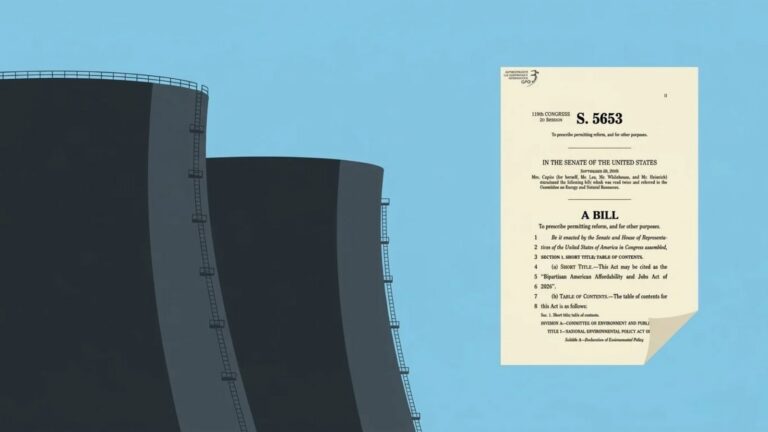
The BAAJA bill could facilitate nuclear development by streamlining federal environmental reviews and providing greater certainty for permitted projects.
Hear in-depth conversations with the world’s top energy and climate leaders from government, business, academia, and civil society.
Affordability was one of the key issues that drove US voters to the polls last week, and the resulting message for the newly elected Congress is clear: driving...
Find out more about our upcoming and past events.
Putting data centers in space once seemed fanciful. Today, a growing number of companies have started doing so.
We are the premier hub and policy institution for global energy thought leadership. Energy impacts every element of our lives, and our trusted fact-based research informs the decisions that affect all of us.
Dr. Margaret Cook is a researcher at IdeaSmiths and a Research Associate at the Houston Advanced Research Center. She earned her Doctorate in Civil Engineering from the University of Texas at Austin Cockrell School of Engineering with a certificate in Engineering Education in 2018. Her research interests include the water-energy-climate nexus and connections between science and policy. Dr. Cook’s previous research focused on the potential for mitigation of water stress in Texas through collaboration on water conservation or reuse technology improvements and the potential effects of drought and heat wave on thermoelectric power plants in Texas and the Midwest. She earned dual Masters degrees in Public Affairs and Environmental and Water Resources Engineering and a Bachelor of Science in Civil Engineering from UT Austin.
There is a strong and growing consensus that a simultaneously growing and decarbonizing electricity sector is necessary to meet declining greenhouse gas emissions targets.
Get the latest news and research on energy & climate policy.
"(required)" indicates required fields