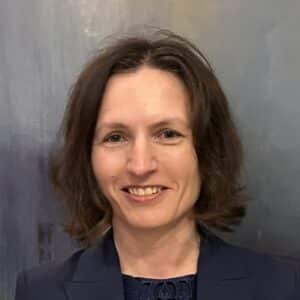
Dr. Irina Shaorshadze is an economist and strategist specializing at the intersection of macroeconomics, global commodities and financial markets, and public policy. She is the Founder and Principal Economist of Dihedral Macro, an independent research and consulting firm, and a Contributing Global Economist for the Economist Intelligence Unit (EIU), where she conducts macroeconomic forecasting, sovereign risk assessment, and country-level economic
and thematic analysis.
Previously, Irina served as a Director and Strategist on Bank of America’s Commodity ResearchTeam, analyzing the macroeconomic, geopolitical, and policy drivers shaping commodity and fixed-income markets, while developing proprietary fundamental and quantitative investment strategies. During her tenure, she was seconded to BofA’s special Economic Task Force, working directly with C-suit level management to model and evaluate pandemic impacts on the U.S.economy and the bank’s balance sheet using advanced alternative data analytics. Earlier in her career, she was an economist consultant at the World Bank, leading analyticalstudies on energy economics, fiscal policy, and social safety-net reforms across the Middle East and North Africa. She resided in Sana’a, Yemen and advised government officials on national energy subsidy reform. She received the World Bank’s Youth Innovation Fund grant for her work on youth employment initiatives in Yemen. Her research background includes a CSWEPFellowship at the U.S. Bureau of Labor Statistics, as well as fellowships with the University of Cambridge’s Energy Policy Research Group (EPRG) and the Institute for New Economic Thinking.
Irina serves on the Board of Directors of the Global Interdependence Center (advising its College of Central Bankers), is a member of the Bretton Woods Committee (participating in its AI and Digital Assets roundtables), co-chairs the Financial Markets Roundtable at the National Association for Business Economics (NABE) and chairs the Global Markets and Economy Committee at the Financial Women’s Association. She is also a past President and LeadershipAdvisor of the New York Association for Business Economics (NYABE) and a member of the Economic Club of New York.
Irina holds a PhD in Economics from the University of Wisconsin–Madison, an MSc in Economics from the London School of Economics, and a Master in International Affairs (MIA)
from Columbia University’s School of International and Public Affairs (SIPA). She speaks six languages and is an avid rock climber and equestrian.