Reflections from Munich 2026
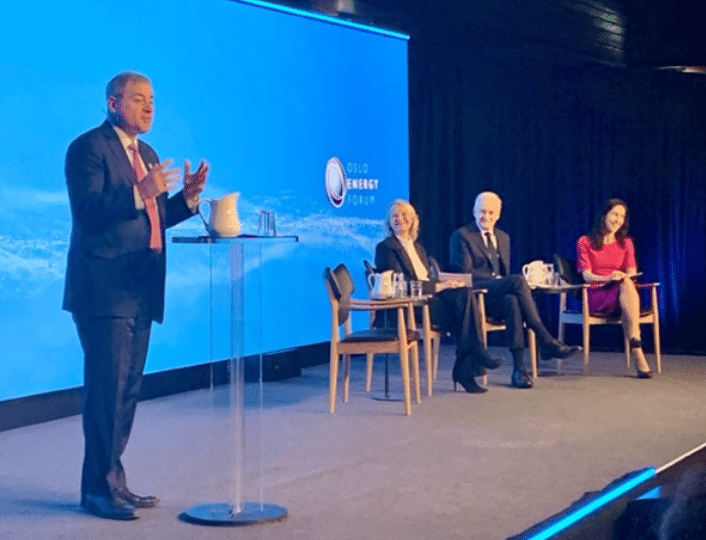
I’m en route home after a week in Europe—first at the Oslo Energy Forum and then at the Munich Security Conference. Munich generated considerable news and drama, but...
Current Access Level “I” – ID Only: CUID holders, alumni, and approved guests only
Past Event
September 30, 2019
6:00 pm - 7:30 pm
Turbulence in international affairs is nothing new, but the diversity of challenges and opportunities facing the international community today rivals some of the most consequential periods in history. The United States Intelligence Community is responsible not only for monitoring current events, but also assessing the future strategic environment, looking around the turns and bends in international relations to see what might be coming in the years ahead. The Center on Global Energy Policy is pleased to present a panel of career intelligence officials and scholars who will offer their views, assessment, and outlook for geopolitics in the next 18 months. Focusing on topics as diverse as East Asia, Europe, cybersecurity and the Middle East, they will make brief presentations followed by a conversation moderated by Mike Dempsey, CGEP non-resident fellow and the former Acting Director for National Intelligence. Panelists include: — Chris Almont, Defense Intelligence Officer for the Middle East — Richard K. Betts, Arnold A. Saltzman Professor of War and Peace Studies, Director of the Saltzman Institute of War and Peace Studies, and Director of the International Security Policy program in the School of International and Public Affairs at Columbia University — Scott W. Bray, National Intelligence Manager for East Asia — Shelby Pierson, Intelligence Community Election Threats Executive and former National Intelligence Manager for Russia, Europe and Eurasia — Guests unable to attend in person can register to view a livestream of the event. This event is open to press. Media should register for this event. Media inquiries or requests for interviews should be directed to Artealia Gilliard ([email protected]) or Genna Morton ([email protected]). Please note: RSVP to this event does not guarantee entry. Seating will be on a first-come, first-served basis until capacity is reached for both the public and press. Flash photography and video recording are prohibited. For more information contact: [email protected].
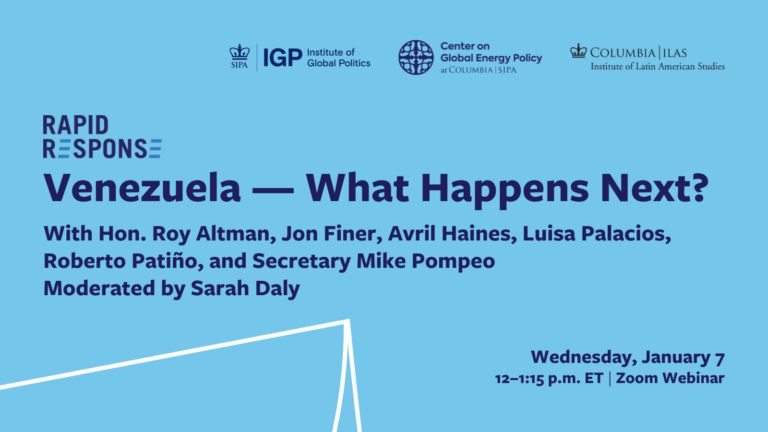
The recent military operation to remove Venezuelan President Nicolás Maduro and First Lady Cilia Flores raises several implications for the future of Venezuela and Latin America, geopolitics, and energy markets. Cosponsored by SIPA’s Institute of Global Politics (IGP) and Center for Global Energy Policy (CGEP), along with Columbia’s Institute of Latin American Studies (ILAS), this webinar will analyze the circumstances and impact of their capture and extradition to New York to face narcoterrorism and drug trafficking charges.
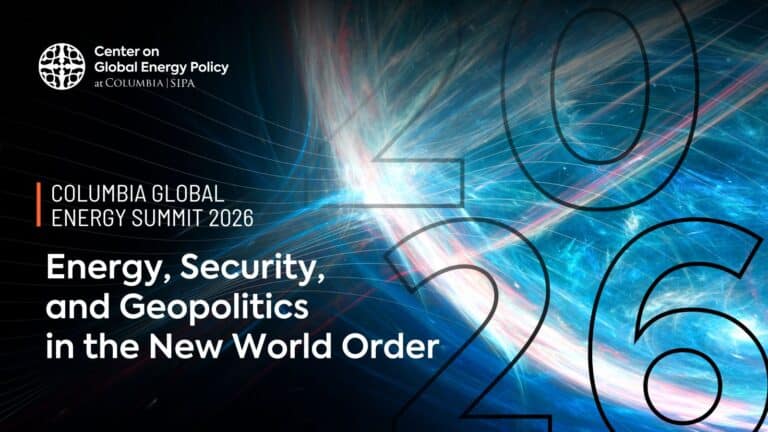
The Columbia Global Energy Summit 2026 is an annual event dedicated to thought-provoking discussions around the critical energy and climate challenges facing the global community.
On October 22, the United States Department of the Treasury announced the imposition of sanctions on Russia’s two largest oil companies, Rosneft and Lukoil, as a penalty for what it characterized as a lack of Russian commitment to ending the war in Ukraine.
As the Israel-Iran conflict continues to unfold, it remains unclear whether a ceasefire will hold or fighting will resume. This uncertainty carries significant implications for energy markets in the Middle East and around the world.
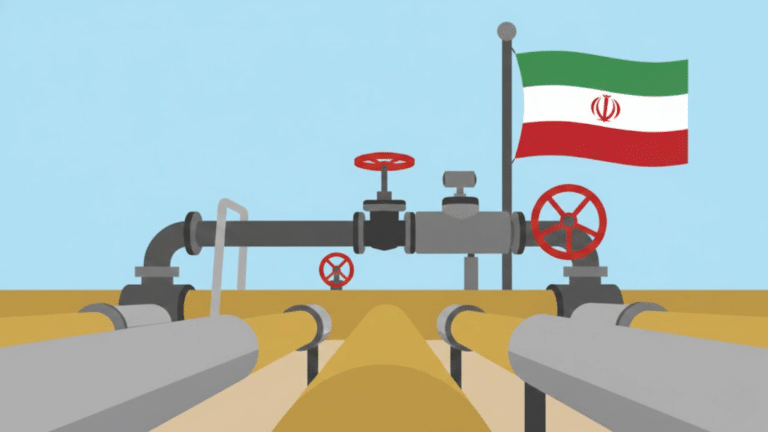
Iran has among the world's largest natural gas resource bases, but its ability to supply regional and global markets is constrained by sanctions, underinvestment, and limited export infrastructure.
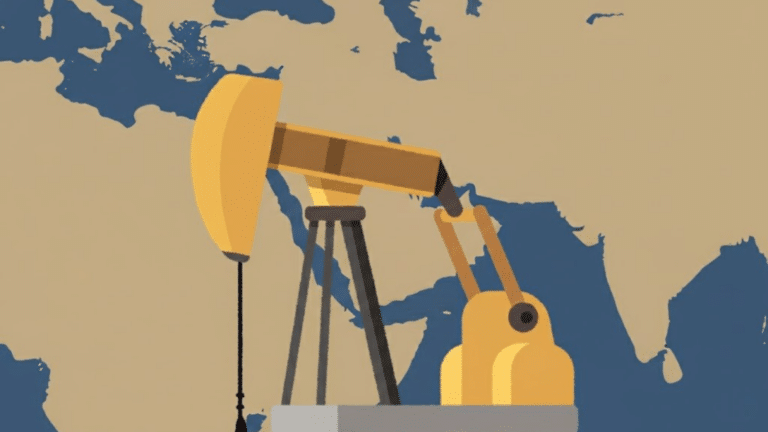
Multiple US–Iran conflict scenarios carry materially different risks for global oil infrastructure, transit routes, and prices.
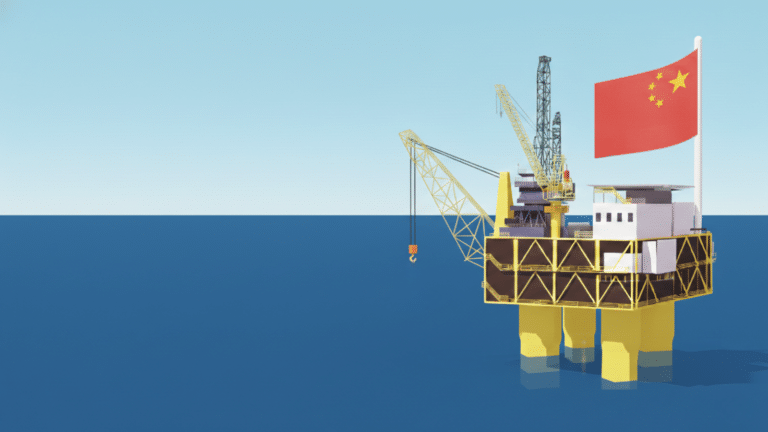
China’s crude oil imports hit a record-high 11.6 million barrels per day in 2025, as geopolitical tensions, low oil prices, and global oversupply spurred China to increase its oil stockpiles, a trend likely to continue in 2026.