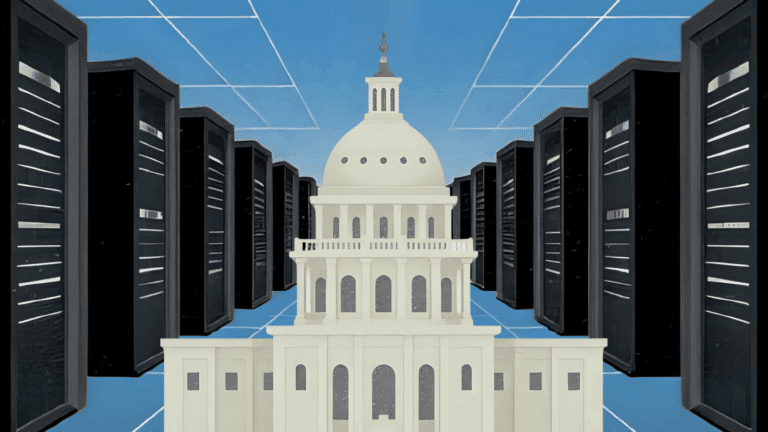
Congress Looks to Charge Data Centers Billions in Sweeping Energy Plan
The permitting bill could make it easier to build data centers for A.I. but a novel provision would also force data centers to pay much more for power.
Get the latest as our experts share their insights on global energy policy.
The shift in the balance of political power will help determine which US policies can be funded and sustained over the next two years.
Hear in-depth conversations with the world’s top energy and climate leaders from government, business, academia, and civil society.
Earlier this month, US voters handed Democrats control of both chambers of Congress and flipped several governorships across the country. The dramatic shift in power raises big questions...

Find out more about our upcoming and past events.
Putting data centers in space once seemed fanciful. Today, a growing number of companies have started doing so.
Chief Innovation Officer for Carbon Direct

From the east to west and north to south, in red states and blue states, attention to data centers is skyrocketing in state capitals across the United States.
As global warming mitigation and carbon dioxide (CO2) emissions reduction become increasingly urgent to counter climate change, many nations have announced net-zero emission targets as a commitment to rapidly reduce greenhouse gas emissions.
Despite growing efforts to drastically cut carbon dioxide (CO2) emissions and address climate change, energy outlooks project that the world will continue to rely on certain products that are currently carbon-intensive to produce but have limited alternatives, such as aviation fuels and concrete.
