The World’s Mineral Powers Seize Their Moment
Resource-rich countries haven’t always benefited from extraction. Can this time be different?
Get the latest as our experts share their insights on global energy policy.
The US Export-Import Bank is preparing to close the first funding tranche of Project Vault, a public-private partnership establishing the US Strategic Critical Minerals Reserve.
Hear in-depth conversations with the world’s top energy and climate leaders from government, business, academia, and civil society.
For years, the energy transition was discussed as a shift that would happen in steady, predictable increments. But a massive surge in electricity demand in recent years—now colliding...

The Center on Global Energy Policy celebrated the launch of a new book by Senior Research Scholar Richard Nephew, The Art of Sanctions: A View From the Field. Mr. Nephew, the former Principal Deputy Coordinator for Sanctions Policy at the Department of State, presented key conclusions from his new book and then joined a panel discussion about current events and U.S. sanctions policy. The conversation focused on sanctions design, particularly as it relates to industry and foreign countries.
For years, the energy transition was discussed as a shift that would happen in steady, predictable increments. But a massive surge in electricity demand in recent years—now colliding...
Despite all the advancements we have achieved globally in recent decades, as many as 750 million people still lack access to electricity. Tackling energy poverty requires far more...

For years, the energy transition was discussed as a shift that would happen in steady, predictable increments. But the last 24 months have shattered that illusion. Energy providers...

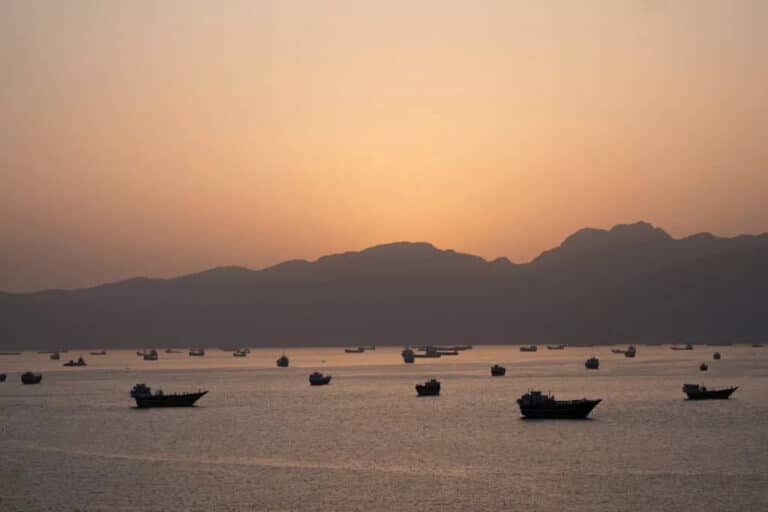
The Iran crisis is in its 80th day. Right now, roughly 1,500 vessels laden with oil, natural gas, fertilizers, and oil products sit trapped in the Persian Gulf...
The UNFCCC process is marred by gridlock in the COP multilateral framework, threatening joint efforts by countries to mitigate the climate crisis.
The White House declared last week that President Trump finally "broke OPEC" after the United Arab Emirates withdrew from the cartel.
The US blockade of tankers serving Iran's oil exports is intended to cut Iranian oil exports to near-zero.