This website uses cookies as well as similar tools and technologies to understand visitors’ experiences. By continuing to use this website, you consent to Columbia University’s usage of cookies and similar technologies, in accordance with the Columbia University Website Cookie Notice.
Energy abundance means different things in today’s global context than it did even a decade ago. It is about expanding electricity access while meeting rising energy demand. It...
PCCMs facilitate the generation, trading, and retirement of carbon credits from projects that remove, reduce, or avoid greenhouse gas emissions. By creating a revenue stream from verified climate...
Event
About Us
We are the premier hub and policy institution for global energy thought leadership. Energy impacts every element of our lives, and our trusted fact-based research informs the decisions that affect all of us.
Book Launch: The Art of Sanctions by Richard Nephew
Past Event
December 5, 2017
6:00 pm - 8:00 pm
Share
Economic sanctions are a key part of international affairs, but they have been widely criticized for decades as being too inefficient, unwieldy, inconsistent with the interests of business and industry, and brutally inconsiderate of humanitarian concerns. At the center is a question of whether and how to do sanctions right. Please join the Center on Global Energy Policy to celebrate the launch of a new book by Senior Research Scholar Richard Nephew, The Art of Sanctions: A View From the Field. Mr. Nephew, the former Principal Deputy Coordinator for Sanctions Policy at the Department of State, will present key conclusions from his new book and then join a panel discussion about current events and U.S. sanctions policy. The conversation will focus on sanctions design, particularly as it relates to industry and foreign countries. Expert panelists will include:
• Ed Crooks of the Financial Times (moderator)
• Jackie Shire, former member of the United Nations Panel of Experts on Iran
• Dr. Tim Boersma is a Senior Research Scholar at the Center on Global Energy Policy
***
A book signing and reception will immediately follow the discussion. A limited number of books will be sold at this event. Registration is required. Guests unable to attend can view a livestream of the event at energypolicy.columbia.edu/livestream. This event is open to press. Please direct media inquiries to Jamie Shellenberger-Bessmann ([email protected]) A podcast of this event will be available ~7 days after the date of the event through iTunes and our website.
Share
CGEP @ Climate Week 2026
September 21-25, 2026 | Columbia University | New York City
The Center on Global Energy Policy will host a series of energy
and climate focused events this September during Climate Week NYC.
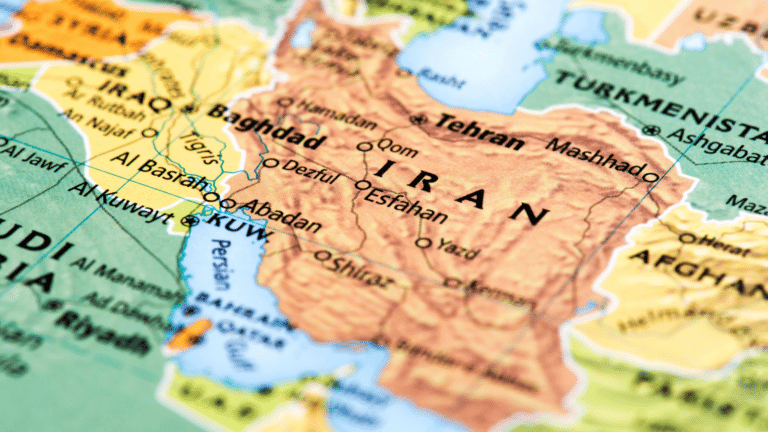
On February 28, the United States and Israel launched an attack on Iran, resulting in the deaths of Iranian Supreme Leader Ali Hosseini Khamenei and senior Iranian leaders...
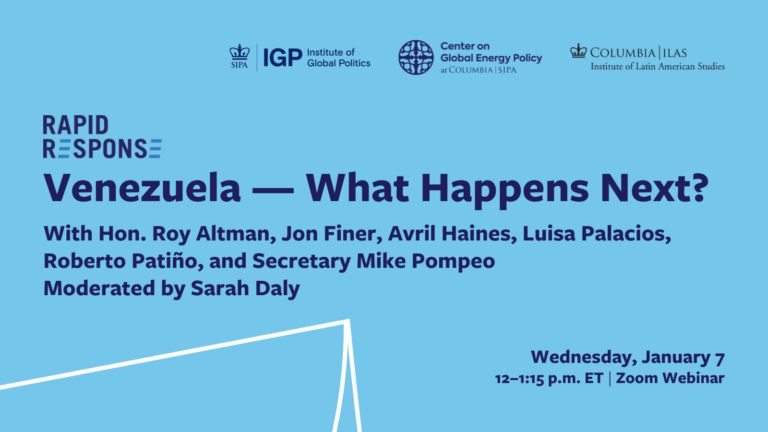
The recent military operation to remove Venezuelan President Nicolás Maduro and First Lady Cilia Flores raises several implications for the future of Venezuela and Latin America, geopolitics, and energy markets. Cosponsored by SIPA’s Institute of Global Politics (IGP) and Center for Global Energy Policy (CGEP), along with Columbia’s Institute of Latin American Studies (ILAS), this webinar will analyze the circumstances and impact of their capture and extradition to New York to face narcoterrorism and drug trafficking charges.
The Columbia Global Energy Summit 2026 is an annual event dedicated to thought-provoking discussions around the critical energy and climate challenges facing the global community.