This website uses cookies as well as similar tools and technologies to understand visitors’ experiences. By continuing to use this website, you consent to Columbia University’s usage of cookies and similar technologies, in accordance with the Columbia University Website Cookie Notice.
Energy Explained
Get the latest as our experts share their insights on global energy policy.
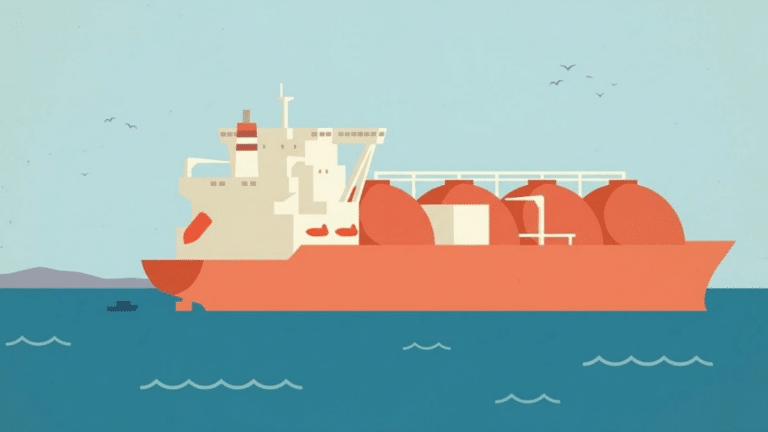
Asia’s Gas Shock Playbook: Coal, Curtailment, and Competing for LNG
Almost 90 percent of the LNG that transited the Strait of Hormuz in 2025 was destined for Asian countries.
Podcasts
Hear in-depth conversations with the world’s top energy and climate leaders from government, business, academia, and civil society.
Dan Steingart on Battery Innovation and the Future of Energy Storage
The conflict in Iran is a reminder of how quickly global energy markets can be disrupted. It also underscores why advances in things like battery technology — from...

Events
Find out more about our upcoming and past events.
April 15, 2026
• 12:00 pm - 1:00 pm
edt
Student Roundtable with LinkedIn’s Co-Founder Allen Blue
This roundtable is open only to currently enrolled Columbia University students. To register, you must sign in with your UNI. Join the Center on Global Energy Policy’s Women...
Event
• Center on Global Energy Policy
1255 Amsterdam Ave, New York, NY 10027
1255 Amsterdam Ave, New York, NY 10027

Guest
Evelyn Wang and Laurent Pilon
Advanced Research Projects Agency - Energy
The Advanced Research Projects Agency – Energy (ARPA-E) recently announced $100 million for its SCALEUP program, which funds start-ups and emerging companies that need support commercializing products.
The agency serves as a research and development group for the Department of Energy. ARPA-E is often described as a venture capital fund, because of its focus on getting new technologies to market. Crucially, it garners support from both political parties because of its emphasis on innovation and national security through transformative energy tech.
Still, ARPA-E’s $450 million budget is much smaller than other research and development agencies. The Defense Advanced Research Projects Agency (DARPA), part of the Department of Defense, has a $4 billion budget this year.
So, what technologies will ARPA-E focus on this year? How will it make the most of its budget? And will it continue to see bi-partisan support in the current political environment?
This week host Bill Loveless talks with Evelyn Wang and Laurent Pilon about ARPA-E’s unique approach to developing and launching high-risk energy projects.
Evelyn Wang is the director of ARPA-E. Prior to joining ARPA-E in 2022, she served as the Ford professor of engineering and head of the department of mechanical engineering at the Massachusetts Institute of Technology.
Laurent Pilon is a program director at ARPA-E. His research focuses on solar, thermal, and electrical energy storage. He was previously a professor in the mechanical and aerospace engineering department at the University of California, Los Angeles.
More Episodes
Dan Steingart on Battery Innovation and the Future of Energy Storage
The conflict in Iran is a reminder of how quickly global energy markets can be disrupted. It also underscores why advances in things like battery technology — from...
Iran Conflict Brief: Ali Ansari on What’s Going on Inside Iran
On the eve of President Trump’s deadline for Iran to reopen the Strait of Hormuz, the global energy landscape faces a moment of unprecedented risk. With dated Brent...
Iran Conflict Brief: The War’s Lasting Impact on Gulf States
While US and Israeli forces have significantly degraded Iran’s military and nuclear capability, the global energy landscape remains in a precarious position. For weeks, the Strait of Hormuz...
Daleep Singh on the Need for a US Industrial Policy Playbook
During President Trump’s second term, the administration has taken unprecedented action in the US private sector. The federal government’s investments in critical mineral mining and chip manufacturing are...

Relevant
Publications
Six Key Issues That Defined Climate Week 2025
CGEP scholars reflect on some of the standout issues of the day during this year's Climate Week
Blog
by Erica Downs, Dave Turk, Kate Guy, Gautam Jain, Luisa Palacios, David Sandalow, Vivek Shastry & Jack Andreasen Cavanaugh • October 10, 2025

Assessment of the potential of sustainable fuels in transport in the context of the Ukraine/Russia crisis
External Publications
with Pierpaolo Cazzola • Think Tank | European Parliament
• April 18, 2023