“Everything up in the air”: LNG, the Strait of Hormuz, and Central & Eastern Europe’s energy future
"LNG shipments to Central & Eastern Europe are reliable as long as those gas markets are not overly dependent upon one supplier."
This website uses cookies as well as similar tools and technologies to understand visitors’ experiences. By continuing to use this website, you consent to Columbia University’s usage of cookies and similar technologies, in accordance with the Columbia University Website Cookie Notice.
Our work is committed to independent and nonpartisan research that meets the high standards of academic integrity and quality at Columbia University.
Our initiatives and programs are designed to address critical needs in key focus areas around energy and climate policy.
Explore our expert insights and analysis in leading energy and climate news stories.
"LNG shipments to Central & Eastern Europe are reliable as long as those gas markets are not overly dependent upon one supplier."
Get the latest as our experts share their insights on global energy policy.
On February 28, the US and Israel launched new attacks on Iran targeting primarily the country's leadership, security forces, and missile program.
Hear in-depth conversations with the world’s top energy and climate leaders from government, business, academia, and civil society.
It’s been a head-spinning day in the Iran war. Earlier today, following a temporary truce between Lebanon and Israel, Iran announced that the Strait of Hormuz would be...
Find out more about our upcoming and past events.
The Columbia Global Energy Summit 2026 is an annual event dedicated to thought-provoking discussions around the critical energy and climate challenges facing the global community.
We are the premier hub and policy institution for global energy thought leadership. Energy impacts every element of our lives, and our trusted fact-based research informs the decisions that affect all of us.
Samuel Ruben-Peter G. Viele Professor of Electrochemistry and Professor of Earth and Environmental Engineering, Columbia Engineering
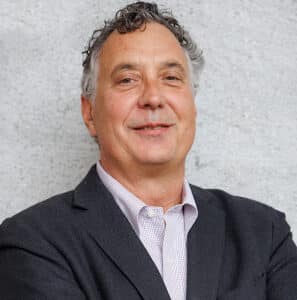
Alan C. West creates, analyzes, and develops electrochemical technologies used for materials, sensors, energy storage and conversion, and the sustainable production of chemicals. He has worked on the design of novel electrodes for next-generation batteries and has collaborated extensively with industry on electrochemical metallization methods used in semiconductor manufacturing.
West has developed novel methods that couple electrochemical and biological technologies that may potentially be used to produce fuels from renewable electricity, to convert inorganic waste streams to fuels, and to enable alternative processes for use in copper mining. Of particular interest to West are the experimental and numerical methods used to characterize transport phenomena and reaction mechanisms in electrochemical systems. He has simulated and analyzed a variety of metallization and dissolution processes, including studies by which the design of the electrolyte composition controls film growth and nucleation, and thus properties in geometries of relevance to the manufacturing of electronic devices. He has developed models of battery electrodes that capture experimental observations ranging from the atomistic scale to the mesoscale to the full scale of the electrode. Due to the multi-scale, complex nature of batteries, West works closely with a range of scientists and engineers, including chemists, material scientists, physicists, and mechanical and electrical engineering.
West received a BS in chemical engineering from Case Western Reserve in 1985 and a PhD in chemical engineering from the University of California, Berkeley, in 1989. He is a fellow of the Electrochemical Society, and in 2014 he received the society’s Electrodeposition Award. He joined the faculty of Columbia Engineering in 1992.
Get the latest news and research on energy & climate policy.
"(required)" indicates required fields