This website uses cookies as well as similar tools and technologies to understand visitors’ experiences. By continuing to use this website, you consent to Columbia University’s usage of cookies and similar technologies, in accordance with the Columbia University Website Cookie Notice.
Energy Explained
Get the latest as our experts share their insights on global energy policy.
Live Updates: US and Iran Sign Deal, Expected to Open Strait of Hormuz
The Center on Global Energy Policy is providing live updates on key developments related to the Iran crisis. Check back here for the latest.
Blog
by Anne-Sophie Corbeau, Erica Downs, Ira Joseph, Richard Nephew, Daniel Sternoff, Karen E. Young, Robin Mills & Neelesh Nerurkar • June 16, 2026
Podcasts
Hear in-depth conversations with the world’s top energy and climate leaders from government, business, academia, and civil society.
Iran Conflict Brief: The US-Iran Deal and a New Phase of Accommodation
The 109-day-old Iran crisis is heading toward an off-ramp in the form of a not-yet-public Memorandum of Understanding to reopen the Strait of Hormuz. While energy markets are...
Columbia Energy Exchange Podcast
with Karen E. Young
, Richard Nephew
and Ira Joseph
• June 16, 2026

Events
Find out more about our upcoming and past events.
June 25, 2026
• 11:30 am - 12:30 pm
est
The Cost of Power: Rising Electricity Prices, AI, and the Grid
This event will take place in-person in Washington DC, at the Rayburn House Office Building, Room 2168 (Gold Room). Advance registration is required. Announcing New Columbia University Publications...
Event
• Rayburn House Office Building, Room 2168 (Gold Room)
Washington, D.C.
Washington, D.C.
Podcast
Iran Conflict Brief: The US-Iran Deal and a New Phase of Accommodation
June 16, 2026
Guests



-
Transcript
-
Daniel Sternoff:
Events in the Middle East are changing quickly and the complexities of understanding the global energy landscape grow deeper by the hour. Join me as we talk to leading experts on the latest developments in the region and what it means for the rest of the world. Welcome to our rapid response series, The Iran Conflict Brief, a special edition of the Columbia Energy Exchange Podcast. I’m Daniel Sternoff, a senior fellow at the Center on Global Energy Policy. We are recording this podcast on Tuesday, June 16th at 8:30 AM in Washington, DC, 4:00 PM in Tehran and 4:30 and 3:30 PM respectively in Abu Dhabi and Riyadh. The 109-day-old Iran crisis is heading toward an off ramp in the form of a not yet public memorandum of understanding that will immediately reopen the Strait of Hormuz and give Iran some economic benefits while pushing the nuclear issue and deeper US sanctions relief into the limbo of negotiations likely to extend far beyond an envisioned 60 days.
The MOU reportedly contains no language limiting Iran’s missile program or proxy networks and applies a Band-Aid to halt fighting in Lebanon over Israeli objections. A war that began with President Trump declaring to the people of Iran that “The hour of your freedom is at hand,” is winding down with an entrenched, even harder line Iranian regime with deep governance challenges and severe damage to its military, industrial and nuclear complexes, but deepened its control over the world’s most important energy choke point. There are many losers from this strategically ambiguous conflict, not least the Arab Gulf States, but energy markets are celebrating with an aggressive selloff. Brent crude, which peaked at $125 a barrel in late April has tumbled to just over $80 a barrel, only $10 higher than where it traded before the war began. The Dubai market has flipped into a shallow contango, a structure anticipating a rush of near term barrels.
European gas markets have similarly round tripped from over 60 Euros per megawatt hour to 42 up 10 Euros from the start of the crisis. While energy markets are pricing in and normalization and flows, the actual operational future of the strait remains dangerously opaque. Hundreds of vessels remain trapped. Navigable shipping corridors are constricted by mines. Mine clearing operations could take months and war risk insurance will remain high until there is confidence in a durable settlement. Global tanker logistics have been scrambled with vessels tied up in floating storage or diverted to long haul routes between the Americas and Asia and until there is a steady flow of outbound and inbound tankers, it will be hard for Gulf producers to fully restore shut in production. This is the case for both oil and gas. Only a single Qatari LNG vessel has officially crossed the strait and with European gas storage levels trending at historic lows, it could take months for Qatar’s massive LNG infrastructure to return to full capacity.
On top of all this, it’s not clear how the strait will be managed in practice. Iran has explicitly stated that while it won’t levy official tolls during the upcoming 60-day ceasefire window, it will enforce its own regulatory protocols and collect “service fees” for passage, effectively institutionalizing Tehran’s course of leverage over Hormuz. 100 days of this war may be coming to an end, but 47 years of US-Iran hostility may just be changing shape.
I’m joined today by Richard Nephew, Karen Young, and Ira Joseph, all experts here at the Center on Global Energy Policy. Given the news over the weekend and the rapidly developing implications, I can think of no one better to give us an idea of what’s actually happening. Good morning, Richard, Karen, and Ira. Thanks for joining.
Karen Young (03:44):
Morning. Thanks, Daniel.
Daniel Sternoff (03:46):
So I have about a thousand questions for each of you about the strategic political and economic dimensions. And we’re all hobbled by the fact that we haven’t actually seen the agreement that we’re analyzing here. But because we’re an energy focused podcast, let’s zero in first on some near term questions around Hormuz. So Karen, let me start with you. Are energy markets premature in projecting a normalization in flows? What will this MOU actually do? How will vessel traffic be managed if shipping lanes are still choked by mines? What are we to make about Iran insisting that management of the strait is up to it and the Omanis, but Oman is distancing itself from Iranian proclamations. Will Saudi and the UAE be willing to coordinate vessel traffic with the IRGC? I have many more questions, but I’d love to hear how you are looking at what you think is actually going to happen here.
Karen Young (04:45):
So as you say, Daniel, with the caveat that we haven’t actually seen the text of the MOU, we’re recording on Tuesday morning. But still, no matter what the MOU says, my expectation is that no, there is no normalization or return to pre-February 28th traffic patterns. Now we could see some return of volumes and the pipelines have been really essential in helping that. And if Iran gets a 60-day window of pump and transit as much as you can, that’s going to be important in terms of getting more oil on the market. And there’s these as much as or maybe more than 80 million barrels sitting in tankers ready to go. And the market’s probably saying, look, more oil is coming. It’s going to start moving. The pace may be slow, but it will probably accelerate. We’ve got a little bit of a summer window, so that’s what we’re going to see first.
(05:51):
But that doesn’t mean that that will be regular and reliable and it also doesn’t mean that it solves our depleted inventory problem. So I think one question which is maybe not really a market problem because the market will just take this day by day, but one question for analysts and for governments is that a return to normal means also thinking about what normal demand looks like. And the demand that we saw before February 28th, now we know, was really a bit fuzzy because of the stockpiling that was happening in China. And so we don’t know what inventory refilling looks like. It won’t happen at the same time, in the same places, at the same prices for everybody. So there’s just, I think, just enormous unknowns on both the supply side and the demand side. So what does that mean? It means brace yourself for continued volatility and pricing and certainly volatility in the regularity and the safety of these transits because all it takes is one accident, right?
(07:00):
You hit one mine, you get one vessel that becomes under stress or boarded by, could be either side, any side, to really put a scare into things. We also have heard, I think, early on in the last day or so from companies like Maersk, which have said, look, our plans are not changing. We have created workarounds and our expectation of trade flows, not just oil and gas, but the normal trafficking of other things that go through this choke point are not going to be in a safe place for us to take the risk. And so we’re going to keep doing what we’ve been doing. And so I think all of those need to kind of moderate our expectations of what normal looks like. Though certainly we could expect in the short term a pretty sharp curve of increase of crude volumes.
Daniel Sternoff (08:00):
Okay. Thanks. Richard, I love to hear your reaction to Karen’s remarks and your assessment around how fragile this MOU is. I mean, technically all it seems to do is extend a ceasefire for 60 days after which we are supposed to have a resolution to everything. It would seem that if we are heading into the hardest negotiations after this, the real leverage to get some kind of resolution there will kind of only come from the threat of re-imposing the blockade or interfering with shipping and so forth. So what do you think this is going to look like and how vulnerable will this interim period be?
Richard Nephew (08:39):
Yeah. Well, look, I agree completely with both you and Karen about the fragility of all of this. It’s worth pointing out we might not even have an MOU right now. We might have a letter of intent to have an MOU and I say that because not only have we not seen the text, which would be useful for us to evaluate this, but the description of what’s actually been agreed is even fuzzy that there are still, to quote the Pakistani Prime Minister, “pre-implementation discussions” that need to take place before Friday. I mean, this is MOU, right? It’s supposed to be fairly straightforward in terms of we’re going to halt the US blockade, the Iranians are going to release the strait. If you can’t say that in pretty clear sentences as of today, Tuesday, and you need a few more days to iron that out, do we even have an MOU?
(09:27):
So I think that just is worth acknowledging at the start. And then of course you’ve got the issue not only of what could happen in the immediate environments of the strait, but you’ve got, as you pointed to, the question of Lebanon. And this speaks to, I think, the broader issue of spoiling factors. The reality is that as Israeli officials have said, they don’t consider themselves bound by the Lebanon portions of the ceasefire. The Iranians have said the Lebanon portions of the ceasefire are essential. Well, that’s a problem, right? That’s a friction point. And we’ve continued to see military action between the Israelis and Hezbollah and Lebanon, almost persistent threat that there is going to be some sort of mine or other incident in the straits. I mean, you add all these up and you basically have a situation in which there are too many different pressure and friction points that could potentially spell this all out.
(10:23):
And that’s before you even get to the whole 60-day thing. As you pointed out, 60 days is supposed to resolve everything. It’s supposed to put the nuclear program definitely in the box from the Iranian perspective. It’s supposed to result in sanctions relief. There are open questions as to whether or not, as some US officials have said, this will involve missile and drone related restrictions on the Iranians, restrictions on Iranian proxies. The Iranians, of course, have said that they’re not doing all those things. And if you get to 60 days and you haven’t resolved that, what do you do? Do you extend this? Do you keep this going? Or as the president has intimated, are we back at this? Now, I’ll give you my personal take on this. I think it is very infeasible that at this point, the United States reverts back to active hostilities.
(11:06):
The president’s been signaling mad that he doesn’t want to, even as he’s been saying he’s going to unleash massive attacks on the Iranians, he keeps finding a different reason to back away with the Iranians essentially saying, “We didn’t agree to anything, but the president claiming otherwise.” So I think what instead you have is just an extension of the extension of the extension of this MOU in perpetuity with the fragility that comes along with it. And all that adds up as I look at this to a likelihood that most of the strategic objectives the United States brought into this conflict are not going to be achieved. We’ll have reopened in the strait, but with potential new administrative ownership, which will be a complicating factor not only for industry, but certainly for government and a possibility that it could fracture again with the Iranians having newfound confidence that they can close the strait at will.
(11:53):
And those are factors that all go back to, I think, Karen’s central point This is the beginning of a ride still.This is not the off-ramp even from my perspective, unless you see major philosophical changes really in the US position and the Iranian position that I don’t think are terribly likely.
Daniel Sternoff (12:13):
Thanks. Let me dig into some of that. This is both for you and for Karen around what Iranian, I don’t know if management is the right word over the strait, but whatever this influence they’re going to be exerting, they are saying they won’t have explicit tolls during these 60 days, but they’ve made it clear that they intend to be monetizing this in some way. They’ve also said, we haven’t seen the text, but maybe there’s some line in there that says Iran and Oman as the littoral states are going to decide what happens here and the Omanis have kind of been going out of their way to say, no, this is an international waterway and we haven’t agreed to any of that. So I’d be curious to understand what you both think is going on there and beyond that, how are Saudi and the UAE looking at this and Qatar as well, especially in light of the reports about their payoffs potentially to Iran. I mean, pragmatically, are they all just going to accommodate themselves to Iran monetizing this thing and that’s going to be the reality or no? Maybe Karen, do you want to take that first?
Karen Young (13:29):
Sure. Well, I think first and foremost, Iran intends to have access to money as a result of this agreement. How they receive funds, whether it’s through tolling or through bilateral agreements or payoffs or frankly extortion really doesn’t matter, I think to them. They just want to see an inflow of cash that they’re desperate for. And the region is, yes, thinking about a new politics of accommodation. And this is something that I think is quite familiar and I would even include it as tools of economic statecraft of the Gulf States. They are familiar with using sort of the carrots of economic statecraft and that will play out in the way that Iran opens to investment opportunities, the way that Iran tries to be more of a source of both oil and gas within the region. They’re going to be a disruptor to OPEC. They’re going to be a disruptor to the GCC and they have this authority now.
(14:49):
So to me, it doesn’t even really matter and I have kind of little faith in their ability to create an administrative function, but the threat allows them to profit from essentially intimidation and the Gulf States I think already are finding ways to protect themselves and this will just be part of the dirty politics of accommodation to come.
Richard Nephew (15:18):
Yeah, I agree. And I’ll just add a couple elements to this. Control over the strait has two potential meanings here. You’ve got this administrative function control and then you’ve got the de facto. We have the ability to reign drones and missiles down on the strait at will, function of this too. And I think what’s interesting about the conflict disturbing in many ways is that until now the Iranians had really feared what would happen if they did this and then they did it and they got to see what would happen. And what would happen is the United States Navy was unwilling to [unclear] and was unable as part of a broader US military and coalition support to stop Iranian drone and missile attacks. And so from the Iranian perspective at this point, I think they think that they’ve got the ability to do this as much as they possibly want.
(16:04):
Obviously everybody else knows that too, but that also gives them a little bit more confidence I think as they approach any kind of dispute that they think that they’ve got their fingers on the pulse and that they can press as hard as they can and they’re probably right. So until there is some sort of very significant change in that kind of military and defensive balance in the strait, which is not going to happen anytime soon, that level of control is going to be there. So it’s always a question of how can we disincentivize the Iranians from doing this? And there are a couple ways. One, you could punish them and the other way is incentivize them. And it looks like that first part of control, them having administrative control over the strait and collecting some kind of administrative fee is going to be how the rest of the world decides to deal with this.
(16:48):
And I think at this point it’s kind of interesting to think about the limits of US power because the United States has been saying for months now, we don’t want to see people paying money. We don’t want to see people paying these bribes and paying these fees. Plenty of reports that people both are already and I suspect would be willing to, if it meant that there was stability and if it meant that there was going to be regular flow and regular order going through the strait, I think people would be willing to look at it and say, “What’s $500,000 per ship that’s going through? What’s a million dollars per ship going through if the value of cargo, value of transit is so much more?” There are ways the US could interfere with that. Sanctions are still an element of this, notwithstanding the fact that the Iranians are apparently asking for it in crypto, which oh, by the way, is a good advertisement for more regulation and sanctions enforcement around crypto.
(17:36):
But I think the sanctions element of this is going to be the only lever I think the United States will have to push back. It seems based at least in what we’re hearing that the MOU is going to go the other way and it’s essentially going to greenlight not only Iranian traffic, but potentially will even allow some level of Iranian collection of these fees, at least if you believe what the Iranian story is in this. So all this comes back to, ultimately, I think people will be willing to pay these things because they recognize where the Iranian control levers are and the US ability to push back is going to be cabined by how much we’re willing to use sanctions and what’s the text of the MOU. Pretty useful if we got that MOU text down so we can know exactly where it is.
Daniel Sternoff (18:18):
Indeed. Let me shift back to some of the energy impact. So Ira, let me bring you in on some gas and LNG angles. So obviously we’ve seen a pullback in TTF gas prices. We’re still about 30-ish percent above where we were at the beginning of this crisis and Brent crude prices are only about 14% above where they were and maybe that’s an interesting comparison to make, but do you think current gas prices are either prematurely celebrating a paper peace or how difficult or how long do you think it will take physically to restore transit and production of Qatari LNG and maybe to the point, is this going to be too late for European gas inventories that are not in the most comfortable position at this point of the year?
Ira Joseph (19:12):
Yes, I think the price movements are definitely premature here, but price movements are already premature because they’re trying to anticipate what the market’s going to be next. None of this changes the fact that European gas storage, which not only stirs gas for Europe, but for the entire world on a seasonal basis is well, well below normal. Most of that is focused on Germany and the Netherlands, but still it’s a bigger issue for the market. So I mean, the Qataris clearly have been negotiating with the Iranians in parallel in a separate way than the US, although the US seems to be aware of it. The news is that they can have 12 of their 14 trains up to 50% of capacity in one month and 80% over the next two months. And all of that suggests that they’ve been preparing and working on these trains already and with some sort of guarantee or some sort of assurance that nothing was going to happen to them if they were going to work.
(20:06):
Otherwise, there’s no way they could be up that fast. It’s simply not possible. And maybe one train you could wrap up that fast, but 12 trains in a situation that’s never been done before in pieces of equipment that are notoriously fickle in terms of being able to ramp them up and down, there’s no way that some agreement or some understanding, let’s just say, has been come to weeks or months ago prior to this. So that being said, we don’t have the volume. There’s still at least 10, 10 to 12 LNG Qatari LNG tankers inside the Straits of Hormuz that have been bobbing up and down for the last two months here that haven’t gone out yet. So you will get some initial supply during the market, but the broader Qatari capacity here is going to take months. Now that being said, US LNG capacity is ramping up very quickly.
(20:57):
We’re coming out of maintenance season here. It’s up pretty significantly just in the last two weeks. Most of that LNG should go into European gas storage. So we’re getting incremental supply potentially from the US now and from the Qataris a little bit down the road here. But I think the top line story here is that the Qataris are in a lot of ways, not a lot of ways, they’ve always shared a gas field with the Iranians. They’re just going to be sharing a gas field with the Iranians in a different way than they have in the past.
Daniel Sternoff (21:26):
Right. Ira, let me ask you something about logistics. So it’s interesting if Qatar might be able to bring production back faster than some people think, at least on some of their trains, but how much is that constrained by logistics? So on the oil side, I mean currently given that we apparently have mines in the normal inbound and outbound lanes to the strait, and that means that all traffic has to be routed through narrower lanes along the Omani or Iranian coast. And I think that’s going to restrict how much of the 500 odd vessels of varying types that need to discharge. But I think for producers on the oil side, it’s not really going to see a full ramp back to production until we can have both inbound and outbound and there’s lots of tankers that are tied up in long haul. They’ve shifted the logistics from the Atlantic basin to Asia and so forth.
(22:21):
So that’s all going to slow the rise in production. Is there something similar happening on the LNG shipping side?
Ira Joseph (22:29):
Yeah. I mean, I think there’s going to have to be because first of all, you’ve lost two trains for at least three or four years here. So that’s 12 and a half million tons of the 77 million tons have been lost. So what’s left here and the Qataris do own all of their own tankers. So the issue is not finding enough tanker capacity to move the LNG, but certainly the logistics around loading the tankers and then moving them through a narrow area than they were before. I mean, before all of this started, we had three tankers moving through the Straits of Hormuz every day. Now it’s going to be much different than that, not to mention all of the other traffic moving through. LNG tankers are not the only things moving in and out of the Straits of Hormuz here. So if one type of tanker’s being constrained here in terms of its movements, all types of tankers are going to be constrained in terms of their movement.
Daniel Sternoff (23:19):
Okay, thanks. Maybe Karen, let me turn back to you a little bit about the regional security architecture after this conflict. I mean, it seems we’re pretty far from a world in which Iran is constrained and then the Abraham Accords, Pax Americana is spreading across the region extending to Saudi and others. And interestingly, during these negotiations of the MOU, we saw this quartet emerge of Saudi, Pakistan, Turkey, and Egypt, I guess a quintet if we put Qatar in that group directly mediating with the Iranians. Is this kind of a regional architecture that in some ways is replacing the role of the US? I mean, the US obviously reliably defended the Gulf States during this conflict, but not hermetically and it could not keep the strait open. So how is this changing Gulf States perception of how they’re going to manage things in this region and of the value of the US Security Alliance?
Karen Young (24:28):
Yeah, it’s a great question, Daniel. And there are essentially two competing narratives out there right now that I’m seeing from analysts. And one is that this is a remarkable example of cohesion among the Arab states with the exception of the UAE in mediating and becoming involved and responsible for their own region and mitigating the effects and the prolonging of this conflict. And then a counter narrative is that actually this reinforces the importance of the United States and the US military and security umbrella to the Gulf and it will cement our alliances going forward. I don’t think those two gel. So is it one or the other or is it somewhere in the middle? I think again, back to sort of the politics of accommodation, there’s never been any cohesive military strategy or security strategy to counter Iran in the region. It just hasn’t worked. And so I don’t see that emerging.
(25:35):
And what you mentioned in terms of the move and the closer relationship actually we’re seeing between Saudi Arabia and Turkey, which is different than what we’ve seen in the last decade, is important, but it doesn’t mean that that’s necessarily a NATO-like kind of alliance that’s emerging within the region. I think it’s very early days for that. So rather it is relationship management and one thing we’re seeing certainly within the Gulf States and probably we’re going to see it even broader is an interest in diversifying their defense procurement processes. This has certainly happened during the war and will I think magnify over time. So not just buying from the US, but buying from the Israelis, buying from the Ukrainians in terms of drones and drone protection from the Australians, from the French, and also from the Chinese. So this really compels particularly the Gulf States, but I think also Egypt, Pakistan and Turkey to think about their own security and we’re going to see massive fiscal expenditure in the region on defense.
(26:45):
We’re also going to see massive interest in, I think we’re going to see a nuclear race in the region and for civilian use, for electricity generation, but also just to have that technical capacity becomes very, very important Iran has showed us why and I have heard already a lot of interest from the Turks, for example, in gaining access to US SMR technology. So the kind of dual use categories are going to be very interesting to navigate going forward. But in terms of regional politics, there is no military equivalent of what the US demonstrated, but the US also fell short, I think in the views of many in the region. And so yes, I think in terms of military sales and those relationships, they’ll continue, they’ll be strong, but they won’t be the only ones. And this sense of exit, which has been through different administrations of both parties of the US commitment to the Gulf is now I think just going to be sort of etched in stone.
(27:57):
This is the reality and that’s going to change a lot of dynamics. I mean, who’s really absent has been the Europeans. So if we get this MOU signed and we start moving to negotiation, the idea is that the Europeans will move in more on demining and sort of on the kind of surveillance side of the traffic flows in the straits. So that will be interesting to watch, but the role of other key players, and I would put Pakistan and China into this category also changes the sort of security dynamic within the region.
Daniel Sternoff (28:33):
Thanks. Maybe I still have a thousand questions for all of you, but we’re running out of time. So maybe Richard, zooming out to the strategic level, we’ve discussed the many ways in which Iranian influence and power have been enhanced ironically by this war and there’s a lot of criticism over the Trump administration and how it has managed this. Are we paying them just to reopen a thing that was already open before and getting nothing else and so forth. But if we kind of try to look objectively at where this conflict is with Iran and specifically looking at their nuclear and missile capabilities, maybe where they stood prior to both Operation Midnight Hammer and Epic Fury, is it a legitimate to look at this to say Iran has been heavily degraded, it has been set back and maybe just having three months of higher energy prices was a price worth paying and this can now be managed or is that a very naive way to look at something at the more strategic reality is going to be a diminishing of US power and a rise in Iranian influence?
Richard Nephew (29:53):
Yeah. I mean, not to get too academic-y on this, but I actually wonder whether or not capabilities haven’t changed at all, but realization of capabilities may have changed in that the Iranians always had a capability to close the strait. They just didn’t realize it and were nervous about executing it. Now they’ve realized it. We’ve always had, I think and others would probably have said similar and inflated sense of our ability from thousands of miles away to exert our will on every single part of the globe, especially if we just use not only one tool but only one part of that tool in this case mostly being air power.
(30:32):
Ultimately there’s a realization that there are limits and limits to what power you could get either out of sanctions, tools or out of military tools or similar. And I think in this context, it’s worth pointing out the Iranians have been building up these capabilities notwithstanding maximum pressure, essentially being in effect since 2018. And that doesn’t speak to as much failure of tools and failures of capabilities, but failure of strategy and really not thinking about what are real objectives here, what do we actually need to do in order to address our bigger concerns? And I think this goes directly to the point about where the nuclear and the missile program is at this point. We had set a rather limited set of objectives with respect to both missiles and nukes a decade ago with regard to the JCPA. It was containing the Iranian nuclear program and then seeing if in the future you could have negotiations to deal with missiles and other such things.
(31:26):
That was decided to be insufficient. And so we took a swing at something biger. So I think it is a fair question to say, okay, well, what did that achieve? Look, it’s inarguable that the Iranian nuclear program is smaller than it used to be. There were large facilities that no longer exist. Their ability to turn dirt into weapons has now been significantly degraded, but the Iranians still have a weapons capability both in the fact that they still possess highly enriched uranium, that the president says he’s going to get out, haven’t seen how, haven’t seen when. And under any reconstitution scenario, we still think they would take only Iran only one or two years to be able to rebuild its entire nuclear program from scratch and that’s because of the technological capacities that they have. So from that standpoint, did we do damage? Did we degrade the nuclear program?
(32:14):
Yes. Is that degradation [unclear]? No. And I think this is where you’re only buying some degree of time. I think that is in spades with respect to the missile program. Obviously Iran has fewer missiles than they did at the start because they were firing them and because they lost some of their production capacity and because the United States was interdicting them and attacking some launches and similar. But the press reports that have come out in the last couple of months and some of the estimates suggest that there was a smaller degradation that there had been. And I think this is actually one of the reasons why I said at the beginning, there’s a risk of spoilers here. All the Israeli concerns about Iran’s missile program are still there and potentially maybe have been galvanized by the fact that the Iranians now have a better sense of what they can potentially do.
(32:57):
So I think the fairest answer is that Iran’s technical capacities, whether we’re talking about nukes or we’re talking about missiles or we’re talking about conventional military applications, the president goes on about the Iranian Navy, for instance. Those have been degraded. Sure. Have they been degraded permanently? No. Have they been degraded for a very long period of time? Probably not. And what has actually shifted is Iran’s appreciation of what strategic depth is, which is its geographic position to one of the world’s most important waterways and realization in the United States and are abroad that we don’t necessarily have the ability or more important the will to try and exert ourselves to prevent that. And I think that’s the strategic dimension that we’re going to be struggling with for the next few years and that as Karen was just talking about GCC states and you can look around the world, other people are going to sit back and say, “Okay, it’s not that the US military isn’t as potent as it ever was, but what does that mean in the context of all the other threats that it’s potentially going to be dealing with in context of domestic politics, in context of what other tools it has at its disposal?” And I think those strategic contexts are going to be much more important as a lesson coming out of this than what necessarily happened at Natanz or what happened at Fordow.
Daniel Sternoff (34:14):
Okay, thanks. I have a last question. I’m going to pose the same question to all of you. Between now and January 20th, 2029, when President Trump surrenders the Oval Office to his successor, is the Strait of Hormuz going to stay more or less open to transit as envisaged under this MOU? That is a yes or no question. Richard?
Richard Nephew (34:51):
No.
Daniel Sternoff (34:51):
Karen?
Karen Young (34:54):
I can’t do yes or no, Daniel. No, but it can be open but less used. Let’s put it that way.
Daniel Sternoff (35:07):
Okay. Ira
Ira Joseph (35:11):
I’m going to go the other way and say yes because we’re going to move on to seven other things to distract us from the thing that is going on now and we will move on from this to something else. Because I think at the end of the day, what the lesson I take away from this is it’s kind of been globalized the Straits of Hormuz because the ability to open and close it and the ways in which the Iranians can open and close it can really happen anywhere now and not just in the Straits or Hormuz. I mean, I remember in the beginning of the Russian-Ukrainian war, everyone was focused on we’ve moved a mile this way in Donbas. We’ve moved a mile that way in Donbas. Now the Ukrainians are blowing up refineries all over Russia and I think I sort of see a similar arc here where whatever this conflict is that we talk about the Straits of Hormuz itself, it’s going to be globalized in a way because not just Iran, but other actors out there are going to feel empowered to do other things elsewhere in the world because everyone has access to the same asymmetrical technology of war that they didn’t have before.
Daniel Sternoff (36:11):
And on that optimistic note, thank you, Richard, Karen and Ira, excellent conversation. Hopefully we will see within a few days that A, there is an MOU, we’ll understand what its text is and whether that makes our blind analysis close to the mark. Thank you all.
Karen Young (36:34):
Thanks, Daniel.
Richard Nephew (36:35):
Thanks, Daniel.
Ira Joseph (36:37):
Thanks,
Karen Young (36:37):
Daniel.
Daniel Sternoff (36:38):
That’s it for this episode of Iran Conflict Brief, a limited series from the Columbia Energy Exchange Podcast. Thank you again, Richard, Karen, and Ira, and thank you for listening. The show is brought to you by the Center on Global Energy Policy at the Columbia University School of International and Public Affairs. I’m Daniel Sternoff. This podcast was produced by Mary Catherine O’Connor, Caroline Pitman, and Kyu Lee. Greg Vilfranc engineered it. For more information about the show or the Center on Global Energy Policy, visit us online at energypolicy.columbia.edu or follow us on social media at ColumbiaUenergy. If you like this episode, leave us a rating on Apple, Spotify, or wherever you get your podcasts. You can also share it with a friend or colleague to help us reach more listeners. If you have any questions, comments or feedback, we’d love to hear from you. Email us at [email protected]. Thanks for listening.
The 109-day-old Iran crisis is heading toward an off-ramp in the form of a not-yet-public Memorandum of Understanding to reopen the Strait of Hormuz. While energy markets are celebrating with a sell-off, the actual operational future of the waterway chokepoint remains unclear.
Navigable shipping corridors remain constricted by mines, hundreds of vessels are still trapped, and full recovery could take months. Furthermore, the ground rules have fundamentally shifted, according to reports that Iran intends to enforce its own regulatory protocols and collect mandatory “service fees” for passage.
The global energy map has been deeply altered by a crisis that disrupted as much as 20 million barrels a day, revealing long-term vulnerabilities. How will this 60-day ceasefire window play out as negotiations face roadblocks over nuclear and sanctions issues? And how will the region’s oil producers permanently adapt to this new phase of accommodation with Tehran?
Today, host Daniel Sternoff sits down with Center on Global Energy Policy experts Karen Young, Richard Nephew, and Ira Joseph. They break down the strategic, economic, and logistical realities behind this “paper peace,” and what the US-Iran deal means for the future of global energy security.
More Episodes
Jessica Uhl on the Fractured Energy Transition: Why Speed Matters Now
The clean energy transition had real momentum at the end of 2024. It was buoyed by federal support, billions of dollars of investment in new technologies, and broad...

Ashley Finan and Amy Roma on Speed, Safety, and Reforming Nuclear Energy
For years, the energy transition was discussed as a shift that would happen in steady, predictable increments. But a massive surge in electricity demand in recent years—now colliding...
Columbia Energy Exchange Podcast
• June 2, 2026

Katie Auth on How the ‘Modern Energy Minimum’ Can Drive Economic Growth
Despite all the advancements we have achieved globally in recent decades, as many as 750 million people still lack access to electricity. Tackling energy poverty requires far more...

Speed to Power: Christian Bruch on Siemens Energy’s Turnaround
For years, the energy transition was discussed as a shift that would happen in steady, predictable increments. But the last 24 months have shattered that illusion. Energy providers...
Relevant
Publications
Live Updates: US and Iran Sign Deal, Expected to Open Strait of Hormuz
The Center on Global Energy Policy is providing live updates on key developments related to the Iran crisis. Check back here for the latest.
Blog
by Anne-Sophie Corbeau, Erica Downs, Ira Joseph, Richard Nephew, Daniel Sternoff, Karen E. Young, Robin Mills & Neelesh Nerurkar • June 16, 2026
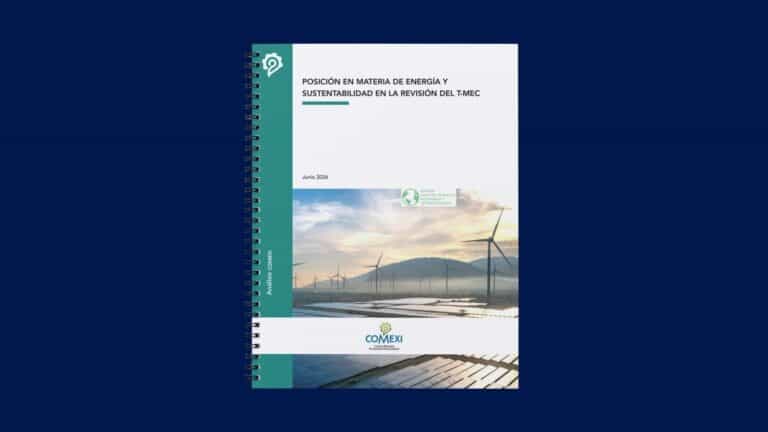
Posición en Materia de Energía y Sustentabilidad en la Revisión del T-MEC
El Consejo Mexicano de Asuntos Internacionales (COMEXI) y la Unidad de Estudio y Reflexión sobre Energía y Sustentabilidad, presentan el análisis: “Posición en materia de energía y sustentabilidad en la revisión del T-MEC" El documento analiza cómo México puede aprovechar este proceso para fortalecer la integración energética de América del
External Publications
with Leonardo Beltran & Diego Rivera Rivota •
Consejo Mexicano de Asuntos Internacionales
• June 01, 2026
Are Bilateral and ‘Minilateral’ Treaties the Precursors to Multilateral Agreements?
The UNFCCC process is marred by gridlock in the COP multilateral framework, threatening joint efforts by countries to mitigate the climate crisis.
If OPEC Falls Apart, It’ll Cost Us All
The White House declared last week that President Trump finally "broke OPEC" after the United Arab Emirates withdrew from the cartel.