U.S.-Iran MOU tension points are in Lebanon, says Columbia’s Karen Young
Karen Young, Columbia University, joins 'Power Lunch' to discuss the latest agreement between the U.S. and Iran, what could terminate the MOU and much more.
Get the latest as our experts share their insights on global energy policy.
Critical minerals were once again near the top of the agenda for G7 leaders as they met in Évian, France, this week, a year after the G7 launched the Critical Minerals Action Plan.

Hear in-depth conversations with the world’s top energy and climate leaders from government, business, academia, and civil society.
Yesterday, the US and Iran signed a memorandum of understanding starting the clock on a 60-day truce. The agreement intends to halt attacks, begin lifting the US naval...
Find out more about our upcoming and past events.
This event will take place in-person in Washington DC, at the Rayburn House Office Building, Room 2168 (Gold Room). Advance registration is required. Announcing New Columbia University Publications...
Chairman, BeyondNetZero
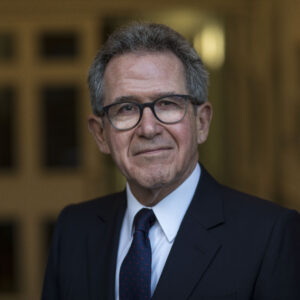
Lord Browne is Chairman of BeyondNetZero, a climate growth equity fund established in partnership with General Atlantic. He served as Group Chief Executive of international energy company BP from 1995 to 2007, having joined the company in 1966 as a university apprentice.
He led BP through a period of significant growth and transformation, including a merger with Amoco in 1998. His landmark speech at Stanford University in 1997 established BP as a global leader in the way it thought about and sought to address climate change. In 2007, Lord Browne joined Riverstone, where he was co-head of the world’s largest renewable energy private equity fund until 2015. He is Chairman of Windward, a global maritime predictive intelligence company and Chairman of SparkCognition, an artificial intelligence technology company.
Lord Browne is independent co-Chairman of the Prime Minister’s Council on Science and Technology, Chairman of the Francis Crick Institute, Chairman of the Courtauld Institute of Art, and a former Chairman of the Queen Elizabeth Prize for Engineering as well as a past President of the Royal Academy of Engineering.
Lord Browne was educated St John’s College, Cambridge, where he earned a BA degree in physics. In addition to his degree in physics from the University of Cambridge, he holds an MS degree in business from Stanford University, California. He is a former Chairman of the Advisory Board of the Cambridge Judge Business School.