Congress Looks to Charge Data Centers Billions in Sweeping Energy Plan
The permitting bill could make it easier to build data centers for A.I. but a novel provision would also force data centers to pay much more for power.
Get the latest as our experts share their insights on global energy policy.
The shift in the balance of political power will help determine which US policies can be funded and sustained over the next two years.
Hear in-depth conversations with the world’s top energy and climate leaders from government, business, academia, and civil society.
Affordability was one of the key issues that drove US voters to the polls last week, and the resulting message for the newly elected Congress is clear: driving...

Find out more about our upcoming and past events.
Putting data centers in space once seemed fanciful. Today, a growing number of companies have started doing so.

| By David R. Mares
October 2022 It is widely thought that state ownership of natural resources, oil and natural gas in particular, causes countries to fall under the sway of the “resource curse.” In such cases, governments allegedly display “resource nationalism,” which destabilizes the economy, society, and politics. In this book, David R. Mares dispels these beliefs and develops a powerful new account of the relationship between state resource ownership and energy policy. Mares examines variations in energy policy across a wide range of countries, underscoring the fact that in most of the world outside the United States, subsoil natural resources are owned by the state. He considers the history of Latin American oil and gas policies and provides an in-depth analysis of Venezuela from 1989 to 2016—before, during, and after the presidency of Hugo Chávez. Mares demonstrates that the key factors that influence energy policy are the inclusiveness of the political system, the level of competitiveness within policy making, and the characteristics of individual leaders. Domestic politics, not state ownership, determines the effectiveness and efficiency of energy policies: the “resource curse” is avoidable. Drawing on these findings, Mares re-conceptualizes resource nationalism, arguing that government intervention into resource extraction is legitimate as long as the benefits are shared through the provision of public goods. Featuring a sophisticated grasp of both Latin American politics and energy policy, this book sheds new light on why some governments are responsible stewards of natural resources while others appropriate national wealth for partisan or private benefit. About the AuthorDavid R. Mares is distinguished professor of political science, Institute of the Americas Endowed Chair for Inter-American Affairs, and director emeritus of the Center for Iberian and Latin American Studies at the University of California, San Diego. He is also nonresident scholar for Latin American energy studies at the Baker Institute for Public Policy at Rice University and a member of the Council on Foreign Relations. |
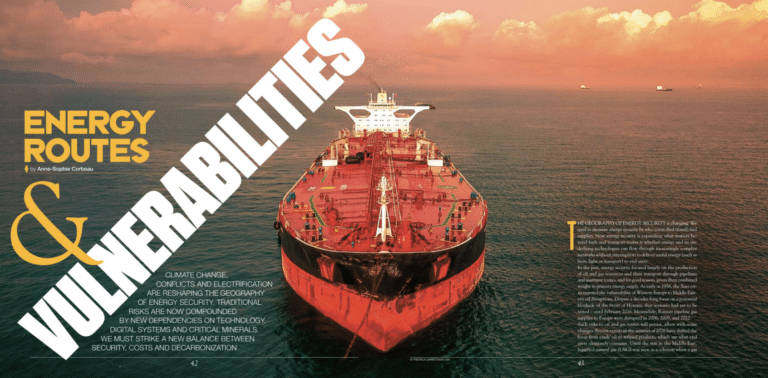
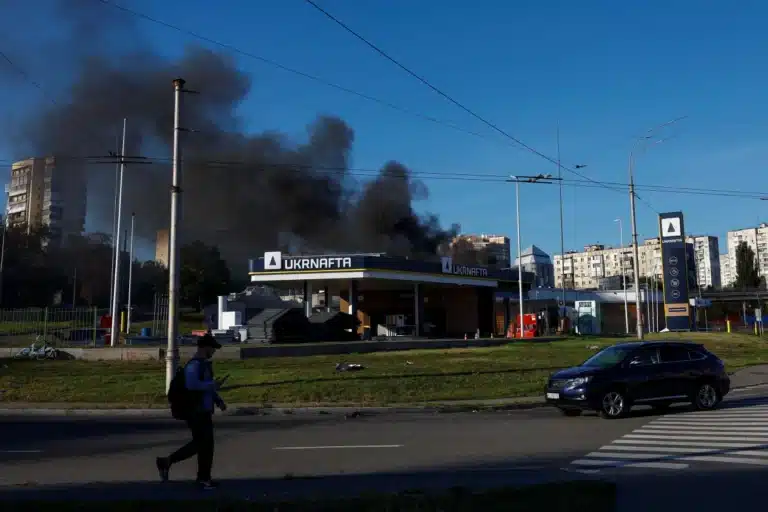
Tatiana Mitrova, a fellow at Columbia University’s Center on Global Energy Policy and former energy scholar at Moscow’s Russian Academy of Sciences, and Sergey Vakulenko, an oil and gas expert at Carnegie’s Russia Eurasia Center, argue that Russia and Ukraine are locked in an energy war that has become an adaptation spiral, despite growing human and economic costs and despite current US pressure on Ukraine. They observe Ukraine’s remarkable ability to withstand Russian strikes, while questioning claims that long-range Ukrainian strikes will be able to achieve game-changing damage on Russia. Ukraine and Russia have transformed the role of energy warfare in modern conflict, drawing on low costs drones but also new forms of technological resilience that are likely to make wars longer and more dangerous.