This website uses cookies as well as similar tools and technologies to understand visitors’ experiences. By continuing to use this website, you consent to Columbia University’s usage of cookies and similar technologies, in accordance with the Columbia University Website Cookie Notice.
Last week's summit between US President Trump and Chinese President Xi was the second meeting between the two leaders since the US and Israel attacked Iran.
Carbon credit markets have become one of the most hotly debated tools in the fight against climate change. Supporters call them essential to closing the gap between corporate...
Apply to Register The Center on Global Energy Policy at Columbia University SIPA’s Women in Energy initiative invites Columbia University students to a roundtable discussion with Pam Brown,...
Event
• Center on Global Energy Policy
Large Conference Room
About Us
We are the premier hub and policy institution for global energy thought leadership. Energy impacts every element of our lives, and our trusted fact-based research informs the decisions that affect all of us.
This Country Framework is part of the Regulatory Frameworks for Project-Based Carbon Credit Markets. To learn more click here.
Overview
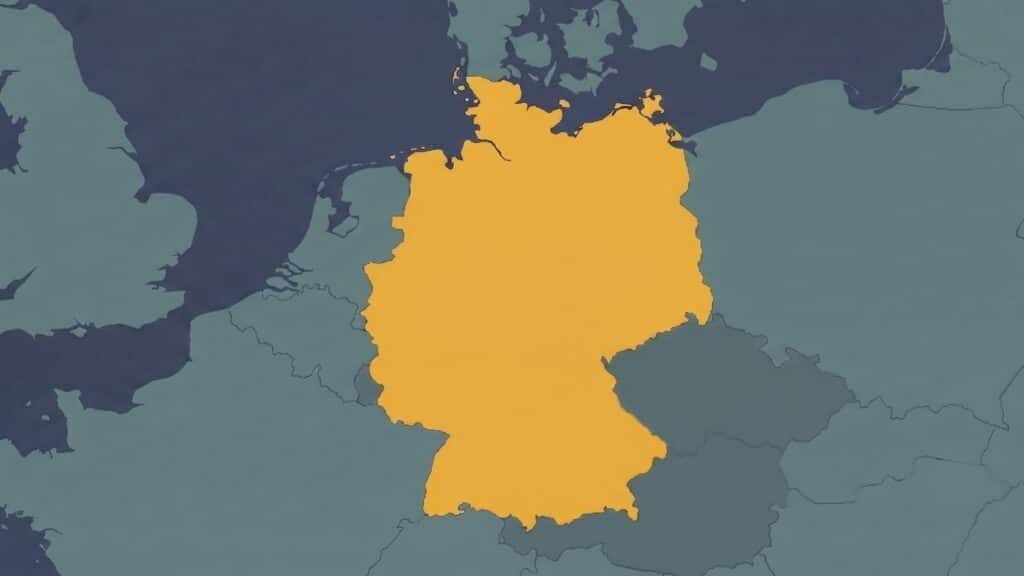
Germany does not operate a federal project-based carbon crediting scheme comparable to the Australian Carbon Credit Unit Scheme or France’s Label bas-carbone. The only statutory project-based compliance mechanism was the Upstream Emission Reduction (UER) component under the Upstream Emission Reduction Ordinance, which functioned solely as a compliance tool within Germany’s transport greenhouse gas reduction quota (THG-Quote) system. The scheme was narrowly confined to emission reduction projects in the upstream segment of the oil and gas supply chain.1 It was not designed as a sovereign carbon crediting scheme or a voluntary carbon market framework―UER certificates could not be used for voluntary offsetting, were not tradable on voluntary carbon markets, and were restricted to a single compliance application within the fuel quota system. This mechanism has since been formally discontinued. New project applications are no longer accepted as of mid-2024, and the last permissible compliance use of UER certificates occurred in the 2025 obligation year. No active UER issuance or quota-based project mechanism remains in force as of January 2026.2
Post-UER, Germany’s federal climate policy is shifting toward (1) enabling legal frameworks for carbon dioxide transport and geological storage through the Carbon Dioxide Storage and Transport Act, which entered into force on November 28, 2025;3 and (2) substantial public funding for carbon dioxide removal, with nearly €500 million allocated through 2033, including dedicated support for soil carbon enhancement.4 However, neither of these measures constitutes a domestic project-based carbon credit market (PCCM) with statutory credit issuance, registry operations, and compliance or voluntary offsetting mechanisms.
For PCCM classification purposes, Germany is a jurisdiction with a discontinued, time-limited, compliance-only, sector-specific quota-based mechanism (UER, 2020–2025) and no active domestic PCCM in force as of April 2026. German companies participating in voluntary carbon markets rely exclusively on international standards such as Verra’s Verified Carbon Standard and the Gold Standard rather than a sovereign German crediting program.5
Last week's summit between US President Trump and Chinese President Xi was the second meeting between the two leaders since the US and Israel attacked Iran.
In this edition of Global Institute Dialogues Jason Bordoff discusses how the Iran crisis, China’s electrification strategy, and the US shale revolution have changed energy geopolitics.