This website uses cookies as well as similar tools and technologies to understand visitors’ experiences. By continuing to use this website, you consent to Columbia University’s usage of cookies and similar technologies, in accordance with the Columbia University Website Cookie Notice.
Energy Explained
Get the latest as our experts share their insights on global energy policy.
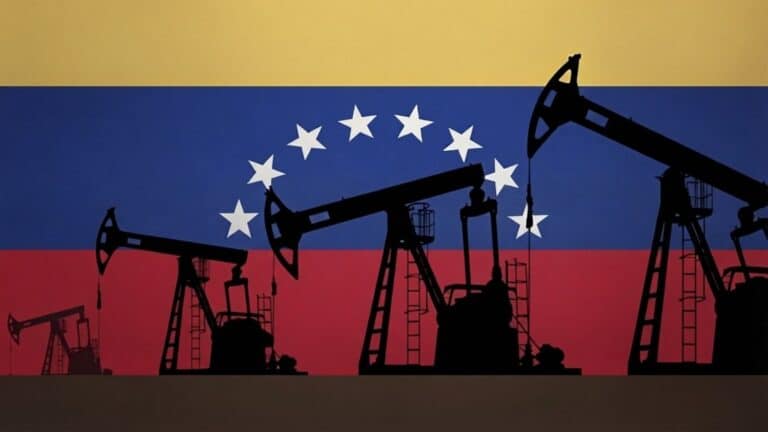
The US-Venezuela Oil Deal Might De-Risk Oil Company NABEP But Not Venezuela
The White House announced last week an oil deal for more than 65 billion barrels of oil reserves in Venezuela and a 35% equity stake in North American Blue Energy Partners (NABEP).
Podcasts
Hear in-depth conversations with the world’s top energy and climate leaders from government, business, academia, and civil society.
Six Months In: Iran War Widens as Energy Markets Feel the Shock
More than six months into the war with Iran, the Strait of Hormuz crisis continues to cause turmoil in the Gulf region and global energy markets with no...
Columbia Energy Exchange Podcast
with Richard Nephew
, Daniel Sternoff
and Karen E. Young
• September 15, 2026

Events
Find out more about our upcoming and past events.
September 21, 2026
• 6:00 pm - 9:00 pm
edt
The Future of Climate Tech: Innovation, Careers, and Connections
Join industry leaders, innovators, employers, and emerging talent for an evening exploring the technologies, trends, and career opportunities shaping the future of climate tech.
Event
• 31 W 52nd St, New York, NY 10019

Jonathan Black
CGEP Distinguished Visiting Fellow; Former Deputy National Security Advisor for the UK

Biography
Jonathan Black served as the UK Prime Minister’s Sherpa for the G7 and G20 and Deputy National Security Adviser from 2019 to 2025. He has 20 years’ experience at the centre of the UK government at the intersection of economic, security and international policy.
As Sherpa, he led the UK’s Presidency of the G7 in 2021 alongside its Presidency of COP26. He played a key role in the UK’s post Brexit trade strategy, including negotiations with the Trump and Biden administrations and with the European Union, and coordinating those with Australia, India, the Gulf and South Korea. As Deputy National Security Adviser, he oversaw the development of the UK’s economic security framework, coordination of the UK’s approach across US, EU and China interests, and the implementation of new powers and policy. He played key role in the G7 coordination of the response to the Russian invasion of Ukraine. He was the Prime Minister’s Representative for the pioneering UK-hosted AI Safety Summit in 2023 that brought leaders of governments, AI companies and civil society together for the first global AI safety agreements.
Prior to his role as Sherpa, Black served in various other roles in the UK government. He was the UK Director at the European Investment Bank and UK Alternate Director at the European Bank of Reconstruction and Development. He was Private Secretary and Press Secretary to the Chancellor of the Exchequer at HM Treasury.
He was Heywood Fellow at the Blavatnik School of Government at the University of Oxford in 2023 where he published “The crossroads of geopolitics: policy making in a more complex and uncertain world”, is an Emeritus Governor of the London School of Economics, and is currently also a Fellow at the Ditchley Foundation.
Relevant Articles
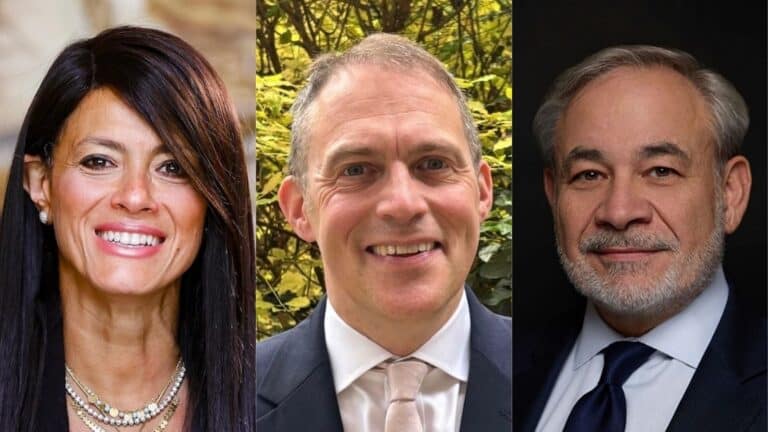
Center on Global Energy Policy Announces Former Government Officials from Egypt, UK, and US to Join as Distinguished Visiting Fellows
The Center on Global Energy Policy (CGEP) at Columbia University SIPA today announced three new distinguished visiting fellows, Rania Al-Mashat, Jonathan Black, and Dan Brouillette, who will bring...
Announcement
• May 12, 2026