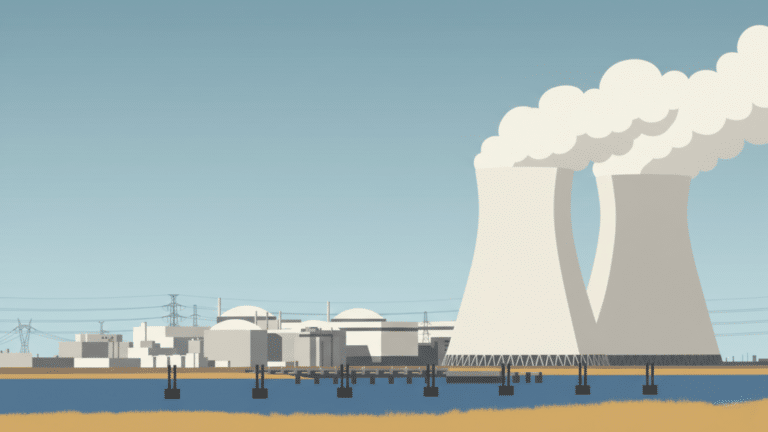
How This Historic Oil Disruption Could Reshape the Global Energy Markets
Iran, Strait of Hormuz, oil prices, solar energy, wind power, energy transition, China, renewables, global markets, energy security
Current Access Level “I” – ID Only: CUID holders, alumni, and approved guests only
Get the latest as our experts share their insights on global energy policy.
On February 28, the US and Israel launched new attacks on Iran targeting primarily the country's leadership, security forces, and missile program.

Hear in-depth conversations with the world’s top energy and climate leaders from government, business, academia, and civil society.
The climate policy landscape in the US is in flux. Last month, the Environmental Protection Agency repealed its own power to regulate greenhouse gases. Two weeks later, the...

Find out more about our upcoming and past events.
This roundtable is open only to currently enrolled Columbia University students. To register, you must sign in with your UNI. The Center on Global Energy Policy (CGEP) at...

Co-Managing Partner, Multiplier
Jigar Shah: We haven’t committed ourselves to doing big things for a long time, it was sort of like the 1980s and 1990s. We were like, we want to export all of our pollution to China, right? I don’t begrudge China, by the way. I think China did what they needed to do to help bring a billion people out of poverty. But I do think that we should be selfish in the United States about what we do with all these inventions that we invent and how we actually create wealth for our society and how we protect ourselves, both from a national security standpoint and an economic security standpoint.
Jason Bordoff: As political support for clean energy has waxed and waned over the past 20 years, so has the government’s financial backing. In the 2010s, critics pointed to the failed solar startup Solyndra, which the Department of Energy had backed to the tune of half a billion dollars as a poster child for wasteful spending.
But under President Biden, in addition to major clean energy incentives passed in the Inflation Reduction Act, the DOE’S Loan Programs Office loan authority grew tenfold. Now under a second Trump administration, the tide has turned again. The loan office, for example, and clean energy spending have been scaled back.
So how has federal support of nascent clean energy technologies evolved? What could be done today to lower energy costs while boosting the reliability of the electric grid? Where’s domestic manufacturing headed and how does that impact both energy and national security? And what can be done today to lower energy costs?
This is Columbia Energy Exchange, a weekly podcast from the Center on Global Energy Policy at Columbia University. I’m Jason Bordoff.
Today on the show, Jigar Shah.
Jigar is the co-managing partner at cleantech advisory firm Multiplier. He co-hosts the Open Circuit podcast. He directed the DOE’SLoan Programs Office during the Biden administration. Before that, he co-founded and was the president of the investment firm Generate Capital. Early in his career, he co-founded the solar service company, Sun Edison.
Jigar joined me to discuss the state of clean energy investing and entrepreneurship under the current administration. We also talked about the history and status of the loan program’s office. Jigar shared his views on the economics of clean energy deployment and what he thinks can be done to deploy more clean energy today. And to do so affordably.
Jigar is always entertaining, and this conversation was no exception. I hope you enjoy it.
Jigar Shah, welcome to Columbia Energy Exchange for the first time talking with me at least. So good to have you on. It’s been a long time.
Jigar Shah: Yeah, well, I am certainly a religious listener to the podcast, so glad to be on. Well,
Jason Bordoff: Thank you. Vice versa, feeling is mutual. Listen to yours as well, just for everyone. I mean, I think many people, maybe not everyone, but most people listening know who you are, but remind people what you’re doing now that your time in government at theLoan Programs Office has come to an end.
Jigar Shah (00:03:01): Yeah, I mean, I was always a private sector guy, so went back into the private sector. I talked to a whole bunch of companies and venture capitalists and others and realized that we really are not very good at getting exits in the clean energy sector. So Jonathan Silver and I have partnered together to create a new firm called Multiplier that we are using to help people get better exits. And then separately from that, I’m back on the podcast circuit with Latitude Media with Open Circuit. And so my good friend Stephen Lacey, and then now new co-host Caroline Golin. And so, I’m busy.
Jason Bordoff (00:03:44): Which I would recommend to people. It’s great. I listen to it religiously. Thanks. Just on that topic, I’m curious sort of what makes it hard to have a good exit and what’s a strategy to change that for companies?
Jigar Shah (00:03:55): Well, I think that the thought process around how companies should be funded was really invented for you and I, right in the dotcom era, right, with venture capital and A rounds and B rounds and C rounds and D rounds. And what you find is that the peak point at which a founder can actually make a lot of money is not the same thing as the peak time when their company makes a lot of impact. Especially in our world, getting to a gigaton of carbon savings takes a trillion dollars of capital along the way. You could have sold your company to a large multinational or gone public or whatever it is. And so I find that these CEOs don’t actually know what the options are in front of them. They’re a first time founder, and their venture capitalists have an interest in stuffing them full of more money because then when they get an exit, they get higher return. You don’t want a company to exit where you’ve only put $2 million into the company. You want to wait until you put $200 million into the company before you exit. And so there’s a mismatch really between what the founders and what maximizes the founder’s return and what maximizes the investor’s return, which isn’t always the case really in the regular tech software world. So our hard tech, deep tech requires a lot of capital, and so it requires a little bit more maneuvering.
Jason Bordoff (00:05:16): So you and Jonathan have a fun now that is doing that,
Jigar Shah (00:05:19): Just an advisory practice. There’s plenty of money, just not a lot of good advice.
Jason Bordoff (00:05:24): Got it. Okay, great. And I think many, again, people again listening will know that you led theLoan Programs Office. I’m not sure everybody knows exactly what that is and how it works and what it does. And I’m curious if you could explain theLoan Programs Office for Dummies and kind of maybe what’s most misunderstood about it or what people should know about it, and we’ll come to what it is today, but what it was when you were leading it.
Jigar Shah (00:05:46): Yeah, I mean, I started my entrepreneurial journey having started Sun Edison, which largely popularized project finance for solar, the Loan Programs Office under Jonathan Silver’s leadership in 2009, did the first 500 megawatt plus solar loans. Today, I think it’s obvious to people that Wall Street can finance solar, but in 2009 it was not. And in fact, those five loans were what got those big utility scale solar projects completed. And if you remember at the time at which they were completed in 2012, there were no buyers for those projects. And so Warren Buffett ended up with most of them, and that guy always gets a good deal. So that’s really what started Berkshire Hathaway, which now Greg Abel, who runs Berkshire Hathaway is running all of Berkshire Hathaway, but at the time he really created Berkshire Hathaway energy off of those loans. And it really wasn’t until 2015, right when we had yield co’s if you people remember, and NextEra still has theirs operating.
(00:06:44):
And then 2019, probably before the solar asset class became fully accepted by Wall Street, so 10 years after the Loan Programs Office provided that first loan, and during that time period, the Loan Programs Office provided a loan to Tesla, et cetera. The Loan Programs Office was created under the 2005 Energy Policy Act with Pete Domenici as the main sponsor. And the whole purpose of it was that the Department of Energy is fantastic at innovation and invention, but the commercialization process seems to be a place where they didn’t really have a role. And the Loan Programs Office provides low cost debt, usually US treasuries plus three eights to really help bring down that weighted average cost of capital so that these first of a kind projects can get built under my leadership
Jason Bordoff (00:07:35): Makes them more financeable with private capital.
Jigar Shah (00:07:38): Well, yeah, for sure. The private capital loves the due diligence process that they go through with the Department of Energy. They’re like, great, let the 10,000 engineer scientists and experts of the DOE platform tell us whether this is worth backing. But I’d say that the private sector gets the returns that they get. They want 20% plus returns on their equity, but by having our debt come in at US treasuries plus three eight instead of 15% interest debt, which is where private credit might price a lot more deals, pencil. And so when you think about the first of a kind hydrogen storage project at Delta ACEs in Utah, or the restart of a Palisades nuclear plant in Michigan, or any number of projects that we completed in the last four years, those projects probably wouldn’t have gotten done. But for the Loan Programs Office getting involved.
Jason Bordoff (00:08:28): And how do you think about risk management with taxpayer dollars? Obviously some people will knowLoan Programs Office from controversies like Solyndra, but on the other hand, some might argue LPO hasn’t taken enough risk. I think over the life of the program, its portfolio hasn’t lost very much money. What does that mean for the right role for government capital as opposed to private capital? What’s the purpose of LPO versus a traditional infrastructure capital investor?
Jigar Shah (00:08:55): So the standards by which we provided a loan were exactly the same as what I did at Generate Capital, for instance, which is another startup company that I created back in 2014 with Scott Jacobs and Matan Friedman. And so I don’t think that the standards are any different. And so in a typical project finance structuring, you want to know that you’re not taking real technology risk, you’re taking perceived technology risk. That was a mistake that was made under the Cylindra loan. And so we don’t take real technology risk anymore. That gets pushed off to a government grant to demonstrate the technology. Then you’ve got feedstock risk, right? In the case of solar, it’s free, but in the case of a sustainable aviation fuel plant, can you get feedstock to power that thing? Then you’ve got offtake risk. So is someone going to buy the product on the other side when you make it?
(00:09:43):
And then you’ve got construction risk, can you build the thing and then you’ve got operating risk, right? So if we said for a sustainable aviation fuel facility, this thing has got to run 82% of the time to be able to actually make enough sustainable aviation fuel to pay off the loan, do you have a team of operators that can run this thing at 82% of the time or is it breaking down for lots of reasons and only running 60% of the time? So that framework is the one that traditional Wall Street project finance providers use and we use at the Loan Programs Office, and we’re very good at it. I think the real game changer is that we’ve got all this expertise. I mean, a lot of the original patent creators were actually the national labs that these folks are using. So these folks can say, well, there’s perceived technology risks but not real because we tested this six times in these six projects, so we know that this technology works. And so in the history of the Loan Programs Office, which was 34 or 5 billion under Jonathan Silver and then another 107 billion under me, the losses were around 3%. And I think the losses will probably come down to 2%. At least that’s the predictive models that we did with the Office of Management budget and the Treasury Department. And so that’s less than a commercial bank. And so the losses, even with Solyndra were pretty low. And now we’ve improved based on the experience of Solyndra.
Jason Bordoff (00:11:11): It’s interesting that maybe defying some predictions. The Trump administration has kept LPO alive, albeit in a different form, and he has given out loan guarantees to recipients already. What do you think of the approach thus far? Do you think any of the projects they’ve selected are meritorious ones you would’ve done?
Jigar Shah (00:11:29): Well, the only ones they’ve done are the ones that we teed up for them to do. So those are the ones that we did most of the work already and then we gave it to them to take the win, which I’m happy for them to take. I think, look, we left them with $300 billion worth of loan requests that we couldn’t yet process. So getting those deals done, my sense is they’re going to line item veto that list and say, here are the technologies that we like: nuclear. Maybe some geothermal, maybe we can get them to do batteries, maybe transmission. They closed the AEP loan that we had gotten to a conditional commitment. So I’m excited to see them use the resources and really help American innovators and entrepreneurs do big things in our country. That being said, I don’t think they’ve been very clear about where they have the most enthusiasm. And so I think a lot of people are left guessing on a deal by deal basis as to whether they should apply for the Loan Programs Office right now.
Jason Bordoff (00:12:31): And when you look back on your four years, what are you most proud of or what do you think perhaps you would’ve done differently in retrospect?
Jigar Shah (00:12:38): I mean, the thing that I think all government programs have a failure around, and this includes the folks in the EU and Canada and the UK and Australia, is that when the government puts out money or offers a program, they think we’re doing the world of service and all the people will apply for it. And what you find is that they don’t. And in fact, the only people who apply for it are the people who are desperate for that money. And so the tier one best in class entrepreneurs are all libertarian and they’re like, no, we’re never going to use government money. And so now you end up with this negative selection. And so we, I think, were very good at going and earning the trust of those entrepreneurs and innovators, getting their investors on board and getting their investors comfortable with using it.
(00:13:27):
And I would say it took the better part of two and a half years to accomplish that goal of the four years to get the tier one folks to apply. And then by the end of our tenure, I’d say that all $300 billion worth of loan requests that were in the queue that we had not had time to process were all extraordinary companies with extraordinary projects. I mean, we had an additional $150 billion with loans that we had taken out of that list. We said, you guys are really not tier one. And so I think that’s an extraordinary accomplishment and one that I’m disappointed that a lot of other countries have not copied. They continue to have this mentality of like, well, we have this on our website. If you’re interested, you should apply. And I don’t think that works.
Jason Bordoff (00:14:12): And anything you would’ve done differently in retrospect or didn’t expect that was harder to achieve than you thought it would be going in?
Jigar Shah (00:14:18): Not really. I mean, my wife worked at the State Department and was SES, and so I had a lot of understanding of what I was going into. Look, I think that everyone’s like, well, I wish I would’ve gone faster. I’m not sure we could have earned trust faster. I mean, not just trust from the applicants, but also from the incoming Biden administration. Remember, a lot of the Biden administration people were the ones who served in the Obama administration and lived through Solyndra. They also had their doubts about the program and whether this was going to be a net positive for the president or a net negative for the president. So we had to earn our wins and get their trust as well. I mean, the Office of Management and Budget came in thinking we probably didn’t know what we were doing. I think by the end of the second year, they said that we were the best run loan program in all of government earning. Their trust was important. And so there are a lot of things that I could make up for you and say, Hey, here’s all the things I could have done with a magic unicorn. But I think you and I both know that that trust building exercise takes time and we needed the entire four years to accomplish it. I think
Jason Bordoff (00:15:20): When you look at the pace at which you can move in government, and I’m not just talking about LPO, but the Biden track record overall, and people point to things like the infrastructure investment and Jobs Act, making something like seven or $8 billion available for EV charging, and we have a few dozen charging stations. What do you think of criticism like that and what happened with things? I’m picking EVs as an example, but there are others too, in terms of the pace at which the agenda could be implemented.
Jigar Shah (00:15:50): So I mean, I certainly agree. I mean, I moved as fast as physically possible and we were putting out five to $10 billion a month in loan conditional commitments, which is faster than all of the rest of the private credit industry globally in the energy combined to understand how fast we were. So I’m proud of the track record there. I think on the tax credit side, I think politics got in the way. I think the hydrogen tax credit and lots of other things should have been finalized, and they shouldn’t have played games with the politics of that, I think. But on the EV chargers, I think as the problem with the EV charger piece was that it was designed to go slow and they just never explained it right. Remember, during the Biden administration, we added a thousand DC fast chargers a week, every week, and even during the Trump administration, we’re at a thousand DC fast charger ports a week every week.
(00:16:45):
So the purpose of the $78 billion was not to install DC fast chargers. The purpose of that program was to help the states understand where their gaps were, which rural areas didn’t have a DC fast charger, which made it hard for someone to own an EV to go from here to there, which areas needed one to be able to get more Uber and Lyft drivers to use EVs, right? And each state had their own plan. They had to create a plan, they had to submit it to the Department of Transportation for approval. All of that took time. It was supposed to be slow because the point of the money was not to replace the 1000 DC fast chargers that were going in with private sector money by itself and just subsidize them. The goal was to say, where are the gaps? And then let’s fill those gaps. And so look, I get it. Nobody in the Biden administration was a very good communicator about those things, and so they got beat up politically over it, but I don’t think on that program it was designed to fill gaps, not to compete with the private sector.
Jason Bordoff (00:17:43): Where do you think we are in this moment of reset, pragmatism, realism, whatever word you want to use for not just a Trump administration coming in that seems to not really think very much of climate change as a policy priority, but more broadly in the private sector with companies with civil society? It does seem like we’re going through a rethink and how we approach climate. How do you think about it?
Jigar Shah (00:18:09): Well, remember, I think that in the journey around climate change, the goal here is to reduce climate emissions such that you stave off the worst impacts of climate change. When you look at the IEA pre-Biden, when Dave Turk was at the IEA, the Japanese government gave them a bunch of money to say, where are we on technologies? They determined by the end of 2019, 2020 that 50% of all global climate emissions could be profitably reduced through technologies that had already come down the cost curve and reached maturity, think LED light bulbs, think solar panels, battery storage, EVs, et cetera. And when you think about what the IRA was, it was not really an acceleration of the deployment of those technologies. It really was defined by hard to abate sectors. The hydrogen hubs like industrial decarbonization, the Loan Programs Office, which is supposed to be there for first of a kind deployments, the Office of Clean Energy Demonstrations, the Advanced Reactor deployment program.
(00:19:19):
So it was really defined as taking invention and commercializing that technology. It was not defined by how do we get a bunch of homes? How do we get a bunch of deals that are in the money done faster? How do we promote culture change around why are utilities doing things that are five times more expensive than the cheapest way to do things? And so my sense is, is that they were never trying to solve that problem, not within the Inflation Reduction Act. And so we are in a place right now because of whatever word you want to use, affordability or things like that where everyone is now consumed by figuring out what pays for itself and accelerating things like that. I mean, some of it’s based on AI load growth. So for instance, everyone’s talking about natural gas engines, which is fantastic, but when you think about what got deployed in 2025 out of the 60 gigawatts that were added to the grid, 4.6 gigawatts of it was natural gas and the rest was solar battery storage and wind. And so you’re like, okay, what is that going to look like in 2026? I think probably the same.
Jason Bordoff (00:20:29): So does that tell us that rolling back big parts of the IRA and the big beautiful bill a sense that DC is not supportive anymore and this is going to have very significant headwinds and throw a lot of sand in the gears to the clean energy transition? Or are you saying, you know what, it doesn’t really matter. All those tax credits matter in the first place if what you just said is all the capital is going into renewables or a lot of it anyway?
Jigar Shah (00:20:54): Yeah, look, I mean the IRA was passed through reconciliation. Reconciliation by definition is a partisan measure, right?
Jason Bordoff (00:21:02): By a tiebreaking vote of the vice president, as I recall.
Jigar Shah (00:21:05): Totally, right? So now they passed the OBBBA and so the OBBBA is basically taking the Inflation Reduction Act, stripping out the stuff that President Trump didn’t want. Obviously they passed tax cuts and that kind of stuff, but I mean in terms of climate, whatever made it through that gauntlet. I think you and I can now call bipartisan, right? Because it passed the IRA and now it passed the OBBBA, right? And so battery storage is bipartisan by definition. They extended the tax credits through 2033, right? Nuclear is bipartisan, geothermals, bipartisan, the 45X tax credits to manufacture stuff in the United States, bipartisan a lot of stuff actually made it through the gauntlet. Those things I think are by definition now bipartisan. And so there’s actually more certainty probably today than there was yesterday around those things. Now the question becomes what happens to the stuff that got stripped out?
(00:21:56):
So solar and wind tax credits in particular got stripped out. I think if you look at the cost of installing solar in Europe and in Australia, it is significantly higher in the United States than it is in those places. I think one of the things we all have to come to grips with is the tax credits probably added a layer of complexity with tax equity and all these other complicated things that made it so that there were haves and have-nots. I was one of the haves, so maybe I’m appreciative, but it clearly created have-nots where banks and others didn’t want to work with small time entrepreneurs. They wanted to work with other folks. I think you’re going to see a much more streamlined financing mechanism as these tax credits go away, a lot more democratically available sort of instruments for everyone to participate. And magically, I think the cost of solar will come down by a third because the complexity will come down by that much as well. And then at the end of 2025, you saw one of the largest transactions we’ve seen in a long time, which is that Google bought Intersect, which is a very large developer of solar. If solar was in such dire straits, my sense is they wouldn’t have got such a great valuation for their company.
Jason Bordoff (00:23:10): So if in a couple of years you’re advising the transition team for an incoming administration that is putting near the top of the agenda rapidly, bringing down greenhouse gas emissions in the United States is the takeaway from what you just said, your advice to them would be not much for you to do, get out of the way. We’re good.
Jigar Shah (00:23:30): Maybe in terms of large dollars maybe. But I think that in terms of culture change, I think they have to do a lot, right? We are in a place right now where AI has been fully implemented by the oil and gas industry and not at all implemented by the utility industry. The utility industry is where good dreams go to die. The question is what do we do as an administration when utility rates are going up because they’re not deploying new technology. In 1996 when that was happening with AT&T, we had to pass the 1996 Telecom Act, right? The Telecom Act didn’t have a lot of money associated with it, but it certainly shook up the entire telecom industry. And we all have cheap cell phones and now Starlink as a result. And so it may be the case that we need to make massive changes or maybe the utilities will be inspired to make their own massive changes to how they adopt technology.
(00:24:24):
But it is very clear that we have the ability to serve customers at least a third less than we’re currently charging them for power. And we’re not deploying those technologies at scale such that, I’ll give you one more example. During the Obama administration, the ARRA stimulus bill 10X, the amount of money, if you’re a member for weatherization of homes, as a result, there has been a waiting list of people who’ve wanted that money. And every year there’s a little bit of money put into the budget. We did that again during the Inflation Reduction Act and the Bipartisan Infrastructure Law. And what percentage of the people in the waiting list got money from those programs? 3%. So now another 97% of people were on the waiting list. They’re still on the waiting list. And then what is the waiting list? 1/20th of the people who qualify for weatherization.
(00:25:20):
And so we’re clearly not going after our old housing stock and improving it based on energy efficiency and things that pay for themselves. Instead, we’d rather build a new nuclear power plant, which I’m a big supporter of at 17 cents a kilowatt hour instead of actually figuring out how to do energy efficiency in people’s homes. So I can imagine that there’s a lot of people post the IRA that was like, you did an interesting hydrogen hub. What did you do for me? I feel like that’s probably what’s going to be the best advice to give these new governors who just got elected and a new administration that might come in in the future.
Jason Bordoff (00:25:56): What are the things these governors, New Jersey, Virginia who came to power with electricity prices being a significant concern of voters, what can we do to bring power prices down? Well, first explain to people why you think power prices have gone are going up. What is the driver of that, and then what’s the policy response?
Jigar Shah (00:26:16): So there’s a couple of big reasons why electricity prices have gone up, right? One is that for decades, the electric utility industry had underinvested in the wires. And so they’re now making up for lost time. They have to, and we have load growth again. So they’re doing that. Now, some of that is stuff they have to do from a maintenance perspective, and some of that they could do at 1/10th the cost with next generation technologies, like instead of replacing the pole transformer in front of your house because you’ve got an electric vehicle and your house needs more current, you could replace your service panel with a next generation service panel that dynamically basically changes the way in which you use your existing service. And that is one third the cost of upgrading a pole transformer. And by the way, now we have a shortage of pole transformers in this country.
(00:27:02):
We’re putting in too many pole transformers. The same thing’s true with a distribution substation. They don’t need to upgrade those substations. They can instead control when your car charges and says basically you should charge when there’s excess capacity in your substation, but the utilities get paid to spend more money, so they’re spending more money. I don’t begrudge them their business model, but that’s where it is. The other piece of it is capacity. The data centers from 2012 to today basically used up all the excess capacity we had on our grid. We had all these LED lights that got put in all this other stuff that got put in. We had a lot of excess capacity. They used it all up. So now we’re short capacity. We built 19,000 megawatts of batteries in 2025 in the United States. Do you know how many we installed in the PJM, which is the independent system operator that is the worst off less than 1000 megawatts?
(00:27:57):
Now, we could build 6,000 megawatts of batteries in 12 months. In the PJM, they’ve got 50,000 megawatts of batteries sitting in the transmission and interconnection queue in PJM. And what they’ve said is, well, we can’t accelerate those things because what if they turn on at the wrong time? What if they turn on during a peak? How dumb does somebody have to be to turn ’em on during a peak? There’s actually safety valves you could put in that prevents them from doing that. Oh, well, we just want to make up an excuse that we can’t do this. So if they built 8,000 megawatts or 6,000 megawatts of batteries in the next 12 months, which we can easily do, and Ford Motor Company just committed to making them all at a facility in Kentucky, then we could solve the problem. But old habits die hard, right?
Jason Bordoff (00:28:49): So obviously PJM has an incentive to solve the problem. They’re quite concerned…
Jigar Shah (00:28:51): Do they have an incentive to solve the problem? When the capacity auction goes up in value, who benefits from that? The board of the PJM, the capacity auction going up doesn’t actually cause anyone to make new investments because a three-year capacity auction. So it’s not a long enough signal to actually solve the problem. But you know what makes a lot of money? The people who own existing coal and natural gas plants, they just got paid more capacity for what’s on there. And their board members are all of those owners. And so do I think they’re feeling a bunch of political heat right now? Yes. But has that translated into them abandoning their capacity auction like the ISO New England market just did two weeks ago? No. And so look, I don’t think they’re evil people. I think they’re hardworking people who are trying desperately to do what they can can within the rule set provided to them. But the rule set needs to change. And the people that can do that are the governors, right? The governors are defacto the board of the PJM because they could just say, screw you, we’re leaving the PJM tomorrow unless you solve these major problems. But you don’t get elected governor of a state by being a PhD in PJM politics. So then you have to brief them. They have to understand whether they want to do it, some of the largest donors to their campaign or the electric utilities locally. It’s a lot of work to do.
Jason Bordoff (00:30:10): So with power prices rising and power demand rising and projections for it to continue to rise, and a sense that the response to that has to be build baby, build permitting, reform. We got to bring power generation on the grid as fast as possible, all of it. Renewables, natural gas down the road. Nuclear. Are you saying that’s wrong?
Jigar Shah (00:30:31): No, I’m not saying it’s wrong. I mean, look, I mean, I was the one who worked so hard to get Kris Singh to not shut down the Palisades nuclear plant, but instead to turn it back on, I got him a 1.2 billion loan out of the Loan Programs Office, which he of course filled out the paperwork properly for. And we got through the due diligence, and then we got TMI to decide to restart by Constellation and Duayne Arnold. So I’m a big fan of nuclear power, but there’s only three power plants you can turn back on, right? In the entire country. The rest are going to be new AP 1000s. You tell me when VC summer that just got allocated to Brookfield, Westinghouse is going to be up and running. I doubt it’s going to be before 2030. It’s probably 2035. So now the question is what do you do between now and then? You get more out of the infrastructure you’ve already paid for. We know how to run batteries in California. There’s 3000 megawatts of batteries that people have installed just because they want power during public safety shutoffs that those batteries are not allowed to participate in the wholesale market in California where you can Texas. And so that’s base power’s entire business plan. And so why is California showing that they hate people who have batteries in their homes and they don’t want them to be able to participate?
Jason Bordoff (00:31:48): This is the virtual power plant concept you’re describing, right?
Jigar Shah (00:31:51): Sure. But I mean that allows you to use the infrastructure we’ve already paid for more efficiently, right? Dynamic line ratings, grid enhancing technologies, replacing old wires with brand new conductors that can transport power twice as much power along the same right of ways. None of those things need NEPA reform or permitting reform. Now, do we also need NEPA reform and permitting reform? Yes, of course we do. But I’m just saying to you that fixing that problem doesn’t get me more power next week. It gets me more power in 2031.
Jason Bordoff (00:32:27): And if I remember correctly, I’m sure there’s a lot of things this Department of Energy is doing you would disagree with, but I think Secretary Wright recently asked FERC to do what you just said, right?
Jigar Shah (00:32:37): Totally. I mean, because there’s no other choice. It’s one of those, I mean, even the great fossil fuel philosopher Alex Epstein is now pro demand flexibility. So I mean, I guess what is it, Victor Hugo is credited by saying sometimes an idea is time has come, right?
Jason Bordoff (00:32:59): So can you explain for I think you believe, I’m not putting words in your mouth. The cheapest way to put new power on the grid is going to be solar, wind and batteries. And we’re growing renewable energy capacity, and people are seeing power prices going up, and often they’re going up in states with more renewables, maybe obviously not in places like Texas. So the disconnect where some people are pointing to the fact that, you know what? Renewables aren’t as cheap as people think they are, and they don’t work every day of the year, and you need the backup capacity. And when you look at the total system cost, it’s more expensive than people think. How do you respond to people who push back on the idea that the cheapest form of power is renewables today?
Jigar Shah (00:33:40): Well, there’s multiple ways to push back. It depends on who’s pushing, right? I think if you’re I, it’s very obvious that the only state that has had power prices go up because of renewables is California. And that’s because they did all of the commercialization work. They signed contracts at 17 cents a kilowatt hour in the same way that Georgia Power decided to take it on the chin for building Vogel units three and four. So God bless them for doing that. But all the people who waited and then scaled up when solar and wind were cheap, think Iowa or Kansas or Nebraska or North Dakota or Texas or Oklahoma, they all have really cheap power because of wind and solar. Just objectively, if you look at the data, there are no renewables in the PJM. I don’t know what people are thinking, but from Illinois to Maryland down to Virginia, the total amount of renewable energy in that entire system is single digits.
(00:34:38):
It’s not even 10%. So that is not the cause of higher power prices there, and it is the cause of lower power prices in the Midwest and the mountain states. So I think just objectively that’s the answer. But separately, I think if you’re running an entire system, what we said in the liftoff reports that we wrote during our time at the Department of Energy was that you needed a lot of clean firm power generation think geothermal, hydro nuclear power. I mean, it was a heavy lift to get the Biden administration to announce a tripling of our nuclear goal. I mean, think about how many people were upset about us trying to get that done in the White House and we got it done. And the reason for that is the data shows that the overall system is cheaper, even if you’re paying 15 cents a kilowatt hour for nuclear, if you maintain 20% nuclear in the system. And so we need all of it, right? The notion that solar and wind and battery storage are going to power the entire grid and we’re going to have 200 hours of battery storage all over the country, and we’re going to be able to get through a week of low wind and a week of low sun through more extra solar and wind is stupid. And so we need a diversity of resources. We have a diversity of resources, and that’s how you get the lowest possible cost decarbonization strategy and grid overall.
Jason Bordoff (00:36:09): And I think you would agree a big part of the reason solar costs have come down so much battery costs have come down so much is the amount that China has put on the market at very low cost. And when you think about energy security and supply chains and how the Biden administration pursued industrial policy to build domestic manufacturing in the name of jobs and economic activity in the name of economic and national security, is there a tension between trying to keep energy as cheap as possible and trying to make much more of it at home? Do we need to do that?
Jigar Shah (00:36:41): Well, I think we have to. You’re the expert here, so I’ll ask the question back to you, but I think that when you think about national security and economic security, let’s start with facts and then we can go to your area of expertise. I think the fact is that all of the technologies that China has deployed, Topcon, all these other technologies that have gotten us from 14% efficiency, solar panels, when the Obama administration took office in 2009 to 23% efficiency panels that you can get today, all of that came out of the US Department of Energy and Martin Green’s lab at University of New South Wales. And so none of it came out of China, but we didn’t have any local manufacturing. So we had to license the technology to them because otherwise we’d tell those entrepreneurs, sorry, tough. We’re just not going to let you monetize your inventions that we provided grants for.
(00:37:33):
So had we decided all of that manufacturing should have been in the United States in 2009, then would solar panels have hit 10 cents a watt? No, probably we would be at 18 cents a watt in the United States, right? I don’t know. Would the world be worse off if we were at 18 cents a watt versus 10 cents a watt? I don’t think so. But people can decide to disagree about that stuff. But because we don’t have any real manufacturing experience of crystalline silicon solar in the United States right now, it costs 35 cents a watt to manufacture the selling price has to be 35 cents a watt to profitably do that stuff in the United States. And so now we’re in a situation where batteries are in the same place we are in 2009, 14% efficiency, solar panels and batteries. We’re not even close to deploying all the best technologies the United States has to offer.
(00:38:26):
Think Sila anodes and their silicon anode, think all of the technologies that we gave grants to over the last four years, they will be fully available by 2030. Should we license those technologies to CATL and BYD and have them put that stuff in, or should we actually manufacture here and double the density of lithium ion batteries and other battery technologies here? I don’t know. But my sense is is that I don’t think that such essential technologies, whether it was OPEC in the 1970s or whether it’s these technologies now should have a concentrated supply chain. I think we should have a diversified supply chain. Now you might say, let’s not do it in the United States. Let’s do it in Mexico. Okay, let’s not do it in Mexico. Let’s do it in India. Okay, I don’t know, but it should be diversified. And so that no one country has all this control over us, particularly when 94% of everything we’re adding to the grid is solar, wind, and battery storage.
Jason Bordoff (00:39:19): So is that how you think about, I mean, one of the few things that seems both sides of the aisle can agree on is industrial policy is back in vogue. This administration’s taking it to a whole different level with equity stakes and advanced purchase commitments and talk of price floors and price ceilings or even a sovereign wealth fund of sorts. Although folks in the Biden administration, Daleep Singh, and others put those ideas out there. What does industrial policy mean to you in the energy context and what’s it trying to achieve? What’s the right role for government in this sector?
Jigar Shah (00:39:49): I think that there’s a couple of layers to this, right? One is that we can’t keep inventing everything here and then exporting the technology to be manufactured elsewhere. I just don’t think that that works. I mean, maybe I’m wrong, but I don’t think Tesla would’ve been successful if we would’ve invented it here and then made it in China and imported it back into the country. I think the fact that Tesla even today is the largest exporter in the entire state of California, which in and of itself is the fourth largest economy in the world matters. And I think that’s why Americans liked Tesla until they didn’t like Elon.
Jason Bordoff (00:40:26): And why does it matter? Does it matter? Because we need to be able to build cars in case one day we need to make tanks and we need the drive trains. These factories are so automated, it’s not a massive number of jobs to make a car. So why does it matter?
Jigar Shah (00:40:40): Well, I think what Elon would say to you is I think it mattered because he was able to walk downstairs to the manufacturing floor and make changes every four months to the way those cars were made because they were there and he was sleeping under his desk on top of the manufacturing plant. And so I think that that mattered to him, and I think that’s what he would say. I think when you think about the way that your separate point around manufacturing tanks, it is very clear that the automotive supply chain matters to the Department of Defense. And so I think if we lose the automotive supply chain, I think we do lose in some ways our defensive capabilities. And so whereas solar panels, maybe you could just manufacture in Mexico or India, I don’t know that the automotive supply chain should be completely outsourced to India.
(00:41:30):
And so there are certain technologies that, like batteries are very obviously important to the Department of Defense, whether it’s drones or whether it’s other things. My sense is making next generation batteries here in the United States is one of the ways that we stay ahead of our competition in the defense industry globally. And so in industrial strategy, I do think that people have to be thoughtful. I don’t think everything we invent in the United States has to be manufactured here in the United States, but I do think that some of these game-changing technologies should be manufactured here, and we should commit ourselves to not just saying that America can’t do big things again, but to your point, if they’re going to be fully automated anyway, I don’t think it’s a labor cost imbalance that’s causing us to not be cost effective. I think it’s just that we haven’t committed ourselves to doing big things.
(00:42:21):
For a long time, it was sort of like the 1980s and 1990s. We were like, we want to export all of our pollution to China, and so let’s do it. And everyone held hands and said, let’s give them most favored nation status, et cetera. I don’t begrudge China, by the way. I think China did what they need to do to help bring a billion people out of poverty and good for them and good for human beings around the world. But I do think that we should be selfish in the United States about what we do with all these inventions that we invent and how we actually create wealth for our society and how we protect ourselves both from a national security standpoint and an economic security standpoint.
Jason Bordoff (00:43:01): And do you think there is, and maybe the answer is there should be, but the benefits that come from that diversification of supply, more domestic manufacturing, economic security, insurance policies, spillover effects, that it’s worth it, but you’re paying something for it, like clean energy may well be more expensive in the scenario you’re describing than if 90 plus percent of x, y, and Z is made in China. Is that a false trade-off or is that a tension we need to grapple with?
Jigar Shah (00:43:31): Well, again, I think it depends on the sector. And so if the sector can survive simply by the Loan Programs Office existing, the Loan Programs Office makes money for the US government, so then there’s no cost to the US government. There’s a cost in the sense of we’re putting out loans and there’s some overhead costs, but even with the overhead costs, we’re paying for it with the three eighths of a point that we’re charging as a premium to folks. So just from a pure accounting standpoint, the Loan Programs Office doesn’t net net cost the US treasury any money right now. If you need to add the 45X tax credit and some of the other things, well then that’s an actual cost to the treasury of money that we’re putting in. And then what do you get in return? Depending on the sector, you get this certainty of supply, you get this certainty of having the next generation technology on the battlefield.
(00:44:20):
I think that if our drones last for an extra four hours compared to other people’s drones, I think that is actually a huge competitive advantage. And so we probably do want those batteries manufactured here, and we do want them in our drones and we want them in our stuff. And so then in that case, the Department of Defense might be like, here’s $400 million MP materials or whatever it is, because we think this is so essential In other sectors, they might say, I think that’s great, but let’s just put it in Mexico. And so I’m not suggesting an absolutist perspective of everything should be manufactured here in the United States and we should pay whatever it takes to manufacture it here in the United States. But I am saying that we took this extraordinarily lax point of view saying if the private sector doesn’t want to fund it, then we don’t want to have it here in the United States point of view for 40 plus years.
(00:45:14):
And the private sector, they want 25% returns, and so they’re not going to do it unless they make 25% returns. And so are there things that make a 12% return that we probably do want in our country that some government intervention would be helpful to make sure that they happen here? Yes. Do I want to copy China where they basically set up a hundred solar manufacturing companies. Every province put in 3% interest money, only five of them survived, and the rest of them had bad debt in the provinces to the point where the former head of Morgan Stanley Research basically just came out in the financial times and said that the Chinese economy basically has more total debt than the US economy. No, I don’t think we should copy that model. I don’t, right? And so I think that we should be thoughtful, but I think for a long time when we had Larry Summers and all these other people running the coop, they were like, we can’t even have thoughtful conversations. The answer is no, we cannot do any of that stuff. If Wall Street doesn’t do it, we can’t intervene. I mean, I think that it’s good that we’re past all of that thinking and now people are being more thoughtful about, well, in some cases it does make sense, and in other cases it’s propagate spending.
Jason Bordoff (00:46:34): Give me your take on the moment of AI revolution that we are in where everybody’s putting massive amounts of capital to work for new infrastructure investments. We need to build power generation everywhere we can. They want it to seemingly be clean firm generation. Where’s the conventional wisdom getting right and getting wrong in your view on AI and data centers right now?
Jigar Shah (00:46:55): So look, I mean, I’m not the smartest person in the world on ai, but I’ve used it, it seems revolutionary when you think about companies in the practical spaces like the electric utility industry. It takes 22,000 hours to do an interconnection study. AI is dropping that to four minutes. It takes six months to do a load study to figure out whether I can give you an extra 400 kilowatts worth of capacity so you can automate your manufacturing line that now takes four minutes. So I think AI is pretty cool on that stuff, and I think it saves a lot of money. And so now the question becomes, do I think that they need to use up all of the world’s resources to build as many data centers as possible? I’m not smart enough to know that, but I do think that the companies that are doing it now are not the same as the dotcom companies.
(00:47:51):
These are hugely profitable companies that had hugely profitable years in 2025. And so they are not the same thing as the dotcom bubble like pet smart or whatever it was, or pets.com or whatever it was. This is not the same thing. So people who say dumb things like that, I think we shouldn’t listen to them separately. Now the question becomes do the people who make decisions on AI know the difference between energy and capacity? No. I know for a fact that they have no idea what the difference between energy and capacity are. And what I mean by that is they’re buying the craziest natural gas recip engines they can buy, right? Putting ’em behind a metadata center, 31 different types of generators, have no idea how complex it is to actually do the operating and maintenance on 31 different types of generators. And then when you say you’re only going to run it 8% of the year, they’re like, what? Are you serious? I’m like, yeah, because the grid is at three and a half cents a kilowatt hour for 89% of the year, and maybe it goes up to four or 5 cents a kilowatt hour for another 8% of the year, and then there’s another 8% leftover where you need to run your capacity because we’re at a capacity challenge. They’re like, oh, I didn’t know that. Okay, whatever. It’s only 1% of the cost in my data center, so I don’t care. Just put it in.
Jason Bordoff (00:49:12): I mean, you’ve been a big proponent of virtual power plants and demand response and distributed energy. What’s holding back the hyperscalers from pursuing more of those approaches?
Jigar Shah (00:49:21): Permission, right. If you go into Duke Energy’s territory, for instance, say in North Carolina, they have 9,700 megawatts of solar projects installed in Duke’s territory, mostly in the areas where the data centers are getting built. None of those solar projects have batteries because they were just all built as solar projects. They already have land, they already have interconnection. It would cost nothing at all. And easily you could find 9,000 megawatts worth of batteries. We manufacture it globally. You could install it all in 12 months. Amazon, who’s building 800 megawatts with the data centers right now and signed a tariff in Duke’s territory that agreed to demand flexibility. Otherwise, duke said that they wouldn’t let them connect, would pay for all those batteries. They’d be like, fine, whatever. As long as we can interconnect and we we’ll pay for the batteries. But they can’t do that without Duke’s permission. And Duke’s going around going, I don’t know. Should I give them permission? This seems weird. I don’t know. I like more natural gas combined cycle gas turbine plants. I don’t like more batteries. And so Amazon can’t do that unless they get permission from Duke. Right.
Jason Bordoff (00:50:34): Is that changing? I saw you tweeted something recently about why 2026 will be the year of batteries, is why are you optimistic there’s change coming in what you described?
Jigar Shah (00:50:43): Well, for sure. I mean, I think that batteries are on a tear. When you think about the IEA was projecting that we might build two terawatt hours, maybe a year worth of batteries in 2030. They just upped it to five terawatt hours for 2030. So this is definitely the year of the battery right now. Is it the year of permissions changing a Duke Energy territory? I don’t know. AEP for instance, banned new data centers in their territory. And then the Ohio Public Service Commission said, you will say yes to data centers and you will put together a tariff that allows for demand flexibility. And then AEP did it and magically everyone was able to do it, and then they’re bringing build your own capacity so you can bring capacity from Walmart stores and have basically, you could flex Walmart stores instead of flexing the data center. Because the data center guys were like, we have a two year depreciation cycle at our chips. We don’t want to flex our chips. And so they’ll pay Walmart to do it. Okay, fine. I mean, there’s lots of solutions to the problem, right? Some markets have permission structures that let you do that. Texas, some markets are deregulated, so you can sort of force permission structures like the PJM or MISO, and some are fully integrated markets. So unless the utility lets you do it, you can’t do it.
Jason Bordoff (00:52:07): I’m going to wrap up just by moving from your role as an energy wonk and investor to sort of political analyst, the theory of the case for the IRA about political durability to do carrots rather than sticks. And again, we saw a meaningful part of it pulled back this moment of affordability, affordability, abundance that we’re in. How do you think about the right political approach for the issue of clean energy moving forward? What’s going to work? You surely saw Matt Yglesias piece recently that what we need to do is be for everything and embrace that kind of position. How do you think about the best way to frame these issues for broader support moving forward?
Jigar Shah (00:52:50): So I think part of the problem is that so many people are Monday morning quarterbacks and not fundamental thinkers. The IRA had nothing to do with Donald Trump winning the presidency. He won the presidency on all sorts of issues. I don’t think it was our industrial strategy that put everybody over the edge and said, oh, we hate industrial strategy. We’re going to vote for Donald Trump. And the same thing’s true with the OBBBA. You and I both know that solar and wind were fine in the OBBBA. It wasn’t until Chip Roy and two other people, the house said, I’m going to burn this entire thing to the ground unless you get rid of these tax credits. So then they took them out. But that wasn’t because the IRA fundamentally didn’t have political currency. And on top of that, which Republican, any of the 22 or whatever that signed that letter was going to vote against extending the Trump tax cuts.
(00:53:43):
You tell me which one was going to do that and then go back to their constituents and say, sorry, we raised your tax rates right, because we were protecting solar and wind. Nobody. And so I don’t understand how people got to be such lazy thinkers, right? Separately, when you think about coal and oil and gas, it is most certainly the case that coal does not pencil anymore. Everyone says that like the CEO of NRG, the CEO of Vistra, the CEO of all the people who own the coal plants are like, we are definitely going to shut them down. So when the CEO of APS, Arizona Public Service went to war with a Trump presidency and said, we’re not going to keep these open. I don’t care how many letters you write. To me it was like 9 cents a kilowatt hour to produce that power.
(00:54:29):
They were losing tons of money to do it. Now you go to oil and gas, do the oil and gas industry love Trump? Hell no. Are you kidding me? With all of the tariffs and all that stuff? They’re like, this is crazy. And then you’ve figured out a way to pump more oil. So oil’s down at $57 a barrel, we’re not making money anymore. Now you’re invading countries. What are you doing? We’re not going to spend a trillion dollars to get Venezuela back to 4 million barrels a day. And so yeah, maybe it gives Trump operating leverage over the Canadians when they go back into the renegotiation of the U-S-M-C-A. But I think that when you think about where we are headed as a country, it is very obvious that real power comes from helping people get off of oil. Like Indonesia jumped from 5% of all new car sales being EVs to 25% in less than seven months. So did Brazil, so did Mexico, so did India. Are they doing it because they’re subsidizing the crap out of EVs? Of course not. They’re not rich enough to do that. They’re doing it because they are all oil importing countries and they don’t want to import gasoline and diesel. They want to actually use their homegrown electricity production capabilities, which are mostly solar and wind, and they want to bring all this money. China’s spending —
Jason Bordoff (00:55:58): What would you say to someone maybe on the other side of the aisle who would say, in the US, which is the largest oil and gas producer in the world, if you want energy security, let’s leave reducing emissions aside for the moment. We shouldn’t. But if that’s not your primary goal and you’re like, why are we buying all this batteries and EVs and everything that is the 90 plus percent made in China refined and processed there? What’s wrong with the internal combustion engine and a country that’s a net oil exporter? Why doesn’t that make us better off and make us more secure?
Jigar Shah (00:56:28): So what I’d say to them is that under the Biden administration, we dramatically increased the amount of exports of LNG, right? Chris Wright is now saying, we want to double LNG exports again. And then again, you and I both know that it wasn’t, but for 2005 when Lee Raymond was saying that we have hit peak gas in the United States, and so you’re telling me that none of this has any impact on domestic gas prices, that we would love to take our gas and pay the same price for our gas, that the Europeans pay for their gas. I mean, is that really what we’re saying right now? If you can,
Jason Bordoff (00:57:07): No, but to be fair, I mean, I’m not saying you, but the department you worked in put a pause on permits to do a huge study
Jigar Shah (00:57:14): That was all political theater as you know.
Jason Bordoff (00:57:16): But you did a study and the study showed that even in a situation within a kind of extremely large unrealistic amount of LNG exports, domestic prices don’t go up that much like you did the analysis.
Jigar Shah (00:57:27): I mean, it goes up by double, it’s still a lot. It went from $2.80 a million BTU to roughly like $5.50 or $6.
Jason Bordoff (00:57:34): No, it went well, I have to go back and it went up by a dollar in 2040 or 50 in a scenario where you get to 60 BCF FA day or some number…
Jigar Shah (00:57:43): Look, all I’m saying, Jason, is that I hear you, but nobody is banning folks from drilling in the Permian Basin or figuring out what it is that they want to do, et cetera. But the notion that what we should do is cosplay, like Landman is stupid. It’s just stupid. And I love that show, God, they are very entertaining. But I mean they’re
Jason Bordoff (00:58:10): They’re very entertaining.
Jigar Shah (00:58:11): But what is Matt Yglesias saying? That we should out and think about it at a time when this wasn’t political at all. Where did the Swift Boat money come from, right? T Boone Pickens. It’s not like all these people are going to suddenly vote for Democrats. I don’t know what it is that Matt Yglesias thought he was saying. I think what he’s basically saying is Let’s depoliticize energy, but that’s not what he actually said.
Jason Bordoff (00:58:37): I think what he was saying, and you’ve been generous with your time, so we’ll have you back for a follow-up episode. We’ll bring Matt on also. But I read it as saying two things can both be true at the same time. One is climate is an urgent problem and we need to be doing much more, much faster to bring emissions down. And second, the US is the largest oil and gas producer in the world, and that’s a good thing, not a bad thing. And he was saying, why can’t anyone say both of those things at the same time?
Jigar Shah (00:59:01): They do! All day long. This is why I’m saying these are just ridiculous statements, right? Look at the most important person on energy in the US Senate is Martin Heinrich. That guy eats and breathes energy. His dad was a utility engineer. I’m just saying that guy also has one of the largest oil and gas states in the country. He’s not anti oil and gas. And when Biden came out between the election and the inauguration and basically said something to the effect that we should stop issuing more oil permits or whatever, Heinrich was like, what the hell are you doing? That’s bad for me. So was Hickenlooper. Look, I mean, I think part of what people say is we need Joe Manchin, we need Tom Dashell. We need Heidi Heitkamp. We need Mary Landrieus. We need all these people. Otherwise, you’re not going to get to 60 votes in the Senate.
(01:00:01):
So you need people who are more moderate on oil and gas issues. But again, that doesn’t mean that I have to cosplay Landman. And so I just think we need to all tone it down like 10 notches and recognize that we need to depoliticize energy. People need energy to live a modern lifestyle. We need to bring a modern lifestyle to 7 billion additional people in the world. I would suggest to you that’s all going to come from solar, wind and battery storage going forward because the oil and gas industry had 60 years to accomplish that goal and failed miserably. We have 700 million people now that are basically in extreme electricity poverty, and the oil and gas sector are not even close to giving them energy. But who is Sun King who’s doing $600 million a year worth of solar and battery storage in 11 countries in Africa? So to me, I think that we all just need to figure out where the technologies are, what they’re capable of, and then what is it that we need to do from a national security and economic security perspective to get the most out of human flourishing.
Jason Bordoff (01:01:06): It’s a good note to end on Jigar Shah, telling everyone to tone it down.
Jigar Shah (01:01:11): I’m excited!
Jason Bordoff (01:01:13): You’re never forthright in your views and we’ll definitely have you back and continue this conversation and maybe do it with Matt. That would be fun.
Jigar Shah (01:01:22): I love Matt, so no worries.
Jason Bordoff (01:01:24): He’s very thoughtful whether you agree or disagree, as are you. So Jigar, thanks so much for making time with us. You’ve been really generous and thanks for your service in the administration as well in such an important role. Great to talk with you today. Thanks for having me on.
(01:01:44):
Thank you again, Jigar Shah. And thanks to all of you for listening to this week’s episode of Columbia Energy Exchange. The show is brought to you by the Center on Global Energy Policy at Columbia University.
The show is hosted by me, Jason Bordoff, and by Bill Loveless. Mary Catherine O’Connor, Caroline Pitman and Kyu Lee produced the show. Gregory Vilfranc engineered the show. For more information about the podcast or the Center on Global Energy policy, please visit us [email protected] or follow us on social media at @ColumbiaUEnergy. And as always, if you feel inclined, please give us a great rating on Apple or Spotify or wherever you listen to your podcasts. It helps us out a lot. Thanks again for listening. We’ll see you next week.
As political support for clean energy has waxed and waned over the past twenty years, so has the government’s financial backing. In the 2010s, critics pointed to the failed solar startup Solyndra, which the Department of Energy had backed to the tune of half a billion dollars, as a poster child of wasteful spending.
But under President Biden, in addition to major clean energy incentives passed in the Inflation Reduction Act, the DOE’s Loan Programs Office borrowing authority grew ten-fold. Now, under a second Trump administration, the tide turned again. The loan office, and clean energy spending, have scaled back significantly.
So how has federal support of nascent clean energy technologies evolved? What could be done today to lower energy costs while boosting the reliability of the electric grid? Where is domestic manufacturing headed and how does that impact both energy and national security? And what could be done today to lower energy costs while boosting the reliability of the electric grid?
Today on the show, Jason Bordoff speaks with Jigar Shah to discuss the current state of clean energy investing and innovation.
Jigar is the co-managing partner at the clean tech advisory firm Multiplier and co-hosts the Open Circuit podcast. He directed the DOE’s Loan Programs Office during the Biden administration. Before that, he co-founded and was the president of the investment firm Generate Capital. Early in his career he co-founded the solar service company SunEdison.
The climate policy landscape in the US is in flux. Last month, the Environmental Protection Agency repealed its own power to regulate greenhouse gases. Two weeks later, the...
As the US-Israeli military campaign against Iran enters its third week, the complexities of the global energy landscape are deepening by the hour. Shut-ins of Middle Eastern upstream...
In energy markets, all eyes are on the Strait of Hormuz. As of March 11, 2026, this vital passage is effectively closed to tanker traffic, stranding almost a...
Since the US-Israeli bombing campaign began in Iran, energy markets around the world have been on edge as the conflict threatens immediate and long-term energy supplies. We’ve seen...

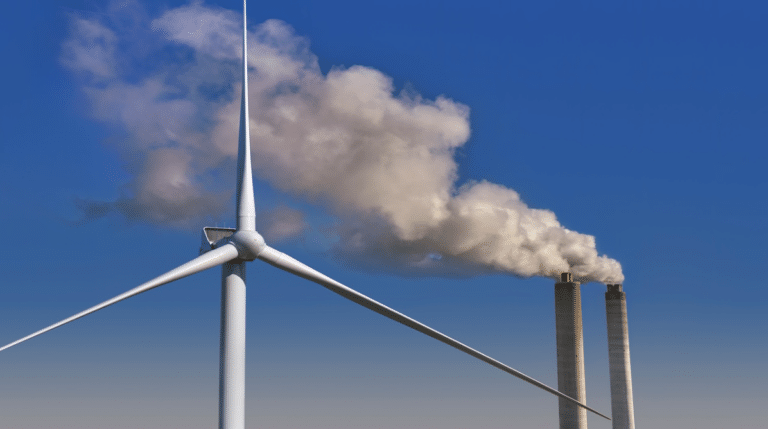
Concerns about greenhouse gas emissions, air pollution, and energy security are driving increased interest in nuclear power.

A fossil fuel superpower cannot sustain deep emissions reductions if doing so drives up costs for vulnerable consumers.
The United States is at a rare inflection point for nuclear energy, with unprecedented momentum behind deployment and regulatory reform as nuclear becomes central to energy security, AI competitiveness, and state and corporate climate goals.