Current Access Level “I” – ID Only: CUID holders, alumni, and approved guests only
Read more about the campus status level system and campus access information.
This website uses cookies as well as similar tools and technologies to understand visitors’ experiences. By continuing to use this website, you consent to Columbia University’s usage of cookies and similar technologies, in accordance with the Columbia University Website Cookie Notice.
As the conflict in the Middle East enters its 20th day, events on the ground have shifted into a critical new phase marked by direct strikes on core...
This roundtable is open only to currently enrolled Columbia University students. To register, you must sign in with your UNI. The Center on Global Energy Policy (CGEP) at...
Event
• Center on Global Energy Policy
1255 Amsterdam Ave, New York, NY 10027
About Us
We are the premier hub and policy institution for global energy thought leadership. Energy impacts every element of our lives, and our trusted fact-based research informs the decisions that affect all of us.
This Energy Explained post represents the research and views of the author(s). It does not necessarily represent the views of the Center on Global Energy Policy. The piece may be subject to further revision.
Contributions to SIPA for the benefit of CGEP are general use gifts, which gives the Center discretion in how it allocates these funds. More information is available here. Rare cases of sponsored projects are clearly indicated.
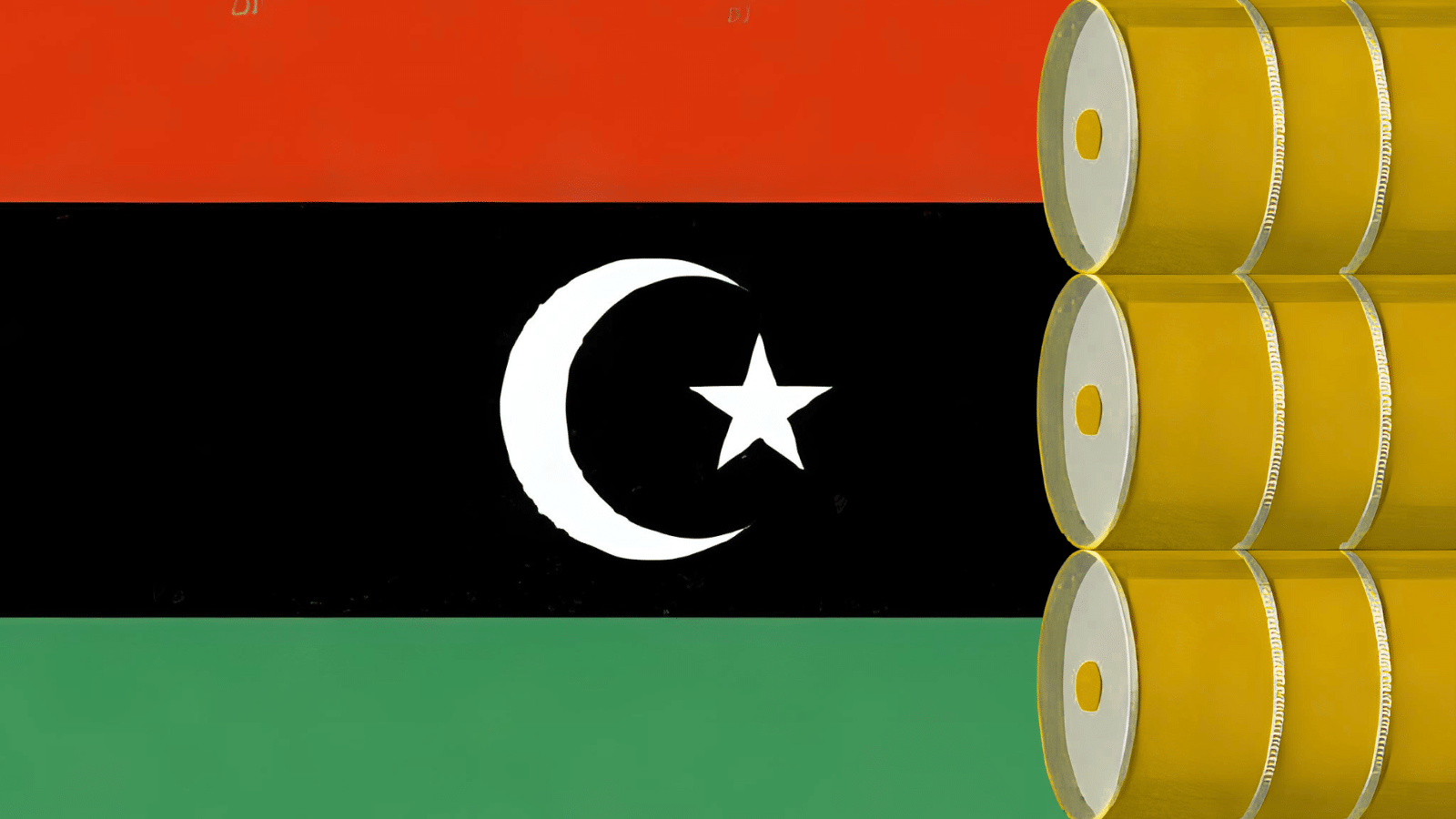
Libya’s bid round for new oil and gas exploration and production highlights its potential revival as a major oil producer and international companies’ renewed interest in the country despite risks.
The success of Libya’s production expansion plans depend on a continuing alignment between its rival western and eastern governments and on opaque deals struck to get buy-in from key political power brokers.
Libya’s oil growth toward its 2030 target of 2 million barrels per day could be an important factor within the OPEC+ alliance, as it considers its strategy and production levels.
Libya has on occasion been pivotal in global oil markets. Its light, sweet crude, adjacent to Europe, helped swell a global glut in the 1960s when it was briefly the world’s sixth-largest producer. Its revolutionary government under Colonel Muammar Gaddafi forced nationalization and renegotiation in the early 1970s, laying the foundations for the OPEC upheavals shortly afterward. And its 2011 civil war, amid uprisings in other Arab states, sent oil prices soaring.
Since then, Libya largely dropped off the oil industry’s map. From a pre-war level of nearly 1.7 million barrels per day (bpd) in 2010, output dropped to just over 400,000 bpd three times: during the 2011 civil war; in 2014–16, as militias closed down facilities for political leverage; and in 2020, when Field Marshal Khalifa Haftar, effective ruler of eastern Libya, waged an ultimately unsuccessful fight to take over the capital, Tripoli, in the west. In August–October 2024, a tussle over control of the crucial Central Bank shut down more than half of national oil production. And at various times, protesting local communities, often marginalized or tribal groups in remote areas such as the southwest, or frustrated job-seekers in the “Oil Crescent” of north-central Libya, have blocked fields and pipelines.
But output this year is set for its best post-Gaddafi performance, likely to average almost 1.4 million bpd. For now, Libya’s oil revival has been built almost entirely on existing assets. But if successful new projects bring it close to its production growth targets—the National Oil Corporation (NOC) targets 2 million bpd by 2030—that would create more competition for its OPEC+ colleagues and the global oil market.
Development Plans
How does Libya plan to meet this oil production goal? Its first licensing round since 2007 features 22 blocks, which NOC says contain 1.68 billion barrels equivalent of oil and gas in-place, and 18 billion barrels of exploration potential. In 2020, national reserves were estimated at 48.4 billion barrels of oil, the largest in Africa, and 50.5 trillion cubic feet of gas, Africa’s fourth-largest.
Eleven of the blocks span much of Libya’s offshore sector, little-explored except in the far western Sabratha area adjoining Tunisia. Eleven onshore blocks are spread between the Murzuq basin in the far southwest; the Ghadames basin in the west, next to Algeria; the fringes of the central Sirte basin, Libya’s oil heartland; and the Cyrenaica plateau in the east. In July, 37 companies out of 44 applicants pre-qualified to bid (see Table 1). Bids are expected to be opened in February 2026.
Table 1: Companies pre-qualified by NOC for the bid round
Source: Libya NOC; company websites.
Libya NOC also plans this year to auction more than 40 marginal fields with production potential of 5,000–20,000 bpd each.
It’s unlikely that exploration under the main bid round will move fast enough to make much difference by 2030, so reaching the 2 million bpd goal requires developing existing discoveries, boosting mature fields, and fixing recurrent technical breakdowns and power shortages.
What’s Triggering Growth
This new momentum is driven by a confluence of international and internal factors. International oil companies (IOCs) have recently shown more interest in non-US investment, with the relative maturing of US shale production. European firms, such as Shell and BP, who had emphasized non-hydrocarbon projects, have turned back to oil and gas development in the face of shareholder pressure.
Moderate and falling oil prices make low-cost producing areas in the Middle East and North Africa attractive, to rebalance portfolios overweighted with higher-cost shale and deepwater projects. With Iran, Russia, and Venezuela off-limits to Western IOCs, examples include not just Libya but also Algeria and Iraq. Politics in these countries is challenging but now appears manageable. Libya has substantially improved its previously very unfavorable contractual terms for upstream oil and gas investors, following a similar track as Iraq.
Some companies qualifying for the new blocks are already well-established in Libya, such as ENI, Repsol, and TotalEnergies. Beyond the current bid round, some companies are negotiating on specific opportunities. BP is discussing revitalizing the giant Messla and Sarir fields in the Sirte Basin, currently run by a subsidiary of NOC. Shell has shown interest in the Atshan gas-condensate field between the Ghadames and Murzuq basins, near the Algerian border. And a consortium of NOC, ENI, TotalEnergies, TPAO, and the Abu Dhabi National Oil Company was said in September to be looking at the important NC-7 gas project, in western Libya, but through a new Benghazi-headquartered company.
Regional national oil companies are also prominent among the qualifiers, including Sonatrach from neighboring Algeria, which is familiar with Libya’s geology and operating environment; OQ from Oman; QatarEnergy; and TPAO, whose home nation of Turkey manages to have both close political ties with Libya’s Tripoli government and a growing relationship with Haftar’s administration.
There is also growing regional interest from smaller Chinese companies, several of which have established themselves in Iraq in recent years. In contrast, Russia’s Lukoil will presumably have to drop out after US sanctions forced it to seek a sale of its international portfolio.
Output and OPEC+
For Libya, relatively low oil prices encourage a volume-based strategy. Along with Iran and Venezuela, Libya is exempt from OPEC+ quotas because of its political situation. There is room for Libya to boost output without triggering a price war. Within OPEC+, only Iraq and the UAE are likely to increase production capacity substantially over the next few years.
At its latest meeting on November 30, OPEC+ decided to appoint consultant DeGolyer and MacNaughton to assess each country’s sustainable production capacity during 2026, with further annual reviews thereafter. So, before it recommits to a formal production target, it would be better for Libya to participate from a position of strength by demonstrating as high capacity as possible.
Political Standing
The country’s fractious politics have aligned, for now. Following their failed 2020 offensive, the Benghazi-based Khalifa Haftar and his sons—Saddam, Khaled, and others—tightened their grip over the east. They have now reached a modus vivendi with the western Tripoli government headed by Abdelhamid Dbeibah. There appears to be an informal understanding over fuel smuggling, whereby Libyan crude is swapped for oil product imports to be sold at very low, subsidized prices, allowing insiders to reap huge profits by diverting the refined products to neighboring countries.
Arkenu, Libya’s first private oil company, has managed to secure some of the country’s oil exports, as well as agreeing to develop three small fields. A December 2024 report to the UN Security Council said that Arkenu was indirectly controlled by Saddam Haftar. Arkenu’s partner in the field development project, Bares Holding, a subsidiary of Turkish commodities trading firm BGN, has qualified as a non-operator for the latest licensing round. Meanwhile, the bid round offers Dbeibah a way to shore up his position in the west.
This convergence of interests does suggest that, despite the inevitable recurrence of disputes, community protests, and opaque backroom deals, the situation could be favorable for long-term projects for the first time since before 2011. International oil companies recognize the country’s complex politics, but bid round participants will judge whether the new Tripoli-Benghazi detente and the mediating power brought by external players such as Turkey will ensure tolerable stability for their investment and operations.
Media reports suggest the Trump Administration is considering restrictions on US oil exports. Officials have said such measures are not under discussion, according to media reports, but the...
Iran has among the world's largest natural gas resource bases, but its ability to supply regional and global markets is constrained by sanctions, underinvestment, and limited export infrastructure.
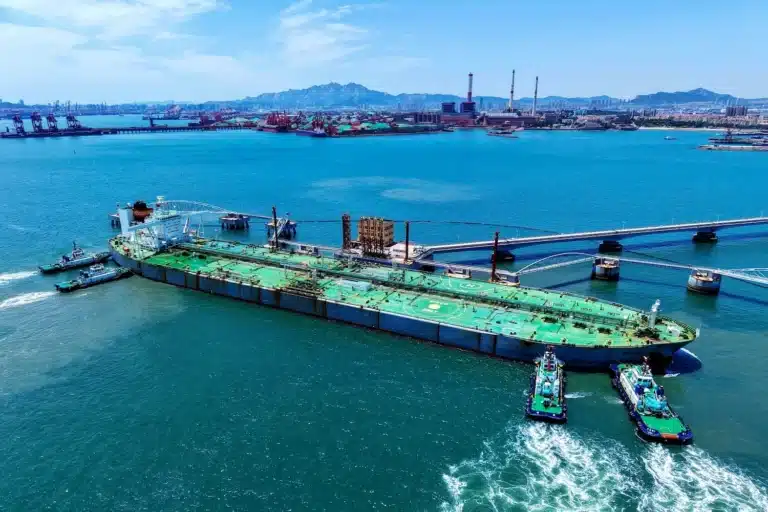
China’s crude oil imports hit a record-high 11.6 million barrels per day in 2025, as geopolitical tensions, low oil prices, and global oversupply spurred China to increase its oil stockpiles, a trend likely to continue in 2026.
The oil shock triggered by the crisis in the Persian Gulf has pushed crude above $100 per barrel, reviving familiar fears of economic turmoil in the United States driven by surging gasoline and diesel prices.
In discussing the dramatic seizure of Venezuelan President Nicolás Maduro and his wife, Cilia Flores, over the weekend, President Donald Trump declared that the United States would now “take back” the country’s oil. Yet he has offered little clarity on what exactly this means.