This website uses cookies as well as similar tools and technologies to understand visitors’ experiences. By continuing to use this website, you consent to Columbia University’s usage of cookies and similar technologies, in accordance with the Columbia University Website Cookie Notice.
Energy Explained
Get the latest as our experts share their insights on global energy policy.
Live Updates: US-Israeli Attacks on Iran and Global Energy Impacts
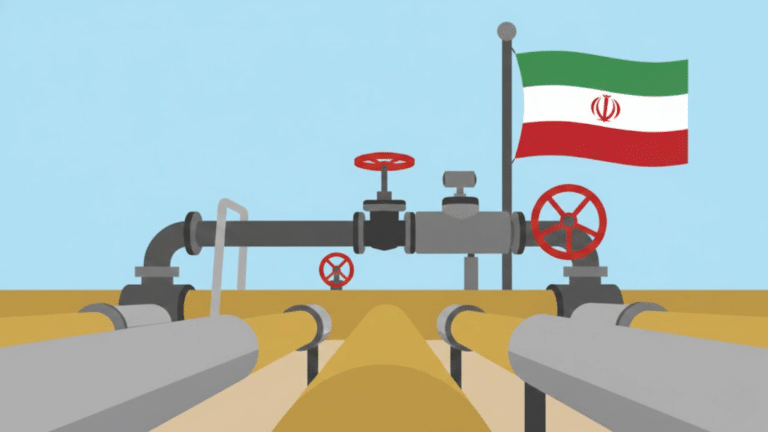
On February 28, the US and Israel launched new attacks on Iran targeting primarily the country's leadership, security forces, and missile program.
Blog
by Anne-Sophie Corbeau, Erica Downs, Ira Joseph, Richard Nephew, Daniel Sternoff, Karen E. Young, Robin Mills & Neelesh Nerurkar • March 23, 2026
Podcasts
Hear in-depth conversations with the world’s top energy and climate leaders from government, business, academia, and civil society.
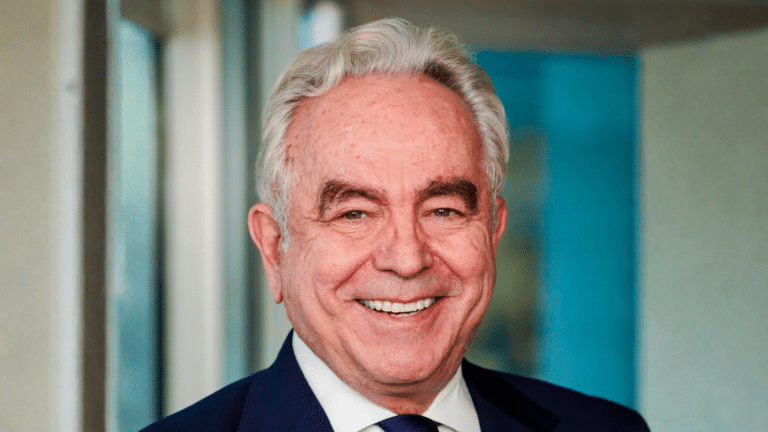
Kurt Campbell on China’s Approach to Energy Security and Statecraft
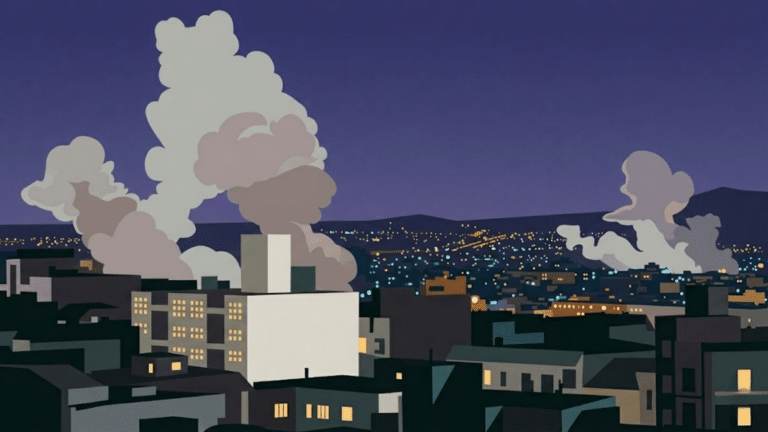
The Iran conflict has rapidly expanded, drawing in actors across the Middle East and raising concerns about broader regional escalation.
Columbia Energy Exchange Podcast
• March 24, 2026
Events
Find out more about our upcoming and past events.
March 26, 2026
• 12:00 pm - 1:00 pm
edt
Fashion in the Energy Transition Talk Series | Session 2
This roundtable is open only to currently enrolled Columbia University students. To register, you must sign in with your UNI. The Center on Global Energy Policy (CGEP) at...
Event
• Center on Global Energy Policy
1255 Amsterdam Ave, New York, NY 10027
1255 Amsterdam Ave, New York, NY 10027

Podcast
Iran Conflict Brief: The High Cost of Attacking Energy Infrastructure
March 19, 2026
-
Transcript
-
Daniel Sternoff:
Events in the Middle East are changing quickly and the complexities of understanding the global energy landscape grow deeper by the hour. Join me as we talk to leading experts on the latest developments in the region and what it means for the rest of the world. Welcome to our rapid response series, the Iran Conflict Brief, a special edition of the Columbia Energy Exchange podcast. I’m Daniel Sternoff, a senior fellow at the Center on Global Energy Policy. Good morning. We are recording this podcast on March 19th at 11:00 AM in Washington DC, 7:30 PM in Tehran and six and 7:00 PM respectively in Riyadh and Abu Dhabi. Today is day 20 of the conflict in Iran and the war is moving into a much more dangerous phase for the world’s energy system. Almost a fifth of world LNG and oil supplies have been bottled up for three weeks due to the closure of the Strait of Hormuz.
And yesterday March 18th, the war escalated sharply from logistical disruption to meaningful and potentially longer lasting damage to some of the region’s core energy infrastructure assets. Israel, with the apparent blessing of the Trump administration, targeted South Pars, the largest gas field on earth that is shared with Qatar and is Iran’s largest domestic energy source. Iran swiftly retaliated across the Gulf causing extensive damage to Qatar’s Ras Laffan, the world’s largest LNG plant, and also targeted oil fields and refineries in Kuwait, the UAE and Saudi Arabia. This included a Saudi refinery on the Red Sea, signaling Iran can threaten Saudi Arabia’s main outlet for crude oil to bypass the Strait of Hormuz. Brent crude spiked as high as $119 a barrel today with some physical grades in Asia trading 12 to $20 higher than that. As barrels become scarce, early signs of demand destruction are appearing and the crisis in natural gas.
The topic of today’s podcast is looking even more acute. European TTF prices are 63 euros per megawatt hour, up more than 125% since the crisis began. The end game of the war is unclear. Iran’s conventional military capabilities are being severely degraded, but there are few signs of regime collapse. Iran holds the advantage in the maritime arena, effectively blocking the strait and President Trump faces a dilemma, look for an exit ramp or escalate possibly with boots on the ground to show the United States is capable of securing freedom of navigation. As always, wars are harder to stop than to start.
I’m joined today by Anne-Sophie Corbeau, a leading authority on the intersection of geopolitics and natural gas. Anne-Sophie currently serves as a global research scholar at the Center on Global Energy Policy. Her research is informed by two decades of senior roles at the International Energy Agency and BP where she examined European energy security and the role of hydrogen. There is no one better than Anne-Sophie to help us untangle what’s going on with LNG supplies, the recent attacks on energy infrastructure and its impact on global markets. Good morning. Anne-Sophie, or shall I say good afternoon since you’re joining us from Paris.
Anne-Sophie Corbeau (03:21):
Thank you very much, Daniel. Good morning to you.
Daniel Sternoff (03:27):
And so this is really the big one. We saw Iran’s strike energy infrastructure earlier in the conflict including Ras Laffan Industrial City along with refineries, ports, gas fields and desalination facilities in Qatar, the UAE Kuwait, Saudi Arabia, and Bahrain. The Israelis have also hit oil storage facilities in Iran during the last three weeks and last weekend the US military hit military but not energy targets on Iran’s Kharg Island. So energy infrastructure has been impacted and has been pulled into this conflict, but the last 24 to 48 hours appear to be a real step change. Can you take us through exactly what happened in the last two days in South Pars and Qatar?
Anne-Sophie Corbeau (04:13):
Yeah, absolutely. So everything started yesterday. So on March 18th when Israel launched an attack on South Pars, so that you understand South Pars, this is the largest gas field in Iran. It’s accounting for about 70% of their gas production. This actually is the same gas field as what we call the north field in Qatar because this is the same infrastructure and in fact this is the largest gas field in the world, so 70% of the Iranian gas production, but gas is very important for Iran’s economy. This is about 70% of primary energy consumption and almost 90% of electricity is coming from gas. So you can understand, but if you are attacking South Pars, you are really attacking the Iranian energy system and its economy. So obviously what immediately happened after that, later on March 18th was a first attack on. So according to the first declaration in particular, Pearl GTL gas to liquid has been damaged, but then there has been a further escalation during the night.
(05:21):
And this morning I woke up in Europe with the news that there had been an attack also on the liquefaction facilities. At the very beginning, Qatar Energy statement was saying that there had been several liquefaction facilities being hit and that the damage had been substantial. However, we have learned a little bit later, about one hour ago that in fact two LNG liquefaction plants have been hit with a total of 12.8 million tons, which is 17% of total total Qatar, total LNG export capacity. So this is substantial because these facilities are going to be potentially down between three and five years according to Qatar Energy’s CEO.
Daniel Sternoff (06:14):
So we’re moving from until now, the crisis has really been about the duration that transit will be disrupted and now we’re into how long production may be constrained by damage, how long repairs could take or how long it might be safe to restart. You mentioned some of the initial reports from Qatar Energies. Do you have any more details? Do we know really how extensive the damage is? And maybe you mentioned two trains, if I’m not mistaken, there’s 14 trains. So can you contextualize how much you think this will hobble the total capacity that can come out of Ru Lahan when and if the Strait of Hormuz reopens?
Anne-Sophie Corbeau (07:02):
So indeed, I mean right at the beginning I highlighted that there were two different issues, the Strait of Hormuz and the flow of LNG through the Strait of Hormuz, and the potential attacks on energy infrastructure, whether this is oil or LNG and an attack on Ras Laffan. This has always been my nightmare, my Armageddon scenario. I mean I give that as a case study to my students. So just to say how much I am worried about that and apparently, well I was white to be worried, so you are correct. In Qatar Energy we have 14 liquefaction plants. However, they have all different sizes. The first ones, the ones which were bought online during the late nineties and the two thousands, the size is ranging between 4.1 million ton per annum and 4.7 million ton per annum. So they’re relatively small. However, between 2009 and 2011, six mega trains of 7.8 million ton per annum were brought online. So given that two facilities accounting for 12.8 million ton per annum were hit apparently according to the report from the CEO, we can estimate that there has been one mega train and one of the smaller LG facilities. This is all we know for the moment. I have to say that there were a lot of people trying to understand based on the pictures, the satellite pictures, exactly what had happened and how much damage has been done.
(08:34):
It’s certain that the damage has been relatively extensive because I don’t think the CEO would’ve said something like it’s going to take three to five years. So what we can assume is that something very crucial in the liquefaction part has potentially been hit because this is not something that you repair that easily. There is a reason why it takes several years and actually up to five years to build these trains.
Daniel Sternoff (09:03):
So it’s very serious. And let’s talk about the impacts on the market and on the industry. So TTF right now is trading, it’s come off a little bit during trading during the day, but it’s 63 euros per megawatt hour compared to around 30 in the second half of last year and we were trading below 30 before this all kicked off. Obviously you’re aware the news flow on the oil side is all about releases of strategic reserves and waivers of sanctions to clear Russian and Iranian barrels, but there’s no such buffers on the natural gas side. And so clearly we’re looking at a supply shock and maybe a lasting price impact if the damage is as Qatar energy is saying and we’re going to have some trains that may be down for years. What do you think that might mean for pricing over the longer term and how do you think different players are going to adjust?
Anne-Sophie Corbeau (10:08):
Well, the first and very important question is to what extent we can restart these LNG liquefaction facilities. I would say now during the year 2026, because at the very beginning many people were hopeful that the Strait of Hormuz will be reopened soon and that liquefaction plants not in Qatar will come back online. It’ll take several weeks, but eventually everything will be back to normal situation. This doesn’t look very likely right now. So what we need to understand is how soon the strait is going to open and how rapidly Qatar can bring the remaining facilities back online. So that’s the first question and honestly, the more we are waiting, the more we are losing LNG supplies. So we may be very soon in a situation where the incremental LNG supply in 2026 is actually going to be zero. The worst case scenario would be in my opinion, if LNG liquefaction plants in Qatar are not restarting at all during 2026, which would mean that we would be roughly back to where we were in 2021 in terms of global LNG supply.
(11:25):
So that would be a very substantial shock to the global LNG market. And unfortunately we don’t know yet. As you mentioned, we don’t have any opportunity to use strategic stocks because there is no such thing in any country. Although I was yesterday at an event in [unclear] and was sitting with a certain number of representatives of the storage industry and with the European Commission and the possibility of having strategic stocks in Europe has been mentioned. So this is probably something that we may see in the future in Europe or at least some of the measures in order to make sure that there is going to be enough gas should we have such supply shocks or such demand shocks. But the problem right now is that we need to find additional supply. So there is additional supply progressively coming to the market from the United States, the Plaquemine projects, the Golden Pass project, Corpus Christi stage three from Canada and from other countries. But this will never be enough to replace the LNG that we are currently missing. So we have simply to adjust on the demand side, which means switching to coal. This is something that we are already seeing both in Asia and in Europe. And I have said that right at the beginning of the conflict. And the second thing is going to be pure demand destruction. And this is also something that we are already seeing in Southeast Asian countries where industry oil gas reserves are being cut.
Daniel Sternoff (12:58):
You’re principally expecting demand destruction will occur on the industrial side or will this be in power generation. Can you maybe elaborate a little bit more? I mean the numbers are pretty stark. What was your demand expectation for 2026 and if we end up seeing zero supply growth for this year, then how would you think about how this adjustment can happen over the course of this year?
Anne-Sophie Corbeau (13:25):
So in LNG terms, we started with a level for 2025, which was at about 590 billion cubic meters. Everybody was expecting to see an additional 40 BCM in terms of additional supply bringing us to about 630 BCM. Now, I mean I would probably estimate that the number is going to be anywhere between where we were last year because I am not very optimistic. And the worst case is where we were back in 2021, which will be really complicated. Very simply, it has to be a lot of coal to gas switching or sorry, gas to coal switching. I’m not used to say it that way to be honest. And definitely some demand destruction, but the demand destruction, you are correct. It can also happen on the power side, which means that power demand will be curtailed and therefore you need to use less gas for power generation. I think at the end of today what is going to be winning is going to be coal and probably also renewables because this is the second big gas crisis that we are experiencing in four years. And even though during the first one Europe was the main region impacted, all the regions were also impacted in a second order, but this time everybody from Asia to Europe and also other smaller LNG importers in Latin America are also impacted. And there may be a lot of second thoughts about being more dependent in the future on LNG.
Daniel Sternoff (15:10):
What about in Europe? I mean there is a very large supply of natural gas that is connected through pipelines that belongs to Russia. The United States is already waving sanctions on Russian oil to allow some flexibility during this crisis. On the oil side, what is the likelihood that in Europe you start to see moves to restore Russian gas flows?
Anne-Sophie Corbeau (15:41):
That is going to be a very tough question. So right now we are actually looking at decreasing the supply of Russian gas to Europe because next month, on the 25th of April, we are going to stop everything which is short-term contract of LNG, so only the long-term contracts remain. And then in June, the same thing with everything which is short term pipeline contract will be stopped. So we are going to reduce progressively version pipeline and version LNG. And then on the 1st of January, 2027, there won’t be any more Russian LNG coming to Europe. And finally towards the end of 2027, on the 30th of September, we stop all Russian pipeline gas. Of course there have been countries such as Hungary and Slovakia which have been totally opposed to this in particular because they are landlocked countries and they don’t want to see the Russian gas supply stopping. But first of all, we have elections in Hungary, so we don’t know what type of government is going to be there in one month.
(16:45):
So that’s the first thing. But on the other side, I am hearing quite a lot of voices who are already calling for additional for a return of Russian gas or for a normalization of the relationships with Russia. That has been a comment from the Belgian prime minister already. And I know that in Germany there have been a lot of voices saying we need to bring back Russian gas. Okay, so there is the idea of bringing back Russian gas, but then how do you bring back Russian gas? There are three possibilities, none of which is particularly appealing. The first one is bringing back Russian gas through Ukraine. Not an easy one. I can imagine the discussion with President Zelensky. So by the way, we need to bring Russian gas back. You can imagine how well that would go. The second one would be to bring back Russian gas through Belarus and then landing into Poland. Given that Poland was the first country cut by Russia in April, 2022, it’s not going to be easy. And the third option would be to restart the only part of the Nord Stream pipeline, which has apparently not been impacted. And this is a part of Nord Stream two, which has not been certified by the German authorities. So as you can see, I mean there is maybe a call to bring back Russian gas, but it’s not going to be easy to bringing back in practice.
Daniel Sternoff (18:21):
What about the potential for an easing of sanctions on Russian LNG that might allow more of that to flow more easily to Asia and elsewhere?
Anne-Sophie Corbeau (18:34):
Yeah, I have to say that the main problem for Russian LNG and for the one which is currently being sanctioned is the logistics because of where Arctic LNG two in particular is located, they need to have access to specific type of LNG cargos [unclear]. They have not been able to have access to the ones that were under construction and were finished. So this is mostly a logistics issue in terms of sanctions, let me observe that effectively this facility is under sanctions and that the US is turning a totally blind eye to these sanctions and that the LNG cargos from Arctic LNG two and also from Portovaya have been going to China to the bay high LNG terminal. So in terms of sanctions, they’re not totally, totally implemented. And regarding version LNG, I mean now they also know that the [unclear] the short route which was going through the Suez Canal and [unclear] because two weeks ago one of these LNG tankers Metagaz was actually hit by a Ukrainian drone and is now half sinking, half floating towards and floating towards Italy, which is the first time actually that we have an LNG tanker being attacked and hit.
(19:54):
So we know now what it looks like. So logistically that means that any LNG cargo from Arctic LNG two would’ve to go through the long route below Africa in order to China or potentially over Asian countries during summer. They can go through the north route, but as long as the summer route is not available, they have to basically take the long hold.
Daniel Sternoff (20:22):
Okay, so that is not a quick or easy solution. So if this is looking to be something that really meaningfully moves fundamentals over, certainly over the short and even possibly over the medium term potential outlets are winners, are renewables in power coal switching, maybe at the margins, political incentives shift towards some return of Russian gas, whether pipeline or LNG over time. What about for the United States? Two questions. One is how much will a greater poll of gas from the US have any impact on domestic pricing in the US? Is question number one. And question number two, there’s obviously a huge amount of liquefaction already under development in the United States. Will this further accelerate that trend?
Anne-Sophie Corbeau (21:20):
So let me take your question two first. I am already hearing a lot of people in the United States who are super happy about the current situation because they’re posing as a reliable supplier who is here to help. And I am sure that next week at CERAWeek there will be a lot of people saying, yes, you need to invest, people in Asia. So look at Alaska LNG, people in Europe look at over project in the Gulf and do invest in US LNG. I am sure that we are going to hear that rhetoric. But indeed, to come back to your first question, one of the main risks attached to US LNG is a price risk because most of US LNG is actually price on Henry Hub. And what we are seeing also with the latest FID, which was taken last week on Calcasieu Pass phase two, is that there is so much LNG, which is going to come from the United States and we are starting to talk about very meaningful volumes, more than 300 billion cubic meters.
(22:16):
And on top of that, the domestic demand doesn’t look like it’s going to decline eventually because all these data centers and they are looking at gas valve plants in order to power and give them some electricity. So one, no decline in terms of domestic demand. Two very strong increase in terms of energy exports. And when I am looking at that picture, and I’m comparing that picture to the official energy information administration outlook, which was looking at a much more moderate increase in terms of L energy exports and a decline in domestic demand while still having an increase in terms of gas prices, I’m really wondering how this new picture is really going to impact the domestic gas prices. I mean, I know what my friends in the US LNG industry are going to tell me, no problem. Anne-Sophie, don’t worry, there is plenty of gas available at $3 or $4, maybe they’re right, but I think this is still a very significant risk that a lot of buyers are thinking about.
(23:23):
And the second thing that buyers are thinking about is diversity. And we see how diversity is important because there is a very strong concentration of LNG volumes, which is going through the Strait of Hormuz. And here we have a big problem. What about I think a very strong concentration of gas of LNG coming from the United States. I mean already it was supposed to be something like 30% of global LNG exports by the early 2030s. Now if more projects are going to come online, this is going to be even more concentrated. And given that I teach energy security, the very first thing that I teach my student is diversity, diversity, diversity, diversity.
Daniel Sternoff (24:05):
How do you think buyers are looking at supplier risks coming from the Middle East? Obviously Qatar was seen as a very reliable, very secure supplier. How is China looking at this? How do you think investors in Qatar may be looking at this, how do you think this conflict winds down from the, what does this do to the perception of Qatar as a stable and secure supplier?
Anne-Sophie Corbeau (24:37):
Yeah, I really feel sorry for the Qataris because they are really themself as being a reliable supplier. And I think this kind of brand image is very important for them. And now we are seeing what it looks like because unfortunately for them their geographical situation means that they are dependent on the Strait of Hormuz and therefore they’re dependent on Iban. It really depends on how the conflict ends. If it ends with a collapse of the regime and replaced by something else, then probably everybody will be breathing and thinking, okay, so this was a very bad moment, but now danger is over. We are going to be able to have the Strait of Hormuz open. Nobody’s going to hinder the flows. However, if we stop at the present situation and the regime remains in place, then we may have coming again. And again, this rate of, well, oil and gas flows through the freight of moose can actually be impacted every now and then.
(25:46):
And that is a very annoying risk for a lot of potential buyers. And frankly, I mean there is no way to actually do what, for example, Saudi Arabia is doing with oil. I mean, we’re not going to build a pipeline of, there is already one from Qatar to the Emirates and then to somewhere on the south coast of Oman in order to basically bring all the gas and then liquified from there. I mean that makes absolutely no sense and I don’t think the will actually agree to that. So we are basically stuck with how this conflict is going to end,
Daniel Sternoff (26:24):
And that is something we don’t have an answer to right now. Why do you think the Iranians went this aggressively towards the Qataris, the Qataris who share this gas field and have gone out of their way, maybe beyond certainly the UAE, but even Saudi Arabia in trying to have good diplomatic relations with Iran and push towards detente? Why do you think Iran escalated in this way so aggressively? And are there risks to Iran if in fact the regime holds on and it’s led by the IRGC, what does that relationship look like?
Anne-Sophie Corbeau (27:08):
So I mean, when you are looking at the shareholding of the liquefaction plants, you can see that besides Qatar energy, there is a name which is popping up again and again. This is Exxon. And when there was an attack on Kharg Island, I think the Iranians were pretty clear that retaliation should the oil facilities be attacked, would be on energy infrastructure with the US shareholding. So for me, on the gas side, the first in line was affan. So that’s the first thing. The second thing is that impacting the global LNG market is impacting a lot of different countries in Asia and in Europe. And by doing so, I mean I think maybe the Iranians are thinking we want to do a little bit of divide and rule game whereby we are making sure that the United States and Israel are not going to get any support on this war because both the Europeans and the Asian countries are going to be impacted economically and they are already on the oil side, but also on the gas side.
(28:19):
And therefore they are going to say, well, no, I mean we don’t want to support this war. We want this war to end as soon as possible. And I think categories are kind of sometimes a little bit exaggerating because they want help and they want the conflict to end as soon as possible. So maybe to prevent further attacks. And so that other countries are saying, okay, no, I mean now we need to really find an end to this conflict and not always push back and talk about weeks. And maybe we are going to have [unclear] which you talk about in a previews podcast, which may or may not be successful
Daniel Sternoff (28:59):
Maybe, although I was struck by a joint statement by a group of Arab and Muslim foreign ministers today, Qatar, Saudi Arabia, UAE, Bahrain, Pakistan, Turkey, all of whom were directly critical of Iran in very sharp language. And it didn’t seem to include language that is asking for the US to wind this down. Maybe those conversations are happening privately. It also would seem as uncomfortable as this is that they also would like this to end but also not end in a way that leaves Iran very dangerous and in control, which is maybe hard to see how we end there, but it’s also not the most comfortable way to end things if we were to see a ceasefire right now with Iran behaving in this way. Do you agree with that?
Anne-Sophie Corbeau (29:54):
No, absolutely. And this is one of my two cases. I mean, how do we end? And if we continue to have the same regime in place, then the threat on the Strait of Hormuz and the oil flows and the LNG flows is going to remain, and that indeed remains risk. So I do understand where all these countries are coming from. Absolutely. I mean for them right now, given what has happened over the past 20 days, they absolutely want the regime to fall.
Daniel Sternoff (30:21):
Let me ask another question. Obviously we’ve seen this spike in gas prices we’re significantly below the $200, $300 type prices we saw in the middle of the Russia Ukraine crisis, which was a real extreme surge. But if we are holding around these kind of levels for potentially the rest of this year or into next year, is that meaningful enough to really bend the curve on substitution? I’m thinking of how in the 1970s the oil shocks of ’73 and ’79, which caused a huge jump in the oil price, which then led to huge efficiency gains in internal combustion engines and smaller vehicles and other measures that impacted demand. It also backed out a lot of demand for oil in power generation. And I’m wondering if you think at these levels we might begin to see something similar happening already. So we’ve seen countries like Pakistan have been able to take renewables to replace fuel oil in power generation, and now China is a supplier of cheap renewables and increasingly cheap batteries. Do you think we might be on the cusp of an inflection point that could really see this crisis accelerate those technologies and fuels?
Anne-Sophie Corbeau (31:54):
I mean in Europe, pretty much everybody is talking about electrification and how we need to electrify faster so that the dependency on natural gas is going to be lower. So that’s definitely at least wishful thinking, even if in practice electrification rate in Europe has been relatively stable, but maybe after two crisis people are going to say, well, now we need to accelerate. Although you still need to put that in practice. I think in many Southeast Asian countries for which I mean gas above $10 per BT is already pretty expensive. So at 20 of course, this is outrageously expensive, so we might see a lot of other countries thinking a little bit like Pakistan and turning increasingly towards renewable while keeping coal at the same time. So basically skipping the LNG stage, which is exactly what I think a lot of LNG exporters including in the US.
(32:52):
I mean this is exactly what they were thinking will not happen. I mean all of these people, all the LNG exporters across the world, they’re thinking that we are going to have LNG moving into Asia, replacing coal, also maybe moving into LNG trucking in China, in India, also moving in shipping. But a lot of demand may be at risk and especially in Southeast Asia, but also in China. I have to say China for many reasons may look at maybe bending a little bit the growth of total gas demand, but also potentially looking at over sources of natural gas, including for Russia.
Daniel Sternoff (33:34):
Well, we still don’t see how this conflict is going to end. I suppose an optimistic view of the events of the last two days is all parties have now touched the third rail of the implications of really going after these kinds of production facilities. And there certainly are still a lot more damage that could happen both to Qatar LNG, UAE and to upstream oil facilities in Saudi Arabia and the UAE. And it does seem that President Trump has expressed some reservations about this strike that the Israelis carried out on South Pars, and he himself had showed some reservations about attacking Iran’s Kharg Island, at least the oil installations on Kharg Island over the weekend. And so maybe we are just touching on the implications for the global energy system and the global economy of escalating in this way, and maybe we won’t go there on the one hand. On the other hand, we are about to enter the fourth week of this crisis and can’t see exactly yet how this is going to wind down. And so the risk of some escalation, including if the US chooses to try to push open the Strait of Hormuz by force or with ground forces, could certainly see this escalate still. I mean, what is your worst case scenario and what could that look like?
Anne-Sophie Corbeau (35:12):
My worst case scenario on the supply side is that we go again for an over attack on Kharg Island or South Pars, and then as a retaliation, there is more damage being done on the LNG facilities in Qatar, which is impacting not only the existing ones, but also the ones which are under construction, which basically means the LNG of our supply story, that’s gone forever, but then down the line eventually, I mean, people looking at that would think, okay, that’s enough not investing into LNG. So you still have this buildup and maybe eventually Qatar comes back, but the LNG demand is going to be much lower. So that will be my overall story. But I do hope because I mean, I was warning against that sort of story happening, but I do hope that the full destruction is not going to happen because otherwise people are going to start calling me Cassandra, which I don’t want to happen.
Daniel Sternoff (36:10):
Right. Well, I think we all hope we’re not going to be facing that scenario, but we may only be halfway through this conflict. We still don’t quite understand what the end game looks like, and clearly we’re starting to hit very sensitive areas and the price shocks are just beginning to ripple through the global economy. Maybe on that note, we can wrap it for today. I suspect we’re going to be speaking additional times before this conflict ends.
Anne-Sophie Corbeau (36:54):
Thank you.
Daniel Sternoff (36:54):
And Sophia.
Anne-Sophie Corbeau (36:56):
Thank you, Daniel.
Daniel Sternoff (36:58):
That’s it for this episode of Iran Conflict Brief, a limited series from the Columbia Energy Exchange Podcast. Thank you again and Anne-Sophie Corbeau. And thank you for listening. The show is brought to you by the Center on Global Energy Policy at the Columbia University School of International and Public Affairs. I’m Daniel Sternoff.
This podcast was produced by Mary Catherine O’Connor, Caroline Pittman and Kyu Lee. Greg Vilfranc engineered it. For more information about the show or the Center on Global Energy policy, visit us [email protected] or follow us on social media at Columbia U Energy.
If you like this episode, leave us a rating on Apple, Spotify, or wherever you get your podcasts. You can also share it with a friend or colleague to help us reach more listeners. If you have any questions, comments, or feedback, we’d love to hear from you. Email us at Columbia Energy [email protected]. Thanks for listening.
As the conflict in the Middle East enters its 20th day, events on the ground have shifted into a critical new phase marked by direct strikes on core energy infrastructure. With the Strait of Hormuz closed for three weeks, effectively bottling up nearly a fifth of the world’s oil and LNG supply, recent escalations have turned the crisis from energy flow disruptions to potentially long-term physical damage.
Following Israeli strikes on the South Pars gas field in Iran, retaliatory attacks hit Qatar’s Ras Laffan—the world’s largest LNG plant—and key energy assets across the UAE, Kuwait, and Saudi Arabia. Crude oil and natural gas prices have surged, signaling a shrinking toolkit for policymakers struggling to contain price volatility.
In this episode of the Iran Conflict Brief, host Daniel Sternoff talks with Anne-Sophie Corbeau to analyze the impact of these infrastructure attacks on global LNG supplies and energy security.
They discuss the extent of the damage to Qatari and Iranian production facilities and the intensifying pressure on global markets. They also discuss the possibilities, and reverberations, to a scenario where this leads Europe to a return to Russian gas.
Anne-Sophie is a global research scholar at the Center on Global Energy Policy and a leading authority on the intersection of geopolitics and natural gas.
More Episodes
Kurt Campbell on China’s Approach to Energy Security and Statecraft
The Iran conflict has rapidly expanded, drawing in actors across the Middle East and raising concerns about broader regional escalation.
Columbia Energy Exchange Podcast
• March 24, 2026
Iran Conflict Brief: How the Energy Shock Is Reshaping Investment
Nearly a month in, the conflict in Iran appears to have hit a critical inflection point. Over the weekend, President Trump gave Iran a 48-hour ultimatum to open...
Michael Gerrard and Jeff Holmstead on Next Chapter in US Climate Policy
The climate policy landscape in the US is in flux. Last month, the Environmental Protection Agency repealed its own power to regulate greenhouse gases. Two weeks later, the...
Columbia Energy Exchange Podcast
• March 17, 2026

Iran Conflict Brief: A ‘Tacit Bargain’ Protecting Gulf Energy
As the US-Israeli military campaign against Iran enters its third week, the complexities of the global energy landscape are deepening by the hour. Shut-ins of Middle Eastern upstream...
Relevant
Publications
How the Iran War Could Consolidate China’s Energy Dominance
Amid global oil and gas disruptions, China stands prepared for the electrostate era.
European Gas Markets in Transition
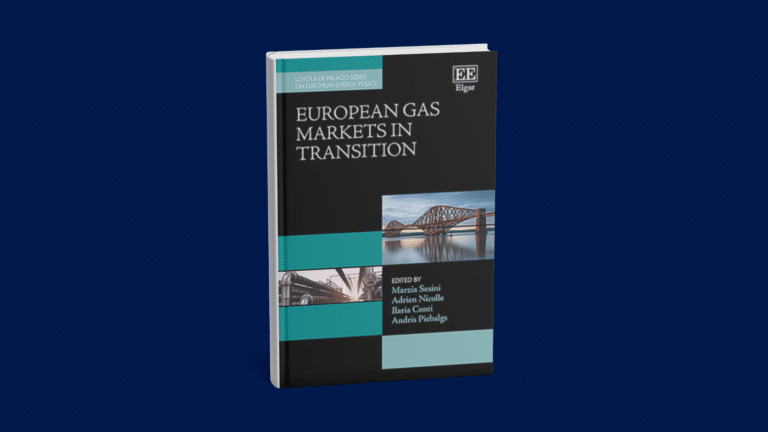
Anne-Sophie Corbeau and leading experts explore how Europe's gas sector is being reshaped by geopolitical shocks.
Downside and Upside Scenarios for Iranian Gas
Iran has among the world's largest natural gas resource bases, but its ability to supply regional and global markets is constrained by sanctions, underinvestment, and limited export infrastructure.